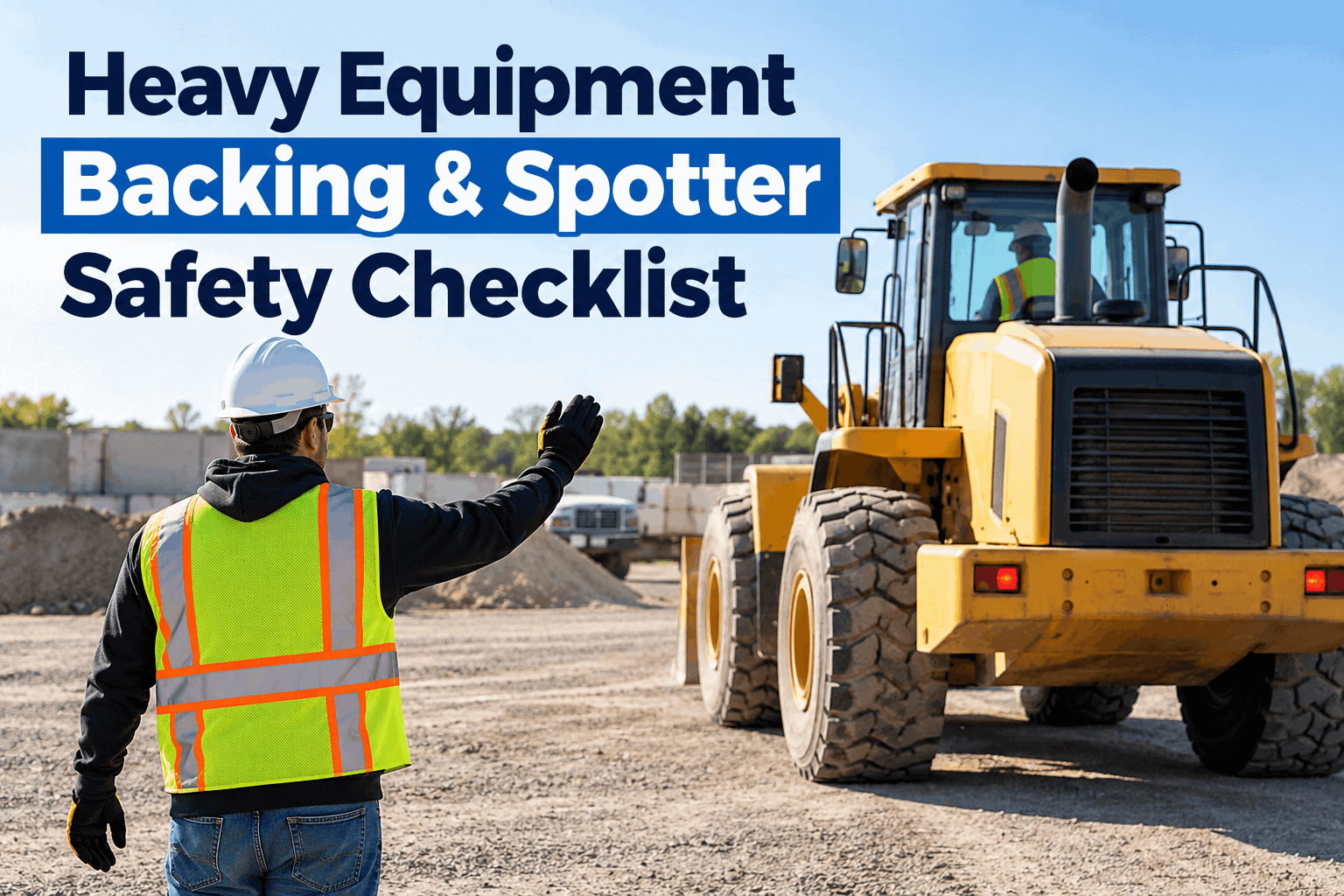
Heavy equipment spotter safety gets treated as common sense right up until the moment it isn't — the dump truck already rolling back, the ground worker with his back turned, the operator who swears he checked. The grim pattern in nearly every backover report reads the same: a blind spot the operator couldn't see into, and no second set of eyes covering it. A spotter and a working backup alarm are the two things standing between a routine reverse and a fatality. Sign up free and log your pre-operation safety checks.
The Operator Can't See Behind the Machine
Every piece of heavy equipment carries a blind zone the operator simply cannot cover from the cab. A spotter exists to own that zone. Here's the danger map the whole practice is built around.
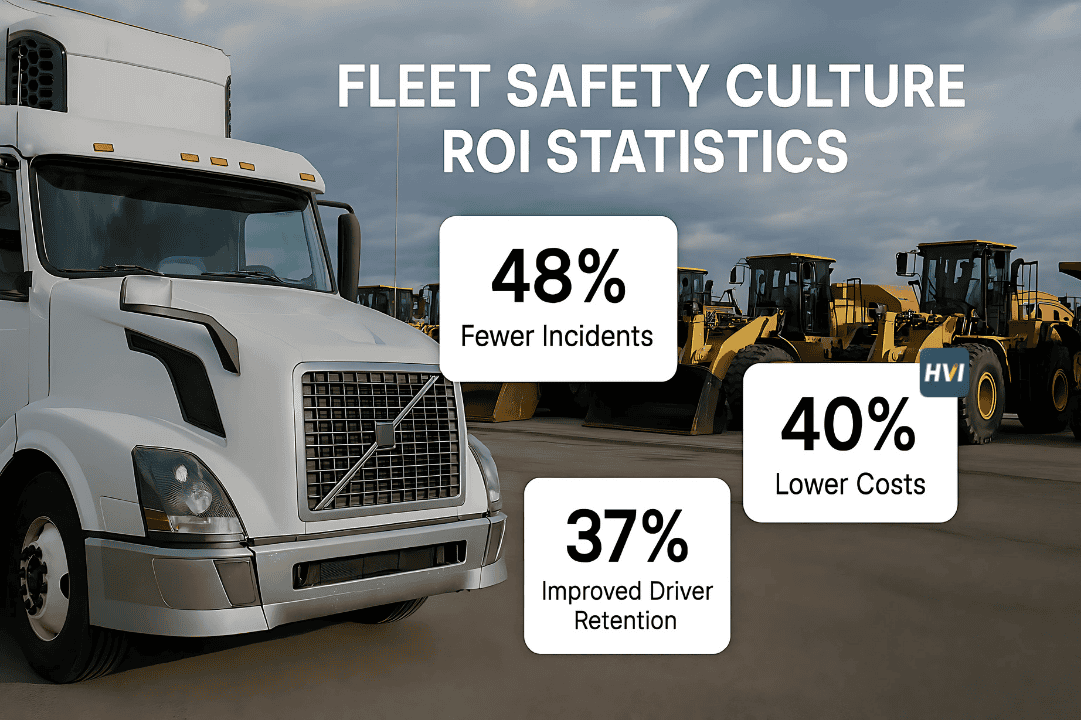
The uncomfortable math: a vehicle spends under 1% of its time in reverse, yet backing accounts for roughly a quarter of all collisions. According to the National Safety Council, backing incidents cause around 500 deaths and 15,000 injuries a year. The operator isn't careless — the machine is simply built so that the exact spot a worker stands in is the spot he can't see. Everything below is about covering that gap, every single time.
Alarm or spotterthe OSHA rule that governs every reverse movement
The regulation is refreshingly blunt. Under OSHA, equipment with an obstructed view to the rear cannot be backed up unless one of two things is true. There's no third option, and "the operator looked" isn't on the list.
A working reverse alarm
An automatic backup alarm audible above the surrounding noise level. If it can't be heard over the site, it doesn't count.
A spotter signaling it's safe
A designated observer who signals when it's clear to back. Required whenever the rear view is obstructed and the alarm can't carry the load.
In practice the safest yards use both — alarm and spotter — and go one step further by eliminating unnecessary backing altogether. But the alarm only works if it works, which is why OSHA also expects you to inspect the reverse alarm, mirrors, and windows at the start of every shift. That shift-start check is a daily inspection, and it's exactly what belongs in a digital See daily operator inspection reporting.
Speak with handsthe standard spotter hand signals every crew should share
Voices get lost under a diesel engine. That's why spotters work in hand signals — and why the single most important rule is that the driver and spotter agree on the signals before the machine moves. These are OSHA's suggested spotting signals; the exact set matters less than everyone using the same one.
The non-negotiable that sits behind every signal: if the driver loses sight of the spotter, the machine stops — immediately. No guessing, no "one more foot." Make that rule part of your documented safety brief so it's trained, not assumed. Book a demo of digital safety checklists.
The backing drillthe four-step sequence that makes every reverse deliberate
Safe backing isn't a reflex, it's a routine. When the same four steps happen every time — not just when it feels risky — backovers stop being a matter of luck. This is the sequence a safety manager wants burned into every operator and spotter.
-
1Walk it first
Before anyone climbs in, walk the full path behind the machine. Clear obstacles, note people, fix the hazard — don't signal around it.
-
2Agree the signals
Driver and spotter settle on hand signals and position before movement. The spotter stands where the driver can see them — and out of the blind zone.
-
3Back slow, stay in sight
Reverse slowly, cover the brake, keep the distance minimal. The spotter signals one driver only, with big clear arm movements, never walking backwards.
-
!Lose sight — stop
The instant the driver can't see the spotter, the machine stops. Re-establish contact, re-agree, then continue. No exceptions, ever.
Minimizing how far and how often equipment has to back up — through better site layout and routing — removes the hazard before the drill even starts. The drill is the backstop, not the first line. Sign up free and build your backing-safety checklist.
The pre-op checkthe heavy equipment backing & spotter safety checklist
OSHA expects the safety devices that make backing survivable to be checked at the start of every shift. This is that checklist — the equipment-condition items plus the human protocol. Run it before the machine turns a wheel; every unchecked line is a backover risk you're carrying into the day.
- Reverse alarm sounds and is audible above site noise
- Backup camera clear, aimed, and showing a live rear view
- Strobe / warning beacon and work lights functional
- Mirrors present, clean, intact, and correctly adjusted
- Windows and windshield clean, unobstructed, undamaged
- Blind zones known to both operator and spotter
- Spotter assigned, wearing high-visibility gear
- Hand signals agreed between driver and spotter before moving
- "Lose sight, stop" rule understood by both
- Backing path walked and cleared of people and obstacles
- Backing distance minimized; unnecessary reversing avoided
- Ground stable; no edge, trench, or power line in the path
Built as a digital template, the warning-device lines become photo-backed pass/fails, and a failed reverse alarm auto-raises a defect that pulls the machine before it backs. See how equipment inspection checklists work. Book a demo of pre-operation checks.
Why it mattersthe numbers behind the backing rule
These aren't abstract. Each figure is a reason the drill exists — and a reason the one shift someone skips it is the one that goes wrong.
The spotter who's most at risk is often the spotter themselves — which is why the protocol insists they stay out of the blind zone, focus only on the machine, and never walk backwards. A documented, trained routine is what keeps the second set of eyes alive too. Explore safety management and incident tracking.
From a site supervisor who runs daily equipment briefings
The backover near-miss that scared me straight wasn't a bad operator — it was a backup alarm nobody noticed had died three days earlier. Now the alarm, mirrors, and camera are on the same pre-op check the operators do every shift, and a dead alarm flags the machine before it moves. The spotter briefing rides on the same checklist, so "agree the signals" and "lose sight, stop" aren't posters anymore — they're a box someone signs.
Heavy equipment spotter safety — FAQs
When is a spotter required for heavy equipment?
Under OSHA, equipment with an obstructed rear view can't be backed unless it has a reverse alarm audible above site noise or a spotter signals it's safe. When the alarm can't carry or hazards and people are present, a spotter is required.
What should a spotter and operator agree on before backing?
The hand signals and the spotter's position, settled before the machine moves. The driver keeps the spotter in sight the whole time, and if that sight line is ever lost, the machine stops immediately until contact is re-established.
What are the standard spotter hand signals?
OSHA's suggested set covers back up, back-turn-left, back-turn-right, and stop, using large overhead arm movements. The exact signals matter less than both people using the same agreed set every time, since voice is unreliable near loud equipment.
Do backup alarms need to be inspected?
Yes. OSHA expects the reverse alarm, mirrors, and windows to be checked at the start of each shift. A dead or muffled alarm is a pre-operation inspection failure that should pull the machine from backing until it's repaired.
How does HVI help with backing and spotter safety?
HVI isn't a training program — it runs the pre-operation inspection of alarms, mirrors, cameras, and lights, flags failures as defects before a machine moves, and documents the spotter checklist as a retained record. It backs the safety routine, not the human spotter.
Make every backing safety check a signed record
You know the drill — alarm or spotter, agree the signals, lose sight and stop. HVI makes the equipment side automatic: start-of-shift pre-op checks on alarms, mirrors and cameras, defects raised before a machine moves, and a documented safety history the same crews already build for their trucks.
No credit card · No hardware · Pre-operation safety records from day one