The spreadsheet that worked fine for one terminal falls apart the moment you open a second one. Different managers track PM on different sheets, work orders live in text threads, and nobody at HQ can see which terminal's trailers are actually overdue for service. That's the exact gap enterprise fleet maintenance software is built to close — one system that standardizes inspections, work orders, and preventive maintenance across every terminal your carrier runs, not just the one closest to the office. Sign up free to connect your first two terminals and see what one shared system looks like.
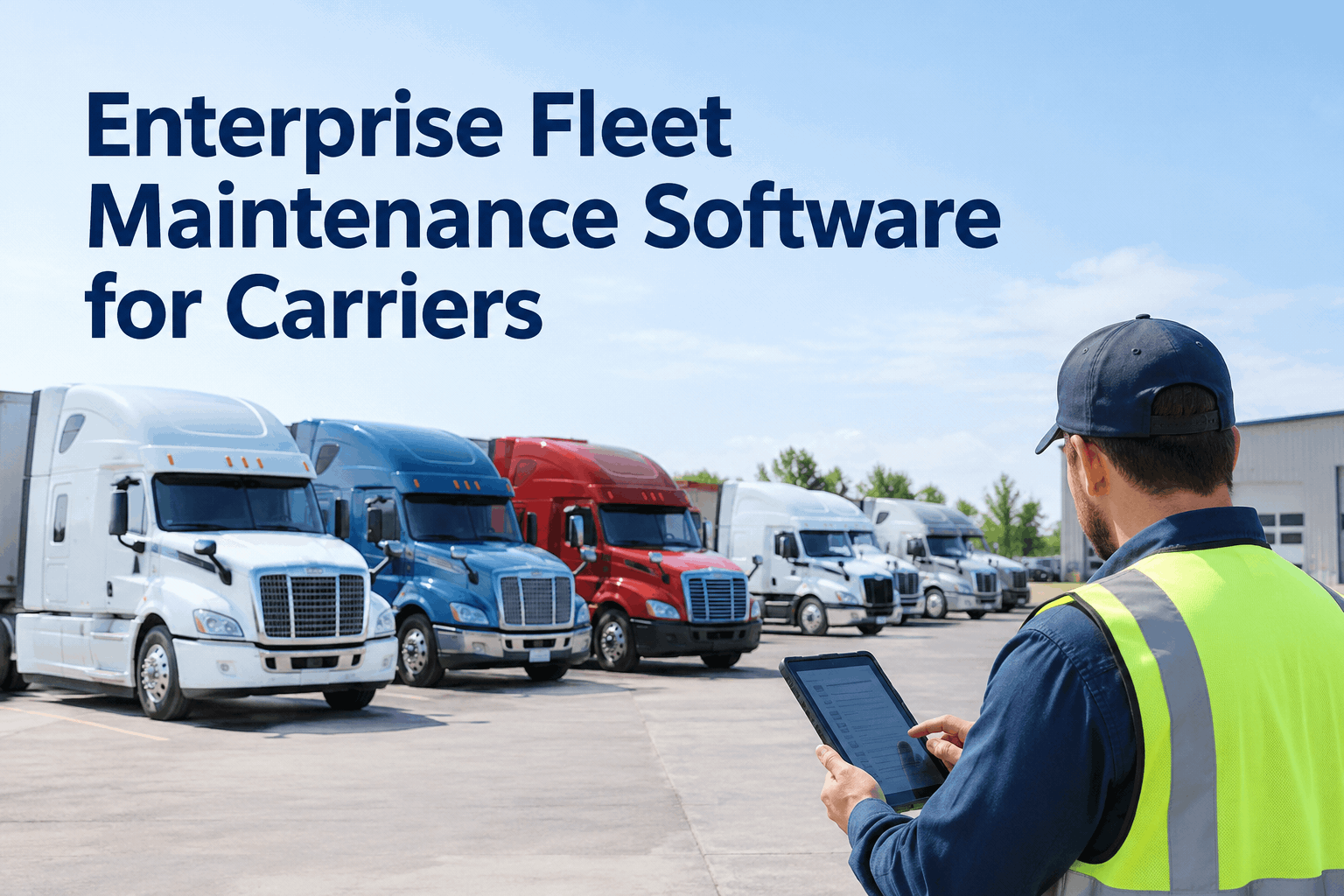
Enterprise Fleet Maintenance Software for Carriers
Growing past one terminal shouldn't mean losing visibility. HVI puts inspections, work orders, and preventive maintenance for every truck and trailer — at every terminal — on one dashboard your HQ team actually trusts.
Why Fleet Maintenance Breaks Down Past One Terminal
Single-terminal fleets can survive on a notebook and a good memory. Multi-terminal carriers can't — the moment maintenance data splits across locations, HQ loses the one thing it needs most: a single source of truth.
No Shared PM Calendar
Terminal A schedules service on paper, Terminal B uses a shared sheet, Terminal C runs on memory. Nobody at HQ can see what's actually overdue fleet-wide.
Work Orders Live in Text Threads
A defect gets reported over WhatsApp or a phone call, and the repair happens, but there's no central record linking the two across terminals.
Trailers Fall Through the Cracks
Trailers move between terminals and tractors. Without one asset record, nobody owns their inspection history — and small defects become expensive ones.
HQ Has No Real-Time View
Ops leadership finds out about a terminal's maintenance backlog weeks later, in a spreadsheet someone finally compiled by hand.
Give Every Terminal the Same Maintenance Playbook
Standardize inspections, work orders, and PM schedules across all your terminals from one HVI account — so HQ sees the whole fleet, not just the depot down the street.
What Enterprise Fleet Maintenance Software Needs to Cover
Not every maintenance app was built to run across locations. For a growing carrier, the software has to work the same way whether a truck is at Terminal 1 or Terminal 4 — sign up free to see this live across your terminals.
Centralized Work Order Management
Every defect, repair, and technician assignment flows into one queue HQ can see, no matter which terminal opened it.
Multi-Terminal PM Scheduling
Preventive maintenance intervals set once and applied fleet-wide, with alerts routed to the terminal that actually owns the vehicle that week.
Fleet-Wide Electronic DVIR
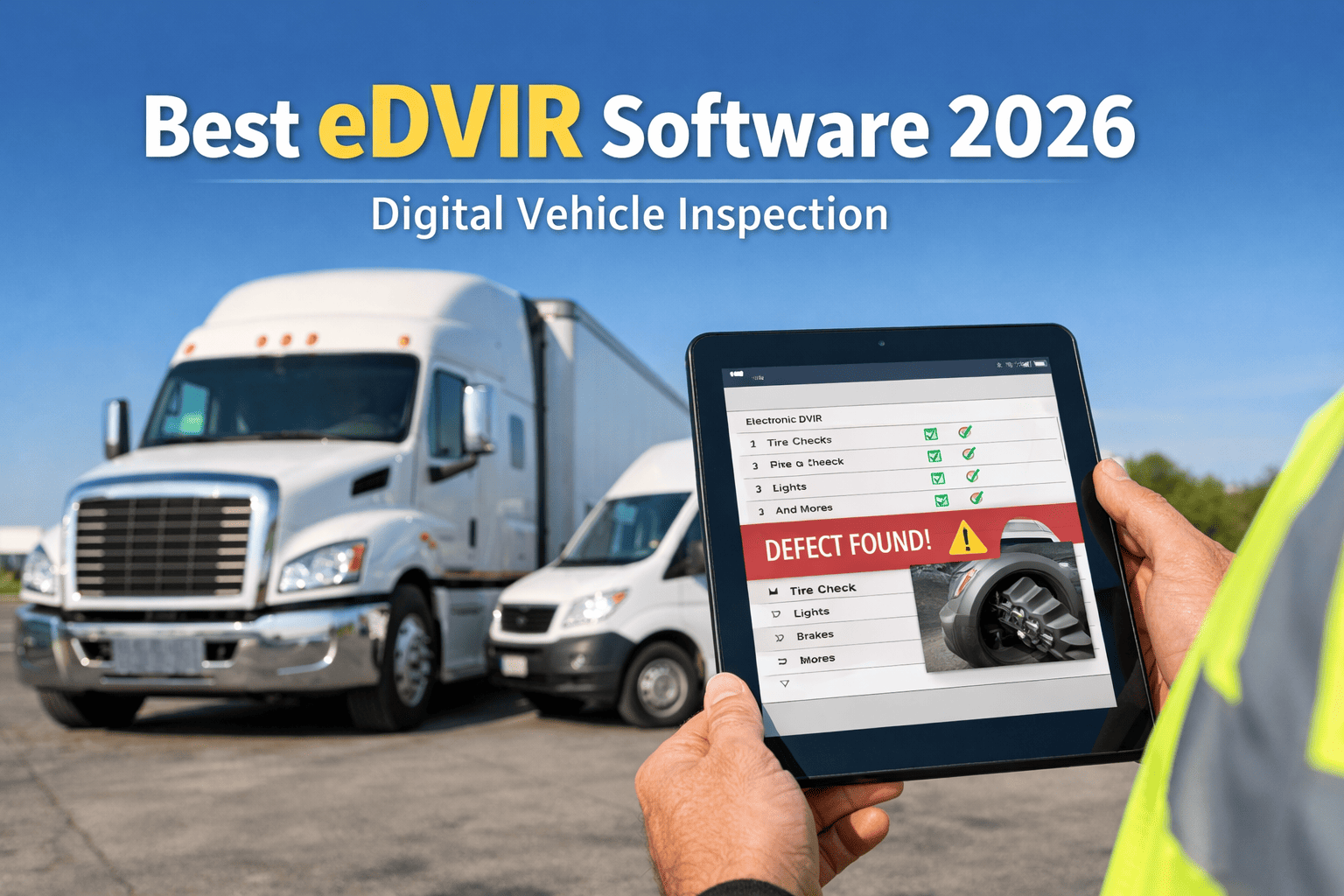
Drivers submit inspections from any terminal on one app, so a defect flagged in one city is visible to the shop in another the same hour.
Trailer & Asset Tracking
Trailers keep one inspection and repair history as they move between tractors and terminals, instead of restarting a paper trail each time.
Role-Based Dashboards
Terminal managers see their own yard's open items; HQ and the maintenance director see the whole network rolled up in one view.
Reactive Fleet Maintenance vs a Planned, Shared Program
This is the gap enterprise carrier software is actually closing — not just convenience, but the difference between a fleet that reacts and one that plans.
Figures reflect fleet maintenance industry benchmarking (reactive vs. documented PM programs) widely cited across 2026 fleet maintenance research. The gap compounds across terminals — a 150-vehicle network running reactive maintenance can lose close to $900,000 a year to unplanned downtime alone.
Self-Check: Is Your Fleet Outgrowing Single-Location Tools?
Run through this before your next terminal opens. Every unticked box is exactly what enterprise fleet maintenance software is meant to fix.
Left more than two boxes unticked? Your fleet has already outgrown single-location tools. Book an enterprise rollout demo and we'll map your terminals onto one HVI account.
Expert View — From a Multi-Terminal Maintenance Director
We run three terminals and for years each one had its own way of tracking maintenance — one on paper, one on a shared sheet, one basically in the shop foreman's head. The problem wasn't any single terminal, it was that I couldn't see across all three at once. The month we moved everyone onto one system, our overdue PM list went from something I guessed at to something I could actually pull up and act on. Standardizing isn't about control for its own sake — it's the only way a growing carrier keeps its maintenance cost from scaling faster than its revenue.
Conclusion — One System, Every Terminal
Enterprise fleet maintenance software isn't about replacing what works at one terminal — it's about giving every terminal the same playbook so HQ finally sees the whole fleet at once. Centralized work orders, shared PM schedules, fleet-wide DVIRs, and trailer records that follow the asset are what separate a carrier that's scaling smoothly from one that's scaling into chaos. If your next terminal is already on the calendar, now's the time to get the system in place before it opens. Sign up free to connect your terminals or book a multi-terminal rollout demo with our team.
Run Every Terminal on One Maintenance System
HVI gives growing carriers centralized work orders, shared PM schedules, fleet-wide DVIRs, and trailer tracking across every terminal — with one dashboard HQ can actually trust. No credit card required to start.
- Unlimited terminals on one account
- Centralized work order queue
- Trailer records that follow the asset
- Role-based HQ & terminal dashboards