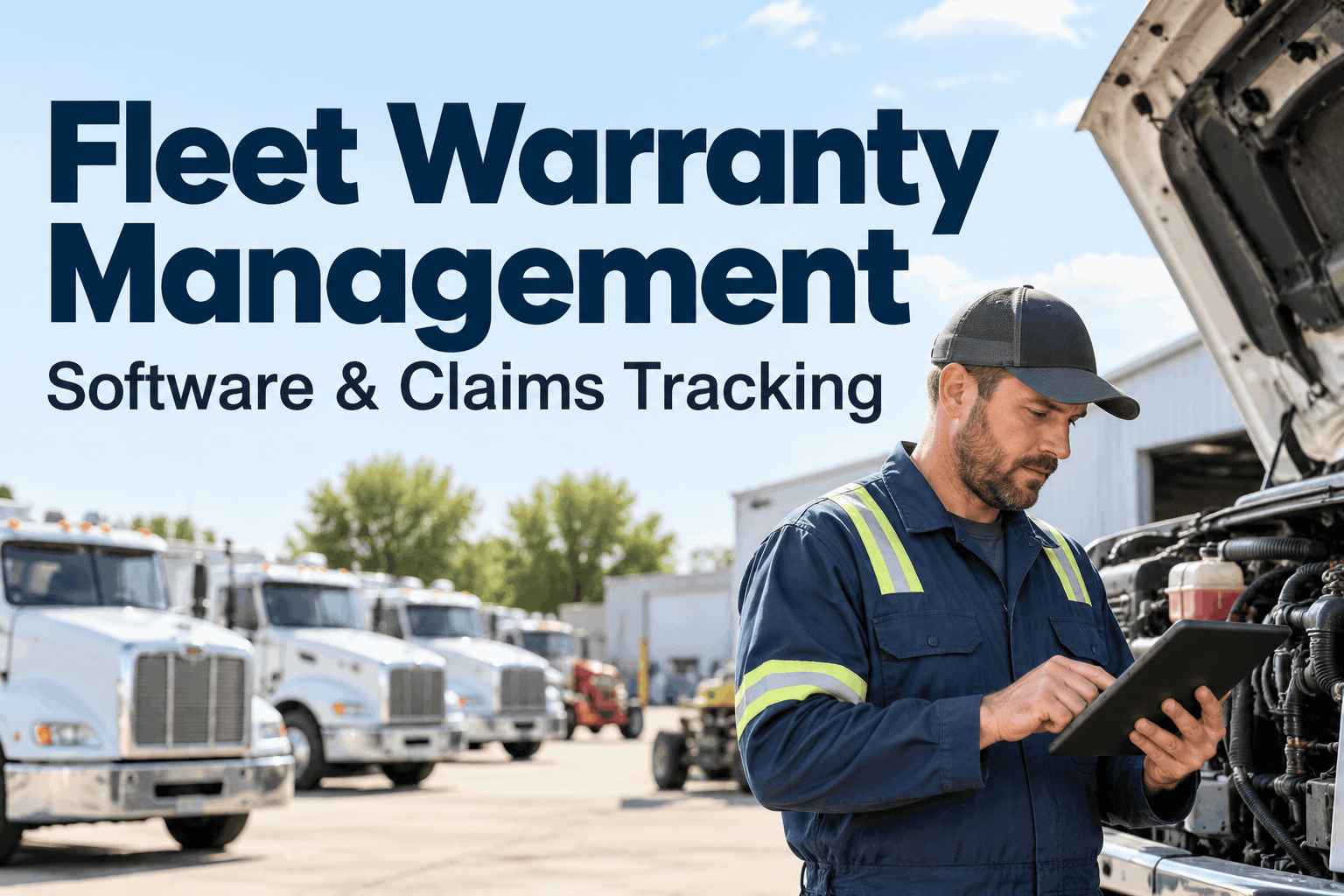
Fleet warranty management starts long before a claim is submitted. When a truck, trailer or heavy equipment component fails, the maintenance team needs to know whether coverage still applies, which repair records support the claim and who owns the follow-up. A repeatable process helps managers spot potential recovery opportunities without delaying necessary repairs.
Don't let a covered repair become an avoidable fleet expense.
Bring coverage dates, work orders, repair evidence and claim status into one practical warranty review process.
For fleet maintenance managers, warranty coordinators and repair supervisorsWarranty losses often start with missing information.Coverage is only useful when the repair team can recognize and document it.
A fleet may have vehicle warranties, replacement-part warranties and vendor workmanship guarantees with different dates, mileage limits, covered components and claim requirements. If those details live in separate spreadsheets, invoices and emails, a potentially eligible repair can be treated as an ordinary expense.
Maintenance managers need a way to flag a possible warranty at the time a defect is reported, collect the evidence during repair and track the decision afterward. The objective is not to claim every repair—it is to review eligible work consistently.
Is this repair a warranty candidate?Use a documented review—not assumptions—before submitting a claim.
Locate the OEM, component or vendor terms. If none apply, process as ordinary maintenance and document the finding.
Check dates, mileage or hours, covered failure modes, exclusions and any pre-authorization requirements.
Illustrative workflow. Always follow the actual warranty contract and the manufacturer's instructions; some repairs require authorization before work begins.
Three warranty records a fleet should keep distinct.Different coverage sources create different claim paths.
OEM vehicle coverage
May cover specified vehicle systems within stated time, mileage or operating-hour limits.
Replacement-part coverage
May apply to an installed component separately from the vehicle's original warranty.
Repair workmanship coverage
May apply to a prior service provider's workmanship under its stated guarantee.
Build a traceable path from defect to credit.Every handoff should leave a record the next person can use.
Identify
Log the reported defect and equipment ID through inspection or maintenance intake.
Evaluate
Review coverage terms, failure symptoms and authorization requirements.
Document
Capture diagnosis, parts, labor, photos and repair details in the work order.
Submit
Send evidence to the OEM or vendor through their required claims process.
Reconcile
Record approval, denial, reimbursement or credit and close the claim record.
See how HVI keeps fleet maintenance history organized.
Explore work orders, inspection records and vehicle maintenance workflows that support more consistent warranty reviews.
What should a claim evidence packet contain?A clear record reduces avoidable back-and-forth during review.
Make the work order do more than close the repair.
Technicians should record what failed, what tests were performed, what parts were installed and what corrected the fault. The warranty coordinator can then compare those facts with the coverage terms and assemble the required claim documentation.
Use a consistent claim reference and record the date submitted, reviewer, requests for more information and final financial result. HVI maintenance records can help provide a traceable repair history; the manufacturer or vendor remains responsible for adjudicating the claim.
Book a Demo to Explore HVI Work Order Records →Measure confirmed recovery, not just claims submitted.A useful warranty report separates opportunity, approval and actual credit.
Confirmed recovery rate = credits received ÷ submitted claim value
55.6% illustrativeFour metrics worth reviewing
All dollar values are fictional examples, not HVI customer results or industry benchmarks. Approved amounts may differ from cash or credits received.
What to look for in fleet warranty management software.Start with reliable maintenance data before assuming advanced claims automation.
Find previous failures, repairs, mileage or hours and service dates by unit.
Keep fault descriptions, technician notes, parts and costs associated with a work order.
Connect reported defects with the corrective work that followed.
Determine how coverage terms, deadlines and claim owners will be maintained.
Define submitted, pending, approved, denied and paid statuses—even if tracked externally.
Review repeat failures, repair spending and confirmed warranty credits.
HVI's work orders, inspections and maintenance history address the recordkeeping foundation. During a Book a Demo of HVI Fleet Maintenance session, confirm which warranty-specific fields, reminders and claim workflows fit your requirements rather than assuming direct OEM claim integration.
A simple 30-day warranty tracking rollout.Make ownership and evidence quality consistent before expanding the program.
Build the coverage register
Identify vehicles, major components, warranty terms and known expirations.
Standardize work order notes
Require failure details, test results, part numbers and supporting files.
Assign claim responsibility
Choose who checks eligibility, submits claims and follows up with vendors.
Review actual outcomes
Audit open claims, missed documentation and credits received.
Fleet warranty management FAQsQuick answers for maintenance managers.
What is fleet warranty management?
It is the process of tracking warranty coverage for vehicles, equipment and parts, identifying potentially eligible repairs, preparing claim evidence and recording the claim decision and any reimbursement.
How can a fleet tell if a truck repair is covered by warranty?
Check the relevant OEM, component or vendor warranty terms against the asset's in-service date, mileage or hours, failure type, exclusions and claim procedures. Confirm eligibility with the warranty provider.
What records are needed for a fleet warranty claim?
Requirements vary, but commonly include vehicle identification, failure description, diagnostic findings, work order, repair dates, part numbers, labor details, invoices and supporting photos or test results.
Can maintenance software automatically submit OEM warranty claims?
Not necessarily. Claim submission and OEM integrations vary by product and provider. HVI can support organized inspection, work order and repair records; confirm any specific claim automation capability during a demo.
Which warranty management KPI matters most?
Confirmed reimbursement or credits received is a useful financial outcome. Pair it with claim timeliness, approval rates, unresolved claims and reasons for denial to identify process improvements.
Turn maintenance history into a stronger warranty review process.
See how HVI helps your team organize fleet inspections, work orders and repair history so warranty opportunities are easier to investigate.