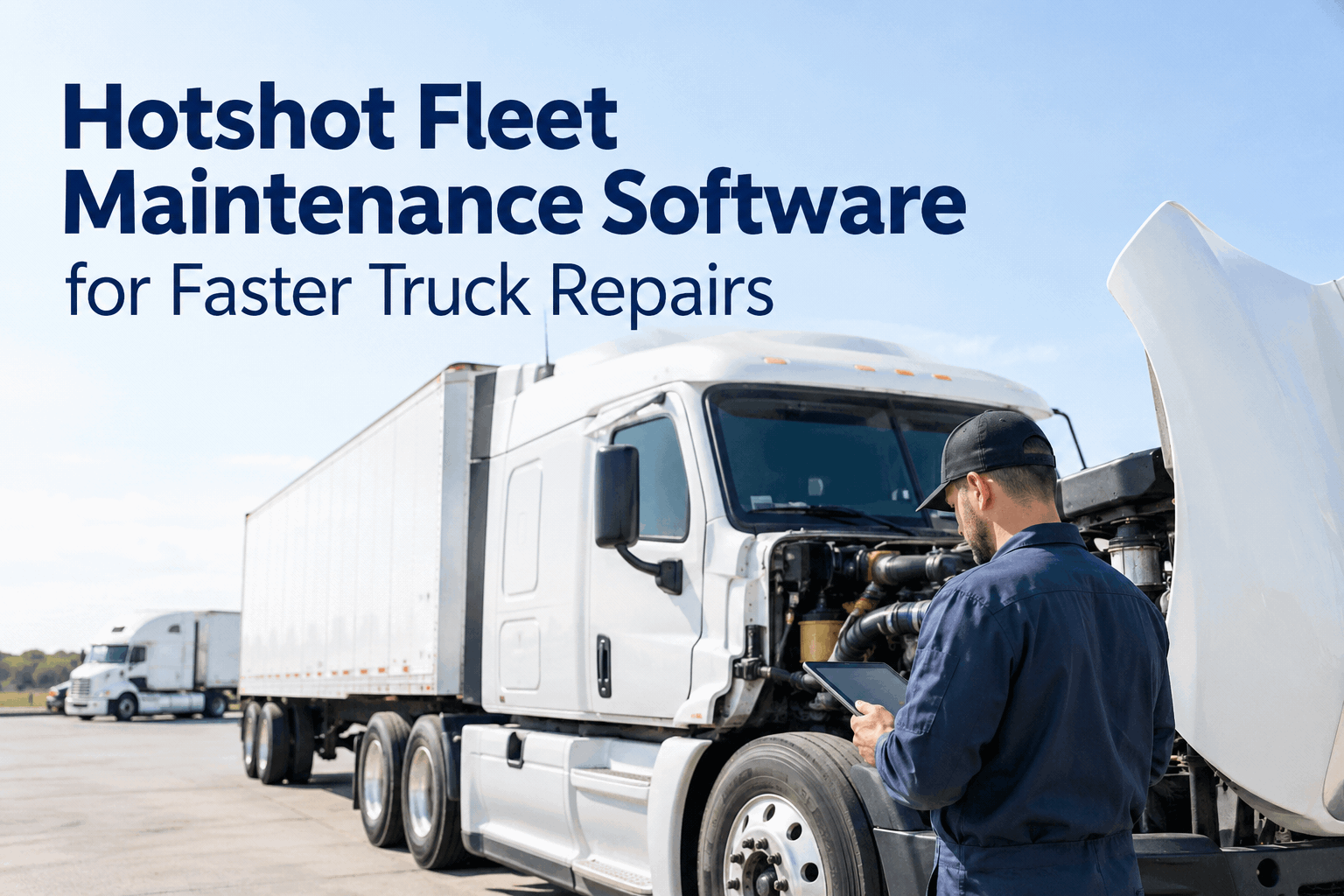
You're 320 miles from the drop, hauling a loaded gooseneck, and the trailer ABS light just lit up. The broker's already texting about ETA. The nearest shop that touches hotshot rigs is 90 miles the wrong direction. This is the reality hotshot fleet maintenance software is built for — and the one HVI was shaped around. Book a demo to see HVI configured for a hotshot operation
The maintenance software built for how hotshot actually runs
eDVIR, PM by mileage, defect-to-work-order in one tap, trailer tracking, and DOT-ready records — on the phone your driver already has.
No shop foreman
You are the mechanic, dispatcher, and driver. The software has to think like that.
Mileage swings monthly
One month 4k mi, the next 12k. Calendar-based PM breaks instantly.
Trailer is a revenue unit
Gooseneck brake magnets & bearings fail the loads, not the truck.
DOT scale, right now
90 days of DVIRs need to be exportable in three taps, not three emails.
Hotshot reality vs. big-fleet workflow
Big-fleet workflow
- Dedicated shop with technicians on payroll
- Dispatcher assigns inspections at terminal
- PM intervals set by months, not meter
- Trailers tracked separately from power units
- Paper DVIRs filed weekly at the office
- Multiple logins for maintenance, fuel, safety
Owner-driver workflow
- Mobile mechanic or outside shop for 90% of repairs
- Driver IS the inspector — from a phone, on-site
- PM intervals set by mileage — some trucks hit 12k/mo
- Truck + gooseneck tracked as one revenue unit
- eDVIR signed & timestamped at every pre/post-trip
- One app for inspection, defect, WO, fuel, compliance
One mobile app, one web view for the office, and the records a DOT officer or shipper audit asks for are already filed. Start a free trial and have your first truck live by tomorrow
The hotshot workflow HVI runs end-to-end
-
1
Pre-trip inspection on the phone
Driver walks the rig with HVI's hotshot DVIR template (truck + gooseneck in one form), flags any defect with a photo. Signed, timestamped, 4-6 minutes.
-
2
Defect auto-creates a work order
Any flagged defect spawns a work order in the back-office view instantly — no email forwarding. Severity decides whether the truck rolls or stays.
-
3
Repair logged against the asset
Mobile mechanic or outside shop updates the WO with parts, labor, and cost. The record attaches to that truck or trailer forever — resale, warranty, audit all pull from it.
-
4
PM triggers on mileage, not guesswork
Oil, DEF filter, grease, brake inspection — each scheduled against actual odometer. Reminder hits the phone before the interval, not after.
-
5
DOT & shipper audit ready, always
Signed DVIRs, PM compliance, repair history — exportable as PDF for any officer, broker, or insurance underwriter in under a minute.
No hardware install, no telematics required. Book a demo to see the hotshot workflow walked through live
The hotshot pre-trip checklist HVI loads out of the box
Truck (power unit)
- Engine oil & coolant level
- DEF level & cap seal
- Belts, hoses, visible leaks
- Air brake build-up & pedal travel
- Steer tire PSI & tread depth
- Drive tire pairs — match, wear, sidewalls
- Headlights, markers, 4-way flashers
- Mirrors, horn, wipers, windshield
- Fifth-wheel or gooseneck ball & chains
Gooseneck trailer
- Coupler, safety chains, breakaway cable
- Jack / landing gear operation
- All tires — PSI, tread, matched duals
- Spare tire present & inflated
- Hub temperature after warm-up
- Brake controller & brake magnets
- Trailer markers, brake lights, ABS
- Deck, side rails, winches, stake pockets
- Load securement — chains, binders, WLL
DOT & compliance
- Driver CDL / medical card in date
- USDOT & MC numbers displayed
- Current registration & IRP cab card
- IFTA decals current
- Insurance & cargo coverage proof
- Fire extinguisher, triangles, fuses
- Hazmat placards (if applicable)
- Previous DVIR & carry-over defects
- Load manifest & BOL on board
Every box signed. Every defect photo'd. Every form stamped with location + time. If the DOT officer at the next scale asks for 90 days of DVIRs, it's three taps on the phone. Start free — this checklist is loaded on day one
What one unplanned breakdown actually costs a hotshot
Per ATRI (American Transportation Research Institute), equipment-related failures are a top-five operating cost driver for small fleets, and unplanned downtime costs several times more per hour than scheduled maintenance. One avoidable breakdown wipes a full week of net margin. Book a demo to see HVI's PM scheduler mapped to a hotshot duty cycle
PM intervals that match hotshot mileage, not a calendar
Each line is a scheduled PM in HVI, with reminders landing on the driver's phone before the mile mark — usually the first visible win in week one.
From an owner-operator who runs the loop
I ran two trucks and a flatbed gooseneck on a notepad for four years. It worked until it didn't — I missed a trailer bearing grease, lost a hub on I-35, and the tow plus the missed drop cost me close to seven grand on one Tuesday. I started on HVI the next week.
What I didn't expect: it wasn't the inspections that saved me the most money, it was the mileage reminders. The oil change I'd been doing by feel was actually running 2,500 miles late most of the time. Fuel economy picked up almost half a mile per gallon. That one change paid for the subscription for the year.
What's inside HVI for hotshot operators
Electronic DVIR
Signed, timestamped, geo-stamped pre- and post-trip from the driver's phone.
One-tap work orders
Defects on inspection become work orders in the back-office instantly.
PM by mileage or hours
Scheduled against actual meter — fits a 4k-to-12k mile monthly swing.
Trailer tracking
Goosenecks, flatbeds, tilt decks tracked as independent revenue assets.
Fuel & cost per mile
Log fuel from the pump, see per-truck cost per mile trended monthly.
DOT audit-ready records
Export 6 or 12 months of DVIRs, PMs, and repairs as a signed PDF in a minute.
Mobile app for the driver, web dashboard for the owner. One system, not six. Start a free trial and have your fleet live by the weekend
Frequently asked questions
What makes HVI different from generic fleet maintenance software for a hotshot carrier?
HVI ships with a hotshot-specific DVIR template covering truck + gooseneck together, schedules PMs by mileage not calendar date, and runs end-to-end on a phone so the owner-driver needs no back-office staffer.
Do I need telematics or hardware installed to use HVI?
No. Start with just the mobile app and the web dashboard, logging meter readings manually during inspections. Telematics and ECM integrations are available later when you want automatic odometer sync.
Will HVI help me stay DOT compliant on inspections and records?
Yes. Every eDVIR is signed, timestamped, and geo-stamped; DVIRs, PM compliance, and repair history export as signed PDFs ready for a DOT officer, broker, or insurer.
Can HVI handle both my power units and my gooseneck trailers separately?
Yes. Trailers are tracked as independent assets with their own inspection history, PM schedules, tire records, and repair log — trailer brake and bearing work never gets missed.
How long does it take to get a 3-truck hotshot operation live on HVI?
Most small carriers run their first signed inspection within a day or two of signup. Full setup — trucks, trailers, PM intervals, driver logins — typically takes under two weeks working evenings.
Run your hotshot operation on one system, not six
Inspections, work orders, PM scheduling, trailer tracking, fuel log, DOT records — one mobile app for the driver, one web dashboard for the office. Stop losing loads to maintenance you never saw coming.
No credit card · No hardware install · First DVIR signed on day one
-
Mobile eDVIRPre & post-trip, signed on the phone
-
Defect → Work OrderOne tap, instant assignment
-
Mileage-based PMOil, brakes, bearings, tires on interval
-
Trailer trackingGooseneck as its own revenue asset
-
DOT audit export90 days of records in 3 taps
-
Fuel & cost per mileReal margin visibility per unit