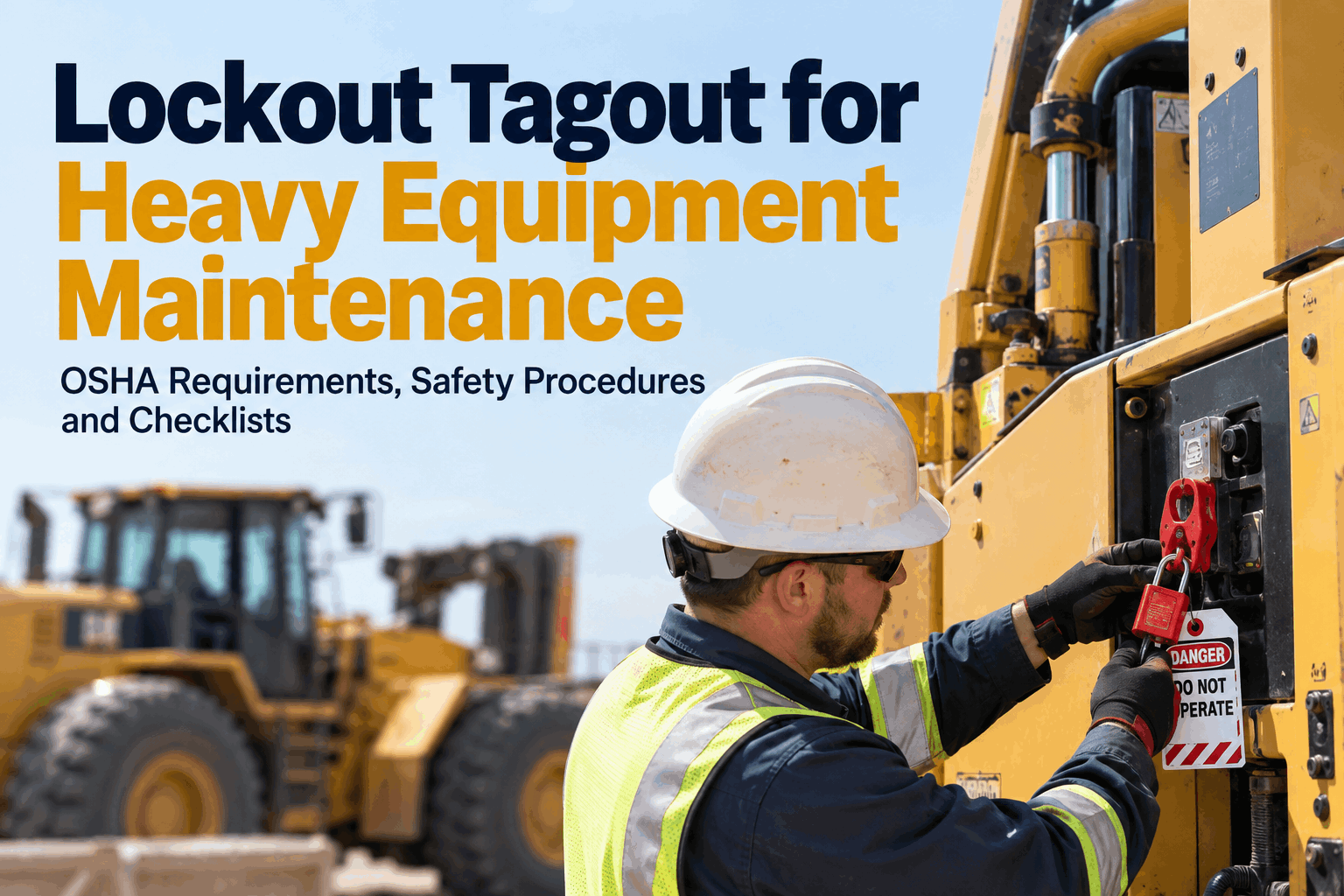
Lockout tagout for heavy equipment maintenance protects technicians from unexpected startup, machine movement and the release of stored energy. A parked machine can still contain pressure in hydraulic circuits, electrical power or suspended components. Effective hazardous-energy control requires an equipment-specific procedure, trained workers and verification before servicing begins.
Lockout Tagout for Heavy Equipment Maintenance
Control the energy you cannot see. Use a clear isolation process for hydraulics, electrical systems, moving components and stored pressure.
Key hazard groups are shown for learning purposes. Actual isolation points depend on the machine and its approved service procedure.
Why Turning Off the Engine Is Not Enough
Heavy equipment can retain dangerous energy even after shutdown. Before maintenance, identify every source that could start, move, drop, rotate or release pressure unexpectedly.
Hydraulic pressure
Trapped fluid and accumulators may move cylinders or release fluid under pressure.
Isolation + pressure controlElectrical energy
Batteries, auxiliary circuits and capacitors can remain energized after shutdown.
Approved electrical isolationMechanical motion
Rotating assemblies, springs and driveline parts may move when restraints are released.
Block + restrain movementGravity & stored loads
Raised booms, buckets, beds and attachments may fall without positive support.
Lower or mechanically supportFor consistent pre-maintenance checks, book a demo to see HVI digital safety inspection checklists.
A Seven-Stage Heavy Equipment LOTO Sequence
This is a planning framework, not a substitute for the machine's written energy-control procedure. Authorized employees must use the correct isolation devices and methods for each asset.
Prepare & identify
Review the job, energy sources, affected personnel and equipment-specific procedure.
Notify & shut down
Inform affected workers and stop the machine through its normal shutdown process.
Isolate every source
Operate approved energy-isolating devices; an ignition switch or control button alone may not be sufficient.
Apply lockout devices
Authorized employees apply assigned locks and tags according to the energy-control program.
Control stored energy
Relieve, restrain or otherwise render residual energy safe using the approved procedure.
Verify isolation
Test for a zero-energy state using safe, specified methods before beginning service.
Restore deliberately
Clear the work area, account for workers and tools, and remove devices only under authorized procedures.
Make Equipment Isolation Findings Easier to Follow Up
Use HVI to organize equipment safety inspections, capture defects and maintain corrective-work records across your fleet.
Hydraulic Lockout Tagout: The Hazards That Get Missed
Hydraulic systems deserve particular attention on excavators, loaders, cranes and service trucks. Pressure can remain in accumulators, hoses and cylinders after the engine stops.
Before opening a hydraulic circuit
- Identify all pressure sources and accumulators.
- Lower or positively support raised attachments as required.
- Use manufacturer-approved pressure-release steps.
- Verify isolation before loosening fittings or lines.
- Never check for pressurized leaks with bare hands.
Hydraulic fluid injection is a medical emergency, even when the skin wound looks small.
Heavy Equipment Lockout Tagout Checklist
A digital checklist can make preparation and follow-up easier to document. It must reflect the actual machine, authorized procedures and applicable energy-control requirements.
Before maintenance
Before & after service
Want repeatable equipment safety records? Sign up free to organize inspection checklists with HVI.
Where OSHA Lockout Tagout Rules Apply
OSHA's general-industry hazardous-energy standard, 29 CFR 1910.147, addresses servicing and maintenance where unexpected energization, startup or release of stored energy could injure employees. Applicability depends on the work and workplace.
29 CFR 1910.147
Addresses energy-control procedures, employee training, periodic procedure inspections and device removal safeguards when applicable.
Check the governing rules
Construction operations and specialized equipment may fall under other OSHA provisions. Do not assume one standard covers every repair situation.
Not every task is identical
Limited exceptions and alternative requirements can apply. Determine coverage through a task-specific hazard assessment and qualified safety review.
For work under 1910.147, periodic inspections of energy-control procedures are generally required at least annually. That is different from inspecting every machine only once per year.
Turn Equipment Safety Findings into Traceable Maintenance Work
HVI can support the documentation surrounding an energy-control program. Authorized personnel still perform isolation, verification, lock removal and restart.
Wheel Loader • WL-208
Maintenance ReviewSuspected hydraulic leak recorded. Equipment held for assessment under the site's approved procedure.
Heavy Equipment Lockout Tagout FAQs
What is lockout tagout for heavy equipment?
It is a hazardous-energy control process used to prevent unexpected startup, movement or energy release during servicing. The exact procedure depends on the machine, the work and applicable requirements.
Does turning off the engine complete lockout tagout?
No. Shutdown alone may leave electrical, hydraulic, mechanical or gravitational hazards. Required isolation, stored-energy control and verification must be completed using the approved procedure.
How is hydraulic pressure controlled during LOTO?
Authorized personnel identify pressure sources, isolate the system, safely control trapped energy and verify the condition using manufacturer-approved methods. Accumulators and raised loads require particular attention.
Does OSHA require annual LOTO inspections?
Under 29 CFR 1910.147(c)(6), employers must conduct periodic inspections of applicable energy-control procedures at least annually to ensure the procedure and requirements are followed.
Can HVI replace a lockout tagout permit or physical lock?
No. HVI can support inspection and maintenance documentation. It does not physically isolate energy, verify zero-energy conditions or replace authorized workers, protective devices or required procedures.
Make Heavy Equipment Safety Checks Easier to Document
Keep inspection findings, equipment defects and corrective maintenance history organized—so your team can focus on doing the work safely.