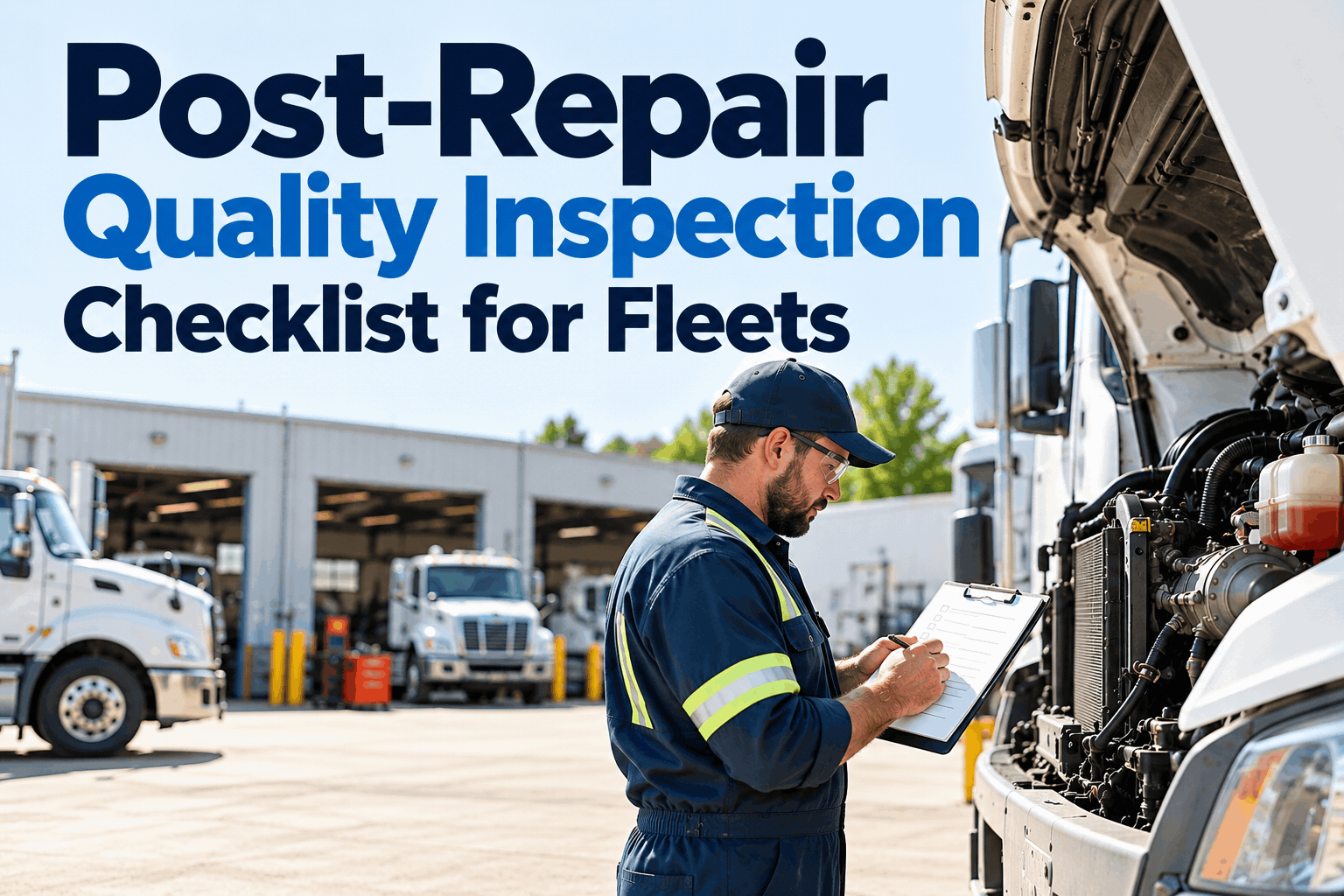
That truck may be repaired, but is it ready to leave the bay? A post repair quality inspection catches the difference between a completed work order and a verified fix. Use this fleet-shop checklist to test the original complaint, check affected systems, document evidence and make a defensible return-to-service decision. Sign Up Free for HVI repair inspections to start organizing the record.
Repair complete ≠ ready for service.
Build a repeatable quality gate between the last wrench turn and the next dispatch.
What is a post-repair quality inspection?A second look at the repair, not another routine walkaround
A post-repair quality inspection is a documented verification that the reported fault was corrected, the repair did not create a new hazard and the vehicle meets the fleet's return-to-service criteria. It takes place after repair work and before release. Its scope depends on the work performed: a lamp replacement requires different evidence than brake, steering or hydraulic repairs.
What was done?
Technician notes, parts, labor, diagnostic steps and repair completion.
Did it work?
Functional result, safety checks, exceptions, verifier and release decision.
Keep these connected but distinct. A work order can describe a completed repair while a quality check still finds a problem. HVI's inspection and maintenance records can help keep the evidence associated with the right asset.
The post-repair inspection checklistSix checks that adapt to the vehicle, defect and repair type
Use these as a core framework, then add manufacturer procedures, shop standards and any legally required tests. A qualified technician must determine which tests are safe and appropriate.
Review the reported symptom, defect history and actual repair; verify the specific complaint is resolved.
Check fasteners, routing, clamps, guards, fittings and signs of leaks or interference.
Use the approved test method for the repaired system; document results and measurements when needed.
Confirm nearby wiring, hoses, guards and components were not damaged during the repair.
Capture readings, notes, photographs where useful, remaining concerns and any rework required.
Record the verifier, date, disposition and responsible release authority; never treat a failed safety check as a pass.
Match the test to the repairFour shop scenarios, four different ways to verify success
Brake repair
Inspect installation and leaks; complete applicable brake system checks and controlled testing under shop procedure.
Evidence: test results + verifierTire or wheel work
Confirm correct fitment, inflation, fastening procedure and any required retorque follow-up.
Evidence: specs + check recordElectrical repair
Test the repaired circuit, connected functions, protective devices and harness routing.
Evidence: functional resultHydraulic repair
Inspect hose routing, fittings and leaks; perform safe pressure/function checks per equipment procedure.
Evidence: leak and function checkFor any repair affecting a safety-critical system, follow the applicable manufacturer procedure and fleet release standard. A generic visual inspection alone is not sufficient.
The repair-release decisionOne failed check changes the route
Record evidence and obtain the required release authorization.
Keep the unit on hold, document the failure and assign corrective work.
Release approval is an operational decision made by authorized personnel. HVI can support the inspection and repair documentation, but the software does not replace qualified judgment or legally required inspection and certification.
What a useful quality-control record looks likeA complete example that can be reviewed weeks later
Brake lamps operate after repair, but the left rear indicator intermittently fails during the function test.
A useful record identifies the asset and work order, states the acceptance test, records the result, assigns follow-up work and identifies who made the release decision. See how HVI handles the earlier stage in routing inspection defects into shop work orders, or Book a Demo of HVI repair and inspection records.
How to reduce repeat repairs without adding paperworkFocus on failures that reveal a process problem
Review the right signals
Track repairs that return with the same complaint, quality checks that fail on first verification, and jobs reopened after release. Review trends by repair category and asset rather than using one fleet-wide number to judge every technician.
First-pass verification rate = repairs passing their initial quality check ÷ repairs checked × 100. Repeat-repair rate = qualifying repeat repairs ÷ completed repairs × 100. Define your repeat window and exclusions before comparing periods.
When a failure repeats, ask whether the root cause was missed, the repair procedure was incomplete, parts were unsuitable or the acceptance test was too narrow. HVI's inspection and maintenance history can support this review when records are consistently entered.
Build the process into everyday shop operationsA simple rollout that respects technician time
Prioritize brakes, steering, wheels, hydraulics and other safety-critical systems.
Define what a pass requires, who can verify and when independent review is needed.
Link findings, photos or readings to the vehicle and repair history.
Use repeat findings to improve diagnosis, training and checklists.
Keep the process proportionate: a minor non-safety repair may need a short functional check, while complex work demands a deeper procedure. For broader repair documentation, see fleet work order best practices.
Post-repair quality inspection FAQsAnswers for fleet shop managers and maintenance supervisors
What is a post repair quality inspection?
It is a documented check after maintenance to confirm that the original defect was corrected, the repaired system performs as required and the vehicle meets the shop's release criteria.
Who should perform the post-repair inspection?
A competent, authorized person should perform the checks. Higher-risk repairs may warrant independent verification by a qualified supervisor or second technician, depending on company policy and applicable requirements.
Is a post-repair inspection the same as a DVIR?
No. A post-repair quality check verifies specific completed work. A driver vehicle inspection report serves a separate purpose and is subject to applicable regulations. The two records can support each other but should not be treated as interchangeable.
What happens if the repair fails quality control?
Record the failed test, keep the vehicle out of service when necessary, assign corrective work and repeat the relevant verification before an authorized person approves release.
How can fleet inspection software help?
Digital inspection and maintenance records help teams associate quality findings with the correct vehicle, maintain consistent checklists, record corrective work and review repeat issues. Book a Demo of HVI post-repair inspection tracking to evaluate the workflow.