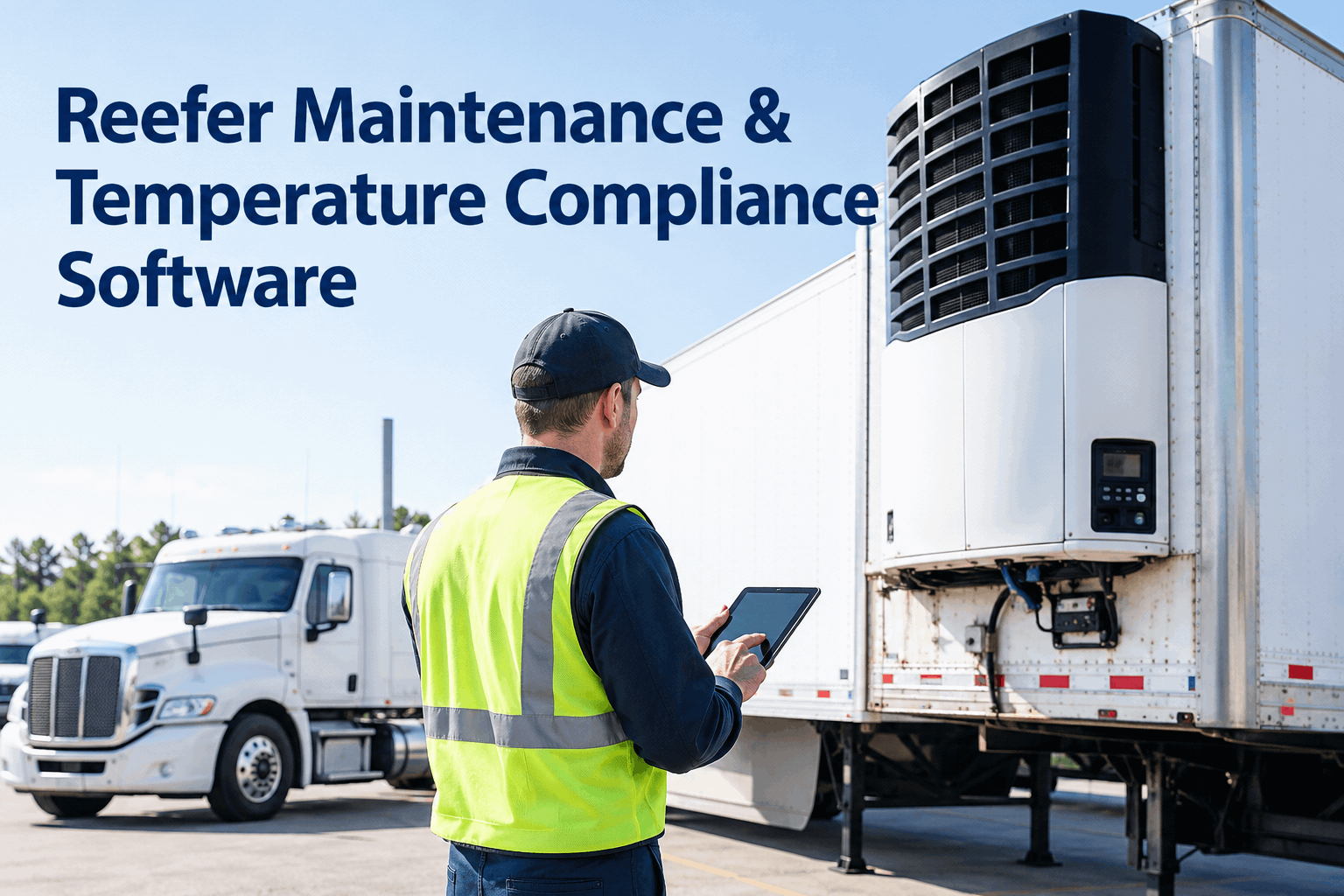
A reefer has one job: hold the number. Miss the setpoint by a few degrees for a few hours and you don't get a breakdown — you get a rejected load, a claim, and an angry shipper. Reefer maintenance and temperature compliance software is about protecting that number before a run: keeping the unit reliable enough to hold, and keeping the records that prove it was fit to. Book a demo to see reefer reliability tracked per unit.
Reefer Reliability Software That Protects the Temperature, Not Just the Trailer
Keep every refrigerated unit fit to hold its setpoint — hour-based PM, pre-cool and pre-trip checks, defect tracking, and audit-ready service records, so the cold chain holds and the claim is defensible.
The trap with a reefer is that it looks fine right up until it isn't. The unit runs, the trailer rolls, and the only sign something's wrong is a temperature the shipper catches at the door. Everything useful happens before that — which is why reliability is really about the systems that hold the number.
What actually breaks the cold chain on a reefer
A temperature excursion is almost never the thermostat lying — it's one of a handful of physical systems failing to do its part. Map them and the reefer maintenance job gets clear: every one of these branches is something you can catch on a pre-trip or a PM, before the load is riding on it.
Notice that none of these is the temperature sensor itself — they're maintenance and inspection items. That's the whole reason reefer reliability lives in a maintenance system: HVI runs hour-based preventive maintenance on the unit and captures the pre-trip reefer inspections that catch each branch early. For the unit-level service-management side, see our refrigerated trailer and reefer unit maintenance guide. Book a demo to map your own failure branches.
When a load's temperature gets questioned, your records answer
Reliability keeps the load cold; compliance proves you did your part when someone asks. A rejected-load dispute almost always comes down to one fork — and which side you land on is decided long before the trip, by whether the maintenance and check records exist.
PM current, pre-cool logged, pre-trip signed, no open defect on the unit. You can show the reefer was fit to hold temperature.
Defensible — the claim has somewhere to go that isn't youNo proof the unit was serviced, pre-cooled, or checked. "We always do it" isn't evidence, and the gap points straight back at the carrier.
Exposed — the rejected load becomes your costHVI keeps the maintenance, pre-trip, and defect records that support a temperature-compliance case. It does not log the box temperature in transit — that comes from the reefer's own recorder or download; HVI organizes the service and inspection evidence around it. Exact cold-chain and FSMA record obligations depend on your operation.
The records don't cost extra effort — they're the by-product of running the checks and services you already do, captured digitally instead of on a clipboard. Explore HVI's analytics and reporting for reefer defect and PM trends, or sign up free and start a defensible reefer record.
The reefer "protect-the-number" readiness checklist
Two moments decide whether a reefer holds: before the load goes on, and across the service life of the unit. Run both columns — the unchecked lines are where a cold-chain failure gets its start.
- Box pre-cooled to setpoint before loading, and it's logged
- Door seals, gaskets, and curtains checked for a tight close
- Unit runs clean on start — no alarms, no odd noise, fuel adequate
- Air chute and return clear so cold air actually circulates
- Recorder working and the pre-trip is signed against the unit
- PM is scheduled by the unit's engine hours, not trailer mileage
- Refrigerant, belts, and the defrost cycle are serviced on interval
- Insulation and panel damage is logged and repaired, not ignored
- Any flagged defect becomes a work order before the next dispatch
- Every service and check is kept as a dated record per unit
Both columns green is a reefer you can trust with a load and defend in a dispute. HVI builds both as the work happens. See our full reefer inspection checklist for the line-by-line version, or book a demo and build these checks into your pre-trip.
What one reefer failure actually costs
A down engine is one truck's problem; a down reefer is a whole trailer of product at risk. That leverage is why reliability spend on a refrigeration unit pays back faster than almost anywhere else on the fleet.
A single rejected temperature-sensitive load can be worth more than a year of that unit's maintenance.
Beyond the product, a spoilage claim and disposal costs land on the carrier without a defensible record.
Cold-chain shippers drop carriers over repeat excursions — the lost lane outlasts the single load.
Illustrative of widely reported cold-chain cost patterns; your product value, lanes, and shipper terms set the actual figures. The point is directional, not a quoted number.
Spend a little on keeping the unit fit, or a lot on the load it spoils — that's the real trade. See how transportation fleets run HVI, or book a demo to protect your reefer uptime.
From a fleet manager running a refrigerated lane
We lost a full load of produce to a reefer that threw an alarm nobody had logged on the last pre-trip — and because we couldn't show the unit had been checked, the claim was ours. That one load cost more than servicing that reefer for two years. Now the pre-cool, the pre-trip, and the hour-based PM all sit in one system, and when a shipper questions a temperature I can pull the unit's whole record in a minute. The cold chain holds, and so does our side of the argument.
Reefer reliability and temperature compliance software FAQs
Does HVI record the trailer temperature in transit?
How is reefer maintenance different from trailer maintenance?
How does this help with a temperature-excursion claim?
What reefer checks should happen before every load?
How quickly can we get reefers set up in HVI?
Make every reefer reliable and every run defensible
Keep each refrigeration unit fit to hold its setpoint with hour-based PM, pre-cool and pre-trip checks, and defect tracking — and keep the dated records that defend a temperature-compliance case. Protect the load and your side of it.
No credit card · Hour-based reefer PM & pre-trips from day one · Audit-ready records
- Hour-based PM on the reefer unit
- Pre-cool & pre-trip checklists
- Defect → work order on each unit
- Reefer fuel & service logs
- Audit-ready records per unit