A garbage truck isn't one machine — it's two. There's the chassis that drives the route, and the hydraulic packer body bolted on top that does the actual work. Most fleet software only tracks the first, so the body quietly racks up failures nobody logged until a tailgate won't close mid-route. Refuse carrier software has to see both. Book a demo to track the whole truck, chassis and body.
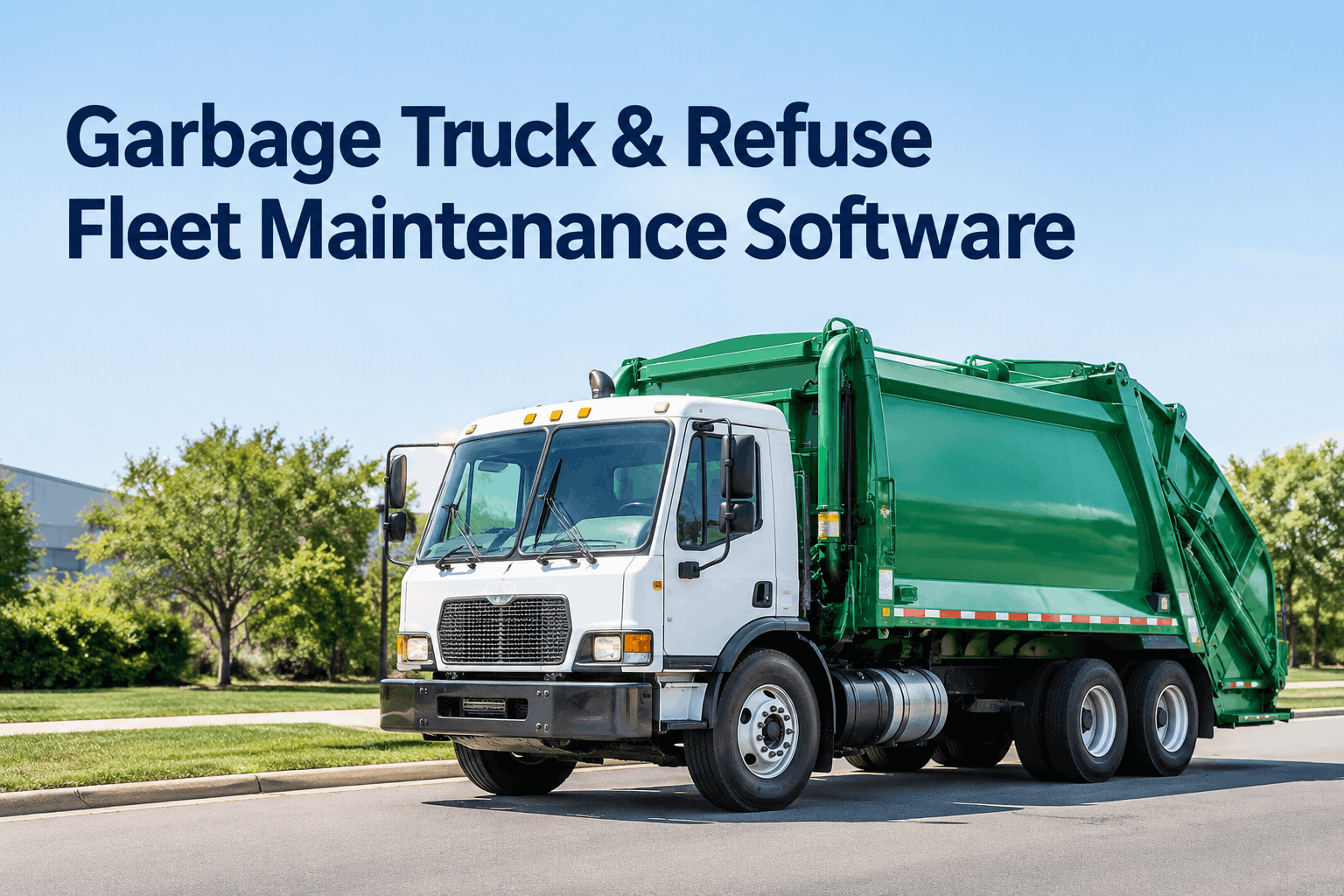
Garbage Truck & Refuse Fleet Maintenance Software
One record for the whole truck — the chassis that drives the route and the packer body that does the work — so nothing on either half slips through to a mid-route breakdown.
Two machines, one VINwhy refuse fleet software can't just watch the chassis
A linehaul tractor is a chassis and a cab. A garbage truck is a chassis and a hydraulic refuse machine — a packer, a lift, a hopper, a tailgate — working harder than the engine ever does. Track only the chassis and you're blind to half the truck.
- Brakes hammered by hundreds of stops a shift
- Tires and suspension on rough alleys and curbs
- Engine, DPF and driveline on constant idle-and-go
- Packer and hydraulics cycling all shift long
- Lift arms, forks or tippers taking every load
- Tailgate seals, cylinders and hoses under pressure
A dropped packer cylinder or a leaking tailgate strands a truck just as fast as a blown brake — and costs just as much in a missed route. HVI puts both halves on one unit record, so garbage truck maintenance software finally covers the whole truck. The quickest way to see it is to book a demo on your refuse fleet.
The second machine, system by systemthe refuse-body components a chassis checklist ignores
The body is where refuse-specific downtime lives. These are the systems a waste hauling software setup has to inspect and maintain on their own schedule — because none of them show up on an odometer, and all of them wear by cycles and load rather than by miles driven.
HVI lets you build a refuse-body inspection template so every one of these is on the walkaround, separate from the chassis lines. You can set up garbage-truck inspection templates that cover both machines in one pass.
The full-truck pre-trip checklistchassis and body, both walked before the route
This is the two-sided walkaround a refuse carrier software workflow should enforce every morning — the chassis lines a DVIR already has, plus the body lines it's usually missing.
- Brakes and slack adjusters within spec
- Tires, wheels and suspension sound
- Lights, mirrors and backup alarm working
- Fluids, leaks and DPF status checked
- Packer cycles fully, blade and wear-bars sound
- Lift arms, forks or tipper move freely, pins tight
- Hydraulic level good, no hose or cylinder leaks
- Tailgate seals, latches and hopper floor clear
Each line can require a photo or signature, so a finished pre-trip is proof both machines were checked. Start free and build your full-truck pre-trip on your own units.
One unit, both work orders on filechassis and body repairs that don't live in two places
When a body defect and a chassis service land on the same truck, they shouldn't live in two systems and two memories. HVI keeps the whole history on one unit record — so you see the real cost and downtime of each truck, body included, and you can bundle the repairs into a single shop visit instead of pulling the same truck off the route twice.
The same records roll into fleet-wide maintenance and downtime reporting — so you can finally see how much of your refuse downtime is body versus chassis, and plan parts for both.
From a fleet manager who stopped losing routes to the bodywhere the hidden downtime actually was
Our old system tracked the truck like it was a dump truck with a box on the back. Then we started logging the body separately and it was obvious — half our mid-route failures were packer hydraulics and tailgate seals, not the chassis at all. Now the driver checks both before the route, a body leak is a work order before the truck leaves the yard, and I can see which units are eating us on the body side. We quit discovering problems at the curb.
Frequently asked questionsgarbage truck & refuse fleet maintenance software
What does refuse carrier software do that a generic fleet tool doesn't?
It tracks the packer body as its own machine — hydraulics, lift, tailgate and hopper — alongside the chassis, on one unit record. Generic tools watch only the chassis and miss half the failures. Book a demo to see both halves tracked.
How is this different from your refuse truck maintenance page?
This page is the chassis-and-body angle. For the duty-cycle PM detail, see refuse truck maintenance software; for inspections specifically, waste fleet inspection software. Book a demo to map it to your whole operation.
Can it schedule preventive maintenance on hydraulic and engine hours?
Yes — PM triggers on engine hours, mileage or usage, so a packer or hydraulic service fires on real duty cycle, not the odometer. See preventive maintenance or book a demo.
Does it keep DVIRs audit-ready for DOT?
Yes — every pre-trip is a signed digital DVIR with photos, stored and pullable on demand for both chassis and body. Book a demo to see the compliance record.
How fast can a waste fleet get started?
Most fleets run full-truck pre-trips on day one and add PM and reporting over the first weeks. Start free with your unit list, or book a demo for a guided setup on your garbage trucks.
Stop losing routes to the half nobody's watching
Garbage truck and refuse fleet maintenance software that treats the truck as what it is — a chassis and a hydraulic refuse machine — with both on one record. Full-truck pre-trips, PM on real duty cycle, and body and chassis work orders in one place.
No hardware · Covers chassis and body · Refuse-specific inspection templates