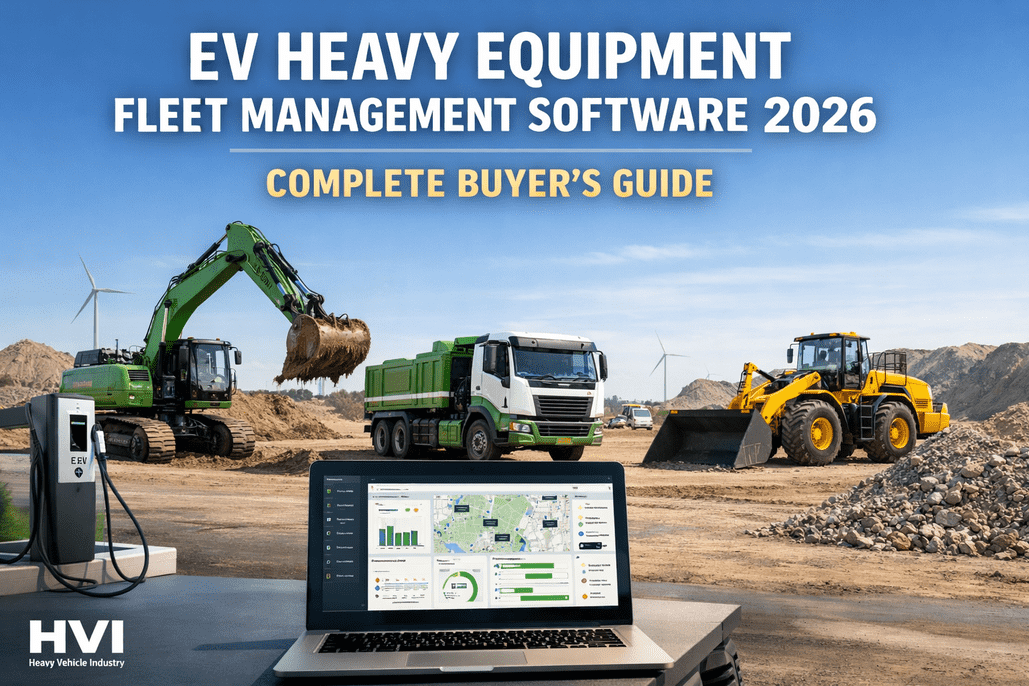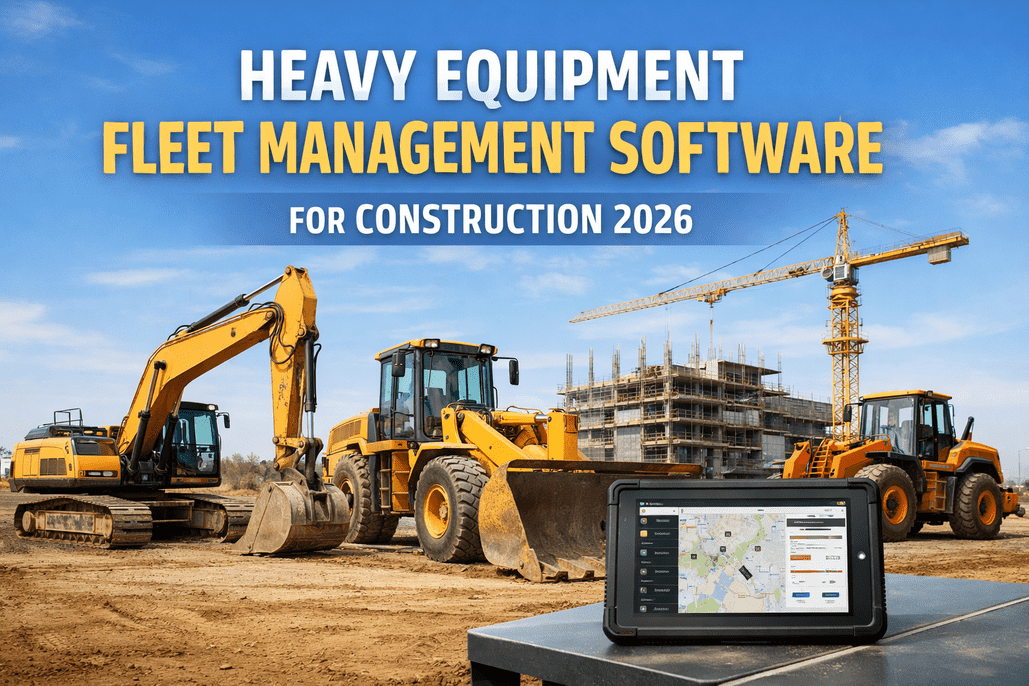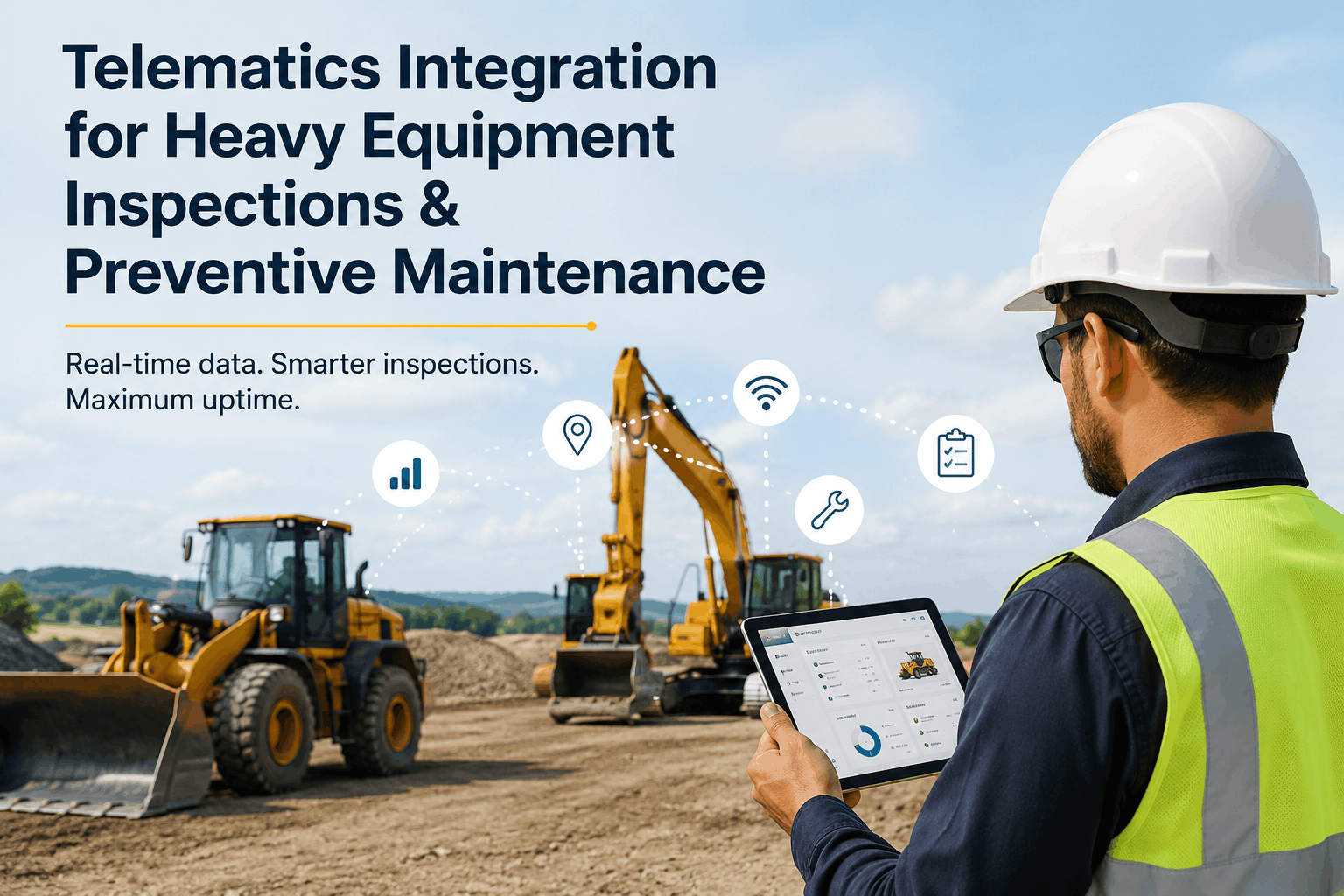
Your machines are already talking. A modern excavator, loader, or dozer streams its engine hours, fuel burn, location, idle time, and fault codes off the machine in real time — the data exists. The problem is where it lives: in a Caterpillar portal, a John Deere portal, a Komatsu portal, and a Volvo portal, each with its own login, its own field names, and its own units. Meanwhile your inspections live in a separate system entirely, so the engine hours your telematics knows precisely never actually trigger the PM that's due, and a fault code that fired at 2pm doesn't become a work order until an operator happens to mention it. Telematics integration closes that gap. Using the ISO 15143-3 (AEMP 2.0) standard — the vendor-neutral protocol that gives every OEM the same data format — a single platform can pull every brand's machine data into one view and wire it directly into the inspection and maintenance workflow. The result: PM scheduled on real hours instead of guesses, fault codes that auto-create work orders, and a fleet you manage from one screen instead of five portals. HVI's inspection and maintenance software integrates telematics so machine data and inspections finally work as one system. This guide explains the standard, the data, and what integration actually changes. schedule a 30-minute walkthrough with our team to see it connected to your fleet.
Your machines stream their own data. Integration turns it into scheduled PM and instant work orders.
HVI pulls engine hours, fuel, location, and fault codes from every OEM via the ISO 15143-3 standard — then wires them straight into PM scheduling and inspections, so one platform replaces five OEM portals.
The problem: data everywhere, working nowhere
Telematics data is abundant. The trouble is that it's fragmented across OEM portals and disconnected from the workflows that should consume it. That fragmentation is what integration solves.
Five portals, five logins — each OEM exposes data differently, with varying parameter names, intervals, and units of measure
Hours known but unused — telematics knows exact engine hours, yet PM still fires on a calendar guess in a separate system
Fault codes go unseen — a diagnostic trouble code fires on the machine but never reaches the maintenance team in time
Inspections sit apart — failed inspection items and machine data live in separate tools that never talk to each other
The standard that makes it work: ISO 15143-3 (AEMP 2.0)
Mixed-fleet integration was once a custom-mapping nightmare. The ISO 15143-3 standard — established through the AEMP — fixed that by giving every manufacturer one common data format.
One format, every OEM
AEMP 2.0 / ISO 15143-3 defines a uniform JSON and XML payload with the same field names and types across brands — Caterpillar, John Deere, Komatsu, Volvo, and more. Vendor-neutral by design.
No custom mapping
Because every OEM speaks the same schema, a platform merges all brands into one dataset without per-manufacturer translation — eliminating the integration work that used to make mixed fleets impossible to unify.
Structured & reliable
The standard specifies which parameters are required, which are optional, and how often they're delivered — so the data feeding your maintenance and analytics is consistent and trustworthy across the fleet.
The practical payoff: instead of logging into a separate portal for each manufacturer, you see GPS location, engine hours, fault codes, and fuel burn for every machine side by side on a single pane of glass — regardless of brand.
The five data points integration delivers
ISO 15143-3 defines the core parameters every mixed fleet should ingest. These five are the foundation of telematics-driven maintenance — and each one changes how the inspection workflow operates.
Location & geofence
Real-time GPS with timestamp — track asset position, enforce geofences, validate deployment, and react fast to theft or unauthorized use across every job site.
Operating hours
Cumulative engine-on time — a far more accurate basis for service intervals and warranty compliance than calendar schedules. The single most valuable input for PM.
Fuel consumed
Lifetime fuel burn plus last-24-hour usage — powers cost-per-hour analysis and flags abnormal spikes from leaks, excessive idling, or misuse in near real time.
Fault & event codes
Generic DTCs and manufacturer-specific fault alerts — the early warning of abnormal operation that lets you act before a fault becomes a breakdown.
Machine status & idle time
Run versus idle state and engine condition data — calibrated hour meters distinguish true runtime from idle, exposing the utilization gap that calendar-based tracking never sees and that quietly inflates fuel cost and accelerates wear.
Pulling five brands' data into one schema is the foundation — wiring it into inspections is where it pays off. sign up for a free HVI account and connect your mixed fleet through the ISO 15143-3 standard, or schedule a live demo to see live engine hours trigger a PM and a fault code open a work order.
What integration actually changes in the workflow
OEM portals stop at basic service reminders. Wiring telematics into the inspection and maintenance platform is where the real transformation happens — these are the four shifts.
PM on real hours, not guesses
Live engine hours flow straight into PM scheduling, so each service fires on actual usage — never wastefully early, never dangerously late. No manual meter readings, no missed intervals.
Fault codes auto-create work orders
A diagnostic trouble code becomes a maintenance work order the moment it fires — not when someone remembers to report it. The early warning reaches the team in time to act.
Inspections and data, one record
A failed inspection item and the machine's telematics live on the same asset record, so a flagged defect and a fault code together build one complete picture of machine health.
Toward predictive maintenance
With hours, fuel, idle, and fault trends in one place, patterns that predict failure surface before symptoms show — the step from reactive and preventive toward genuinely predictive maintenance.
From machine to work order, automatically
The whole value of integration is that the chain runs without a human in the middle. Here's the loop that replaces the OEM-portal-to-spreadsheet-to-memory handoff.
Machine streams data
Engine hours, fuel, location, and fault codes flow off every OEM machine in the ISO 15143-3 format — no manual entry.
HVI ingests & unifies
Every brand lands in one schema on one screen, tied to each asset record alongside its inspection history.
PM & work orders fire
Hours trigger the due PM; a fault code opens a work order — automatically, the moment the data says so.
OEM portals typically stop at "oil change due at X hours." An integrated platform adds the workflow — configurable PM schedules and automatic maintenance requests from failed inspections or fault codes. That's the line between data you can see and data that acts. sign up free and turn your telematics feed into automatic PM and work orders.
OEM portals vs. HVI telematics integration
OEM portals show you data. An integrated inspection and maintenance platform acts on it — across every brand, wired into the workflows that keep machines running.
Separate OEM portals
- A different login and layout for every manufacturer
- Data shown, but disconnected from inspections and PM
- Basic reminders only — "service due at X hours"
- Fault codes seen in a portal nobody checks hourly
- Engine hours re-entered by hand into the maintenance system
- No single view of a mixed-brand fleet
With HVI integration
- Every OEM in one schema on a single pane of glass
- Hours and fault codes wired into PM and work orders
- Configurable PM that fires on real usage automatically
- Fault codes auto-create work orders the moment they fire
- Telematics and inspection history on one asset record
- Mixed fleet managed from one platform, not five portals
OEM portals collapsed into one platform — that's what the ISO 15143-3 standard makes possible, and what integration delivers. Engine hours drive PM, fault codes open work orders, and inspections share one record with machine data. HVI turns the data your machines already stream into automatic, fleet-wide maintenance.
Frequently asked questions
What is telematics integration for heavy equipment?
Telematics integration is the process of pulling the data your machines already generate — engine hours, fuel burn, location, idle time, and fault codes — out of individual OEM portals and into a single platform where it connects to your inspection and maintenance workflows. Modern equipment streams this data in real time, but by default each manufacturer keeps it in its own portal with its own format. Integration consolidates every brand into one view and, more importantly, wires that data into action: engine hours trigger preventive maintenance, fault codes create work orders, and machine data shares a record with inspection results. HVI integrates telematics so the data and the workflow finally operate as one system instead of two disconnected ones.
What is the ISO 15143-3 (AEMP 2.0) standard?
ISO 15143-3, also known as AEMP 2.0, is the international mixed-fleet telematics standard established through the Association of Equipment Management Professionals. It defines a uniform data format — a common JSON and XML payload with the same field names and types — that every major OEM supports, including Caterpillar, John Deere, Komatsu, and Volvo. Before it, integrating a mixed-brand fleet meant custom-mapping each manufacturer's unique data structure. The standard eliminates that by making the data vendor-neutral, so a single platform can merge all brands without per-OEM translation. It specifies five core parameters — location, operating hours, total fuel consumed, fuel used in the last 24 hours, and machine status — plus fault codes. HVI uses this standard to connect mixed fleets cleanly.
How does telematics improve preventive maintenance?
By replacing guesswork with real data. The biggest gain is engine-hour-based scheduling: instead of servicing on a calendar estimate, PM fires on the cumulative operating hours the machine actually reports, which is a far more accurate basis for service intervals and warranty compliance. That means no machine is serviced wastefully early or dangerously late, and no meter reading has to be logged by hand. Beyond hours, fault codes provide early warning of abnormal operation before it becomes a breakdown, and fuel and idle trends flag developing problems. With all of this in one platform, you move from reactive repair toward preventive and ultimately predictive maintenance — catching patterns that signal failure before symptoms appear. HVI schedules PM automatically from the integrated hour feed.
Can I integrate equipment from different manufacturers?
Yes — that's exactly what the ISO 15143-3 (AEMP 2.0) standard was created for. Because it defines a common data format that Caterpillar, John Deere, Komatsu, Volvo, and other major OEMs all support, a single platform can ingest every brand using the same field names and units, with no custom mapping per manufacturer. Instead of logging into five separate OEM portals, you see GPS location, engine hours, fault codes, and fuel burn for the whole mixed fleet side by side on one screen. This vendor-neutral approach is what makes unified mixed-fleet management practical. HVI connects to AEMP-compliant equipment so your Cat, Deere, Komatsu, and Volvo machines all report into one system.
How does HVI use telematics integration?
HVI brings telematics and inspections into one workflow. Using the ISO 15143-3 standard, it ingests engine hours, fuel, location, idle time, and fault codes from every OEM in your fleet and presents them on a single pane of glass, tied to each machine's asset record alongside its inspection and service history. The integration then drives action: live engine hours schedule preventive maintenance automatically, fault codes and failed inspection items create work orders the moment they occur, and hour, fuel, and fault trends build toward predictive maintenance. You manage a mixed-brand fleet from one platform instead of five portals, with machine data and inspection data finally working together. It works across Cat, John Deere, Komatsu, Volvo, and other AEMP-compliant equipment. schedule a demo and we will set it up around your specific fleet and OEM mix on the call.
Turn the data your machines already stream into automatic maintenance.
HVI integrates telematics through the ISO 15143-3 standard — pulling engine hours, fuel, location, and fault codes from every OEM into one platform and wiring them into PM scheduling, inspections, and work orders. Stop logging into five portals and re-entering hours by hand. Sign up free and make your machine data finally work for you.
No credit card required · Live in under two weeks · Telematics + PM scheduling + fault-code work orders + inspections in one platform