Importance of 36,000-Mile Vehicle Inspections
Major Fluid Service Milestone
- The 36,000-mile interval requires complete transmission fluid and filter change plus differential oil replacement, protecting critical drivetrain components from premature wear. These fluid changes remove accumulated contaminants and restore proper lubrication properties, ensuring reliable power delivery and extending component life. Sign up for free to automate 36K mile service scheduling and track fluid change intervals across your fleet.
Complete System Verification
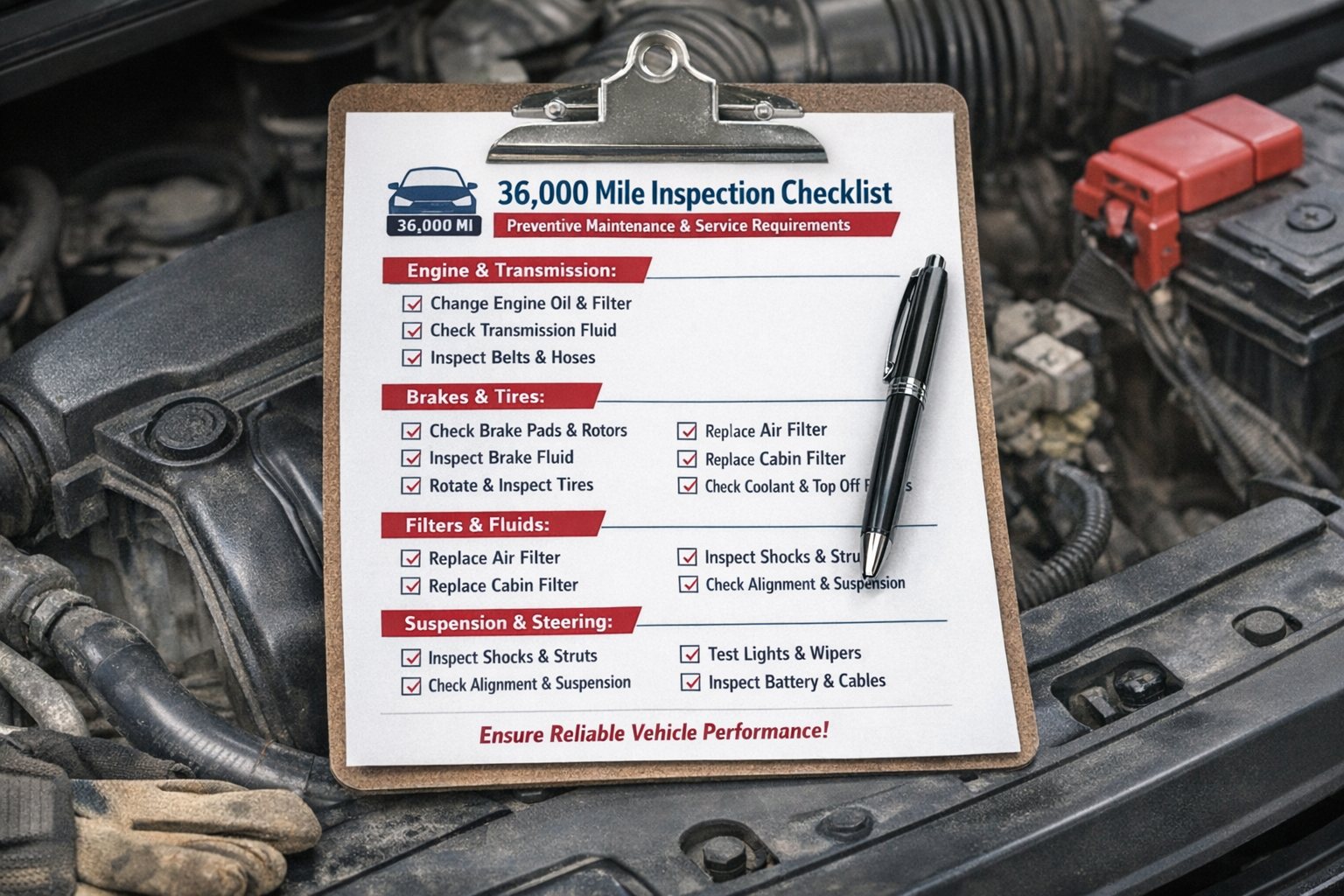
- Comprehensive 36K inspection includes air system components, brakes and suspension, engine performance, HVAC systems, steering and front axle, fuel delivery, and safety equipment. This thorough evaluation ensures all systems meet operational standards and identifies components requiring attention.
Air System & Safety Compliance
- Detailed air system inspection verifies compressor operation, governor adjustment, brake valves, and air tank drainage. Combined with comprehensive safety equipment checks, this service ensures passenger protection and regulatory compliance for commercial vehicle operations.
Performance Validation Through Road Testing
- Mandatory road testing at 36,000 miles verifies all systems function correctly under actual operating conditions after service completion. Road tests confirm transmission shifting quality, brake performance, engine response, and overall vehicle drivability, ensuring vehicles are truly roadworthy. Schedule a demo to see how digital inspection systems document road test results and track vehicle performance trends.
1. Air System
Air system component inspection and verification:
2. Air System (Continued)
Additional air system components:
3. Brakes & Suspension
Comprehensive brake and suspension system inspection:
4. Coach Exterior
Exterior component and safety equipment inspection:
5. Coach Interior
Interior systems and passenger safety verification:
6. Engine
Engine service and maintenance tasks:
7. Front Axle
Front axle and steering system inspection:
8. Fuel System
Fuel system component inspection and maintenance:
9. Heating & Air Conditioning
HVAC system comprehensive inspection:
10. Heating & Air Conditioning (Continued)
Additional HVAC system inspection items:
11. Power Train
Power train component inspection and service:
12. Rear Axle
Rear axle differential service:
13. Road - Test
Operational performance verification:
14. Suspension
Suspension system inspection and adjustment:
15. Transmission
Transmission fluid service and system inspection:
Why Use Digital Fleet Management?
HVI App Benefits for 36,000-Mile Vehicle Inspections:
- ✓ Automated 36K mile service reminders based on vehicle odometer readings
- ✓ Track transmission and differential fluid change intervals across fleet
- ✓ Document road test results and operational performance verification
- ✓ Monitor air system component condition and maintenance history
- ✓ Generate comprehensive inspection reports for regulatory compliance
- ✓ Maintain complete service records accessible for warranty claims and audits
Frequently Asked Questions About 36,000-Mile Inspections
1. Why are transmission and differential fluids changed at 36,000 miles?
By 36,000 miles, transmission and differential fluids have accumulated heat-related degradation, moisture contamination, and metal particles from normal wear. Complete fluid and filter changes restore proper lubrication properties, remove contaminants, and protect gears and bearings from premature failure. This service is critical for maintaining smooth shifting and extending drivetrain component life.
2. What air system components are inspected at 36K miles?
Air system inspection includes air strainer and fittings, all brake valves, hydra-vac unit operation, interlock systems, expello valve electrical operation, battery racks, voltage regulator, compressor mount security, and governor mount and adjustment. This comprehensive check ensures air brake systems maintain proper pressure and respond safely to driver inputs.
3. How long does a complete 36,000-mile inspection take?
A thorough 36,000-mile inspection typically requires 4-6 hours, including transmission and differential fluid services, complete air system checks, engine tune-up for gasoline vehicles, comprehensive HVAC inspection, and mandatory road testing. Additional time is needed if components require repair or replacement based on inspection findings.
4. Why is road testing mandatory after 36K service?
Road testing verifies that all systems function properly under actual driving conditions after major fluid services and comprehensive inspection. The test confirms transmission shifting smoothness with fresh fluid, brake response, steering feel, engine performance, and overall vehicle drivability. Road testing ensures vehicles are truly roadworthy and identifies any issues requiring additional attention. Start your free trial to document road test results and track vehicle performance trends across your fleet.
5. What HVAC system items are inspected at 36,000 miles?
HVAC inspection includes evaporator and condenser coil condition, refrigerant pressure testing, blower motor operation, alternator charge rate and brushes, condenser fan function, hoses and compressor seal integrity, compressor mounting, dehydrator and strainer, pressure safety switches, belt tension, heater core leak checks, auxiliary water pump, freon level, compressor oil level, and clutch adjustment. This thorough evaluation ensures passenger comfort year-round.
6. How does digital tracking improve 36K service quality?
Digital systems automatically schedule 36K service based on actual mileage, provide standardized checklists ensuring transmission and differential services aren't missed, track fluid change history for warranty compliance, document road test results with performance data, generate comprehensive reports for management review, and maintain searchable service records accessible for future reference or regulatory audits.
Take Action: Execute Comprehensive 36K Service
Download our FREE 36,000 Mile Inspection Checklist and ensure complete maintenance including critical transmission and differential fluid services. Digital inspection management provides automated scheduling, standardized documentation, and comprehensive reporting. Experience systematic 36K service tracking that protects drivetrain investments, maintains air system reliability, and ensures optimal vehicle performance through thorough preventive care.
Comprehensive 36K Service with Critical Fluid Changes
Complete 36,000-mile maintenance: transmission and differential fluid service, air system inspection, engine tune-up, HVAC evaluation, road test verification—all documented digitally for optimal fleet reliability.