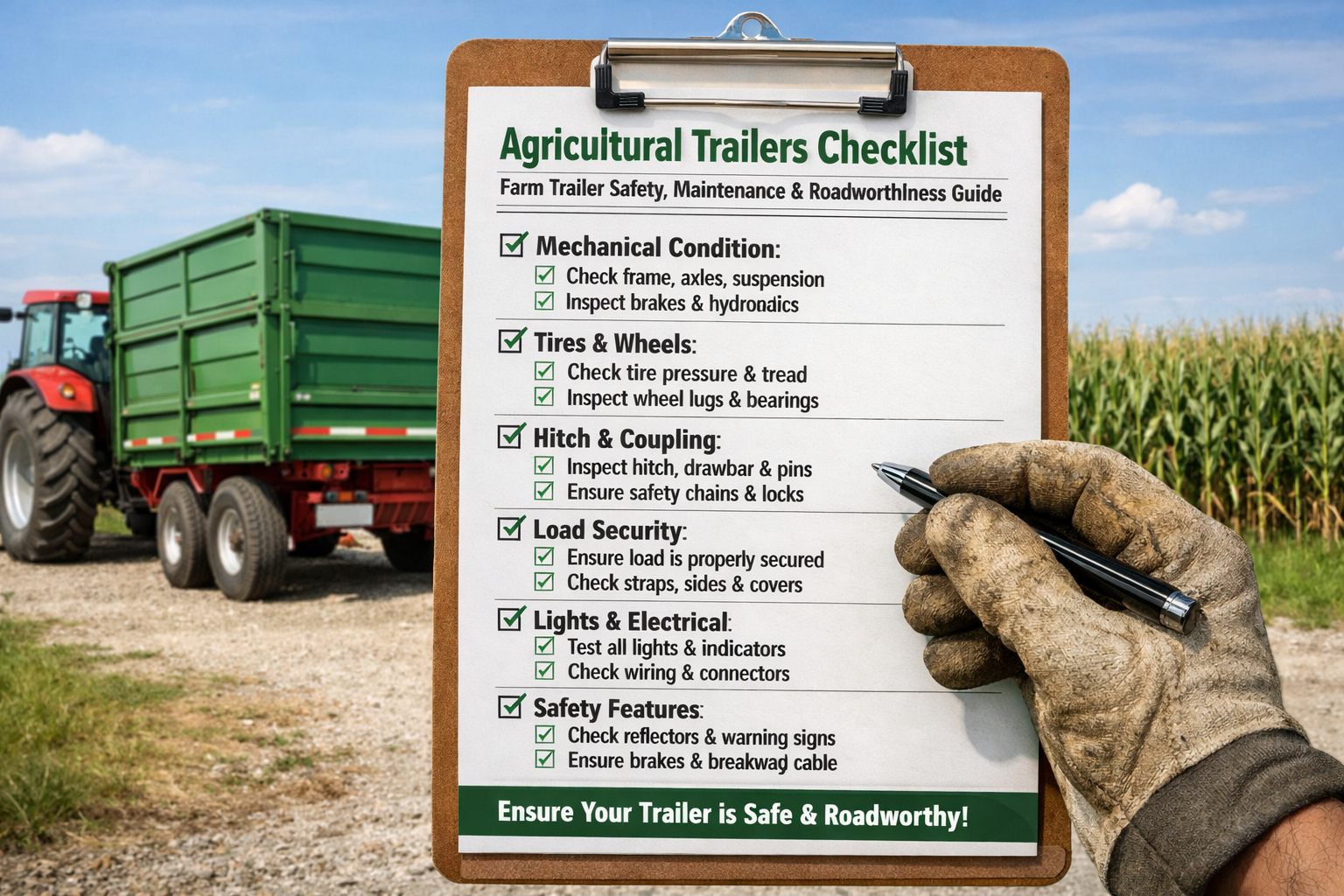
Importance of Agricultural Trailer Inspections
Farm Safety
- Regular trailer inspections prevent accidents during transport of equipment, livestock, and harvested crops, protecting farm workers and public road users from equipment failures.
Operational Reliability
- Systematic maintenance ensures trailers remain operational during critical farming periods like planting and harvest seasons, preventing costly downtime when equipment is needed most.
Compliance & Liability
- Documented trailer inspections demonstrate compliance with roadworthiness regulations, reduce liability exposure, and provide evidence of due diligence in farm operations. Start your free 14-day trial to maintain digital inspection records with timestamps, photo documentation, and automated compliance reporting.
Equipment Longevity
- Proactive inspection and maintenance extends trailer service life, protects agricultural investment, and maintains resale value of farm equipment through proper care and documentation.
1. Body
Critical body and structural components to inspect:
2. Brakes
Comprehensive brake system inspection procedures - brake failures are a leading cause of agricultural trailer accidents on public roads. Systematic brake inspections protect your drivers, other road users, and your farm's liability exposure. Schedule a 30-minute demo to see how automated inspection reminders ensure your trailers' brake systems are checked before every road trip.
3. Lights - Check condition, security, operation
Essential lighting system components to inspect:
4. Miscellaneous
Additional components and safety features to verify:
5. Structural
Critical structural components to examine:
6. Wheels and Tyres
Wheel and tire inspection requirements:
Why Use Digital Fleet Management for Agricultural Trailers?
HVI App Benefits for Farm Trailer Management:
- ✓ Schedule and track regular trailer inspections automatically
- ✓ Document brake, lighting, and structural condition digitally
- ✓ Maintain compliance records for roadworthiness regulations
- ✓ Receive alerts for upcoming inspection due dates
- ✓ Create audit-ready safety documentation for farm operations
- ✓ Track maintenance history across multiple trailers
Frequently Asked Questions About Agricultural Trailer Inspections
1. How often should agricultural trailers be inspected?
Agricultural trailers should be inspected before each use for basic safety checks (lights, tires, hitch), with comprehensive inspections performed at least quarterly or as specified by manufacturer guidelines and local regulations. High-use trailers during busy farming seasons may require more frequent inspections.
2. What are the most critical safety checks for farm trailers?
The most critical safety checks include brake system functionality, tire pressure and condition, hitch and coupling integrity, lighting operation, load restraint anchor points, and structural soundness. PTO guards and hydraulic systems also require careful attention on specialized agricultural trailers.
3. Are agricultural trailers subject to DOT regulations?
Agricultural trailers used exclusively on private farm property may have exemptions, but trailers operated on public roads are typically subject to DOT and state vehicle regulations including proper lighting, brakes, registration, and safety requirements. Check your specific state and local regulations for detailed requirements.
4. What brake system maintenance is required for agricultural trailers?
Brake system maintenance includes inspecting air or hydraulic lines for wear and leaks, testing brake performance regularly, checking ABS functionality if equipped, inspecting brake couplings, verifying parking brake operation, and ensuring all connectors are secure and functioning properly.
5. How does digital inspection software help manage farm trailers?
Digital inspection software automates inspection scheduling, creates standardized checklists accessible from mobile devices, maintains permanent safety records, tracks maintenance history, provides photo documentation of issues, and generates compliance reports for regulatory requirements and insurance purposes. Sign up for a free trial and get instant access to customizable agricultural trailer checklists, mobile inspection capabilities, and automated compliance tracking - no credit card required for your 14-day trial period.
6. What are common causes of agricultural trailer failures?
Common failure points include worn wheel bearings from field use, corroded brake components from agricultural chemicals and moisture, damaged hydraulic systems from debris, cracked welds from heavy loads, deteriorated tires from sun exposure and chemical contact, and lighting failures from moisture and vibration.
Take Action: Implement Proper Agricultural Trailer Inspections
Download our FREE Agricultural Trailers Checklist and start implementing systematic inspection processes for your farm equipment. Digital fleet management streamlines trailer safety compliance, ensures inspection consistency across your operation, and provides the documentation needed for liability protection and regulatory compliance. Keep your agricultural trailers road-ready and operating safely throughout every season.
Keep Your Agricultural Trailers Road-Ready and Compliant
Comprehensive inspection coverage: body structure, brakes, lighting, hitch safety, load restraints, and roadworthiness—all tracked automatically with digital fleet management.