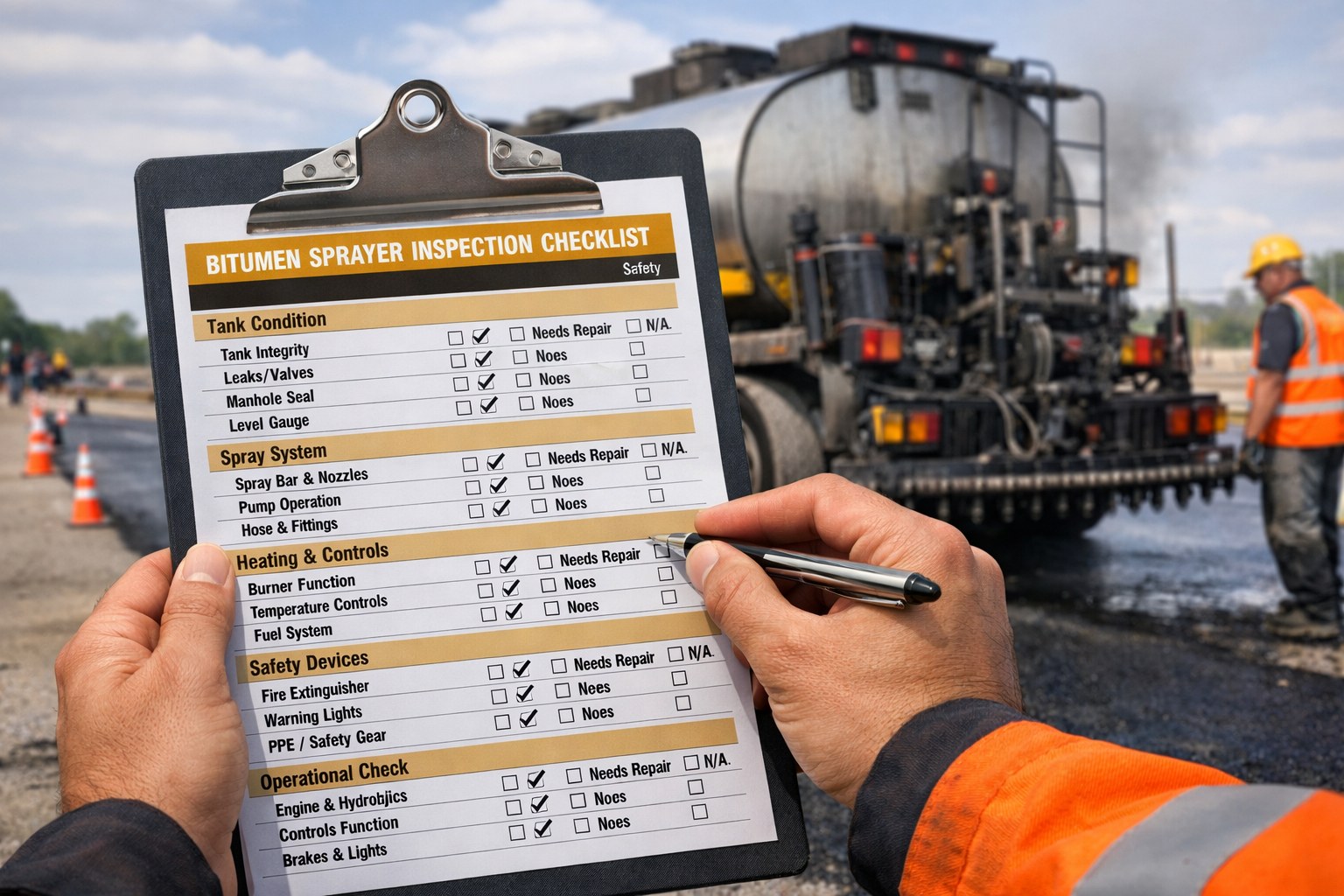
Importance of Bitumen Sprayer Inspections
Application Quality
- Comprehensive sprayer inspection ensures spray bars distribute bitumen uniformly, heating systems maintain proper temperatures, pumps deliver consistent flow rates, and all systems function correctly, producing quality tack coats and surface treatments that meet specifications and bond properly with pavement layers.
Worker Safety
- Systematic inspection protects workers from hot bitumen burns, prevents tank failures releasing heated material, verifies heating system integrity preventing fires, ensures control systems function properly, and maintains all safety equipment protecting personnel during spraying operations.
Operational Readiness
- Regular inspection verifies engine performance, transmission condition, electrical system functionality, spray system operation, and overall equipment readiness, ensuring sprayers can begin operations immediately when needed for time-sensitive paving schedules.
Equipment Reliability
- Proactive inspection prevents unexpected breakdowns during critical spraying operations, identifies developing issues before failures halt production, maintains heating and pumping systems properly, and extends sprayer service life through early problem detection and proper maintenance.
1. CLASSIFICATION OF EQUIPMENT
Equipment condition assessment and deployment status. Schedule a 30-minute demo to see how digital platforms streamline sprayer inspections with component-specific checklists, deployment readiness tracking, maintenance alerts, and automated service scheduling based on operating hours and application volumes.
2. CONTROL SYSTEM
Spray and engine control verification:
3. ELECTRICAL SYSTEM
Electrical power and charging system inspection:
4. ENGINE
Engine performance and condition verification:
5. FUEL INJECTION SYSTEM
Fuel system components inspection:
6. LUBRICANT CONDITION
Fluid quality verification:
7. LUBRICANT OIL SYSTEM
Engine lubrication system inspection:
8. STRUCTURE
Tank, chassis, and spray system structural verification:
9. TRANSMISSION (POWER TRAIN)
Power transmission and compressor system inspection:
Why Use Digital Fleet Management for Bitumen Sprayer Inspections?
HVI App Benefits for Road Construction Spray Equipment:
- ✓ System-specific checklists covering all critical sprayer components
- ✓ Temperature and application rate tracking for quality control
- ✓ Photo documentation of tank condition, burner operation, and system integrity
- ✓ Hour-based maintenance scheduling for engine and spray system components
- ✓ Deployment readiness classification for project allocation
- ✓ Complete inspection history for warranty compliance and safety audits
Frequently Asked Questions About Bitumen Sprayer Inspections
1. How often should bitumen sprayers be inspected?
Bitumen sprayers require daily pre-operation inspections before heating and spraying covering tank integrity, heating system function, spray bar condition, burner operation, and safety systems. Comprehensive periodic inspections following manufacturer intervals (typically every 100-250 operating hours) verify engine performance, transmission condition, electrical systems, and all spray system components. Additional inspections are required after tank repairs or heating system work.
2. What are the most critical safety items to inspect on bitumen sprayers?
Critical safety items include tank integrity preventing hot bitumen leaks, burner system condition preventing fires, heating system controls maintaining proper temperatures, pressure relief valves functioning correctly, spray bar and nozzle condition preventing uncontrolled spray, emergency shutoff systems, and hose integrity preventing ruptures. Hot bitumen creates severe burn hazards making systematic safety verification essential.
3. Why is the classification system important for sprayer management?
Equipment classification determines deployment status: "Good mechanical condition" sprayers are ready for immediate project assignment; "Needs minor repairs" equipment requires light maintenance but can be mobilized with short notice; "Needs major repairs/overhaul" equipment must go to base workshop and is unavailable for projects. This classification helps fleet managers allocate sprayers efficiently across multiple paving projects and plan maintenance resources.
4. What causes most bitumen sprayer failures during operations?
Common failure causes include burner system malfunctions preventing proper heating, pump failures stopping material flow, spray bar clogging from contaminated bitumen, heating system failures causing material solidification, engine overheating, transmission or clutch failures, and control system malfunctions affecting application rates. Most failures are preventable through systematic inspection identifying developing problems before critical spraying operations.
5. How does digital inspection tracking improve sprayer operations?
Digital platforms maintain system-specific checklists ensuring comprehensive verification, track heating temperatures and application rates for quality control, document tank and burner condition with photos, schedule maintenance based on operating hours and material volumes, classify equipment deployment readiness for project planning, generate automatic service alerts preventing overdue maintenance, and maintain complete inspection history for safety audits and warranty compliance. Sign up for a free trial and get instant access to customizable bitumen sprayer inspection checklists, temperature tracking, and deployment classification management - no credit card required for your 14-day trial period.
6. What maintenance is unique to bitumen sprayers compared to other equipment?
Unique maintenance includes burner system cleaning and adjustment, spray bar nozzle inspection and replacement, heating coil condition verification, tank insulation integrity, bitumen pump maintenance, spray pattern verification, pressure gauge calibration, and thorough cleaning to prevent material buildup. Hot bitumen creates specialized maintenance requirements different from standard construction equipment, requiring personnel trained on hot material handling systems.
Take Action: Implement Systematic Bitumen Sprayer Inspections
Download our FREE Bitumen Sprayer Inspection Checklist and establish comprehensive inspection programs that ensure safe operation and quality material application. Digital fleet management maintains consistent system verification, tracks deployment readiness, schedules preventive maintenance, and prevents failures during critical spraying operations. Protect your workers and ensure successful paving projects.
Ensure Safe Bitumen Application with Comprehensive Equipment Inspections
Complete coverage: tank integrity, heating systems, spray controls, engine performance, transmission, electrical systems—all verified systematically with digital inspection tracking for safe and effective bitumen spraying operations.