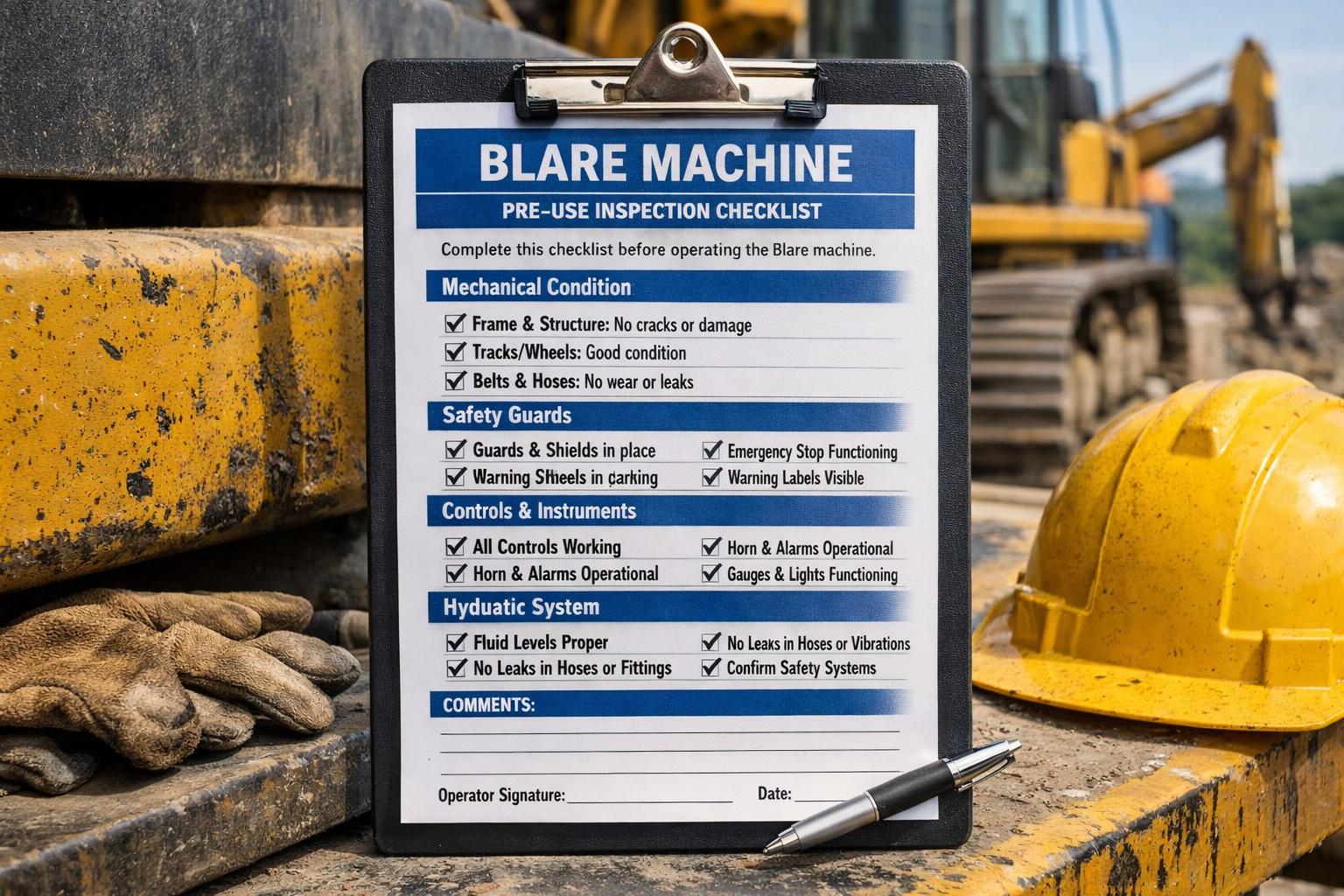
Importance of Blare Machine Pre-Use Inspections
Operator Safety
- Pre-use inspection verifies critical safety systems including shields, guards, safety screens, emergency controls, and protective equipment function properly before operation begins, preventing accidents and protecting operators from mechanical hazards, pinch points, and moving components during machine operation.
Equipment Reliability
- Systematic pre-operation verification catches developing issues before operation begins, prevents mid-shift breakdowns that halt production, ensures hydraulic systems operate properly, verifies mechanical adjustments are correct, and maintains equipment performance throughout demanding work cycles.
Regulatory Compliance
- Pre-use inspections satisfy OSHA and manufacturer requirements for equipment verification before operation, create documented safety records, demonstrate due diligence, and provide defensible inspection history during safety audits and incident investigations.
Production Efficiency
- Proactive pre-use inspection identifies adjustment needs, verifies proper settings, catches wear before failure, prevents quality issues from misadjusted components, and ensures equipment operates at peak efficiency from operation start through completion.
1. AUDIT
Initial equipment condition verification. Schedule a 30-minute demo to see how digital platforms streamline pre-use inspections with mobile checklists, component-specific verification, defect photo documentation, and automated alerts ensuring inspections occur before every shift.
2. BALE EJECTOR
Hydraulic ejector system comprehensive verification:
3. CHAINS
Drive chain system inspection:
4. MISCELLANEOUS
General equipment components and systems verification:
5. PICK-UP
Material pickup system inspection:
6. PLUNGER HEAD
Compression system verification:
7. TWINE KNOTTER
Twine tying system comprehensive inspection:
8. WIRE TWISTER
Wire tying system verification:
Why Use Digital Fleet Management for Pre-Use Inspections?
HVI App Benefits for Equipment Pre-Use Safety Programs:
- ✓ Mobile pre-use checklists ensuring inspections occur before every shift
- ✓ Photo documentation of safety guards, adjustment settings, and component condition
- ✓ Immediate supervisor alerts when critical defects are identified
- ✓ Automatic equipment lockout preventing operation until defects are resolved
- ✓ Complete inspection history demonstrating pre-use safety compliance
- ✓ Recurring defect identification prompting permanent corrective action
Frequently Asked Questions About Blare Machine Pre-Use Inspections
1. Why are pre-use inspections critical for blare machines?
Pre-use inspections verify equipment is safe to operate before work begins, identify adjustment needs that affect performance, catch developing problems before operation starts, ensure safety guards and shields are in place, verify hydraulic systems function properly, and prevent mid-shift breakdowns. Equipment condition changes between shifts due to wear, vibration, and operational stresses making pre-use verification essential for safe and productive operation.
2. Who should conduct blare machine pre-use inspections?
Equipment operators are responsible for conducting pre-use inspections before operating blare machines each shift. Operators must receive training on inspection procedures, understand critical adjustment points, recognize safety hazards, know proper reporting protocols for defects, and understand that they should not operate equipment with identified safety issues. Supervisor oversight ensures inspection consistency and proper defect resolution.
3. What are the most critical items to inspect on blare machines?
Critical inspection items include all safety shields and guards protecting pinch points, chain tension and sprocket alignment affecting drive systems, hydraulic cylinder and hose condition preventing leaks, plunger head movement and alignment, knotter or twister system adjustments affecting tie quality, bearing condition, slip clutch settings, and all safety decals and warnings. These items directly impact operator safety and machine performance.
4. What should operators do if they identify a defect during pre-use inspection?
Operators must immediately report safety-critical defects to supervisors, tag equipment as out-of-service if defects prevent safe operation, document defects in inspection records, and not operate equipment until qualified technicians complete repairs. Minor adjustment issues may be corrected by trained operators following manufacturer procedures, but mechanical repairs require qualified maintenance personnel.
5. How does digital inspection software improve pre-use safety programs?
Digital platforms ensure pre-use inspections occur through automated prompts before equipment operation, provide comprehensive checklists preventing missed items, enable photo documentation of defects for maintenance teams, create immediate supervisor alerts for critical issues, prevent equipment operation until safety defects are resolved, maintain permanent inspection records for compliance audits, and identify recurring problems requiring permanent corrective action. Sign up for a free trial and get instant access to customizable blare machine inspection checklists, mobile capabilities for field use, and automated safety compliance tracking - no credit card required for your 14-day trial period.
6. How long should pre-use inspections take?
Thorough pre-use inspections typically require 10-20 minutes depending on machine complexity and condition. While this seems time-consuming before production begins, systematic pre-use inspection prevents hours of downtime from equipment failures, protects operators from accidents, ensures proper adjustments for quality operation, and demonstrates organizational safety commitment. Experienced operators become more efficient at inspections while maintaining thoroughness.
Take Action: Implement Systematic Pre-Use Inspection Programs
Download our FREE Blare Machine Pre-Use Inspection Checklist and establish consistent pre-operation safety verification that protects operators and prevents equipment failures. Digital inspection management ensures inspections occur before every shift, provides immediate hazard reporting, maintains compliance documentation, and creates a culture of safety. Protect your workforce and equipment investment.
Protect Operators with Consistent Pre-Use Safety Inspections
Complete coverage: safety shields, hydraulic systems, chains, adjustments, knotter/twister systems, bearings—all verified before every shift with digital pre-use inspection tracking for safe and productive operations.