Importance of Bloodborne Pathogen Training
Worker Protection
- Bloodborne pathogen training protects employees from serious infectious diseases including hepatitis B, hepatitis C, and HIV by teaching universal precautions, proper PPE usage, safe cleanup procedures, and immediate response protocols following exposure incidents. Understanding these hazards prevents life-threatening infections in workers who may render first aid or encounter blood in workplace situations.
OSHA Compliance
- OSHA's Bloodborne Pathogens Standard (29 CFR 1910.1030) requires employers to provide training, implement exposure control plans, offer hepatitis B vaccinations, and maintain detailed records. Comprehensive training programs demonstrate regulatory compliance and protect organizations from citations during inspections.
Emergency Preparedness
- Training ensures workers know how to respond safely when coworkers sustain bleeding injuries, understand when to use barriers and protective equipment, follow proper cleanup procedures, and report exposures immediately for medical evaluation and treatment.
Organizational Responsibility
- Employers must provide confidential medical follow-up at no cost to exposed employees, maintain hepatitis B vaccination programs, supply appropriate PPE, implement engineering controls, and create comprehensive exposure control plans addressing workplace-specific risks.
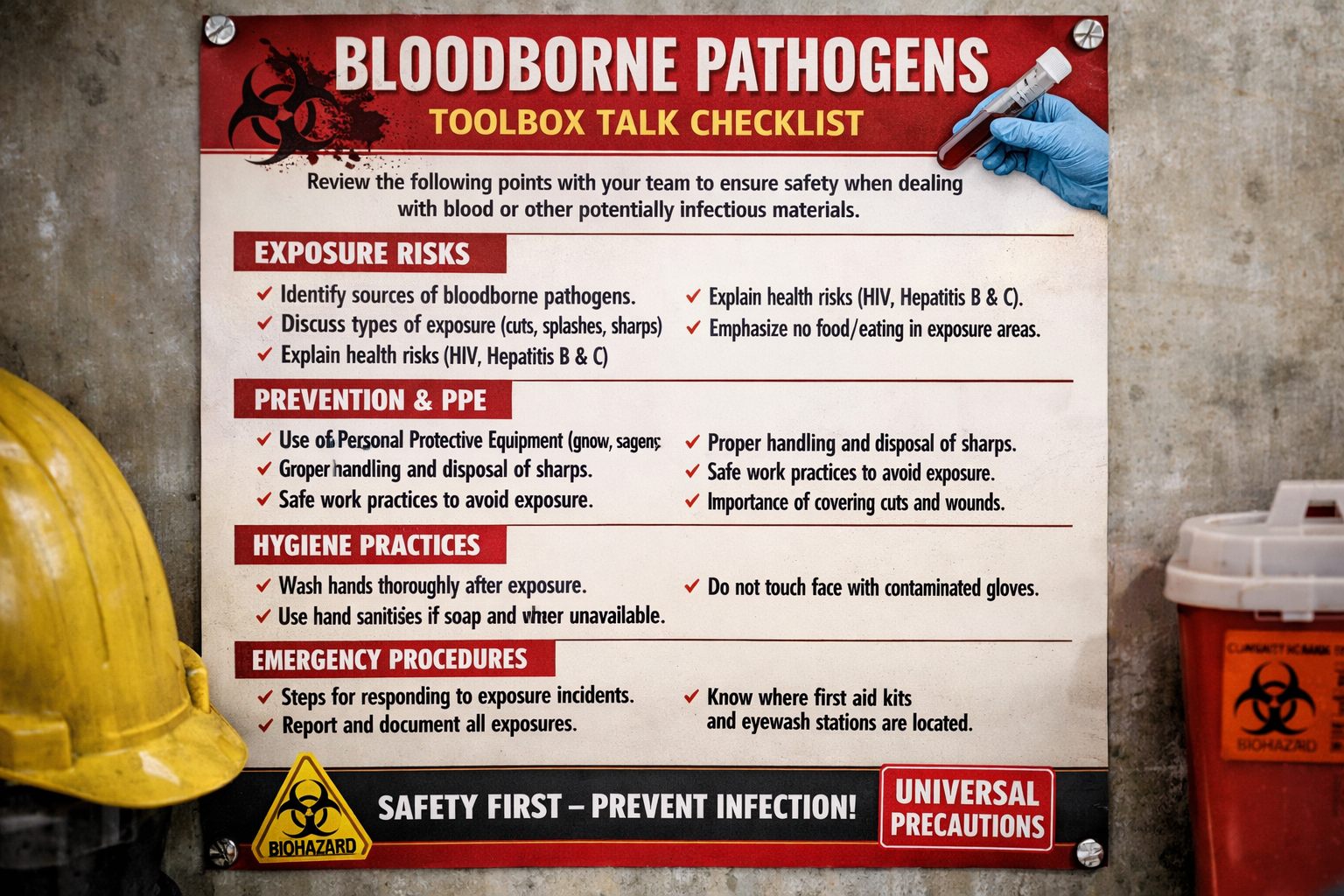
Bloodborne Pathogens Toolbox Talk
Comprehensive bloodborne pathogen awareness covering universal precautions, PPE requirements, exposure response, employer responsibilities, and workplace hazards - essential training for all employees who may encounter blood or body fluids during emergency response or routine operations. Schedule a 30-minute demo to see how digital platforms streamline safety training with automated certification tracking, annual retraining reminders, attendance verification, and complete compliance records for OSHA inspections.
Why Use Digital Safety Management for Bloodborne Pathogen Training?
HVI App Benefits for Workplace Health & Safety Programs:
- ✓ Digital training attendance tracking with participant signatures and dates
- ✓ Automated annual retraining reminders ensuring OSHA compliance
- ✓ Certification expiration alerts preventing gaps in training coverage
- ✓ Complete training records accessible during regulatory inspections
- ✓ Hepatitis B vaccination tracking and declination documentation
- ✓ Exposure incident reporting with immediate supervisor notification
Frequently Asked Questions About Bloodborne Pathogen Training
1. Who needs bloodborne pathogen training?
OSHA requires bloodborne pathogen training for all employees with reasonably anticipated occupational exposure to blood or potentially infectious materials. This includes designated first aid responders, maintenance staff who may clean up bodily fluids, employees who handle contaminated laundry or waste, and anyone who may render emergency aid to coworkers. Even if exposure is unlikely, employees who could reasonably encounter blood must receive training.
2. What are universal precautions?
Universal precautions is an infection control approach treating all human blood and certain body fluids as potentially infectious for bloodborne pathogens, regardless of the person's perceived infection status. This means using appropriate barriers (gloves, face shields, gowns) and safe handling procedures whenever contact with blood or body fluids is possible. Universal precautions prevent exposure by assuming all blood could transmit disease.
3. What should workers do immediately after blood exposure?
Workers exposed to blood or body fluids should immediately wash affected skin with warm water and soap, flush mucous membranes (eyes, nose, mouth) with water or saline for 15 minutes, and report the exposure to supervisors immediately. Time is critical - post-exposure prophylaxis for HIV is most effective when started within 2 hours. Employers must provide confidential medical evaluation, testing, and treatment at no cost to exposed employees.
4. How often must bloodborne pathogen training be provided?
OSHA requires initial training for all employees with occupational exposure, followed by annual retraining. Additional training is required when job tasks change creating new exposure risks, when new procedures or equipment are introduced, or following exposure incidents. Training must be provided during work hours at no cost to employees and must be conducted by qualified instructors knowledgeable about bloodborne pathogens.
5. How does digital training management improve compliance programs?
Digital platforms maintain permanent training records with participant signatures and dates, generate automatic annual retraining reminders preventing expired certifications, track hepatitis B vaccination status and declinations, document exposure incidents with supervisor notification, create instant reports for OSHA inspections, identify employees needing training, and maintain complete compliance history accessible for audits. Sign up for a free trial and get instant access to bloodborne pathogen training tracking, automated compliance reminders, and complete certification management - no credit card required for your 14-day trial period.
6. What diseases are transmitted through bloodborne pathogens?
Primary bloodborne diseases include hepatitis B virus (HBV) causing liver disease and cancer, hepatitis C virus (HCV) causing chronic liver disease, and human immunodeficiency virus (HIV) causing AIDS. Other pathogens transmitted through blood include syphilis, malaria, and viral hemorrhagic fevers. Hepatitis B is the most significant occupational bloodborne disease due to high transmission rates and virus survival outside the body for seven days. OSHA requires employers offer hepatitis B vaccination at no cost to employees with occupational exposure.
Take Action: Implement Comprehensive Bloodborne Pathogen Training
Download our FREE Bloodborne Pathogens Toolbox Talk Checklist and establish systematic training programs that protect workers from infectious disease exposure. Digital safety management ensures annual retraining occurs, tracks certifications, documents hepatitis B vaccinations, and maintains complete OSHA compliance records. Protect your workforce from life-threatening infections.
Protect Workers with Comprehensive Bloodborne Pathogen Training
Complete coverage: universal precautions, PPE requirements, exposure response, employer responsibilities, OSHA compliance—all tracked digitally with automated certifications and annual retraining reminders.