Importance of Bobcat/Skid Steer Inspections
Operator Safety
- Comprehensive skid steer inspection prevents tip-over accidents by verifying tire condition and hydraulic system integrity, protects operators from struck-by hazards through control verification, ensures safety devices function properly, identifies mechanical failures before operation begins, and verifies workplace conditions are safe for equipment operation.
Equipment Reliability
- Daily pre-operation inspection catches developing problems before failures occur, verifies hydraulic system integrity preventing unexpected attachment drops, ensures engine systems operate properly, identifies tire or track wear requiring replacement, and maintains equipment performance throughout demanding work cycles.
Workplace Hazard Control
- Systematic workplace inspection identifies overhead hazards, verifies ground stability preventing tip-overs, locates underground utilities avoiding strikes, assesses weather conditions affecting safe operation, and identifies pedestrian traffic requiring additional controls before equipment operation begins.
Regulatory Compliance
- Pre-use inspections satisfy OSHA requirements for powered industrial equipment, create documented safety records, demonstrate due diligence, and provide defensible inspection history during safety audits and incident investigations involving skid steer operations.
1. ENGINE PRE-START UP
Comprehensive pre-operation equipment verification before engine start. Schedule a 30-minute demo to see how digital platforms streamline skid steer inspections with mobile checklists, component-specific verification, defect photo documentation, and automated alerts ensuring inspections occur before every shift.
2. ENGINE START UP
Operational systems verification with engine running:
3. WORKPLACE INSPECTION
Worksite hazard identification and assessment:
Why Use Digital Fleet Management for Skid Steer Inspections?
HVI App Benefits for Compact Loader Safety Programs:
- ✓ Mobile pre-operation checklists ensuring inspections occur before every shift
- ✓ Photo documentation of tire wear, hydraulic leaks, and safety device condition
- ✓ Workplace hazard identification with GPS-tagged photo documentation
- ✓ Immediate supervisor alerts when critical defects prevent safe operation
- ✓ Equipment lockout preventing operation until safety issues are resolved
- ✓ Complete inspection history demonstrating OSHA compliance and due diligence
Frequently Asked Questions About Bobcat/Skid Steer Inspections
1. Why are pre-use inspections critical for skid steer loaders?
Skid steers operate in demanding conditions with high risk of tip-overs, struck-by incidents, and hydraulic failures. Pre-use inspection verifies tire condition and pressure preventing tip-overs on slopes, ensures hydraulic system integrity preventing attachment drops, confirms controls function properly preventing loss of steering, identifies mechanical failures before operation begins, and assesses workplace hazards requiring additional controls. Daily inspection is essential for operator safety in compact loader operations.
2. What are the most critical items to inspect on skid steers?
Critical inspection items include tire or track condition and pressure affecting stability, hydraulic system integrity preventing attachment drops, lift arm and steering controls ensuring proper function, safety devices including seat bar and backup alarm, engine oil and coolant levels, workplace ground conditions assessing tip-over risk, and overhead hazards including power lines. These items directly impact operator safety and equipment control during operation.
3. What workplace hazards must be assessed before skid steer operation?
Operators must assess ground stability and slope preventing tip-overs, locate underground utilities avoiding strikes during digging, identify overhead electrical lines maintaining clearance, verify adequate space for safe maneuvering, assess weather conditions affecting traction and visibility, identify pedestrian traffic requiring barriers or spotters, check for debris or materials creating hazards, and evaluate vehicle traffic requiring traffic controls. Workplace assessment prevents the majority of skid steer accidents.
4. Who should conduct skid steer pre-use inspections?
Equipment operators are responsible for conducting pre-use inspections before operating skid steers each shift. Operators must receive training on inspection procedures, understand critical safety items, recognize workplace hazards, know proper defect reporting protocols, and understand they should not operate equipment with identified safety issues. Supervisor oversight ensures inspection consistency and proper resolution of identified defects.
5. How does digital inspection software improve skid steer safety programs?
Digital platforms ensure pre-use inspections occur through automated prompts before operation, provide comprehensive checklists preventing missed critical items, enable photo documentation of tire wear and hydraulic leaks for maintenance teams, create immediate supervisor alerts for safety-critical defects, prevent equipment operation until defects are resolved, maintain permanent inspection records for compliance audits, track workplace hazard identification, and identify recurring problems requiring permanent corrective action. Sign up for a free trial and get instant access to customizable skid steer inspection checklists, mobile capabilities for field use, and automated safety compliance tracking - no credit card required for your 14-day trial period.
6. What causes most skid steer accidents?
Common accident causes include tip-overs from operating on slopes or unstable ground, struck-by incidents from inadequate clearance or pedestrian control, attachment drops from hydraulic failures, loss of steering control from hydraulic or mechanical issues, contact with overhead power lines, underground utility strikes, and operator error from inadequate training or visibility. Most accidents are preventable through systematic pre-use inspection identifying equipment defects and workplace hazards before operation begins.
Take Action: Implement Systematic Skid Steer Safety Inspections
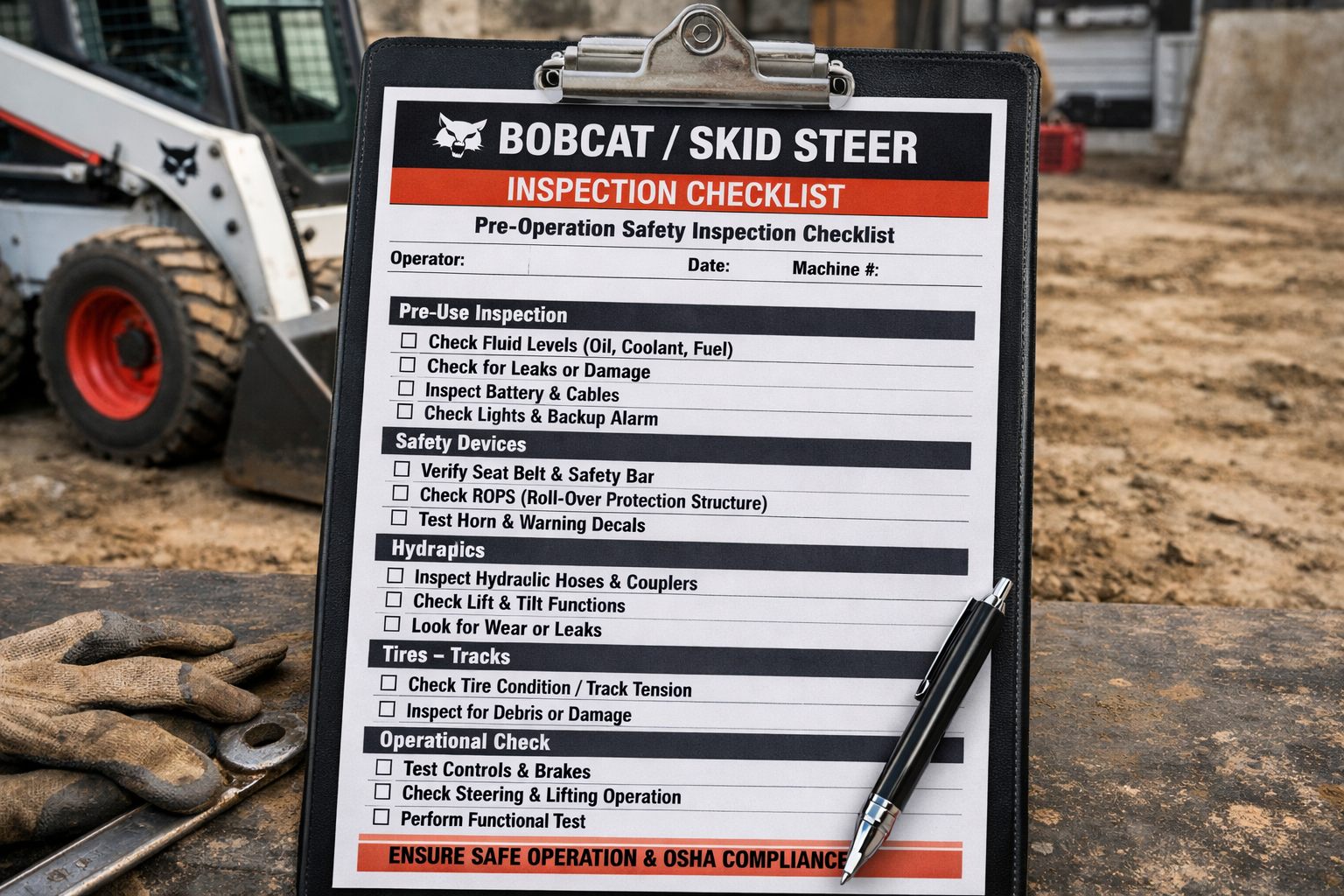
Download our FREE Bobcat/Skid Steer Inspection Checklist and establish comprehensive pre-operation inspection programs that protect operators and prevent accidents. Digital fleet management ensures inspections occur before every shift, identifies workplace hazards, maintains equipment reliability, and creates complete safety compliance documentation. Protect your operators and job sites.
Prevent Tip-Overs and Accidents with Comprehensive Pre-Use Inspections
Complete coverage: engine systems, hydraulics, tires/tracks, controls, safety devices, workplace hazards—all verified before operation with digital inspection tracking for safe skid steer operations.