Importance of Bus Fleet Program Inspections
Passenger Safety
- Bus fleet inspections protect passenger safety by verifying critical safety systems including brakes, steering, lights, wheelchair lifts and tiedowns, seatbelts, emergency exits, and fire extinguishers function properly before transporting students, transit riders, or charter passengers. Systematic inspection identifies mechanical defects, worn brake components, steering problems, and safety equipment failures before they cause accidents endangering passengers and the public.
Regulatory Compliance
- DOT, FMCSA, and state regulations mandate systematic inspection programs for passenger-carrying vehicles. Fleet program inspections satisfy annual inspection requirements, document preventive maintenance, demonstrate due diligence during safety audits, and protect operating authority during regulatory reviews. Non-compliance results in fines, out-of-service orders, and operating authority suspension.
Operational Reliability
- Preventive inspection and maintenance programs identify developing problems before roadside failures disrupt transportation schedules, maintain vehicle availability for scheduled routes, reduce emergency repair costs, extend vehicle service life, and ensure consistent transportation service for students, commuters, and passengers.
Cost Management
- Systematic fleet programs reduce total cost of ownership by preventing expensive roadside breakdowns, minimizing unscheduled maintenance, extending component life through proper servicing, reducing fuel consumption from properly maintained engines and tires, and maintaining resale value through documented maintenance history and vehicle condition.
1. Accessories
Required equipment and accessibility system verification. Schedule a 30-minute demo to see how digital platforms streamline bus fleet management with vehicle-specific checklists, wheelchair lift certification tracking, air conditioning service scheduling, and automated compliance alerts ensuring required equipment is present and functional.
2. Exterior Inspection
External vehicle condition and tire verification:
3. Interior Inspection
Passenger compartment and safety system verification:
4. Service and Operation Inspection
Mechanical systems and preventive maintenance verification:
Why Use Digital Fleet Management for Bus Programs?
HVI App Benefits for Passenger Transportation Programs:
- ✓ Automated inspection scheduling for entire bus fleet based on mileage or time intervals
- ✓ Wheelchair lift certification tracking with annual inspection reminders
- ✓ Defect documentation with photo evidence for maintenance teams and regulatory compliance
- ✓ Immediate supervisor alerts when safety-critical defects prevent vehicle operation
- ✓ Complete service history demonstrating DOT and FMCSA compliance during audits
- ✓ Fleet-wide reporting showing vehicle availability, maintenance costs, and compliance status
Frequently Asked Questions About Bus Fleet Programs
1. What inspections are required for bus fleet programs?
Bus fleets require daily pre-trip inspections by drivers covering brakes, lights, steering, tires, emergency equipment, wheelchair lifts (if equipped), mirrors, and seatbelts before each route. Periodic preventive maintenance inspections follow manufacturer and regulatory schedules (typically every 3,000-6,000 miles or monthly) covering all mechanical systems, fluids, filters, belts, hoses, brakes, steering, suspension, and safety equipment. Annual DOT inspections by qualified mechanics verify complete vehicle compliance with FMCSA regulations. School buses require additional state-specific inspections. All inspections must be documented and records maintained for regulatory compliance.
2. How often must wheelchair lifts be certified?
ADA regulations require annual certification of wheelchair lifts and securement systems by qualified technicians following manufacturer specifications. Certifications verify lift operation, load capacity, safety features (platform barriers, interlocks), emergency lowering systems, and wheelchair tiedown anchor integrity. Daily pre-trip inspections confirm lift operates properly, and any malfunction requires immediate repair before transporting passengers with mobility devices. Documentation of annual certifications and repairs must be maintained for ADA compliance audits.
3. What documentation must bus fleet programs maintain?
Required documentation includes daily pre-trip inspection reports signed by drivers, periodic preventive maintenance records with dates and work performed, annual DOT inspection reports, wheelchair lift certification records, defect reports with repair documentation, driver qualification files including medical certificates and license verification, vehicle registration and insurance, mileage/hour meter readings, fuel and maintenance costs per vehicle, accident and incident reports, driver training records, and drug/alcohol testing compliance. Records must be maintained for regulatory periods (typically 1-3 years) and available during DOT audits.
4. What are the most critical bus safety inspection items?
Critical safety items include brake system function (pedal travel, parking brake, rotors/pads/drums condition), steering system integrity (loose components, excessive play), tire condition (tread depth minimum 4/32", proper inflation, no damage), all lights and signals operational (headlights, brake lights, turn signals, hazard flashers, clearance lights), emergency exits accessible and operable, fire extinguisher charged and accessible, first aid kit present, seatbelts functional (especially on school buses), mirrors properly adjusted, wheelchair lift operation and securement (if equipped), and horn/backup alarm function. These items directly impact passenger safety and regulatory compliance.
5. How does digital fleet management improve bus programs?
Digital platforms automate inspection scheduling preventing missed required inspections, track wheelchair lift certifications with annual renewal reminders, document defects with timestamped photos for maintenance teams, create immediate alerts when safety-critical defects prevent vehicle operation, maintain complete service history for each vehicle satisfying DOT record requirements, generate fleet-wide reports showing vehicle availability and maintenance costs, identify recurring problems requiring corrective action, schedule preventive maintenance based on mileage or time intervals, track driver qualification expirations, and provide instant access to inspection and maintenance records during regulatory audits. Sign up for a free trial and get instant access to automated bus fleet management with regulatory compliance tracking, wheelchair lift certification management, and comprehensive reporting - no credit card required for your 14-day trial period.
6. What causes bus fleet compliance violations?
Common compliance violations include missing or incomplete inspection documentation, expired wheelchair lift certifications, inadequate brake performance during roadside inspections, tire tread below minimum depth (4/32"), inoperative lights or signals, missing emergency equipment (fire extinguisher, first aid kit, emergency exits blocked), drivers operating without valid medical certificates, failure to document and repair reported defects, exceeding service intervals for oil changes or preventive maintenance, and inadequate driver qualification files. Most violations are preventable through systematic inspection programs, documentation procedures, and digital tracking ensuring required inspections occur, defects are repaired promptly, certifications remain current, and records are complete for regulatory review.
Take Action: Implement Comprehensive Bus Fleet Programs
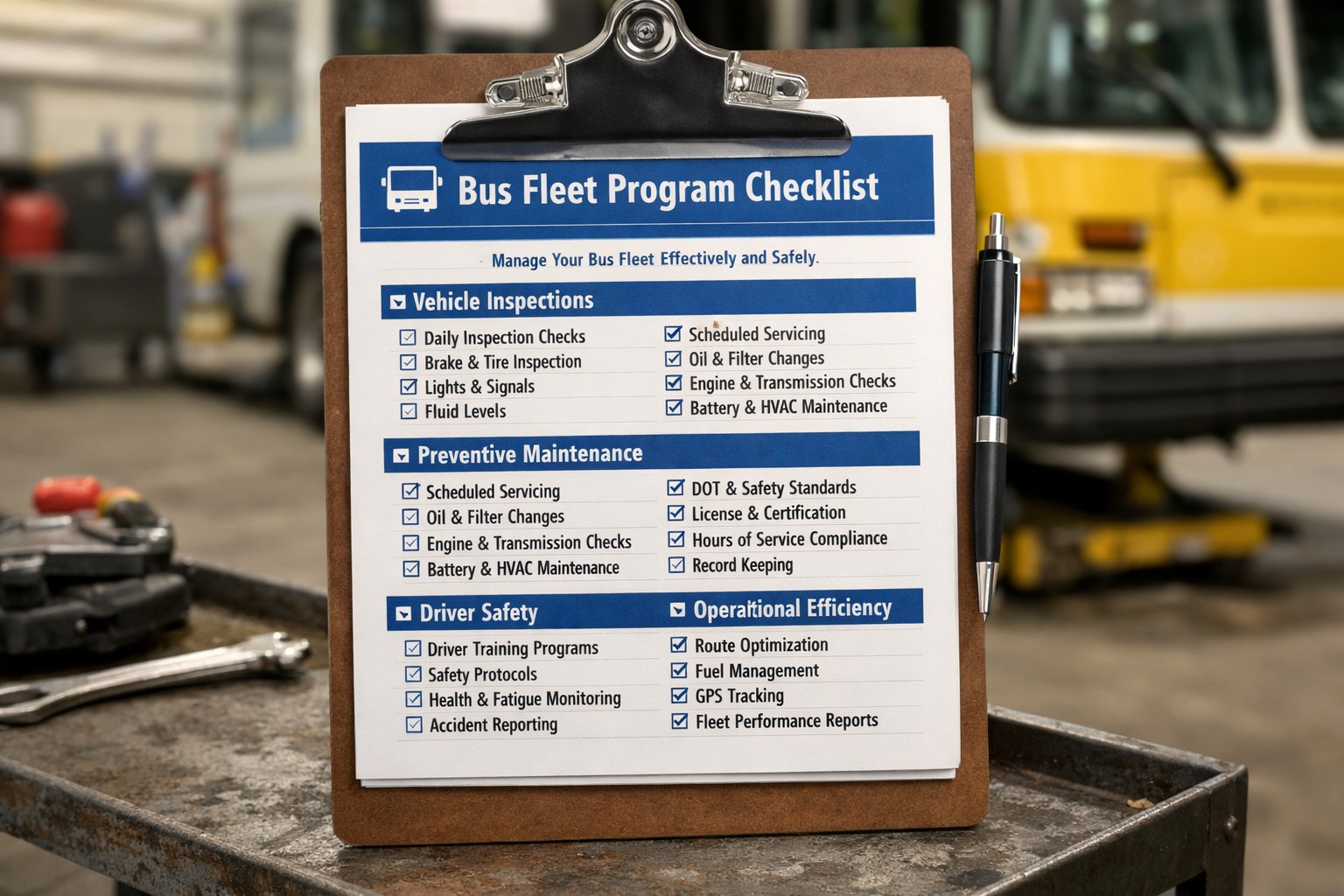
Download our FREE Bus Fleet Program Checklist covering all 40 critical inspection items across accessories, exterior, interior, and service requirements. Digital fleet management automates inspection scheduling, tracks wheelchair lift certifications, maintains regulatory compliance documentation, and provides complete fleet visibility. Protect your passengers and ensure regulatory compliance.
Ensure Passenger Safety and Regulatory Compliance with Systematic Fleet Management
Complete coverage: accessibility equipment, safety systems, mechanical inspection, preventive maintenance—all tracked with digital management for reliable passenger transportation.