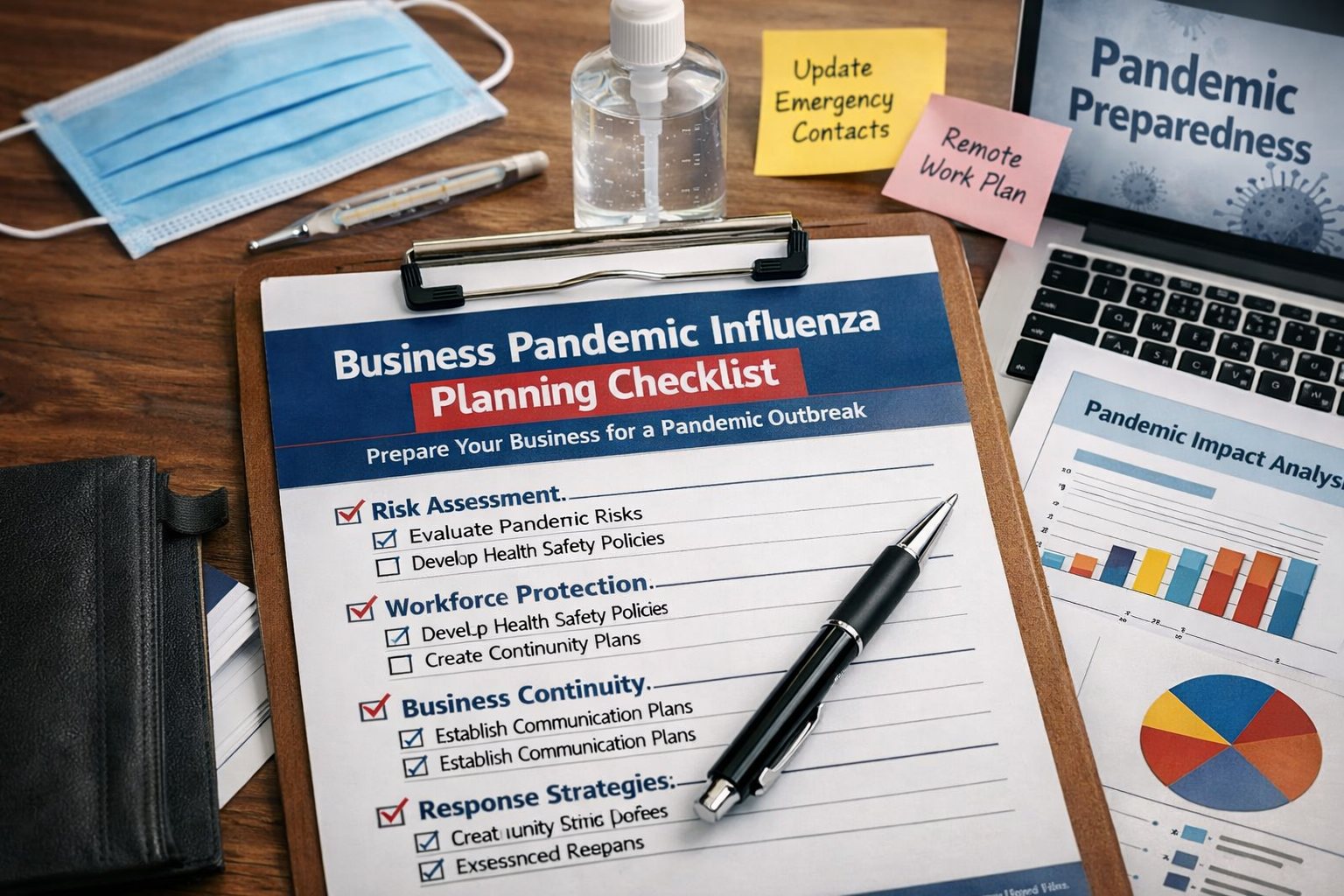
Importance of Pandemic Influenza Planning
Workforce Protection
- Pandemic planning protects employee health and safety by establishing infection control measures, providing access to medical consultation and advice, ensuring availability of hand hygiene products and protective supplies, implementing sick leave policies preventing contagious employees from workplace exposure, and coordinating with healthcare providers ensuring employees receive appropriate care during widespread illness outbreaks affecting communities.
Business Continuity
- Systematic pandemic planning maintains business operations during health emergencies by identifying essential employees and critical functions, establishing telecommuting and flexible work capabilities, developing contingency plans for workforce absences, coordinating with suppliers ensuring supply chain continuity, and implementing policies allowing operations to continue despite significant employee absences and public health restrictions.
Stakeholder Communication
- Effective pandemic communication protocols ensure employees, customers, vendors, and community partners receive timely, accurate information about organizational status, protective measures, operational changes, and available resources through multiple channels including hotlines, websites, and emergency contact systems functioning during crisis conditions.
Community Coordination
- Pandemic planning coordinates organizational response with public health agencies, emergency responders, healthcare facilities, and community resources ensuring businesses contribute to community-wide response efforts, access accurate pandemic information, understand public health capabilities and restrictions, and align business actions with broader community protection strategies.
1. Allocate resources to protect your employees and customers during a pandemic:
Infrastructure and resource allocation for pandemic response. Schedule a 30-minute demo to see how digital platforms streamline pandemic planning with resource tracking, medical consultation coordination, infection control supply management, and comprehensive preparedness documentation.
2. Communicate to and educate your employees:
Employee communication and education protocols:
3. Coordinate with external organizations and help your community:
External coordination and community support:
4. Establish policies to be implemented during a pandemic:
Pandemic response policies and procedures:
5. Plan for the impact of a pandemic on your business:
Business impact assessment and continuity planning:
6. Plan for the impact of a pandemic on your employees and customers:
Employee and customer protection planning:
Why Use Digital Planning for Pandemic Preparedness?
HVI App Benefits for Business Continuity Programs:
- ✓ Centralized pandemic planning documentation accessible to response teams and stakeholders
- ✓ Communication protocol tracking with contact list management and backup system verification
- ✓ Resource allocation monitoring ensuring infection control supplies and medical consultation availability
- ✓ Policy documentation with version control for pandemic-specific sick leave and telecommuting procedures
- ✓ Exercise and drill tracking with periodic plan revision reminders
- ✓ Coordination tracking with public health agencies, healthcare facilities, and community partners
Frequently Asked Questions About Pandemic Influenza Planning
1. Why is pandemic planning critical for businesses?
Pandemic events create simultaneous challenges including significant workforce absences (potentially 20-40% during peak periods), supply chain disruptions from vendor closures and transportation restrictions, reduced customer demand from containment measures and mass gathering restrictions, and public health requirements affecting normal operations. Without systematic planning, businesses face uncontrolled operational shutdowns, inability to protect employees and customers, regulatory non-compliance, and potential permanent closure. Pandemic planning ensures critical functions continue, employees remain protected, stakeholder communication occurs effectively, and organizations recover successfully from prolonged health emergencies.
2. What are essential elements of pandemic sick leave policies?
Pandemic-specific sick leave policies must be non-punitive and liberal encouraging employees to stay home when ill rather than working while infectious, clearly define when previously ill employees are no longer contagious and can safely return to work, establish immediate mandatory sick leave for employees suspected of illness or exposure at the worksite, provide compensation ensuring employees don't face financial hardship for staying home during illness, and comply with applicable employment laws while protecting public health. Traditional attendance policies penalizing absences prove counterproductive during pandemics when keeping sick employees home protects the entire workforce and customer base.
3. How should businesses coordinate with public health agencies?
Effective coordination requires businesses to participate in local and state public health planning processes sharing business capabilities and needs, understand public health agency capabilities including testing, vaccination, and guidance resources, align business policies with public health recommendations on containment measures and protective actions, identify business assets and services that could support community response efforts, establish reliable information channels for timely pandemic status updates and guidance, and share pandemic plans ensuring public health officials understand business operations and potential impacts. This coordination prevents conflicting actions and ensures businesses contribute to broader community protection strategies.
4. What infrastructure is needed for pandemic telecommuting?
Pandemic telecommuting requires enhanced communications infrastructure including remote access systems for business applications and data, video conferencing capabilities for team meetings and customer interactions, secure VPN connections protecting business information, sufficient bandwidth supporting multiple simultaneous remote users, technical support for remote employees experiencing connectivity or software issues, and customer service capabilities allowing remote workers to maintain client relationships. Businesses should test remote work systems before emergencies, train employees on remote tools, and ensure essential functions can operate with distributed workforce during extended periods when office access is restricted or employees cannot safely commute.
5. How does digital planning improve pandemic preparedness?
Digital platforms centralize pandemic planning documentation ensuring response teams and stakeholders access current plans and procedures, track communication protocols with backup contact verification preventing single points of failure, monitor resource allocation confirming infection control supplies and medical consultation remain available, document policies with version control showing pandemic-specific sick leave and flexible work procedures, schedule exercises and drills with periodic plan revision reminders, coordinate with external organizations tracking public health agency contacts and healthcare facility collaboration, and maintain comprehensive preparedness records demonstrating organizational due diligence and regulatory compliance. Sign up for a free trial and get instant access to customizable pandemic planning templates, communication protocol tracking, and coordinated response management - no credit card required for your 14-day trial period.
6. How often should pandemic plans be updated and tested?
Pandemic plans require annual reviews at minimum updating contact information, revising policies based on regulatory changes or organizational restructuring, incorporating lessons learned from exercises or actual health events, and confirming resource availability including infection control supplies and medical consultation arrangements. Periodic exercises and drills (at least annually) test communication systems, practice implementing flexible work arrangements, verify essential employee identification remains current, validate coordination with public health agencies and healthcare facilities, and identify gaps requiring corrective action. Plans should also be revised immediately following significant organizational changes affecting critical functions, workforce composition, or stakeholder relationships to ensure continued effectiveness during health emergencies.
Take Action: Implement Comprehensive Pandemic Preparedness
Download our FREE Business Pandemic Influenza Planning Checklist covering all 36 critical planning elements across resource allocation, employee communication, external coordination, policy development, business impact assessment, and workforce protection. Digital planning management centralizes documentation, tracks coordination efforts, monitors resource availability, and ensures organizational resilience during health emergencies. Protect your employees, customers, and business operations.
Protect Your Workforce and Ensure Business Continuity During Health Emergencies
Complete coverage: resource allocation, employee communication, external coordination, pandemic policies, business impact planning, workforce protection—all managed with digital planning for organizational resilience.