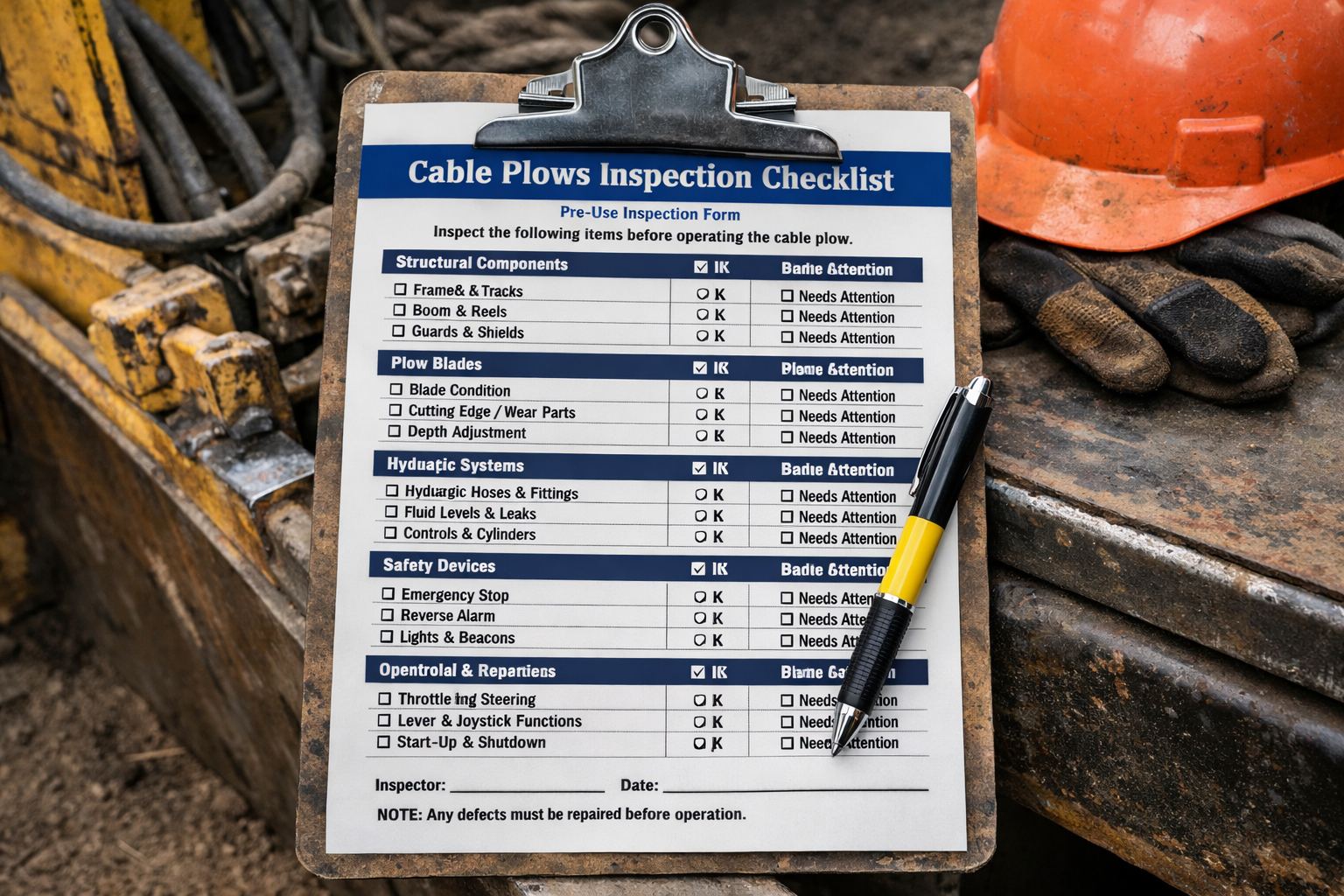
Importance of Cable Plow Inspections
Operator Safety
- Cable plow inspection protects operators from safety hazards by verifying ROPS (Rollover Protection Structure) integrity preventing crushing during tip-overs, confirming seat belt condition and mounting preventing ejection, validating safety interlocks ensuring proper operation sequence, checking guards and shields protecting from moving components, and ensuring access/egress systems allow safe entry and exit during trenching operations in underground utility installation projects.
Equipment Reliability
- Systematic inspection identifies developing hydraulic problems before failures halt cable installation operations, verifies engine oil and coolant levels maintaining power system performance, confirms swing drive and pump drive integrity, ensures proper hydraulic oil levels and cooler function, and catches component wear before breakdowns during critical underground utility projects.
Operational Readiness
- Pre-operation verification ensures all controls function properly, validates ground drive and steering responsiveness, confirms parking brake holds equipment securely, verifies wipers and mirrors provide adequate visibility, checks alarms warn of operational issues, and ensures plow operates correctly for cable installation work.
Hazard Prevention
- Inspection identifies hydraulic leaks creating slip hazards and environmental contamination, verifies restraint bar and trench cleaner function, confirms stow locks secure components during transport, validates fire extinguisher presence and serviceability, and ensures safety systems protect operators during demanding trenching and cable laying operations.
1. ENGINE COMPARTMENT
Power system component verification. Schedule a 30-minute demo to see how digital platforms streamline cable plow inspections with mobile checklists, fluid level tracking, filter replacement scheduling, and automated maintenance alerts based on operating hours.
2. GENERAL-GO AROUND INSPECTION
Comprehensive walk-around safety and operational verification:
3. INSIDE THE CAB
Operator station and control verification:
4. ON THE MACHINE
External component and system verification:
Why Use Digital Equipment Management for Cable Plow Operations?
HVI App Benefits for Underground Utility Installation Equipment:
- ✓ Pre-operation checklists ensuring comprehensive verification before cable installation work
- ✓ Safety interlock testing documentation demonstrating proper equipment operation sequence
- ✓ ROPS and seat belt condition tracking preventing rollover ejection risks
- ✓ Hydraulic system leak identification with photo documentation for maintenance teams
- ✓ Equipment lockout preventing operation until safety issues are resolved
- ✓ Complete inspection history for warranty compliance and preventive maintenance planning
Frequently Asked Questions About Cable Plow Inspections
1. What are cable plows and why do they require specialized inspection?
Cable plows are specialized equipment designed to install underground cables, fiber optics, and utilities by creating a continuous trench while simultaneously laying cable without traditional excavation. These machines combine powerful hydraulic systems, plow blades, trenching components, cable feeding mechanisms, and mobility systems operating in demanding underground installation conditions. Specialized inspection is required because equipment operates under high stress from ground conditions, hydraulic failures can halt installation operations affecting project schedules, safety interlocks must function properly to prevent operator injury, ROPS protection is critical for tip-over hazards on uneven terrain, and component failures create expensive delays during utility installation projects serving telecommunications, electrical, and water infrastructure.
2. Why are safety interlocks critical on cable plows?
Safety interlocks ensure cable plows operate in proper sequence preventing unsafe conditions. Interlocks prevent plow engagement without proper ground drive operation, ensure restraint bars deploy before trenching operations begin, verify stow locks disengage before component movement, confirm operator presence before initiating potentially hazardous functions, and prevent simultaneous operations that could create equipment damage or operator hazards. Failed interlocks allow unsafe operation sequences potentially causing equipment damage, operator injury from unexpected component movement, or cable installation failures requiring rework. Daily interlock verification confirms systems function correctly before underground utility work begins.
3. What should operators check regarding ROPS on cable plows?
Operators must verify ROPS (Rollover Protection Structure) shows no structural damage from previous impacts or stress, mounting bolts are tight with no missing hardware, no modifications compromise protection strength, seat belt webbing and buckle function properly, seat belt mounting points are secure, and access/egress systems allow safe entry and exit. Cable plows operate on varied terrain including slopes and unstable ground creating rollover risks. ROPS structures and functioning seat belts prevent operator crushing during tip-over events. Damaged ROPS or non-functional seat belts create false security and fail during actual rollover incidents causing operator fatalities on utility installation projects.
4. How do hydraulic system failures affect cable plow operations?
Hydraulic systems power critical cable plow functions including ground drive for equipment mobility, swing drives enabling directional changes, pump drives delivering hydraulic pressure to components, plow blade operation for trenching, and cable feeding mechanisms. Hydraulic failures from leaks, low fluid levels, or component damage cause loss of ground drive stranding equipment in trenches, inability to control plow depth or direction affecting cable installation quality, safety system failures from loss of hydraulic pressure, and complete operational shutdown requiring expensive service calls and project delays. Daily hydraulic inspection identifies leaks, verifies oil levels and cooler function, and catches developing problems before failures occur during critical underground utility installation operations.
5. How does digital inspection improve cable plow safety programs?
Digital platforms provide comprehensive 39-item checklists ensuring thorough verification across engine compartment, walk-around inspection, cab interior, and external components, track safety interlock testing with dated documentation proving proper function, monitor ROPS and seat belt condition preventing rollover ejection risks, enable photo documentation of hydraulic leaks and component wear for maintenance teams, create immediate supervisor alerts when safety-critical defects prevent operation, prevent equipment use until repairs are completed through equipment lockout, maintain complete inspection records for warranty claims and regulatory compliance, and identify recurring hydraulic leaks or component problems requiring engineering solutions. Sign up for a free trial and get instant access to customizable cable plow inspection checklists, safety interlock tracking, and automated equipment management - no credit card required for your 14-day trial period.
6. What causes most cable plow equipment failures?
Common failure causes include hydraulic system problems from leaks or low fluid levels causing loss of plow control or ground drive failure, engine overheating from cooling system neglect halting operations, worn or damaged plow blades requiring replacement during installation work, safety interlock failures allowing unsafe operation sequences, swing drive or pump drive problems affecting equipment mobility and trenching capability, battery failures preventing equipment startup, and component damage from operating in harsh underground installation conditions without adequate inspection. Most failures are preventable through systematic daily inspection identifying hydraulic leaks, verifying cooling system function, checking fluid levels, testing safety interlocks, and addressing component wear before catastrophic failures occur during demanding cable installation projects serving critical telecommunications and utility infrastructure.
Take Action: Implement Systematic Cable Plow Inspections
Download our FREE Cable Plows Inspection Checklist covering all 39 critical inspection items across engine compartment, walk-around verification, cab interior, and external components. Digital equipment management ensures pre-operation inspections occur, tracks safety interlock function, identifies hydraulic problems before failures, and maintains complete equipment history. Protect your operators and utility installation projects.
Ensure Safe Underground Cable Installation with Comprehensive Equipment Inspections
Complete coverage: engine systems, safety interlocks, ROPS protection, hydraulic components, operational controls—all verified with digital tracking for safe utility installation operations.