Importance of Chassis Inspections
Structural Integrity
- Chassis inspection verifies frame rails, cross members, and structural components remain sound. Prevents catastrophic failures during operation. Start your free trial for digital chassis tracking with defect documentation and maintenance history.
Component Reliability
- Systematic inspection identifies wear in suspension, steering, brakes, and coupling systems before failures occur. Reduces downtime and prevents costly roadside repairs.
Safety Compliance
- Documented chassis inspections satisfy DOT requirements, demonstrate proper maintenance for liability protection, and ensure safe vehicle operation under load conditions.
Fleet Reliability
- Regular chassis inspection prevents unexpected breakdowns, extends component life through early problem detection, and maintains fleet availability for revenue operations.
1. BODY
Body structure and mounting verification. Schedule a demo to see digital chassis inspection with photo documentation and automated alerts.
2. BRAKES
Complete brake system verification:
3. CHASSIS FRAME/UNDERBODY
Frame structure and integrity inspection:
4. LOAD SPACE
Load space structure and mounting:
5. STEERING SYSTEM
Steering components and linkage:
6. SUSPENSION
Suspension system verification:
7. TIRES AND WHEELS
Tire and wheel assembly inspection:
8. COUPLING DEVICE
Coupling and hitch system components:
9. LIGHTS AND SIGNALS
Lighting and electrical system:
Digital Chassis Inspection Management
HVI App Benefits:
- ✓ Complete 118-item chassis verification
- ✓ Photo documentation of defects
- ✓ Automated maintenance alerts
- ✓ Component-specific tracking
- ✓ Fleet-wide inspection records
- ✓ DOT compliance documentation
Frequently Asked Questions
1. What are critical chassis inspection items?
Critical items include frame rails and cross members for structural integrity, suspension components affecting ride and load capacity, steering linkage ensuring vehicle control, brake system components for stopping ability, coupling devices preventing trailer separation, and tire/wheel assemblies supporting vehicle weight. Inspect fasteners, welds, and mounting points for cracks or looseness.
2. How often should chassis inspections occur?
Daily pre-trip inspections verify critical safety items. Comprehensive chassis inspections follow manufacturer schedules (typically every 3-6 months or 12,000-25,000 miles). Annual DOT inspections required for commercial vehicles. High-mileage or severe-duty operations require more frequent inspection.
3. What causes chassis component failures?
Common causes include corrosion from road salt and moisture, fatigue from repeated stress cycles, loose or missing fasteners from vibration, overloading exceeding design limits, impact damage from road hazards, and lack of proper maintenance. Early detection through regular inspection prevents catastrophic failures.
4. Why is suspension system inspection important?
Suspension supports vehicle weight, maintains tire contact with road surface, and absorbs shock from uneven terrain. Failed suspension causes loss of vehicle control, uneven tire wear, excessive frame stress, reduced braking effectiveness, and poor ride quality affecting driver safety and cargo security.
5. How does digital tracking improve chassis maintenance?
Digital platforms maintain complete 118-item inspection records, enable photo documentation of wear and damage, schedule component-specific maintenance based on operating hours, track fastener torque verification, provide fleet-wide visibility of chassis condition, and maintain DOT compliance documentation. Sign up for a free trial - no credit card required.
6. What are signs of chassis structural damage?
Warning signs include visible cracks in frame rails or cross members, misalignment causing uneven tire wear or handling problems, loose or missing fasteners, unusual noises during operation, oil or grease leaks from suspension or steering components, and abnormal wear patterns on tires or brake components. Any structural damage requires immediate inspection by qualified technicians.
Take Action: Implement Chassis Inspections
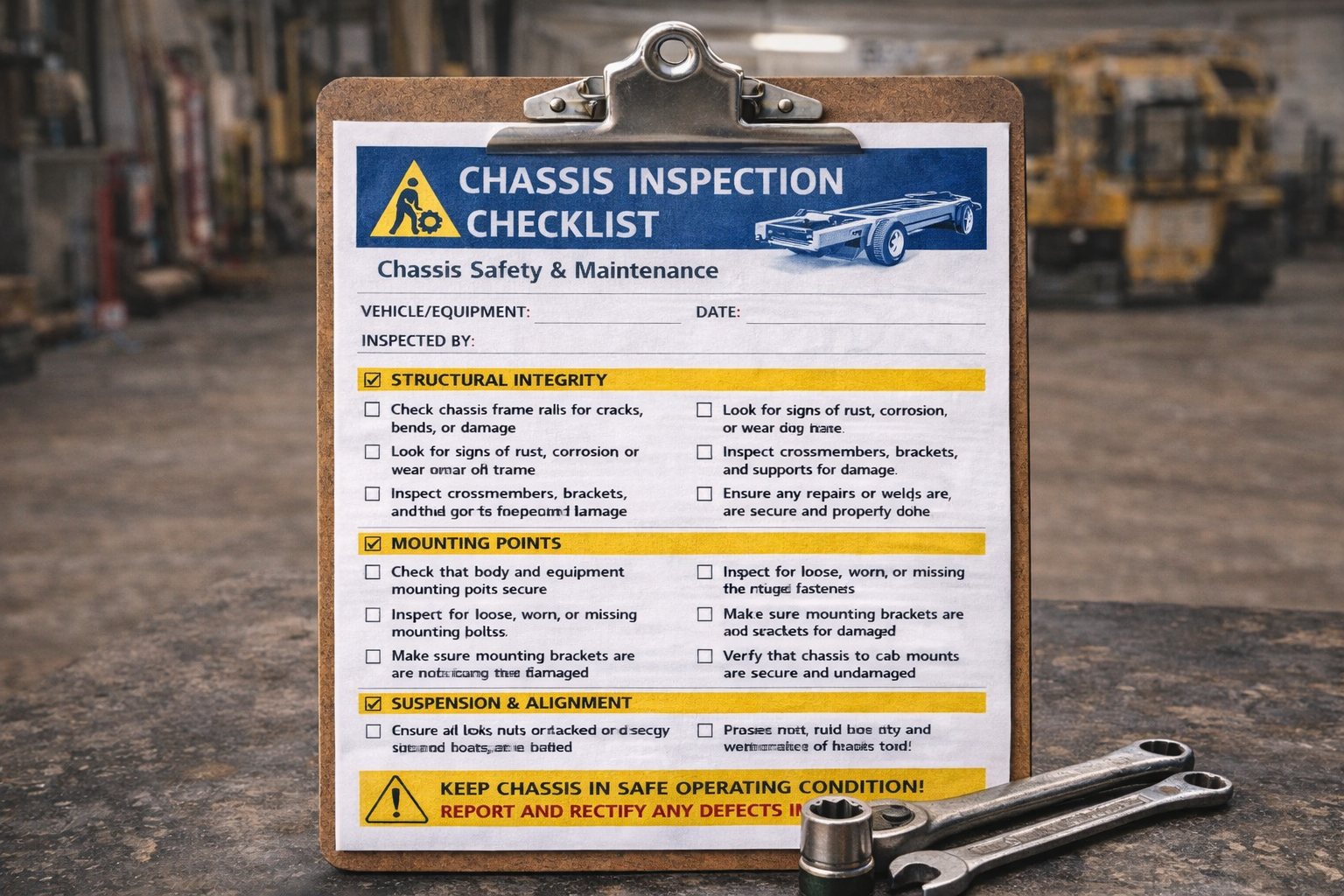
Download our FREE Chassis Inspection Checklist covering 118 critical components. Digital management ensures systematic inspection, tracks maintenance, and provides complete documentation.
Ensure Structural Safety with Comprehensive Chassis Inspections
Complete coverage: frame, brakes, steering, suspension, coupling, tires—all verified with digital tracking for fleet reliability.