Importance of Clamshell Excavator Inspections
Operator Safety
- Inspection verifies seat belts, ROPS/FOPS protection, and cab condition protecting operators from falling materials and equipment rollovers. Prevents hydraulic failures causing uncontrolled bucket drops.
Equipment Reliability
- Regular inspection identifies hydraulic leaks, cylinder wear, track damage, and attachment problems before failures halt material handling operations and cause expensive downtime.
Bucket Integrity
- Clamshell bucket inspection ensures proper operation preventing material spillage, verifies pin and lock security, and identifies structural cracks before catastrophic failures during lifting operations.
Compliance
- Documented inspections satisfy OSHA excavation equipment requirements, demonstrate proper maintenance for liability protection, and ensure safe operation during material handling projects.
1. ENGINE
Engine system verification. Schedule a demo to see digital inspection with mobile checklists and automated maintenance alerts.
2. FLUID
Fluid level and condition verification:
3. GENERAL
General equipment and safety systems:
4. HYDRAULICS
Hydraulic system integrity:
Digital Excavator Inspection Management
HVI App Benefits:
- ✓ Pre-operation checklists ensuring inspection before use
- ✓ Photo documentation of hydraulic leaks and defects
- ✓ Immediate alerts for safety-critical issues
- ✓ Equipment lockout until repairs completed
- ✓ Complete inspection history and maintenance records
- ✓ Automated service scheduling based on operating hours
Frequently Asked Questions
1. What are critical clamshell excavator inspection items?
Critical items include hydraulic system integrity preventing uncontrolled bucket drops, seat belt condition protecting operators during rollovers, bucket/attachment security ensuring safe material handling, structural crack inspection preventing catastrophic failures, control operation verification, track condition for stability, and fluid levels maintaining system performance. These items directly impact operator safety and equipment reliability.
2. How often should clamshell excavators be inspected?
Daily pre-operation inspections verify safety-critical items before each shift. Periodic inspections follow manufacturer schedules (typically every 250-500 operating hours) covering comprehensive system verification. Monthly greasing of attachments and base machine maintains component function. Immediate inspection required after any incident involving bucket drops or hydraulic failures.
3. Why is hydraulic system inspection critical?
Hydraulic failures cause uncontrolled bucket drops creating struck-by hazards for ground personnel, loss of bucket control during material handling, inability to position loads safely, and complete operational shutdown requiring emergency repairs. Daily inspection identifies leaks, cylinder wear, and hose damage before catastrophic failures during lifting operations.
4. What are signs of clamshell bucket problems?
Warning signs include difficulty opening or closing bucket jaws, uneven jaw movement, visible cracks in bucket structure, loose or missing pins and locks, excessive play in bucket pivot points, hydraulic leaks at bucket cylinders, and material spillage during handling. Any bucket malfunction requires immediate inspection before continued operation.
5. How does digital inspection improve excavator safety?
Digital platforms ensure pre-operation checklists are completed before equipment use, enable photo documentation of hydraulic leaks and structural cracks, generate immediate supervisor alerts for safety issues, prevent equipment operation until critical repairs are completed, maintain permanent inspection records for compliance demonstration, and track greasing schedules ensuring proper attachment lubrication. Sign up for a free trial - no credit card required.
6. What causes clamshell excavator accidents?
Common accident causes include hydraulic failures causing uncontrolled bucket drops, operator ejection during rollovers from non-functional seat belts, struck-by incidents from bucket swing radius contact with personnel, structural failures from undetected cracks, loss of control from worn tracks or steering problems, and visibility issues from damaged windows or mirrors. Most accidents are preventable through systematic daily inspection identifying defects before operation.
Take Action: Implement Excavator Safety Inspections
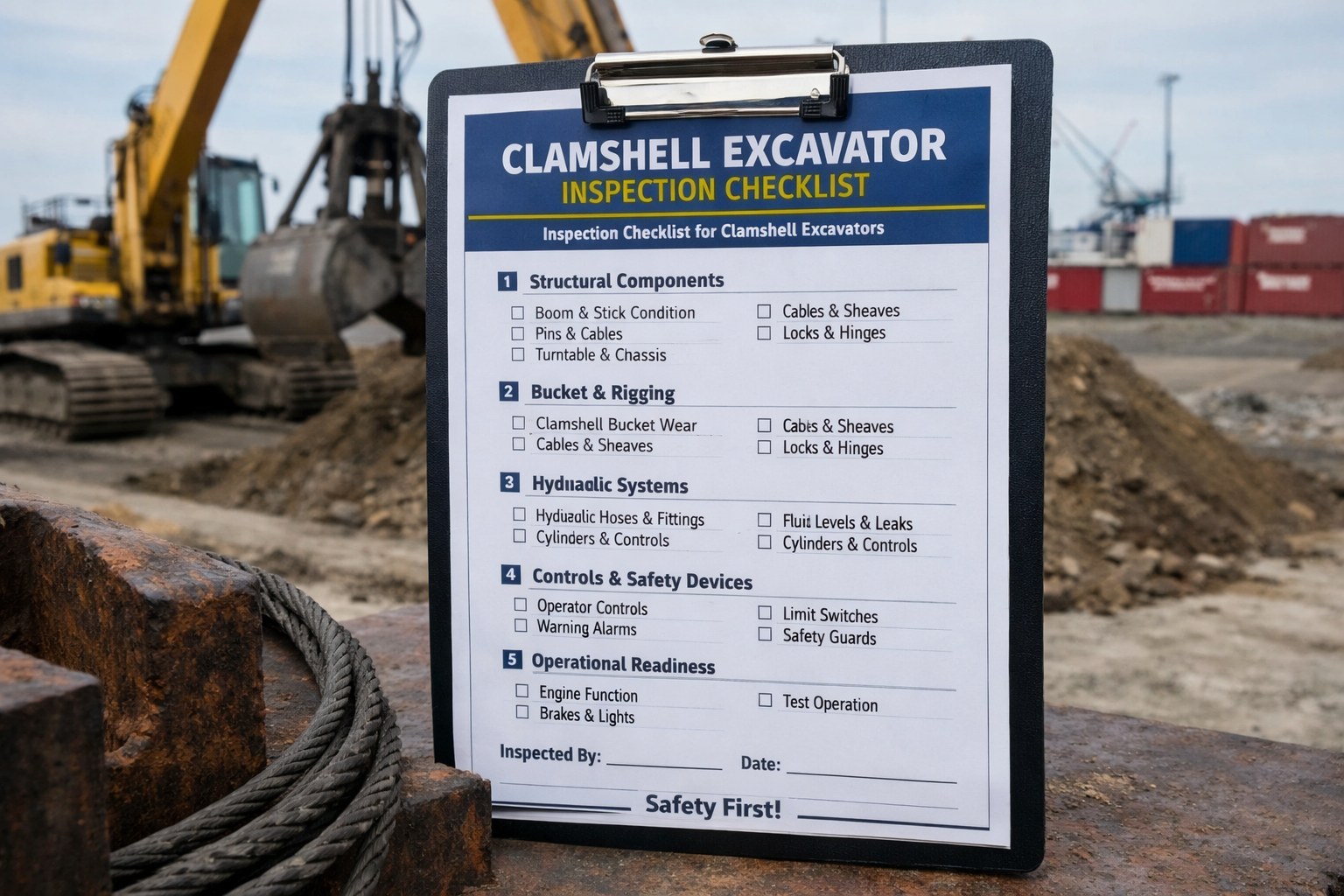
Download our FREE Clamshell Excavator Inspection Checklist covering 31 critical components. Digital tracking ensures daily inspections occur, identifies safety hazards, and maintains complete equipment records.
Ensure Safe Material Handling with Systematic Excavator Inspections
Complete coverage: hydraulics, bucket integrity, controls, safety systems—all verified with digital tracking for excavation operations.