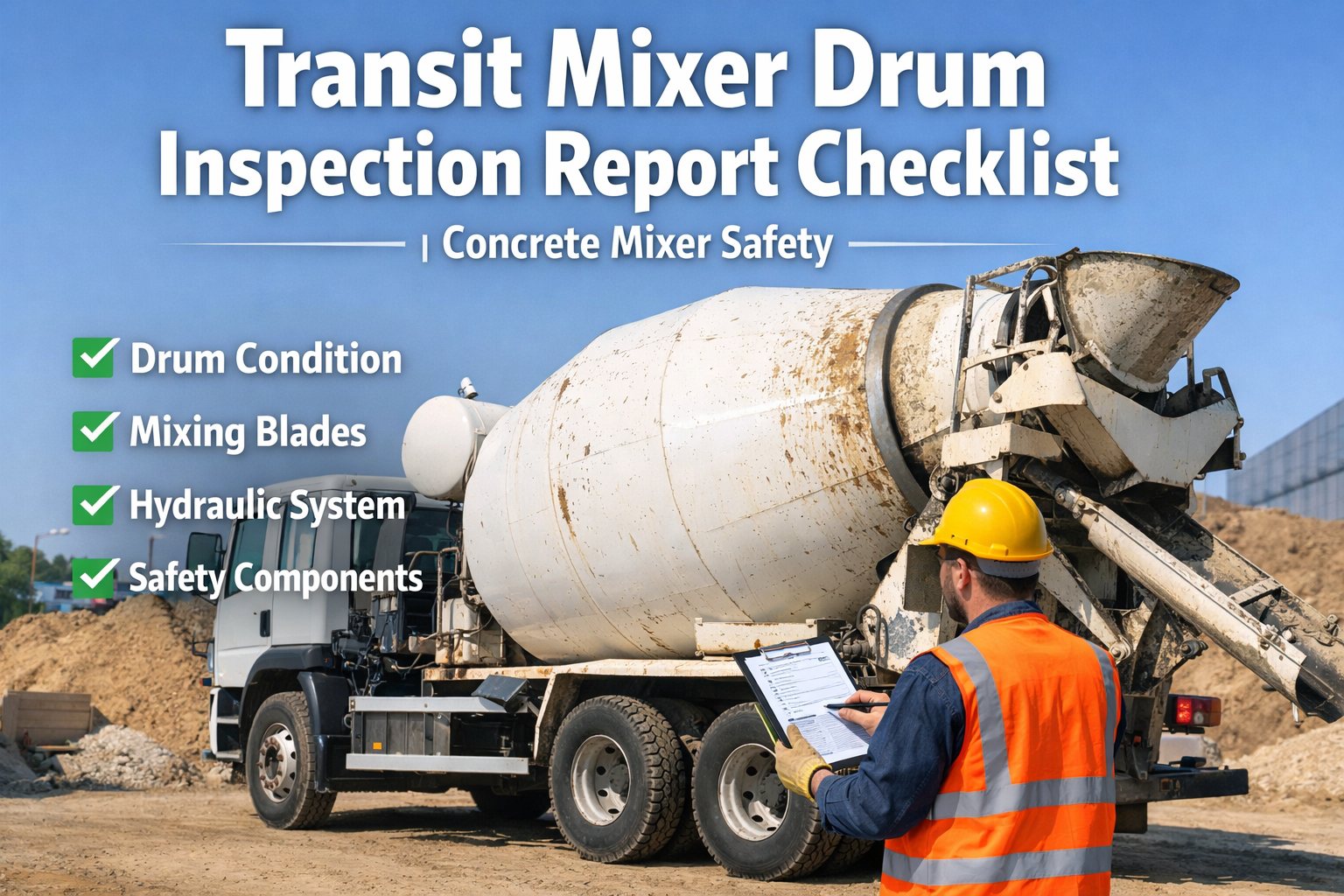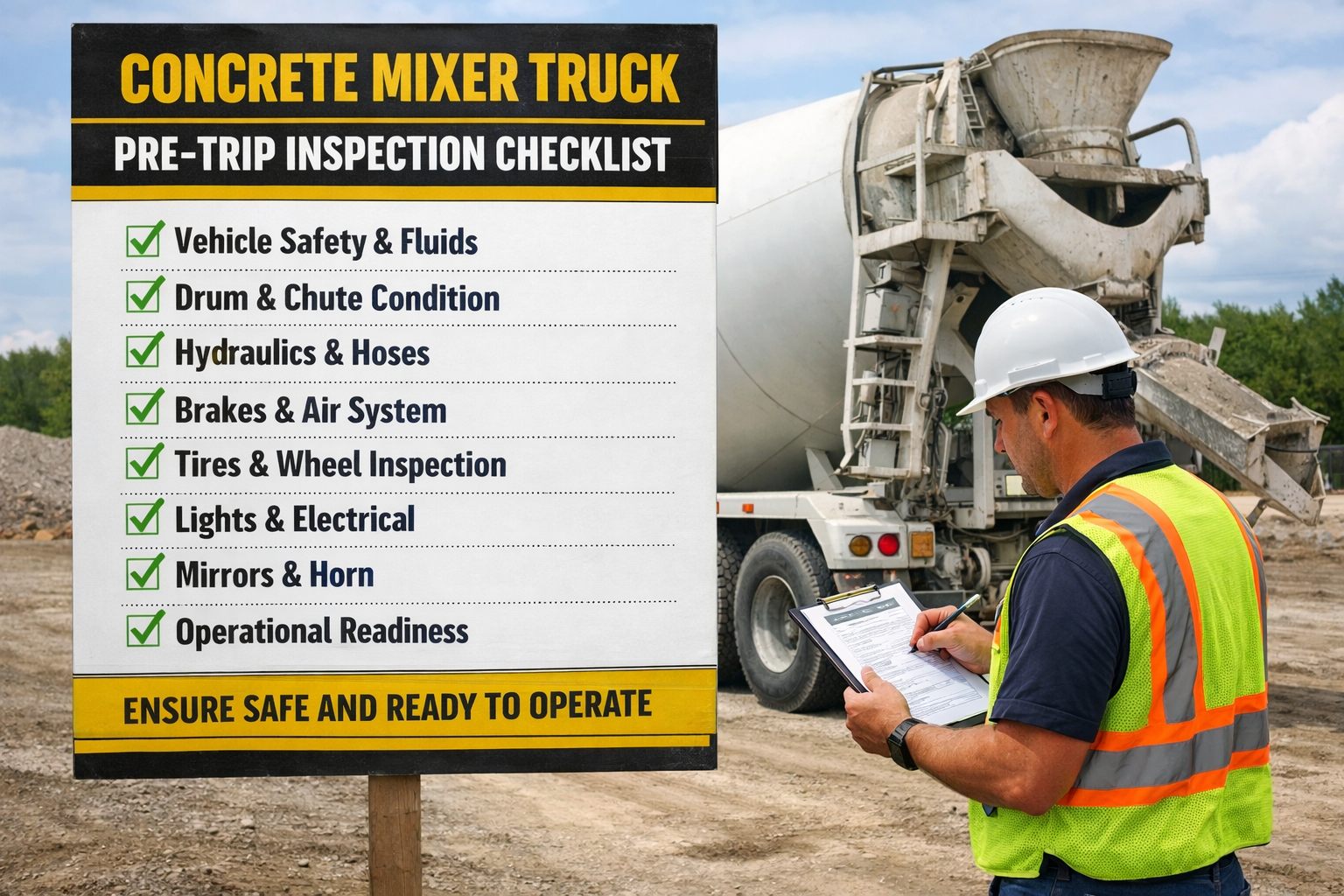
Importance of Concrete Mixer Truck Pre-Trip Inspections
Driver Safety
- Pre-trip inspection verifies brakes, steering, tires, and controls function properly preventing accidents during concrete delivery operations. Start your free trial for digital concrete truck inspection with driver checklists and DVIR compliance.
DOT Compliance
- Federal regulations require pre-trip inspections for commercial vehicles. Documented inspections demonstrate compliance during roadside checks and protect operating authority.
Delivery Reliability
- Systematic inspection identifies mechanical defects, hydraulic leaks, and tire problems before dispatch preventing route failures and delivery delays.
Liability Protection
- Completed pre-trip inspections prove driver diligence, demonstrate proper fleet maintenance, and protect against negligence claims following accidents.
1. GENERAL INSPECTION
General vehicle and equipment verification. Schedule a demo to see digital mixer truck inspection with mobile DVIR and automated compliance tracking.
Digital Concrete Mixer Truck Inspection Management
HVI App Benefits:
- ✓ Driver-assigned pre-trip checklists before dispatch
- ✓ Mobile DVIR completion with signature capture
- ✓ Immediate supervisor alerts for safety defects
- ✓ Equipment lockout preventing dispatch with defects
- ✓ Complete DOT compliance records (90-day retention)
- ✓ Fleet-wide safety monitoring and maintenance tracking
Frequently Asked Questions
1. What are critical concrete mixer truck pre-trip items?
Critical items include brake system function ensuring stopping ability with loaded concrete, tire condition supporting heavy vehicle weight, hydraulic fluid levels for drum operation, steering system responsiveness, engine oil and coolant preventing mechanical failures, fire extinguisher accessibility for emergency response, and horn operation for traffic safety. These items directly impact driver safety and delivery operations.
2. How often must concrete mixer trucks be inspected?
Federal regulations require pre-trip inspections before first route of each day and post-trip inspections documenting defects discovered during operations. Concrete delivery operations typically require inspection before each dispatch due to heavy loads and frequent stops. Annual DOT inspections required for commercial concrete trucks.
3. Why is brake inspection critical for concrete trucks?
Loaded concrete mixer trucks can exceed 60,000 pounds requiring fully functional brakes for safe stopping. Brake failures with loaded drums create runaway vehicle hazards, inability to stop at job sites endangering workers, and collision risks in traffic. Daily brake inspection verifies pin and linkage integrity, brake firmness, and smooth stopping preventing failures during delivery routes.
4. What tire problems affect concrete mixer trucks?
Common tire problems include under-inflation causing blowouts under heavy concrete loads, tread wear reducing traction on construction sites, sidewall separation from overloading or age, and missing lug nuts allowing wheel detachment. Concrete trucks operate at maximum weight limits making tire failures particularly dangerous. Daily tire inspection prevents catastrophic failures during delivery operations.
5. How does digital inspection improve fleet safety?
Digital platforms ensure drivers complete pre-trip inspections before dispatch with loaded concrete, provide mobile DVIR completion from truck cab, generate immediate supervisor alerts when defects affect safe operation, prevent truck dispatch until critical repairs are completed, maintain permanent inspection records demonstrating DOT compliance, and provide instant access to maintenance history during roadside inspections. Sign up for a free trial - no credit card required.
6. What hydraulic system items require inspection?
Hydraulic system inspection includes fluid level verification ensuring adequate drum operation, hose condition checking for leaks or damage, connection tightness preventing fluid loss during rotation, and control operation confirming smooth drum function. Hydraulic failures prevent drum rotation causing concrete to set inside mixer requiring expensive cleaning or replacement. Daily hydraulic inspection prevents failures during delivery operations.
Take Action: Implement Concrete Mixer Truck Safety Inspections
Download our FREE Concrete Mixer Truck Pre-Trip Inspection Checklist covering 25 critical items. Digital tracking ensures daily compliance, prevents operation with defects, and maintains complete fleet records.
Ensure Safe Delivery Operations with Daily Pre-Trip Inspections
Complete coverage: brakes, tires, hydraulics, steering, engine systems—all verified with digital tracking for DOT compliance.