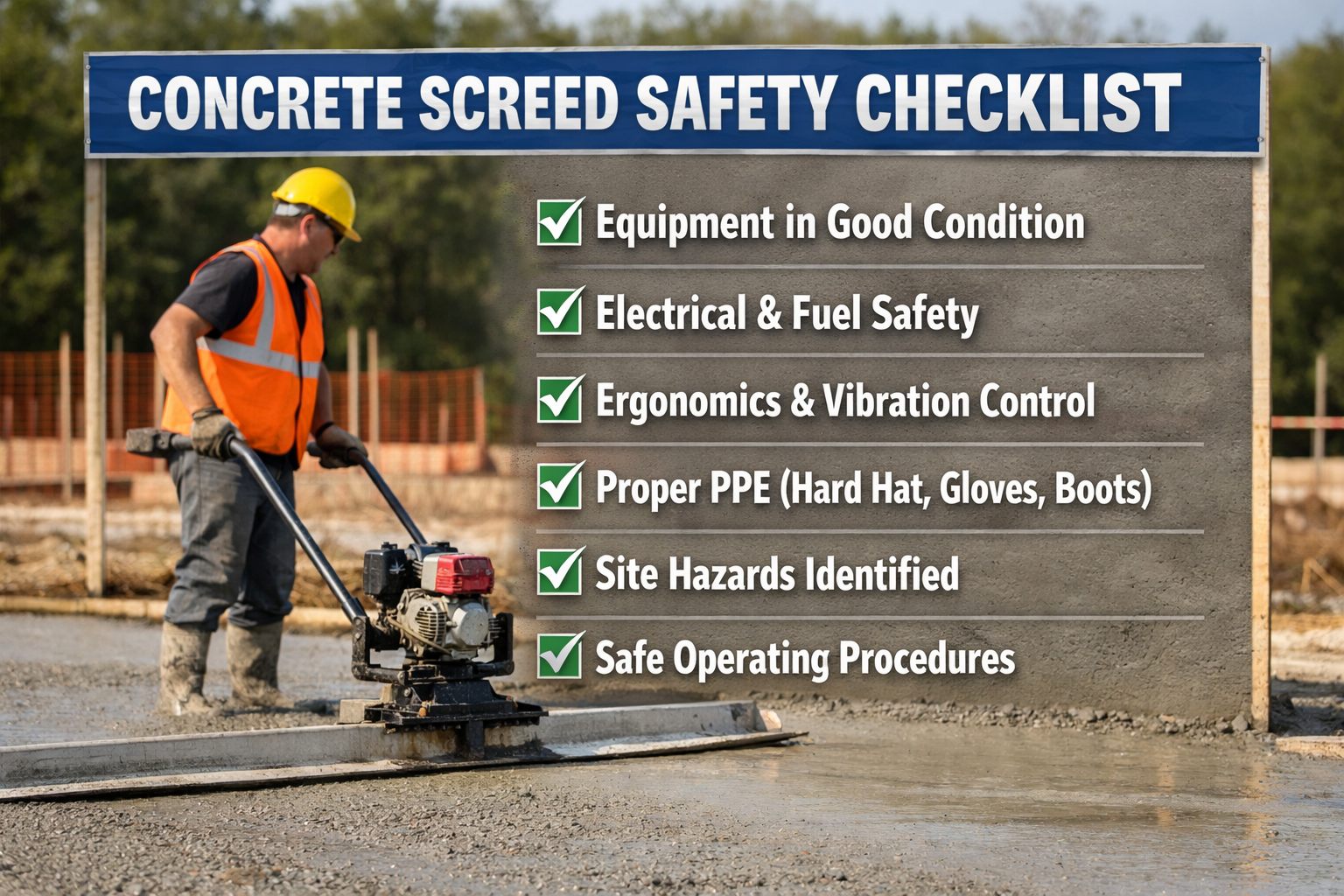
Importance of Concrete Screed Safety Checks
Accident & Injury Prevention
- Thorough pre-use inspections identify faulty electrical components, fuel leaks, worn parts, and unsafe conditions before they cause serious harm to operators or nearby workers.
Equipment Reliability & Uptime
- Checking control systems, power train, lubrication, and structural integrity prevents unexpected breakdowns during concrete pours, reducing delays and repair costs.
Regulatory Compliance & Reduced Liability
- Documented safety inspections demonstrate compliance with OSHA, local safety regulations, and company policies — protecting your organization from fines and legal exposure.
Long-term Worker Health Protection
- Consistent evaluation of vibration levels, noise, exhaust, and ergonomic factors helps prevent hand-arm vibration syndrome (HAVS), hearing loss, and other occupational health issues.
Ready to make safety inspections fast, consistent and audit-ready across your entire fleet?
Schedule a 30-minute personalized demo → or
start your free trial now — takes under 2 minutes.
CONTROL SYSTEM
Critical control system components to inspect:
ELECTRICAL SYSTEM
Key electrical components and safety checks:
FUEL INJECTION SYSTEM
Fuel system safety inspection items:
GENERAL CONDITION
Overall engine and operational condition checks:
LUB. OIL SYSTEM
Lubrication system and related components:
LUBRICANT CONDITION
Fluid condition verification:
POWER TRAIN
Critical power train and pumping components:
STRUCTURE
Structural integrity and support components:
Why Use Digital Fleet & Safety Management?
HVI App Benefits for Construction Equipment Safety:
- ✓ Automate pre-use and daily safety inspection checklists
- ✓ Track equipment hours, defects, photos, and compliance status in real time
- ✓ Manage parts, repairs, PPE requirements, and unsafe condition alerts
- ✓ Reduce risk with automatic reminders and escalation for critical issues
- ✓ Create audit-ready digital records with timestamps, signatures & evidence
- ✓ Ensure every operator completes required safety checks before use
Thousands of construction teams already use HVI to eliminate paper checklists and missed inspections.
Book your free 30-minute demo today — see exactly how it works for concrete screed, boom pumps, mixers and other heavy equipment.
Frequently Asked Questions About Concrete Screed Safety Checks
1. Why is a pre-use safety checklist important for concrete screeds?
A daily or pre-use safety checklist helps identify electrical faults, fuel leaks, worn hoses, excessive vibration sources, and structural issues before they cause injury, equipment failure, or costly downtime during concrete placement.
2. Who should complete the concrete screed safety inspection?
The operator or designated equipment inspector should complete the checklist before each shift or use. In larger crews, a safety officer or mechanic may perform more detailed checks weekly or after major pours.
3. What PPE is required when operating a power screed?
Standard PPE includes safety boots, high-visibility clothing, hearing protection (due to engine noise), gloves, dust mask/respirator (for silica dust), and safety glasses. Anti-vibration gloves are strongly recommended for prolonged use.
4. How often should vibration exposure be monitored on screed equipment?
Hand-arm vibration (HAV) should be assessed per manufacturer data and local regulations (e.g., ACGIH TLV or EU Directive). Daily pre-use checks help identify worn mounts or unbalanced screed blades that increase vibration levels.
5. Can I use a digital app instead of paper checklists for screed inspections?
Yes — digital tools like the HVI App allow photo evidence, automatic timestamps, real-time alerts for critical defects, and instant compliance records. This reduces lost paperwork and makes audits much easier.
6. What happens if a critical defect is found during the safety check?
The equipment must be tagged out of service (Lockout/Tagout procedure), reported immediately, and repaired by qualified personnel before use. Continuing operation with known serious defects can result in serious injury and legal liability.
Take Action: Implement Proper Concrete Screed Safety Checks
Download our FREE Concrete Screed Safety Checklist and start performing consistent, documented pre-use inspections. Integrating digital safety management streamlines compliance, improves accountability, reduces risk, and helps keep your crew safe on every concrete pour.
Keep Your Crew Safe on Every Screed Job
Follow a proven safety checklist: control systems, electrical & fuel checks, power train inspection, structural condition, lubricant verification—all tracked digitally for compliance and accountability.