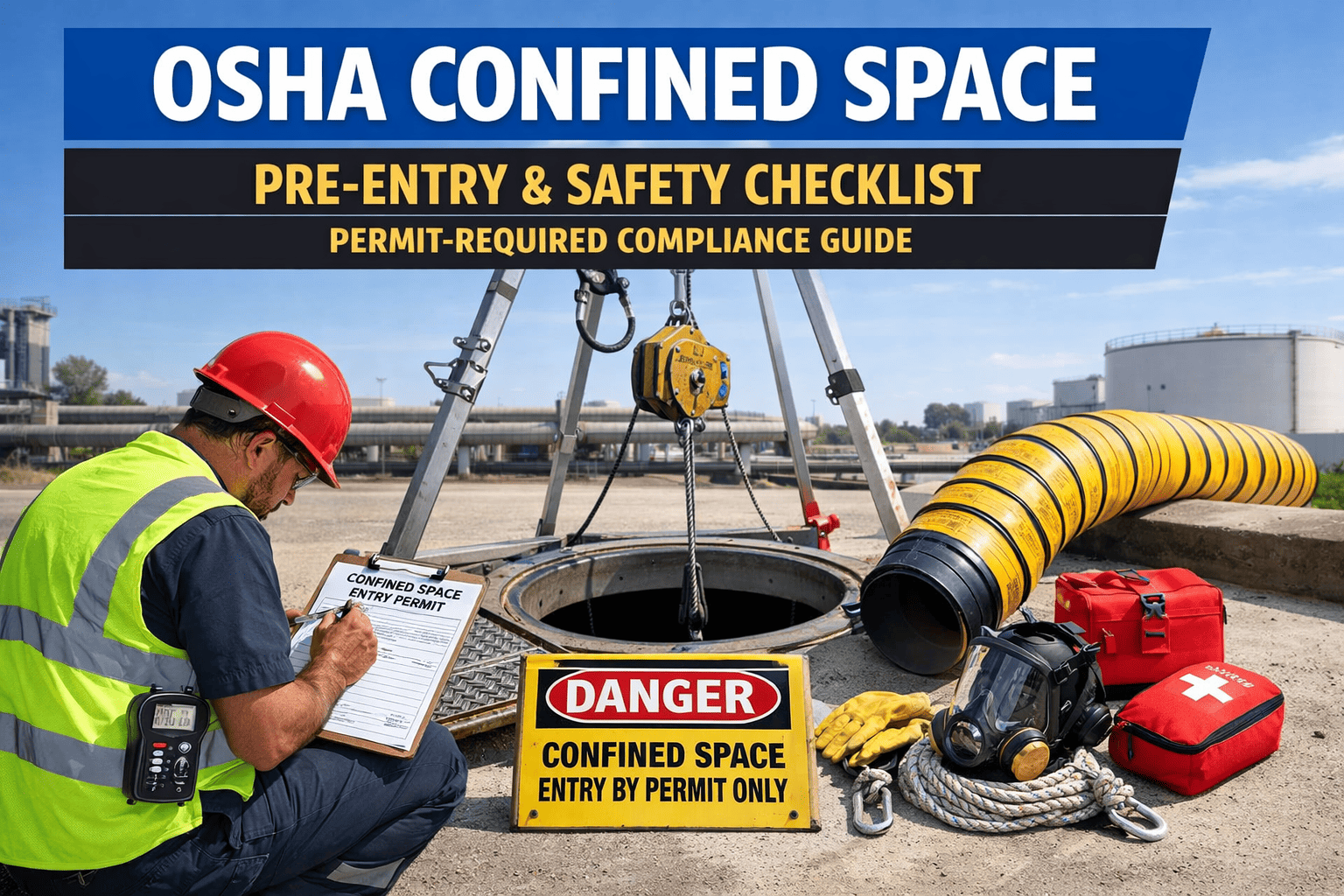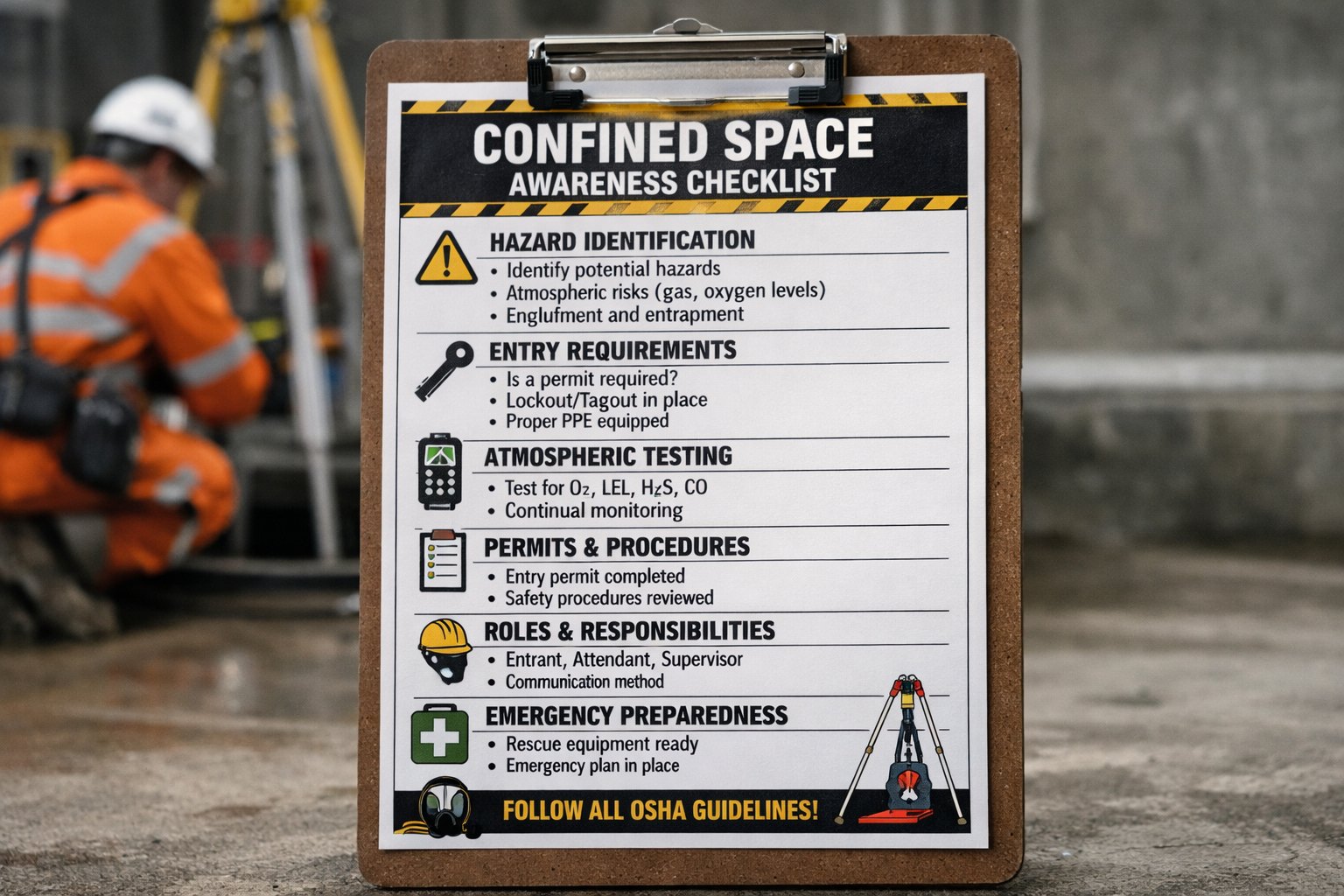
Importance of Confined Space Awareness
Worker Safety Protection
- Comprehensive confined space awareness training helps workers recognize atmospheric hazards, engulfment risks, and other life-threatening conditions before entry, preventing serious injuries and fatalities through proper hazard identification and control measures.
Regulatory Compliance
- Following OSHA confined space standards ensures regulatory compliance and avoids costly citations. Proper awareness training, permit systems, and documented procedures demonstrate commitment to worker safety and legal requirements for confined space operations.
Emergency Preparedness
- Effective confined space awareness includes emergency response planning, rescue procedures, and communication protocols. Proper training ensures all team members understand their roles, recognize warning signs of exposure, and can respond quickly to prevent tragedies.
Hazard Prevention
- Systematic confined space awareness programs identify potential hazards, implement control measures, and ensure proper atmospheric testing before entry. Regular safety assessments and permit review processes protect workers from oxygen deficiency, toxic atmospheres, and other confined space dangers.
1. Atmospheric Monitoring and Equipment
Critical atmospheric monitoring and safety equipment requirements:
2. Permit and Documentation Requirements
Essential permit system and documentation procedures:
3. Training and Qualification
Comprehensive training and qualification requirements for confined space entry teams:
4. Space Identification and Control
Critical confined space identification and access control measures:
Why Use Digital Safety Management?
HVI App Benefits for Confined Space Safety:
- ✓ Automate permit-required confined space entry documentation and tracking
- ✓ Track real-time atmospheric testing results and equipment calibration
- ✓ Manage training certifications and qualification renewals for entry teams
- ✓ Maintain complete audit-ready records of all confined space entries
- ✓ Create standardized entry procedures and emergency response protocols
- ✓ Ensure regulatory compliance with OSHA confined space requirements
Frequently Asked Questions About Confined Space Awareness
1. What is a confined space according to OSHA?
A confined space is defined by OSHA as a space that is large enough for workers to enter and perform work, has limited means of entry or exit, and is not designed for continuous occupancy. Permit-required confined spaces have additional hazards such as atmospheric dangers, engulfment risks, or configuration hazards that could trap or asphyxiate workers.
2. What atmospheric hazards exist in confined spaces?
Confined spaces can contain oxygen-deficient atmospheres (below 19.5%), oxygen-enriched atmospheres (above 23.5%), flammable gases or vapors, and toxic substances. Atmospheric testing must be conducted before entry and continuously monitored during work to protect workers from these life-threatening hazards.
3. Who can authorize confined space entry?
Only trained and qualified entry supervisors can authorize confined space entry. Entry supervisors must verify that all required testing and procedures have been completed, ensure rescue services are available, and confirm that all entry team members understand their roles and the hazards present.
4. What training is required for confined space entry?
Workers must receive comprehensive training on confined space hazards, entry procedures, atmospheric testing, emergency response, and their specific roles (authorized entrant, attendant, or entry supervisor). Training must be documented and refreshed whenever conditions change or workers demonstrate knowledge gaps.
5. How does the HVI App help manage confined space safety?
The HVI App automates permit documentation, tracks atmospheric testing results, manages training certifications, maintains complete entry records, and ensures compliance with OSHA requirements. Digital management streamlines confined space safety programs and creates audit-ready documentation for regulatory inspections.
6. What is the role of the confined space attendant?
The confined space attendant (hole watch) monitors the entry from outside, maintains communication with entrants, tracks who enters and exits, recognizes hazardous conditions, orders evacuation when necessary, and summons rescue services if needed. Attendants must have no other duties that could interfere with monitoring responsibilities.
Take Action: Implement Comprehensive Confined Space Safety
Download our FREE Confined Space Awareness Checklist and start implementing safer, more compliant confined space entry procedures. Integrating digital safety management with your confined space program streamlines every aspect of hazard identification, permit documentation, and worker protection, ensuring your operations remain safe, compliant, and effective. Experience the power of automated safety tracking to enhance your confined space program and prevent serious incidents.
Protect Workers with Comprehensive Confined Space Safety
Implement proven confined space awareness: hazard identification, atmospheric testing, permit systems, training documentation, and emergency preparedness—all managed digitally for complete regulatory compliance.