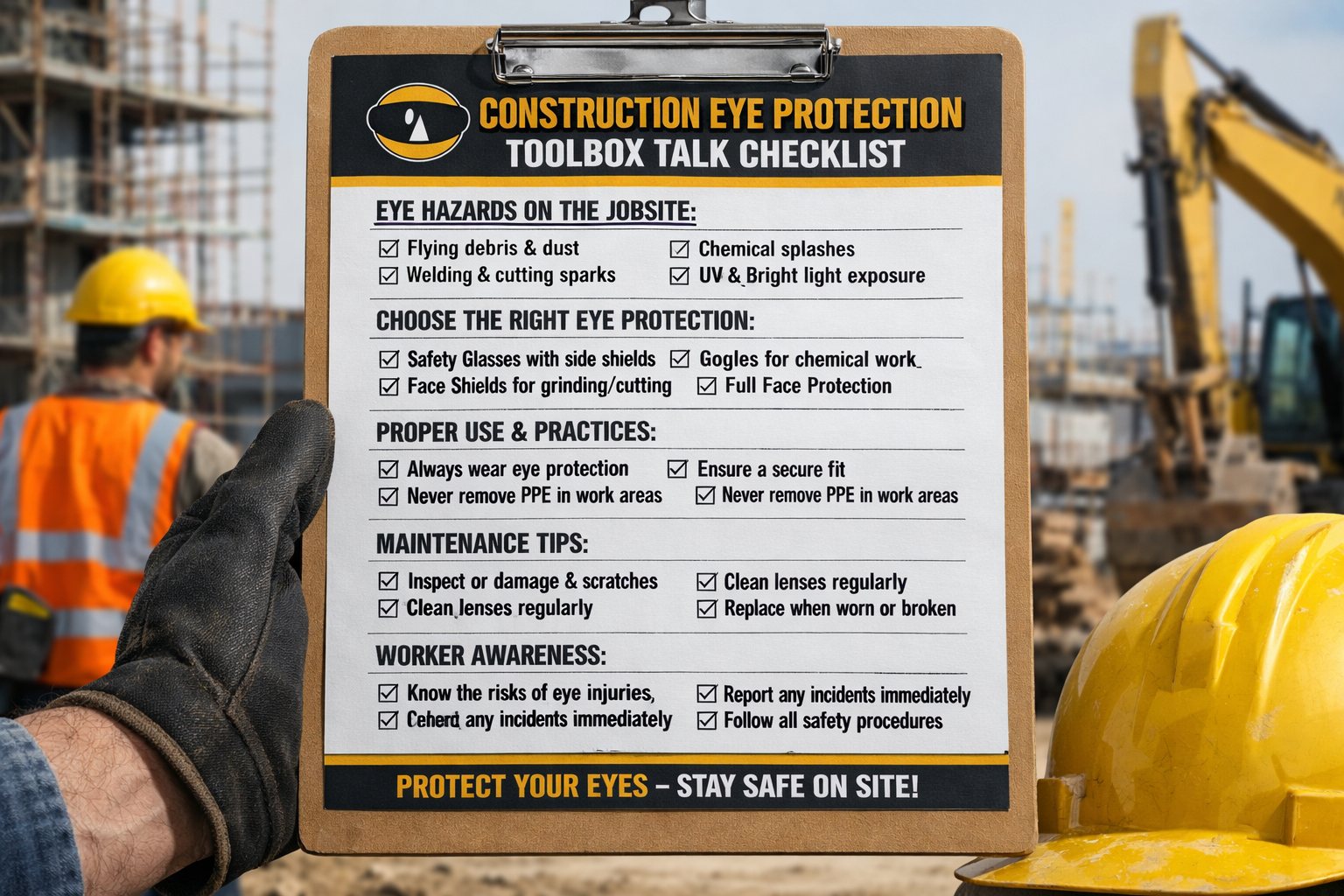
Importance of Construction Eye Protection
Injury Prevention
- 2,000 daily workplace eye injuries in US with construction workers having highest rates. Proper eye protection prevents life-long vision problems from dust, metal, wood particles. Start your free trial for digital safety training tracking and compliance documentation.
Proper Selection
- Correct eyewear selection based on hazards prevents injuries. Goggles, face shields, and impact-resistant glasses provide different protection levels for various construction tasks.
Emergency Readiness
- Knowing eyewash station locations and emergency procedures enables rapid response to eye injuries minimizing permanent vision damage.
Compliance
- Documented eye safety training satisfies OSHA requirements, demonstrates proper PPE programs, and protects against liability following eye injuries.
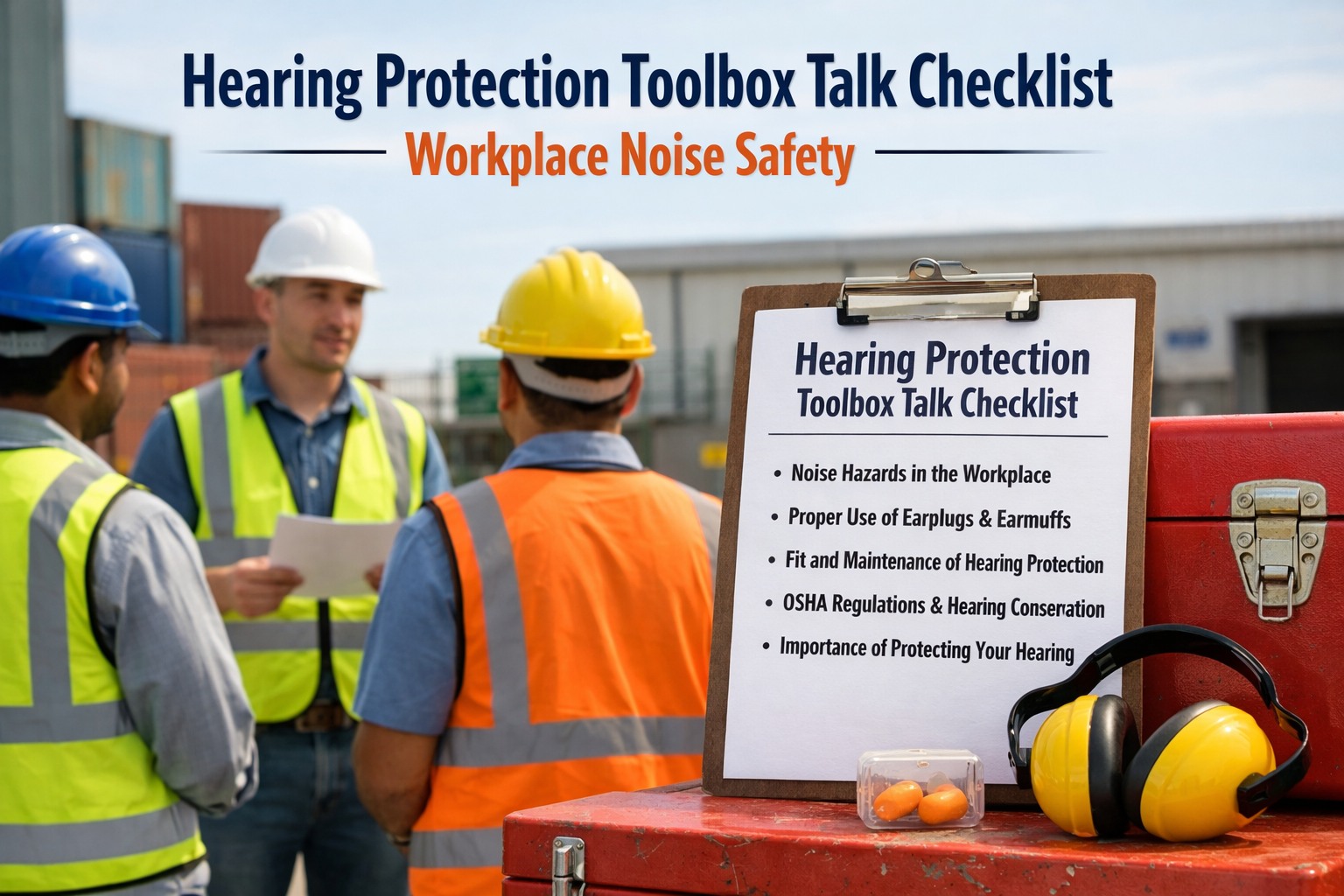
1. Construction Eye Protection Toolbox Talk
Eye safety awareness and protection procedures. Schedule a demo to see digital toolbox talk tracking with attendance records and safety training compliance.
Digital Eye Safety Training Management
HVI App Benefits:
- ✓ Digital toolbox talk attendance tracking
- ✓ Worker acknowledgment and signature capture
- ✓ Complete training records for OSHA compliance
- ✓ Photo documentation of PPE usage
- ✓ Hazard-specific eyewear selection guides
- ✓ Emergency procedure verification
Frequently Asked Questions
1. Why are construction workers at high risk for eye injuries?
Construction workers face multiple eye hazards including flying particles from power tools, sawing, grinding, and hammering; dust and debris from cement, drywall, and wood; chemical splashes from corrosive substances; and radiant energy from welding operations. 2,000 workplace eye injuries occur daily in US with construction having highest injury rates. Even minor scratches from sawdust or cement cause painful corneal erosion with life-long vision problems.
2. What types of eye protection are required for construction work?
Required eye protection depends on specific hazards: impact-resistant safety glasses with side shields for general construction work, flexible-fitting goggles over prescription glasses for dust and particle protection, chemical goggles for corrosive substance handling, full face shields (worn with safety glasses) for grinding and welding, and special purpose eyewear for specific tasks like chipping or welding. Regular glasses and contact lenses never substitute for proper safety eyewear.
3. Can face shields be worn alone for eye protection?
No, full face shields worn alone do not adequately protect from impact hazards. Face shields must be worn in addition to protective eyewear (safety glasses or goggles) when protection from impact hazards is necessary. Face shields provide face and neck protection but require underlying eye protection for complete safety.
4. What emergency procedures should workers know for eye injuries?
Workers must know eyewash station and face-washing unit locations, complete required training on emergency equipment use, report accidents to supervisors immediately, and seek medical help without delay. Eye injuries require immediate flushing with water or eyewash solution for chemical exposures. Delayed treatment increases risk of permanent vision damage.
5. How does digital training tracking improve eye safety compliance?
Digital platforms ensure toolbox talks reach all workers with attendance verification, capture worker acknowledgments and signatures documenting training completion, maintain permanent records demonstrating OSHA compliance, enable photo documentation of proper PPE usage, provide hazard-specific eyewear selection guidance, and track emergency procedure training ensuring workers know response protocols. Sign up for a free trial - no credit card required.
6. What eye hazards exist in different construction activities?
Chipping, grinding, and sawing create flying particles requiring impact-resistant glasses with side shields. Chemical handling involves splash hazards needing chemical goggles. Welding produces radiant energy, sparks, and flying particles requiring welding helmets with proper lens shading. Overhead work creates falling debris hazards. Dusty environments require sealed goggles preventing particle entry. Each activity requires hazard assessment and appropriate eye protection selection preventing specific injury types.
Take Action: Implement Construction Eye Safety Training
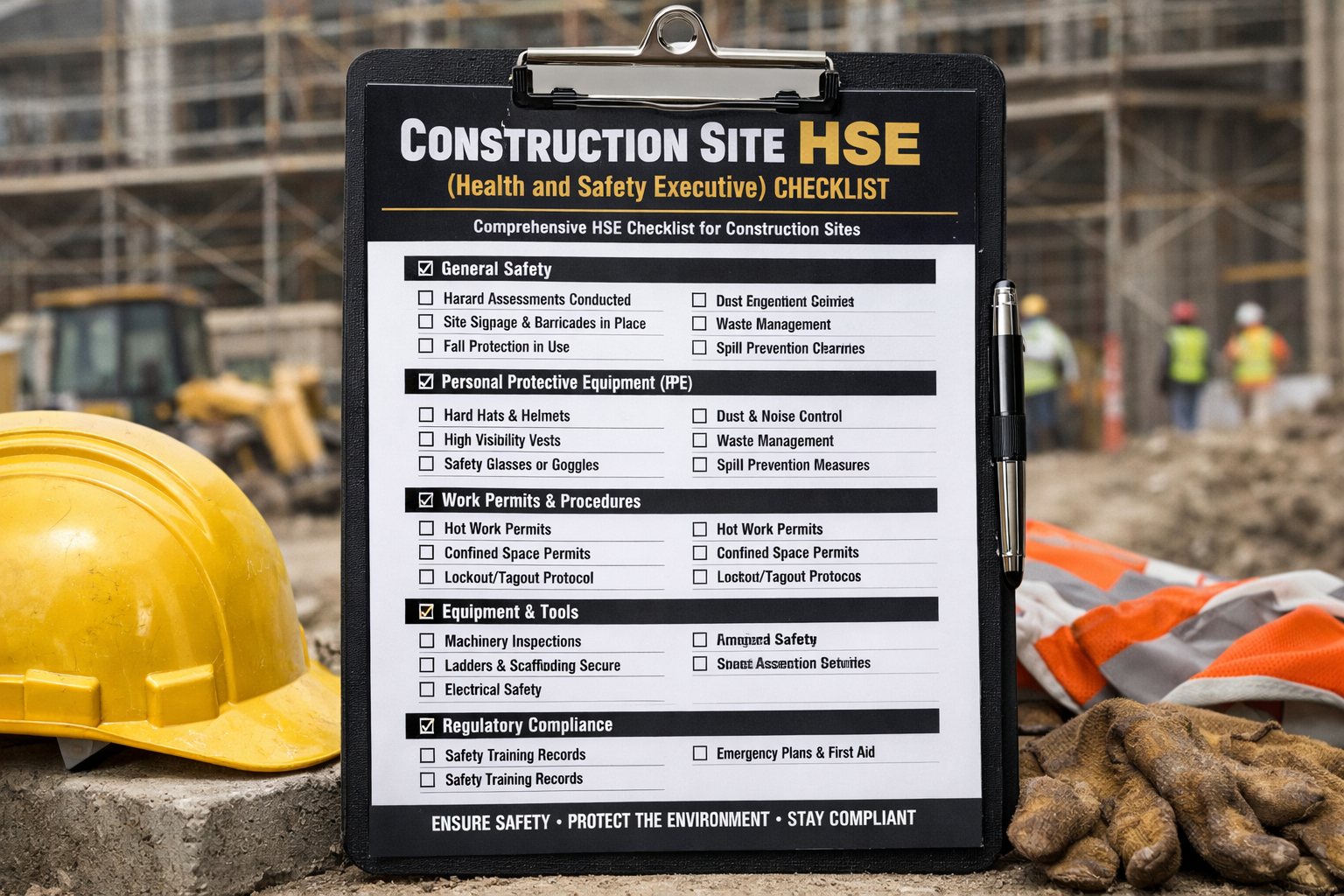
Download our FREE Construction Eye Protection Toolbox Talk Checklist covering 17 critical safety points. Digital tracking ensures training completion, documents attendance, and maintains complete compliance records.
Prevent Eye Injuries with Comprehensive Safety Training
Complete coverage: hazard awareness, eyewear selection, emergency procedures—all verified with digital training tracking for OSHA compliance.