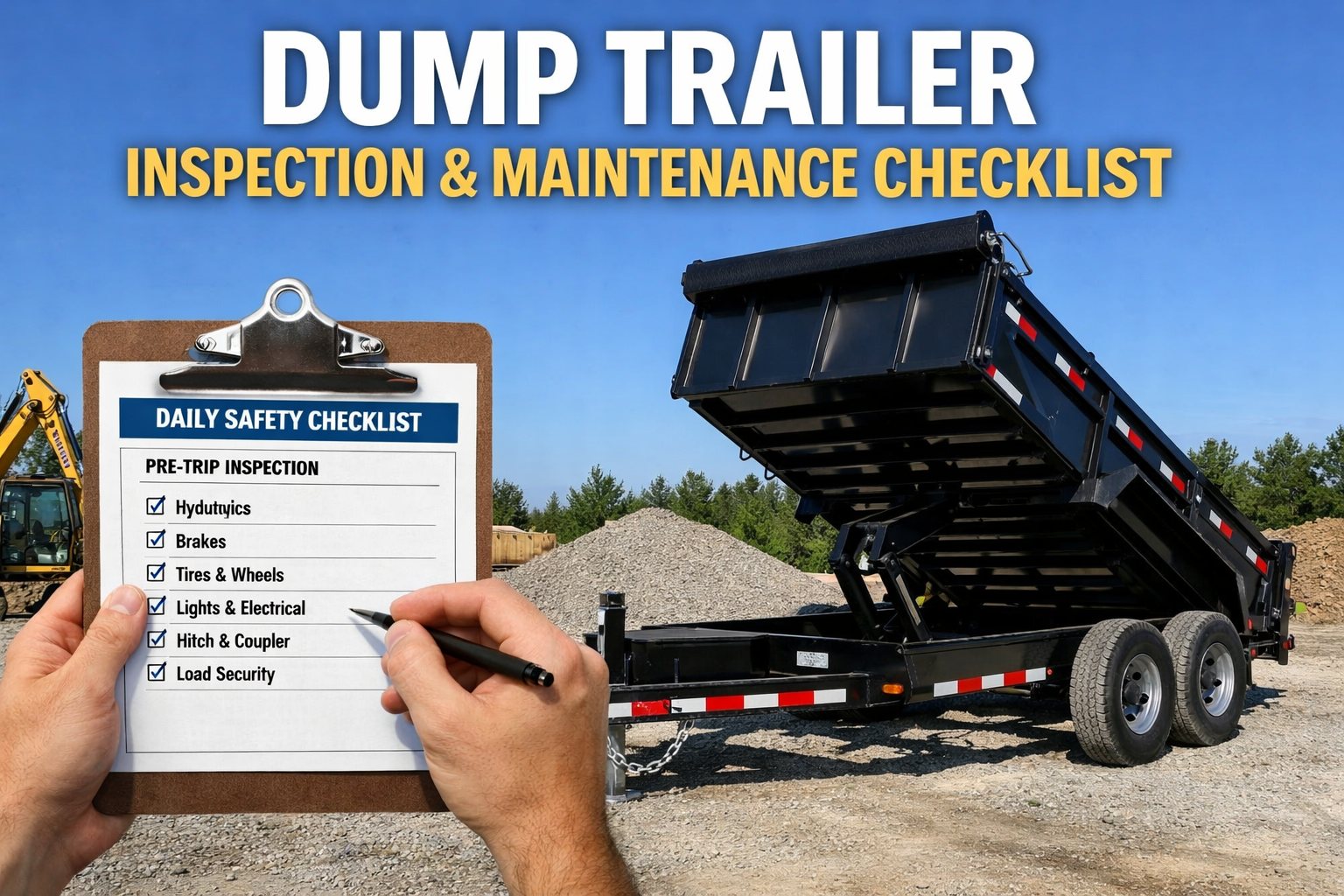
Importance of Dump Trailer Inspections
Road Safety
- Dump trailer inspections prevent brake failures, tire blowouts, coupling separations, and lighting defects that could cause serious accidents on highways and construction sites. Systematic checks of brake systems, wheel bearings, safety chains, and electrical components protect drivers, other motorists, and pedestrians from trailer-related accidents and load spillage incidents.
DOT Compliance
- Federal Motor Carrier Safety Regulations require comprehensive trailer inspections to verify brake functionality, lighting operation, coupling integrity, and tire condition. Documented inspections demonstrate compliance with FMCSR Part 396 requirements, prevent roadside violations, and ensure hauling operations meet Department of Transportation safety standards.
Equipment Reliability
- Regular inspections identify brake adjustment issues, suspension wear, wheel bearing deterioration, and electrical system defects before they cause breakdowns during critical hauling operations. Early detection of tire damage, hub problems, and brake line leaks prevents costly roadside repairs and maintains productive dump trailer operations.
Liability Protection
- Systematic dump trailer inspection programs reduce accident risks, lower insurance premiums, and protect companies from liability claims resulting from equipment failures. Complete inspection documentation provides legal protection and demonstrates due diligence in fleet safety management and regulatory compliance.
1. Additional
Coupling and registration verification. Prevent detachment accidents—sign up now to automate coupling and safety chain inspection tracking.
2. Brake System
Brake components and functionality verification. Ensure stopping power—schedule a demo to see how digital tracking prevents brake system failures.
3. Electrical System
Lighting and electrical safety verification:
4. Running Gear
Suspension and chassis component inspection:
5. Tires and Wheels
Tire condition and wheel integrity verification. Prevent blowouts—create your account to implement automated tire pressure and condition monitoring.
Why Use Digital Dump Trailer Inspection Management?
HVI App Benefits for Dump Trailer Inspections:
- ✓ Automate daily pre-use inspection reminders for all drivers and operators
- ✓ Track brake system condition, tire pressure, and lighting functionality
- ✓ Document coupling security, safety chain condition, and registration status
- ✓ Generate professional inspection reports for DOT compliance audits
- ✓ Create work orders automatically for brake adjustments and tire replacements
- ✓ Maintain complete inspection history for all dump trailer assets
Fleet operations demand reliable equipment. Start your free trial to implement digital dump trailer inspections today, or schedule a demo to see how automated tracking prevents roadside breakdowns and DOT violations.
Frequently Asked Questions About Dump Trailer Inspections
1. Why are dump trailer inspections critical for fleet safety?
Dump trailer inspections prevent brake failures, tire blowouts, coupling separations, and electrical malfunctions that could cause serious highway accidents, load spillage, or equipment damage. Systematic checks of brake systems, wheel bearings, safety chains, trailer lights, and tire condition protect drivers, other motorists, and cargo while ensuring compliance with DOT regulations and preventing costly roadside violations during hauling operations.
2. What are the key components inspected on dump trailers?
Critical components include brake systems (brakes, adjustment, magnets, linings, controllers, cylinders, lines, hubs/drums), wheel bearings and seals, electrical systems (battery, trailer lights, brake wiring, breakaway system), couplers and jacks, safety chains, running gear (springs, suspension parts, U-bolts), tires (pressure, condition, replacement timing), wheels (condition, nuts/bolts), and trailer registrations.
3. How often should dump trailers be inspected?
DOT regulations require daily pre-use inspections by drivers before each trip to verify safe operating condition. Inspections must cover brake functionality, tire condition and pressure, lighting operation, coupling security, safety chains, and load securement systems. Periodic comprehensive inspections (typically every 12 months or as specified by manufacturer) assess brake adjustment, wheel bearing condition, suspension wear, and electrical system integrity.
4. How does the HVI App help manage dump trailer inspections?
The HVI App automates daily pre-trip inspection scheduling, sends reminders to drivers before trips, provides comprehensive trailer safety checklists, captures photos of brake wear, tire damage, and coupling condition, tracks brake adjustment intervals and tire pressure monitoring, generates DOT-compliant inspection reports, creates automatic work orders for deficiencies, maintains complete DVIR (Driver Vehicle Inspection Report) documentation, and alerts fleet managers to safety-critical issues requiring immediate attention. Ensure fleet compliance—sign up free or book your demo.
5. What DOT regulations apply to dump trailer inspections?
FMCSR Part 396 (Inspection, Repair, and Maintenance) requires systematic inspection, repair, and maintenance of commercial motor vehicle equipment including dump trailers. Regulations mandate daily pre-trip inspections, annual inspections by qualified inspectors, documentation of all inspections and repairs, and immediate removal from service for defects affecting safe operation. Equipment must meet FMCSR Part 393 safety equipment standards including brakes, lighting, and coupling devices.
6. What happens if defects are found during dump trailer inspection?
Any defect affecting safe trailer operation must be documented on a Driver Vehicle Inspection Report (DVIR) immediately, and the trailer must be removed from service until repairs are completed by qualified technicians. Critical deficiencies include brake system failures, tire damage beyond safe limits, non-functional lights, coupling defects, broken safety chains, or suspension damage requiring immediate corrective action before resuming hauling operations on public roads.
Take Action: Implement Systematic Dump Trailer Inspections
Download our FREE Dump Trailer Inspection & Maintenance Checklist and start implementing comprehensive daily pre-use inspection protocols for your hauling fleet. Integrating digital inspection management streamlines DOT compliance tracking, ensures drivers perform thorough pre-trip checks, and maintains complete DVIR documentation for regulatory requirements. Experience the power of automated inspection tracking to enhance fleet safety and prevent costly roadside violations.
Prevent Roadside Breakdowns with Comprehensive Dump Trailer Inspections
Perform systematic safety inspections: brake systems, electrical components, tires and wheels, running gear, couplers, safety chains—all tracked automatically with digital fleet management.