Importance of Emergency Generator Weekly Inspections
Critical Infrastructure Protection
- Emergency generator inspections ensure backup power systems provide reliable electricity during utility failures for hospitals, data centers, emergency services, and critical facilities. Weekly verification of fuel supply, battery readiness, coolant levels, and auto-start capability prevents catastrophic failures during emergencies when uninterrupted power is essential for life safety and operations.
NFPA 110 Compliance
- NFPA 110 Standard for Emergency and Standby Power Systems requires weekly inspections of emergency generators to verify operational readiness. Documented inspections demonstrate compliance with Level 1 and Level 2 system requirements, prevent code violations, and ensure emergency power systems meet regulatory standards for critical facilities.
Equipment Reliability
- Weekly inspections identify fuel contamination, battery deterioration, coolant loss, belt wear, and electrical system defects before they cause generator failures during utility outages. Early detection of engine oil consumption, radiator leaks, and battery charger malfunctions prevents costly emergency repairs and maintains generator availability.
Operational Readiness
- Systematic weekly inspections verify generators maintain proper fuel levels, battery charge, coolant temperature, and electrical system functionality ensuring immediate auto-start capability during power failures. Regular monitoring prevents operational failures that could compromise patient care, data integrity, emergency communications, and critical facility operations.
Sign up to track emergency generator inspections automatically
PRIME MOVER / GENERATOR
Comprehensive generator system verification. Ensure backup power readiness—sign up now to automate weekly generator inspection tracking, or schedule a demo to see how digital management ensures NFPA 110 compliance.
Why Use Digital Emergency Generator Inspection Management?
HVI App Benefits for Generator Weekly Inspections:
- ✓ Automate weekly inspection schedules with reminders for facilities teams
- ✓ Track fuel levels, battery condition, and coolant percentages over time
- ✓ Document inspection findings with photos and timestamps for NFPA audits
- ✓ Generate professional inspection reports for regulatory compliance
- ✓ Create work orders automatically for maintenance and repairs
- ✓ Maintain complete inspection history for all emergency generator assets
Critical facilities demand reliable backup power. Start your free trial to implement digital generator inspection management today, or schedule a demo to see how automated tracking ensures emergency power readiness and NFPA 110 compliance.
Frequently Asked Questions About Emergency Generator Weekly Inspections
1. Why are emergency generator weekly inspections critical?
Emergency generator weekly inspections ensure backup power systems remain operational and ready to provide critical electrical power during utility outages affecting hospitals, data centers, emergency services, and essential facilities. Systematic checks prevent fuel contamination, battery failures, coolant loss, and electrical system defects that could cause generators to fail during emergencies when reliable backup power is essential for life safety, patient care, data integrity, and critical operations.
2. What are the key components inspected on emergency generators weekly?
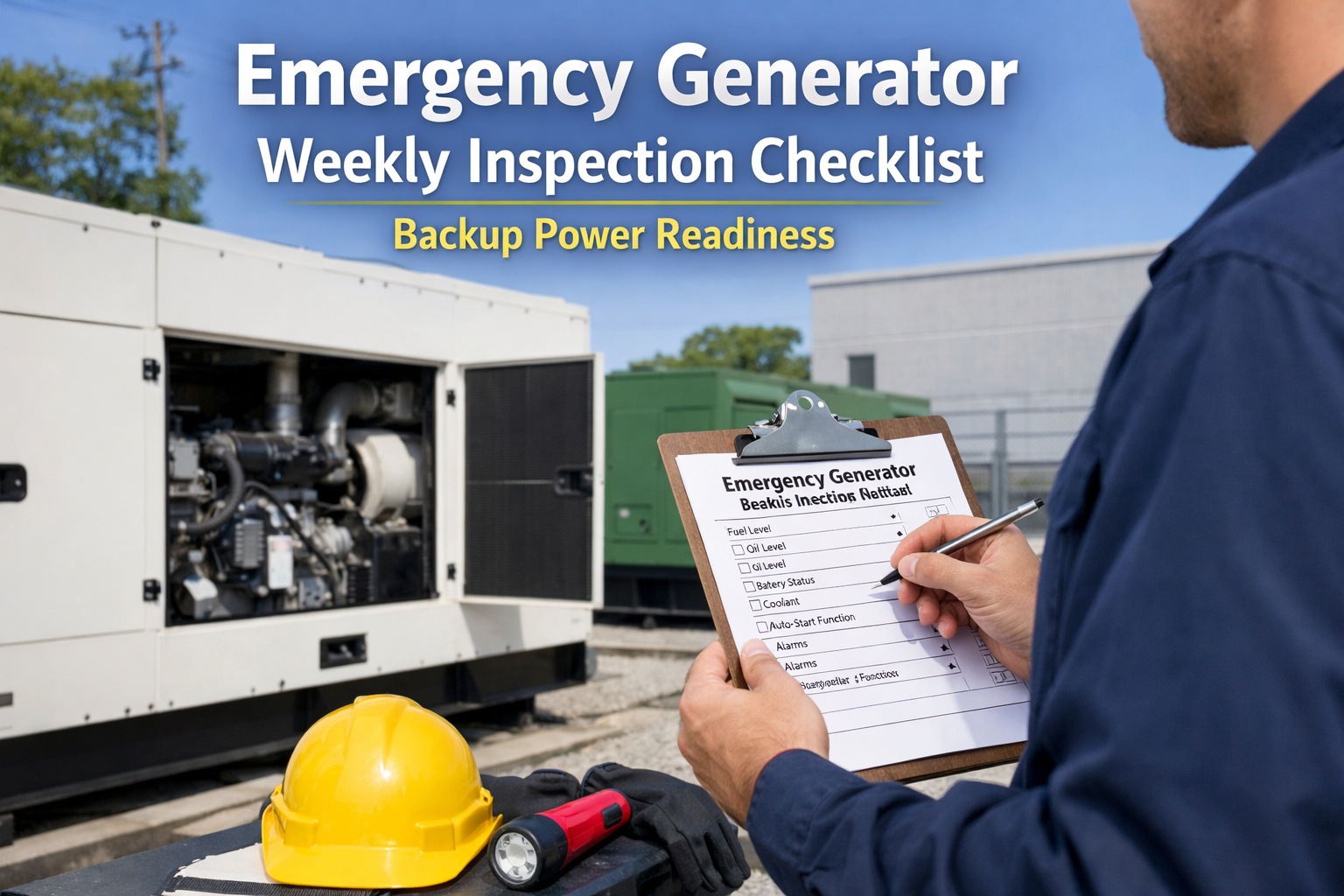
Critical weekly inspection items include general condition assessment, belts and hoses condition, engine oil level percentage, lube oil heater operation, coolant level percentage, water pump functionality, jacket water heater operation, radiator and hoses condition, electrical system integrity, battery condition, battery electrolyte level, battery specific gravity, battery charger operation, exhaust system condition, fuel supply level percentage, and fuel tank vent functionality ensuring complete system readiness.
3. How often should emergency generators be inspected?
NFPA 110 requires weekly inspections of emergency generators to verify operational readiness including fuel levels, battery condition, coolant levels, and general system condition. Monthly exercise testing under load verifies operational capability. Annual comprehensive inspections assess engine performance, electrical systems, and safety controls. Level 1 systems (critical for life safety) require more frequent inspections than Level 2 systems. All inspections must be documented with findings and corrective actions.
4. How does the HVI App help manage emergency generator inspections?
The HVI App automates weekly inspection scheduling, sends reminders to facilities personnel before inspections are due, provides comprehensive generator inspection checklists, captures photos of gauge readings and equipment condition, tracks fuel level trends and battery performance over time, generates NFPA 110-compliant inspection reports, creates automatic work orders for maintenance issues, maintains complete documentation for regulatory audits, and alerts facility managers to critical deficiencies requiring immediate attention. Ensure backup power reliability—sign up free or book your demo.
5. What NFPA regulations apply to emergency generator inspections?
NFPA 110 Standard for Emergency and Standby Power Systems establishes inspection, testing, and maintenance requirements for emergency generators. Weekly inspections verify fuel supply, battery condition, coolant levels, and system readiness. Monthly exercise testing under load confirms operational capability. Annual load bank testing validates performance under design conditions. Level 1 systems serving life safety applications require stricter inspection schedules than Level 2 systems. All inspections require documented findings and corrective actions.
6. What happens if defects are found during generator inspections?
Any defect affecting generator operational readiness must be documented immediately and corrected according to NFPA 110 timelines. Critical deficiencies including low fuel levels, battery failures, coolant loss, or electrical system defects require immediate corrective action. Non-critical issues must be tracked and resolved during scheduled maintenance. Generators with defects preventing auto-start capability must have alternate backup power arrangements until repairs restore full operational readiness for emergency response.
Take Action: Implement Systematic Emergency Generator Inspections
Download our FREE Emergency Generator Weekly Inspection Checklist and start implementing comprehensive backup power inspection protocols for your critical facility. Integrating digital inspection management streamlines NFPA 110 compliance tracking, ensures weekly inspections are completed on schedule, and maintains complete documentation for regulatory audits. Experience the power of automated generator inspection tracking to ensure emergency power readiness and protect critical operations.
Ensure Emergency Power Reliability with Comprehensive Generator Inspections
Perform systematic weekly inspections: fuel levels, battery condition, coolant systems, belts/hoses, electrical systems, exhaust—all tracked automatically with digital emergency power management.