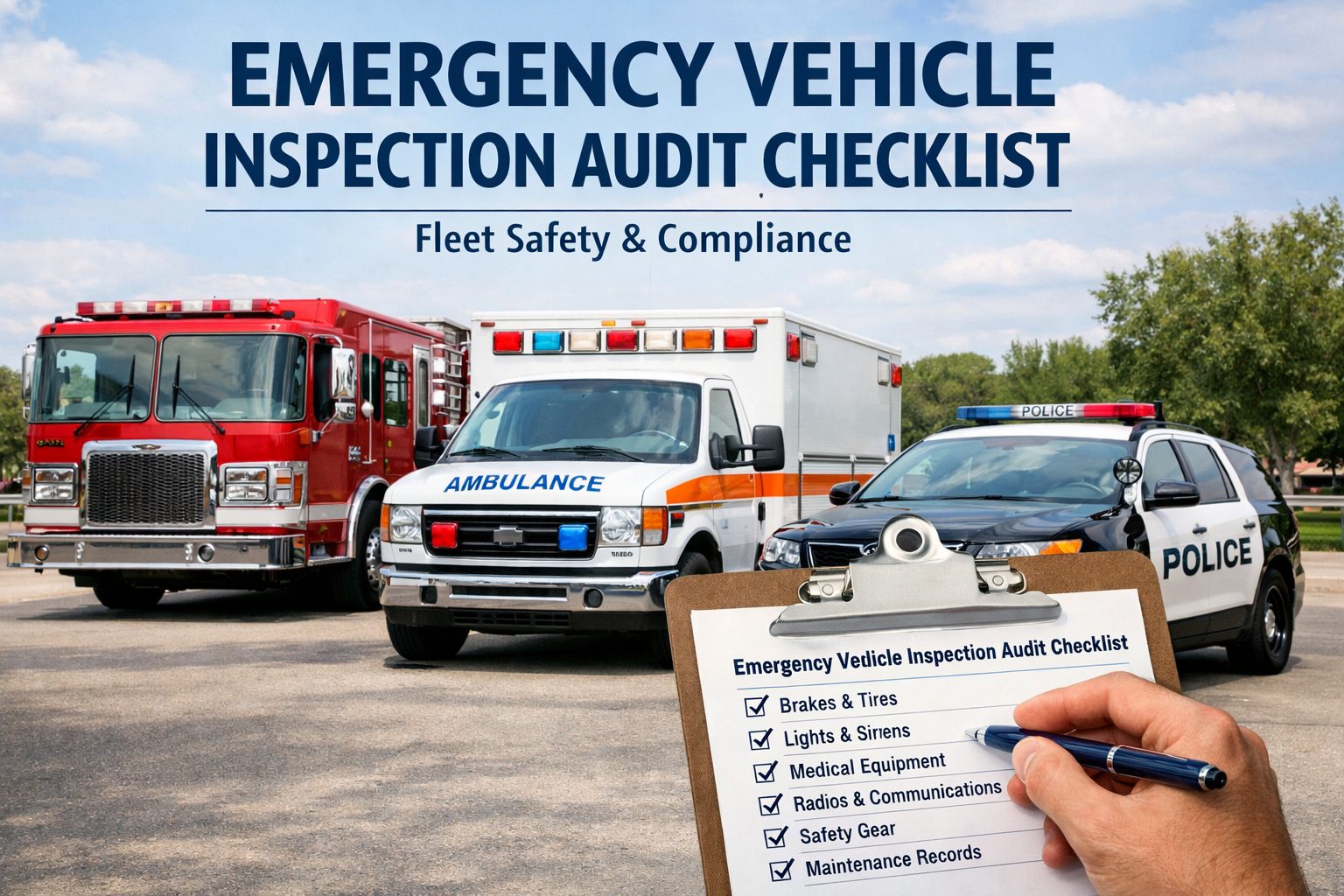
Importance of Emergency Vehicle Inspection Audits
Response Readiness
- Emergency vehicle audits verify ambulances, fire trucks, and police vehicles maintain operational readiness for immediate life-safety responses. Comprehensive checks of lighting, sirens, communications, rescue tools, and safety systems ensure emergency responders have reliable equipment when lives depend on rapid response.
Public Safety
- Systematic audits protect the public by ensuring emergency vehicles operate safely with functioning warning lights, sirens, brakes, and safety equipment. Regular verification of rescue equipment, first aid supplies, and communications ensures effective emergency assistance without equipment failures.
Regulatory Compliance
- NFPA, DOT, and state regulations require documented emergency vehicle inspections and maintenance. Complete audit records demonstrate compliance with emergency vehicle standards, prevent citations, and ensure emergency services meet public safety requirements.
Crew Protection
- Audits verify seat belts, grab rails, cabinet security, and structural integrity protecting crews during high-speed responses. Comprehensive checks of mirrors, reversing cameras, and safety systems prevent accidents and maintain crew safety.
1. EXTERIOR BODY AND GLASS (Take Photos of any noted damage).
Exterior condition and damage verification. Maintain fleet appearance—sign up now to automate photo documentation.
2. EXTERIOR LIGHTS
Lighting system functionality verification. Ensure visibility—schedule a demo to see digital lighting inspection tracking.
3. INTERIOR
Interior safety and operational systems verification:
4. REQUIRED DOCUMENTATION
Compliance documentation verification:
5. RESCUE EQUIPMENT
Rescue tools and equipment readiness verification. Ensure response capability—create your account to track rescue equipment automatically.
6. SAFETY EQUIPMENT
Emergency warning and safety systems verification:
7. TYRES
Tire and wheel assembly condition verification:
Why Use Digital Emergency Vehicle Inspection Management?
HVI App Benefits for Emergency Vehicle Audits:
- ✓ Automate daily and periodic inspection schedules for emergency fleet
- ✓ Track EVS siren, lights, and communications equipment functionality
- ✓ Document rescue equipment condition with photos and timestamps
- ✓ Generate professional audit reports for NFPA and regulatory compliance
- ✓ Create work orders automatically for equipment deficiencies
- ✓ Maintain complete inspection history for all emergency vehicles
Emergency services demand peak readiness. Start your free trial to implement digital emergency vehicle audits today, or schedule a demo to see automated compliance tracking.
Frequently Asked Questions About Emergency Vehicle Inspection Audits
1. Why are emergency vehicle inspection audits critical?
Emergency vehicle audits ensure ambulances, fire trucks, and police vehicles maintain operational readiness for life-safety responses. Comprehensive checks prevent equipment failures during emergencies, verify warning lights and sirens function properly, ensure rescue equipment is ready, and maintain public safety through reliable emergency services.
2. What are the key components inspected on emergency vehicles?
Critical components include exterior body/glass condition, exterior lights (high/low beams, turn signals, brake lights, reversing lights), interior safety (seat belts, grab rails, reversing camera, gauges), required documentation (fire permits, service records), rescue equipment (generators, hydraulic tools, chainsaws, winch), safety equipment (radios, sirens, EVS lights, first aid, fire extinguisher), and tires.
3. How often should emergency vehicles be inspected?
NFPA recommends daily pre-shift inspections by qualified personnel before emergency vehicles enter service. Weekly comprehensive audits verify rescue equipment, communications, and safety systems. Monthly detailed inspections assess structural condition, lighting systems, and documentation compliance. Annual certifications verify manufacturer service requirements and regulatory standards.
4. How does the HVI App help manage emergency vehicle audits?
The HVI App automates inspection scheduling for emergency fleets, sends pre-shift reminders to crews, provides specialized emergency vehicle checklists, captures photos of damage and equipment condition, tracks EVS siren/light functionality, generates NFPA-compliant audit reports, creates automatic work orders for repairs, maintains complete documentation for regulatory audits, and alerts supervisors to critical deficiencies. Ensure emergency readiness—sign up free or book your demo.
5. What regulations apply to emergency vehicle inspections?
NFPA 1911 (fire apparatus) and NFPA 1917 (automotive fire apparatus) require systematic inspection and maintenance. State emergency vehicle regulations mandate warning light and siren functionality. DOT commercial vehicle standards apply to larger emergency vehicles. Agencies must maintain inspection records demonstrating compliance with manufacturer service schedules and regulatory requirements.
6. What happens if defects are found during emergency vehicle audits?
Any defect affecting safe operation or emergency response capability must be documented immediately, and the vehicle must be removed from service until repairs are completed. Critical deficiencies include non-functional EVS sirens or lights, seat belt failures, brake defects, communication equipment malfunctions, or rescue tool damage requiring immediate corrective action before resuming emergency operations.
Take Action: Implement Systematic Emergency Vehicle Inspection Audits
Download our FREE Emergency Vehicle Inspection Audit Checklist and start implementing comprehensive audit protocols for your emergency fleet. Integrating digital inspection management streamlines regulatory compliance tracking, ensures crews perform thorough pre-shift checks, and maintains complete documentation for NFPA and agency requirements. Experience the power of automated audit tracking to enhance emergency response readiness.
Ensure Emergency Response Readiness with Comprehensive Vehicle Audits
Perform systematic inspections: exterior condition, lighting systems, interior safety, rescue equipment, communications, documentation—all tracked automatically with digital emergency fleet management.