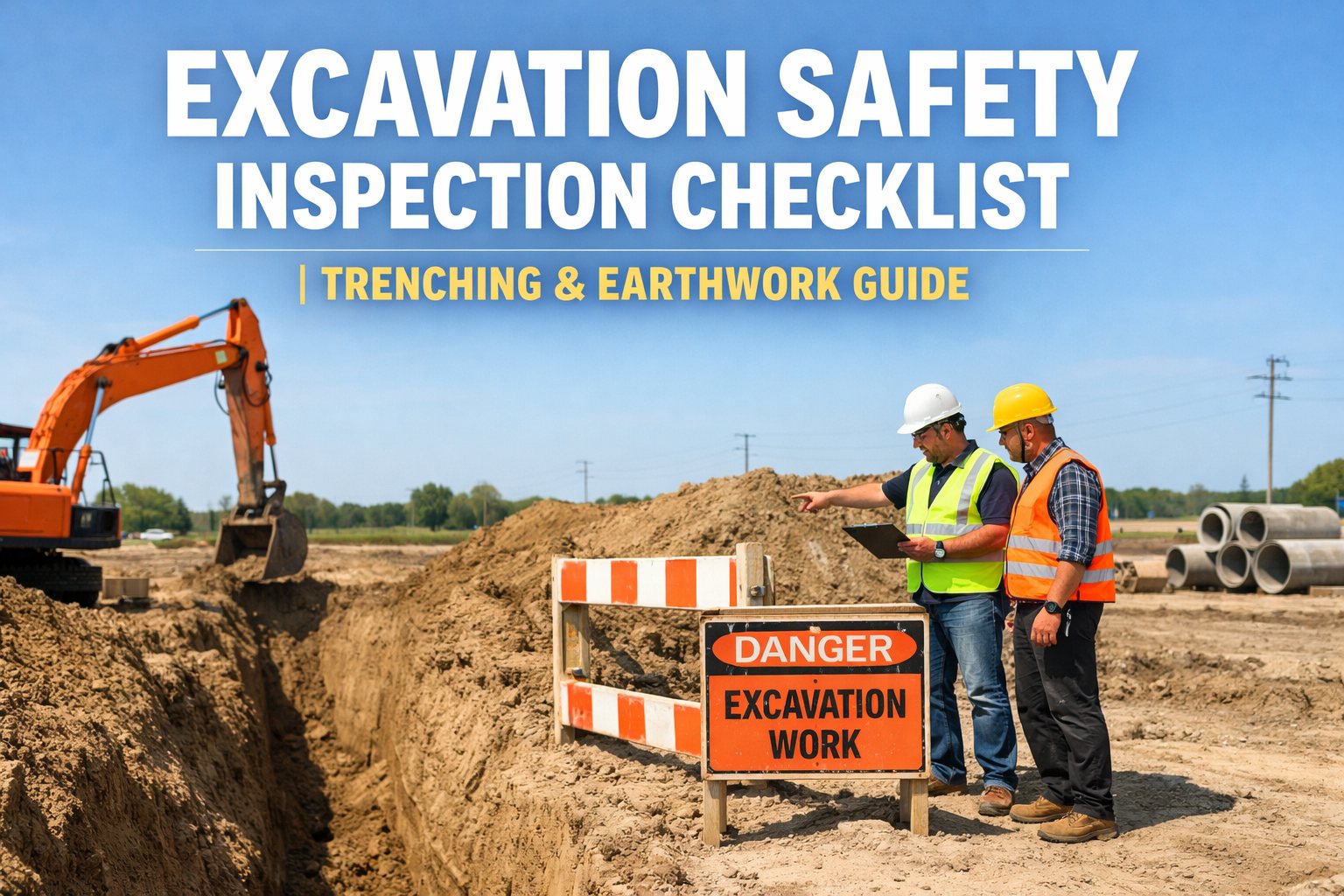
Importance of Excavation Safety Inspections
Worker Protection
- Excavation safety inspections prevent cave-ins, the leading cause of fatalities in trenching operations. Systematic verification of protective systems, soil stability, and proper shoring/sloping protects workers from burial, crushing injuries, and structural collapse during underground construction work.
OSHA Compliance
- OSHA 29 CFR 1926 Subpart P requires daily inspections by competent persons before work begins and after any occurrence that could affect stability. Documented inspections demonstrate compliance with excavation standards, prevent citations, and ensure trenching operations meet federal safety requirements.
Utility Safety
- Excavation inspections verify underground utilities are properly located, marked, and protected preventing gas line ruptures, electrical contact, water main breaks, and communication cable damage. Systematic utility verification protects workers and the public from explosions, electrocution, and service disruptions.
Atmospheric Protection
- Regular atmospheric testing verifies safe oxygen levels and absence of hazardous gases in excavations deeper than 4 feet. Continuous monitoring prevents asphyxiation, toxic gas exposure, and combustible atmosphere hazards protecting workers entering trenches and confined excavation spaces.
Excavation Checklist
Comprehensive excavation safety verification. Protect workers—sign up now to automate daily excavation inspection tracking, or schedule a demo to see how digital management ensures OSHA Subpart P compliance.
Why Use Digital Excavation Safety Management?
HVI App Benefits for Excavation Inspections:
- ✓ Automate daily competent person inspection requirements with digital checklists
- ✓ Track soil classification, protective systems, and atmospheric testing results
- ✓ Document inspection findings with photos, timestamps, and competent person sign-off
- ✓ Generate professional excavation safety reports for OSHA compliance audits
- ✓ Create work orders automatically for hazard corrections and protective system repairs
- ✓ Maintain complete inspection history for all excavation and trenching projects
Construction safety demands rigorous excavation compliance. Start your free trial to implement digital excavation safety management today, or schedule a demo to see how automated tracking prevents cave-ins and protects workers.
Frequently Asked Questions About Excavation Safety Inspections
1. Why are excavation safety inspections critical?
Excavation safety inspections prevent cave-ins, the leading cause of trenching fatalities, by verifying protective systems, soil stability, proper access/egress, utility locations, and atmospheric safety. Daily inspections by competent persons identify tension cracks, water seepage, unstable soil conditions, and inadequate shoring before catastrophic failures occur, protecting workers from burial, crushing injuries, utility strikes, and hazardous atmosphere exposures during underground construction operations.
2. What are the key components of excavation safety inspections?
Critical inspection items include protective systems (sloping, shoring, shielding, benching), soil classification (Type A/B/C), barriers and fall protection, access/egress (ladders within 25 feet), spoil pile placement (minimum 2 feet from edge), utility locations and markings, atmospheric testing (oxygen, combustibles, toxics), water accumulation and removal, support system integrity, ramp construction, warning systems for mobile equipment, confined space classification, shrinkage cracks, tension cracks, and surface encumbrances.
3. How often should excavation safety inspections be performed?
OSHA requires competent person inspections daily before work begins, after rainstorms or other events that could affect stability, and when conditions change indicating potential cave-in hazards. Atmospheric testing is required before entry and continuously when hazardous atmospheres are possible. Inspections verify protective systems remain adequate, access/egress is maintained, utilities are protected, and workers follow safe work practices. All deficiencies must be corrected before allowing workers to enter excavations.
4. How does the HVI App help manage excavation safety inspections?
The HVI App automates daily competent person inspection scheduling, sends pre-shift reminders before trenching begins, provides comprehensive excavation safety checklists covering OSHA Subpart P requirements, captures photos of protective systems and soil conditions, tracks atmospheric testing results and utility clearances, generates OSHA-compliant inspection reports with competent person certification, creates automatic work orders for hazard corrections, maintains complete documentation for compliance audits, and alerts project managers to critical deficiencies requiring immediate work stoppage. Ensure trenching safety—sign up free or book your demo.
5. What OSHA regulations apply to excavation safety?
OSHA 29 CFR 1926 Subpart P establishes excavation safety requirements including competent person designation, daily inspections, soil classification, protective systems for excavations 5 feet or deeper (or less if competent person identifies cave-in potential), access/egress within 25 feet for excavations 4 feet or deeper, spoil pile placement minimum 2 feet from edge, atmospheric testing, utility location, and water control. Protective systems must be designed by registered professional engineers or meet tabulated data requirements.
6. What happens if hazards are found during excavation inspections?
Any condition indicating potential cave-in, protective system failure, hazardous atmosphere, or other imminent danger requires immediate work stoppage and worker removal from the excavation. Critical deficiencies include tension cracks, water accumulation without proper removal, inadequate protective systems, atmospheric hazards, unstable adjacent structures, improper access/egress, or protective system damage requiring immediate correction by qualified personnel before allowing workers to re-enter the excavation.
Take Action: Implement Systematic Excavation Safety Inspections
Download our FREE Excavation Safety Inspection Checklist and start implementing comprehensive daily inspection protocols for your trenching and earthwork operations. Integrating digital excavation safety management streamlines competent person requirements, ensures daily inspections are completed before work begins, and maintains complete OSHA Subpart P documentation. Experience the power of automated excavation safety tracking to prevent cave-ins and protect construction workers.
Prevent Cave-Ins with Comprehensive Excavation Safety Inspections
Perform systematic competent person inspections: protective systems, soil classification, atmospheric testing, utility locations, access/egress, water control—all tracked automatically with digital excavation safety management.