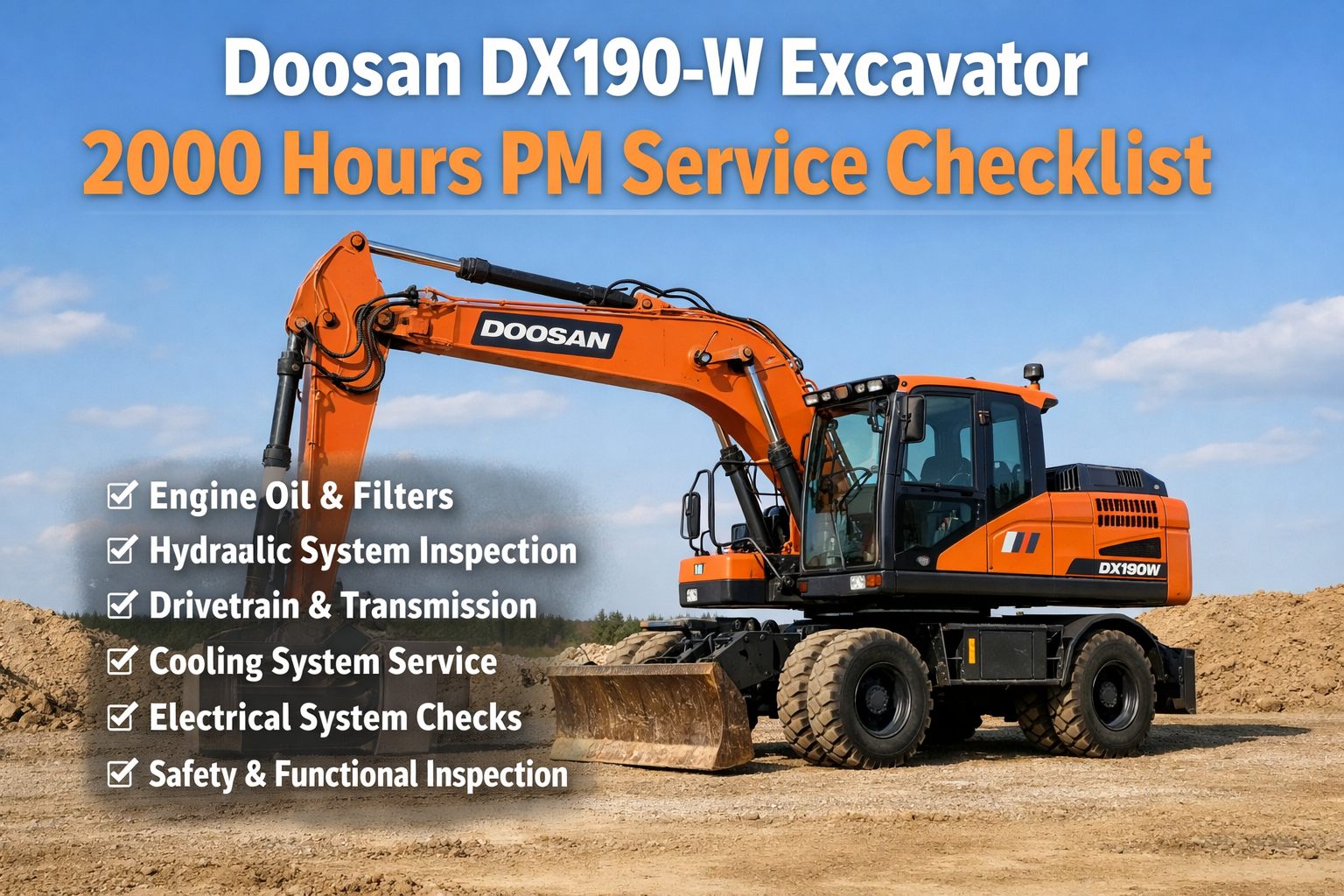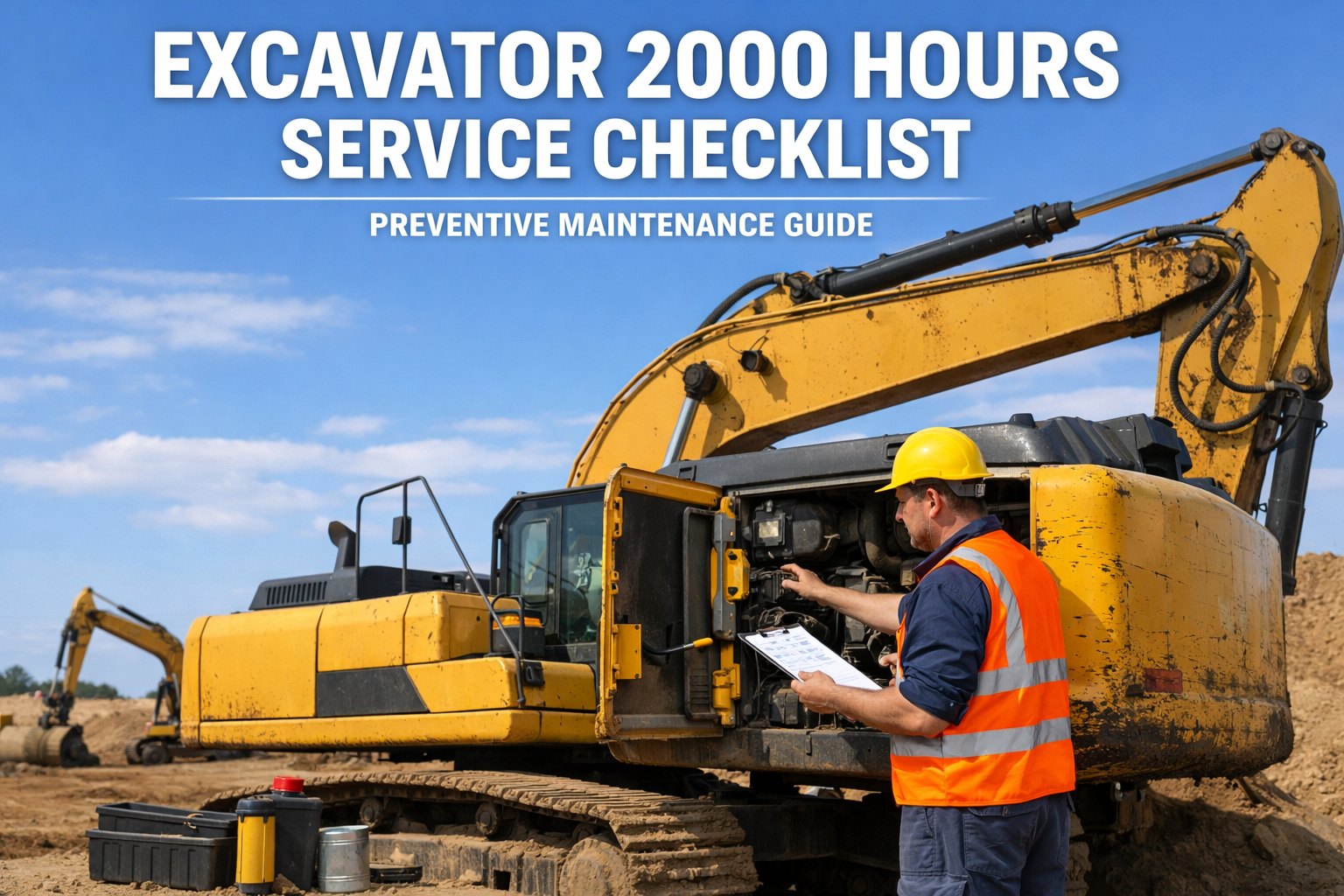
Importance of Excavator 2000-Hour Service
Equipment Reliability
- The 2000-hour service interval represents a major preventive maintenance milestone preventing hydraulic system failures, cooling system breakdowns, and gear compartment damage. Comprehensive fluid changes, filter replacements, and component inspections identify wear before catastrophic failures occur, maintaining excavator availability for critical construction and mining operations.
Warranty Protection
- Manufacturer warranties require documented adherence to prescribed service intervals including 2000-hour major maintenance. Complete service records demonstrating timely hydraulic oil changes, coolant system maintenance, and gear oil replacements protect warranty coverage and provide evidence of proper equipment care for resale value and insurance claims.
Cost Control
- Scheduled 2000-hour service prevents expensive component failures including hydraulic pump replacement, cooling system repairs, and gear compartment rebuilds. Systematic fluid analysis during service intervals identifies contamination and wear patterns allowing corrective action before major failures require costly emergency repairs and extended production downtime.
Operational Safety
- Major service intervals verify critical safety systems including hydraulic brake functionality, cooling system pressure integrity, and structural component condition. Comprehensive inspections during 2000-hour service prevent hydraulic failures that could cause uncontrolled boom movement, overheating incidents, or catastrophic component failures endangering operators and site personnel.
Maintenance Service
Major preventive maintenance tasks at 2000-hour interval. Maintain equipment reliability—sign up now to automate 2000-hour service tracking, or schedule a demo to see how digital management ensures manufacturer compliance.
Why Use Digital Excavator Maintenance Management?
HVI App Benefits for Excavator 2000-Hour Service:
- ✓ Automate service interval tracking based on equipment hours and calendar time
- ✓ Track hydraulic oil, coolant, and gear oil change history for each excavator
- ✓ Document service completion with photos, timestamps, and technician sign-off
- ✓ Generate professional service reports for warranty compliance and asset management
- ✓ Create work orders automatically when approaching service intervals
- ✓ Maintain complete maintenance history for all excavator fleet assets
Heavy equipment demands rigorous preventive maintenance. Start your free trial to implement digital excavator maintenance management today, or schedule a demo to see how automated tracking ensures service intervals are never missed.
Frequently Asked Questions About Excavator 2000-Hour Service
1. Why is the excavator 2000-hour service critical?
The 2000-hour service represents a major preventive maintenance interval preventing hydraulic system failures, cooling system breakdowns, and gear compartment damage that could cause catastrophic equipment failures. Comprehensive hydraulic oil and filter changes, radiator coolant system maintenance, and gear oil replacements at manufacturer-specified intervals maintain excavator reliability, prevent costly component failures, protect warranty coverage, and ensure safe operation during demanding construction and mining applications requiring continuous equipment availability.
2. What are the key service tasks at 2000 hours?
Critical 2000-hour service tasks include radiator antifreeze change (except Extended Life Coolant which requires ELC extender at 3,000 and 6,000-hour intervals), complete hydraulic tank oil and filter change to remove contamination and maintain system performance, and gear oil compartment oil changes ensuring proper lubrication of swing drives, travel motors, and final drives preventing premature wear and component failures.
3. How often should excavator major services be performed?
Manufacturer service intervals typically include daily inspections, 250-hour minor services, 500-hour intermediate services, 1000-hour major services, and 2000-hour comprehensive services. The 2000-hour interval represents a critical milestone requiring complete hydraulic system fluid changes, cooling system maintenance, and gear compartment services. Adherence to manufacturer-specified intervals is mandatory for warranty protection and optimal equipment reliability. Operating conditions may require more frequent services in severe applications.
4. How does the HVI App help manage excavator maintenance intervals?
The HVI App automates service interval tracking based on equipment hour meters, sends alerts before services are due, provides comprehensive excavator maintenance checklists covering 2000-hour requirements, captures photos of fluid condition and component wear, tracks fluid analysis results and parts replacements, generates manufacturer-compliant service documentation, creates automatic work orders for scheduled services, maintains complete service history for warranty compliance, and alerts fleet managers when excavators approach critical service intervals requiring immediate scheduling. Ensure equipment reliability—sign up free or book your demo.
5. What happens if 2000-hour service is delayed?
Delaying 2000-hour service risks hydraulic system contamination causing pump failures, cooling system deterioration leading to overheating and engine damage, and gear oil degradation resulting in bearing failures and component seizure. Extended service intervals void manufacturer warranties, increase catastrophic failure risks, reduce equipment resale value, and create safety hazards from deteriorated hydraulic brake systems and compromised structural components requiring expensive emergency repairs and extended downtime.
6. What is Extended Life Coolant (ELC) and how does it affect service intervals?
Extended Life Coolant (ELC) is a long-life antifreeze formulation that, when properly maintained, extends cooling system service intervals. Standard antifreeze requires complete change at 2000 hours, while ELC requires only ELC extender additions at 3,000-hour and 6,000-hour intervals. Using ELC reduces maintenance costs and downtime but requires strict adherence to extender addition schedules. Mixing standard coolant with ELC eliminates extended service benefits requiring immediate system flush and refill with appropriate coolant type.
Take Action: Implement Systematic Excavator Maintenance
Download our FREE Excavator 2000 Hours Service Checklist and start implementing comprehensive preventive maintenance protocols for your heavy equipment fleet. Integrating digital maintenance management streamlines service interval tracking, ensures manufacturer requirements are met on schedule, and maintains complete documentation for warranty protection and asset management. Experience the power of automated excavator maintenance tracking to prevent failures, reduce costs, and maximize equipment availability.
Maximize Equipment Life with 2000-Hour Excavator Service
Perform comprehensive preventive maintenance: radiator coolant system, hydraulic tank oil and filter, gear oil compartments—all tracked automatically with digital heavy equipment management.