Why Oil-Water Separator Inspections Matter
Environmental Protection
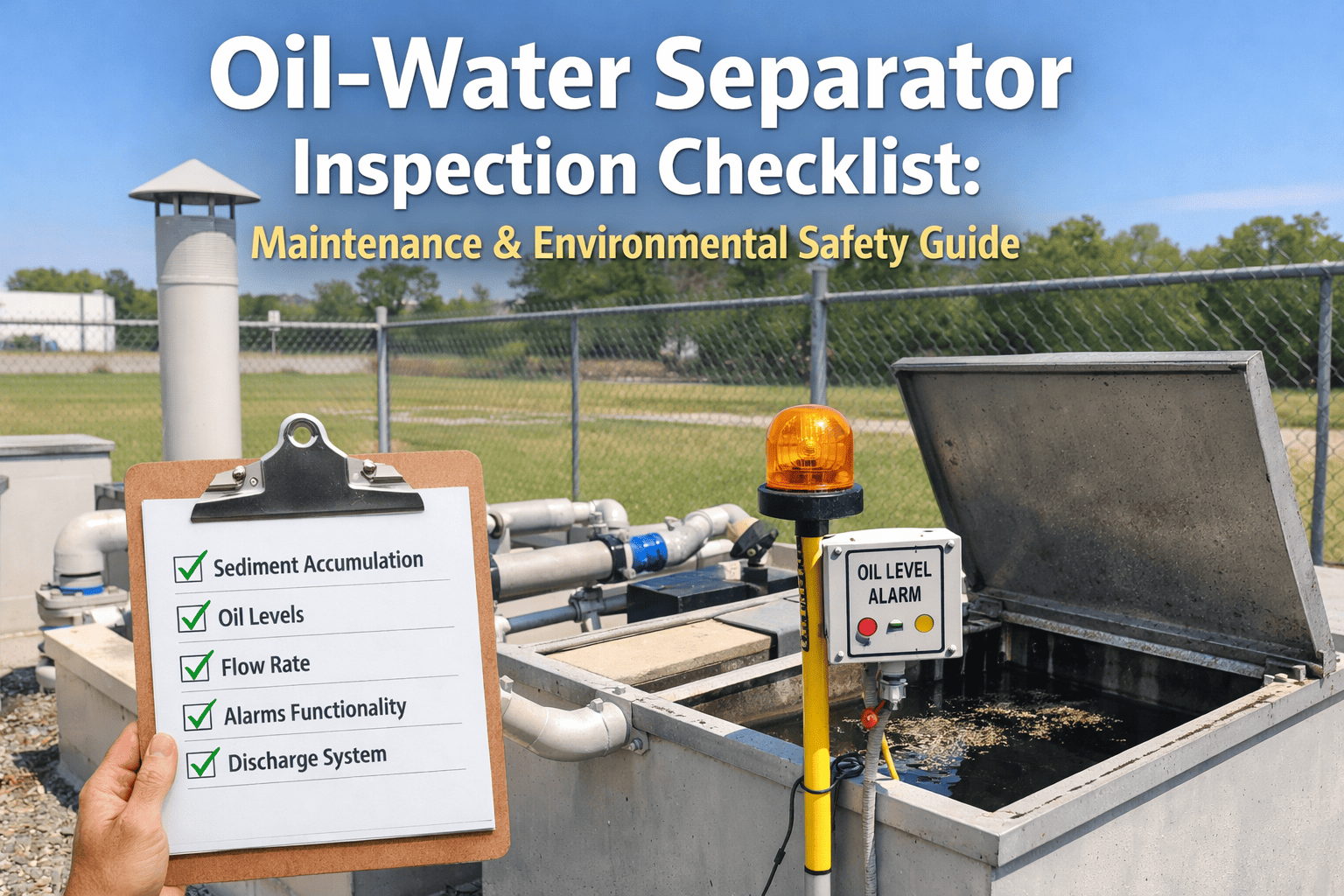
- HVI guides maintenance teams through all oil-water separator inspection requirements including outlet and inlet structural condition, sediment and debris blockages, erosion control, oil containment chamber monitoring, and pretreatment assessment—preventing oil and pollutant discharges that can cause significant environmental damage and regulatory violations.
System Performance
- HVI ensures that oil volume thresholds and sediment accumulation thresholds are monitored before they impair separator function, oil-absorbing pads are replaced before saturation compromises performance, and water conveyance through the system is verified at every inspection. Photo capture and automatic work order creation identify deficiencies early, maximizing separator uptime.
Regulatory Compliance
- HVI maintains compliance with environmental regulations governing oil-water separator maintenance through timestamped digital documentation. Our platform produces audit-ready reports and provides evidence of systematic separator inspection and maintenance for regulatory reviews and stormwater permit compliance.
Cost Control
- HVI prevents minor separator deficiencies from becoming major failures through automated monitoring of sediment accumulation, sludge levels, structural deterioration, and spill or leak indicators. Our platform tracks inspection intervals and threshold conditions across all separator systems—lowering remediation costs through proactive maintenance notifications.
Ready to digitize your oil-water separator inspections? Start your free trial now (get started in 10 minutes) or schedule a quick demo to discover how HVI revolutionizes oil-water separator inspection management.
1. Outlets
Outlet inspection with HVI software—start your free trial today and digitize inspections immediately.
2. Inlets
Inlet inspection with HVI software—schedule your personalized demo.
3. Oil Containment Chamber
Oil containment chamber inspection with HVI software:
4. Other
Other system condition inspection with HVI software:
5. Other System Components
Other system components inspection with HVI software:
6. Pretreatment
Pretreatment inspection with HVI software:
7. Sediment Collection Chamber
Sediment collection chamber inspection with HVI software:
Benefits of HVI Inspection Software for Oil-Water Separator Operations
Revolutionize Your Oil-Water Separator Inspection Workflow with HVI:
- ✓ Automated inspection scheduling with maintenance team notifications and pre-inspection reminders
- ✓ Digital checklists with photo documentation for outlets, inlets, oil containment chamber, other conditions, other system components, pretreatment, and sediment collection chamber
- ✓ Timestamped deficiency monitoring with inspector verification
- ✓ Professional environmental compliance documentation generated automatically
- ✓ Automatic work order generation for cleaning, pumping, pad replacement, and structural repairs
- ✓ Comprehensive records and analytical insights for all oil-water separator systems
Ready to modernize your separator maintenance program? Start your free HVI trial now or schedule a personalized demo.
Frequently Asked Questions About HVI Oil-Water Separator Inspection Software
1. How does HVI improve oil-water separator inspection and maintenance compliance?
HVI guides maintenance supervisors through all sections of the Oil-Water Separator Inspection checklist: Outlets (poor structural condition, sediment/trash/debris blockage, erosion around outlets), Inlets (poor structural condition, sediment and trash accumulation, debris blocking inlets), Oil Containment Chamber (oil volume threshold reached, oil-absorbing pads saturated), Other (ponding water evidence, water conveyance failure evidence), Other System Components (structural deterioration, spills or leaks), Pretreatment (sediment accumulation, trash and debris accumulation), and Sediment Collection Chamber (sediment accumulation threshold reached, sludge accumulation threshold at chamber bottom reached)—automatically recording deficiencies and generating compliance reports.
2. What sections does HVI cover for oil-water separator inspections?
HVI covers seven sections: Outlets (3 items), Inlets (3 items), Oil Containment Chamber (2 items), Other (2 items), Other System Components (2 items), Pretreatment (2 items), and Sediment Collection Chamber (2 items) — 16 items in total. Deficiencies are documented with photos and maintenance teams are notified automatically.
3. How does HVI manage oil-water separator inspection scheduling?
HVI automatically schedules separator inspections and sends digital notifications to maintenance managers and environmental compliance teams. The platform tracks oil volume and sediment accumulation thresholds, pad saturation status, and structural condition—triggering service work orders when thresholds are reached or deficiencies are identified.
4. What capabilities does HVI provide for separator compliance?
HVI automates inspection planning, delivers digital protocols for all seven separator inspection sections, captures timestamped photos, monitors threshold conditions, produces environmental compliance documentation automatically, generates work orders for cleaning and pumping and structural repairs, and sends immediate notifications for critical deficiencies. Start your free trial now or schedule a demo.
5. How does HVI support environmental regulatory compliance for oil-water separators?
HVI helps satisfy environmental permit and stormwater management requirements by ensuring maintenance teams complete digital assessments covering all outlet, inlet, oil containment, system component, pretreatment, and sediment collection chamber conditions. The platform maintains complete inspection histories and provides full audit trails for regulatory reviews and stormwater permit compliance documentation.
6. How does HVI handle discovered oil-water separator deficiencies?
HVI records deficiencies with timestamped documentation and photo evidence, then flags systems for corrective action. Critical deficiencies include outlets in poor structural condition, sediment or debris blocking outlets or inlets, erosion around outlets, oil volume threshold reached in the containment chamber, saturated oil-absorbing pads, evidence of ponding or conveyance failure, structural deterioration, visible spills or leaks, sediment or trash accumulation in pretreatment, and sediment or sludge accumulation thresholds reached in the collection chamber—all requiring immediate maintenance response to prevent environmental discharge and regulatory violations.
Get Started Quickly: Implement HVI Oil-Water Separator Inspection Software Today
Eliminate manual separator inspection inefficiencies. Download our FREE Oil-Water Separator Inspection Checklist and digitize your maintenance workflow. Join 500+ maintenance and environmental teams—start your free trial now (no credit card required) or schedule a 15-minute demo.