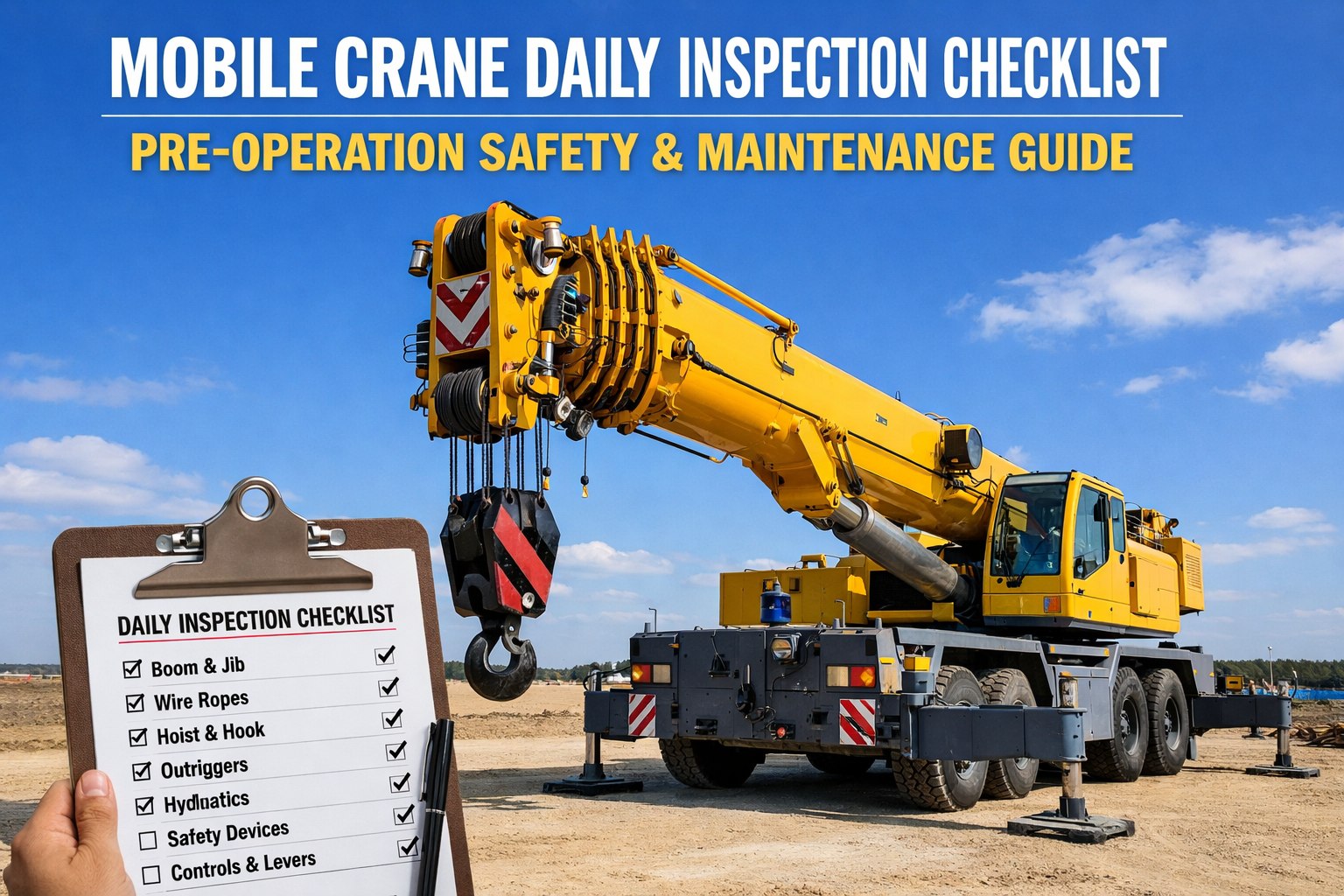
Importance of Overhead Crane Daily Pre-Start Inspections
Worker Safety
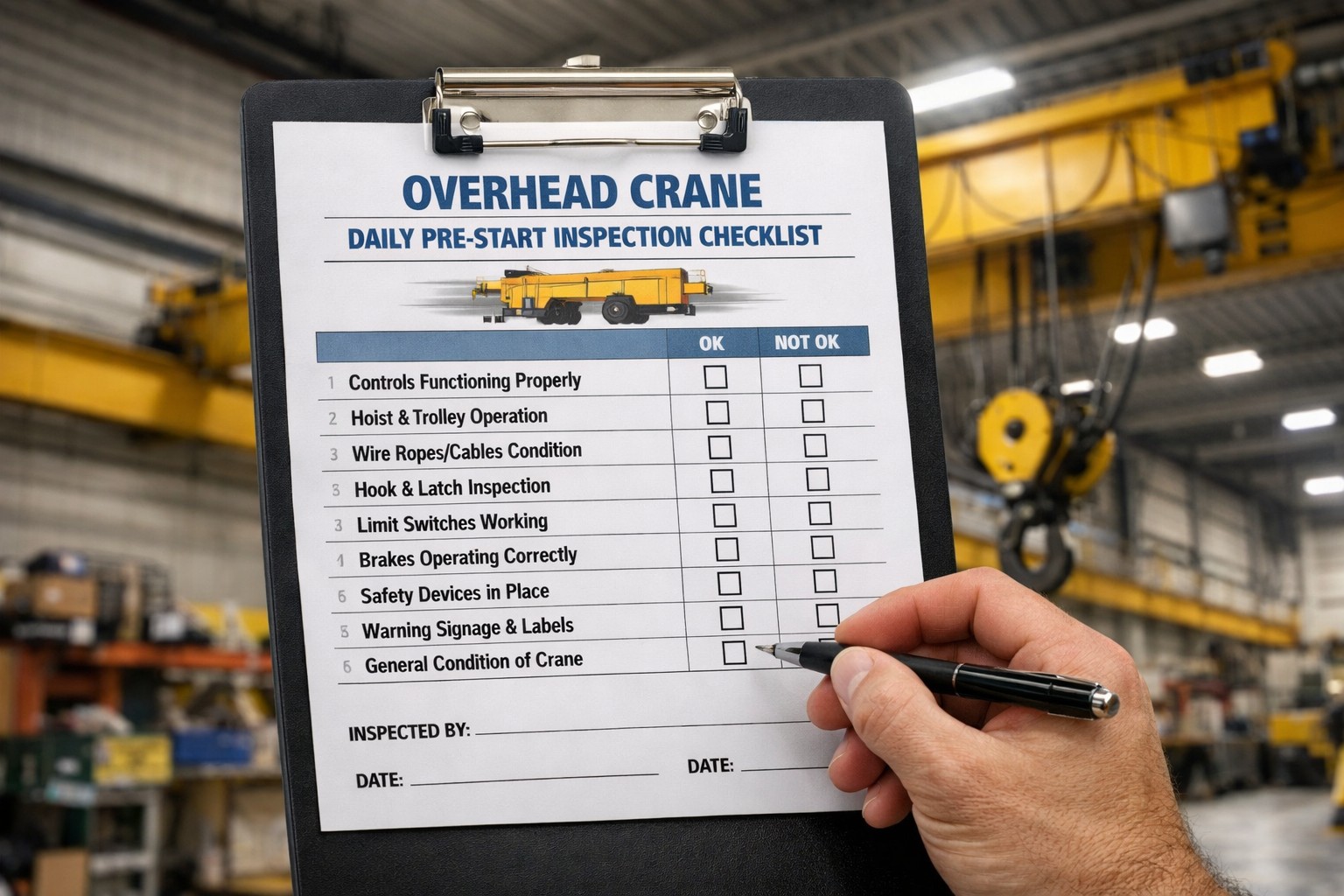
- Daily pre-start inspections protect workers from crushing injuries, falling loads, and equipment failures. Systematic checks identify malfunctioning brakes, worn wire ropes, damaged hooks, and control problems before operations begin, preventing serious accidents in industrial facilities.
Regulatory Compliance
- OSHA 29 CFR 1910.179 and ASME B30.2 require daily inspections by qualified operators before overhead crane use. Documented pre-start inspections demonstrate compliance, prevent citations, and satisfy insurance requirements for material handling operations.
Equipment Reliability
- Pre-start inspections verify operational readiness of hoists, trolleys, bridges, controls, and safety devices. Early detection of defects prevents equipment breakdown, reduces downtime, and maintains productivity in manufacturing and warehousing operations.
Load Handling Safety
- Systematic inspections ensure proper rigging techniques, load attachment, and balanced lifting operations. Pre-start checks verify limit switches, brakes, and controls function correctly, preventing dropped loads and two-block incidents that could cause injuries or property damage.
1. Attaching The Load
Load attachment and rigging verification:
2. Equipment
Bridge equipment and control systems:
3. Main Hoist
Main hoist system components and controls:
4. Moving The Load
Safe load handling and movement procedures:
5. Post operation
Post-operation verification and safety checks:
6. Runways
Runway system and documentation requirements:
7. Trolley
Trolley system components and travel mechanisms:
Why Use Digital Overhead Crane Inspection Management?
HVI App Benefits for Overhead Crane Inspections:
- ✓ Automate daily pre-start inspection schedules and operator assignments
- ✓ Track compliance rates and ensure inspections occur before every shift
- ✓ Document deficiencies with photos and maintain corrective action records
- ✓ Generate OSHA-compliant reports with digital signatures and timestamps
- ✓ Create work orders automatically for identified maintenance needs
- ✓ Maintain complete inspection history for all overhead lifting equipment
Book a demo to see automated overhead crane inspection tracking
Frequently Asked Questions About Overhead Crane Daily Pre-Start Inspections
1. Why are daily pre-start inspections required for overhead cranes?
OSHA 29 CFR 1910.179 and ASME B30.2 mandate daily inspections before overhead crane use to verify operational readiness and identify hazards. Pre-start inspections detect worn wire ropes, damaged hooks, malfunctioning brakes, faulty limit switches, and control problems that could cause dropped loads, crushing injuries, or fatalities in industrial facilities.
2. Who can perform daily overhead crane inspections?
Daily inspections must be conducted by qualified crane operators who are trained to recognize defects and understand crane systems. Operators must be competent to identify worn components, damaged structures, malfunctioning controls, and safety device failures. Training and certification records should be maintained for all operators.
3. What are the critical components inspected during pre-start checks?
Critical components include main hoist (motor, brake, wire rope, hooks, limit switches), trolley system (motor, brake, wheels, rails), bridge equipment (motors, brakes, controls, bumpers), runways (rails, conductors, lubrication), load attachment devices, and safety systems. Any deficiency affecting safe operation requires immediate attention.
4. How does the HVI App help manage overhead crane inspections?
The HVI App automates daily inspection scheduling, sends pre-shift reminders to operators, provides standardized digital checklists, captures photos of defects, tracks corrective actions, generates OSHA-compliant reports with digital signatures, creates automatic work orders for deficiencies, and maintains complete inspection history for regulatory compliance.
5. What happens if deficiencies are found during pre-start inspection?
Any deficiency affecting safe crane operation must be documented immediately, and the crane must be removed from service until repairs are completed by qualified maintenance personnel. Critical deficiencies include damaged wire ropes, malfunctioning brakes or limit switches, control problems, worn hooks, or structural damage requiring immediate corrective action.
6. What rigging and load handling procedures must be verified?
Operators must verify proper rigging techniques, ensure slings are free from kinks and properly attached to hooks, confirm loads are balanced before lifting, check that hoist ropes are not twisted, test brakes with rated loads, prevent load swinging, and ensure no workers are on loads or in travel paths during lifting operations.
Take Action: Implement Systematic Overhead Crane Pre-Start Inspections
Download our FREE Overhead Crane Daily Pre-Start Inspection Checklist and start implementing consistent inspection protocols. Integrating digital crane inspection management streamlines compliance tracking, ensures operators perform thorough pre-shift checks, and maintains complete documentation for OSHA and ASME requirements. Experience the power of automated inspection tracking to enhance overhead crane safety and maintain operational readiness in your industrial facility.
Ensure Safe Overhead Crane Operations with Systematic Pre-Start Inspections
Perform comprehensive pre-shift checks: hoists, trolleys, bridges, wire ropes, hooks, brakes, limit switches, controls, and load handling procedures—all tracked automatically with digital crane management.