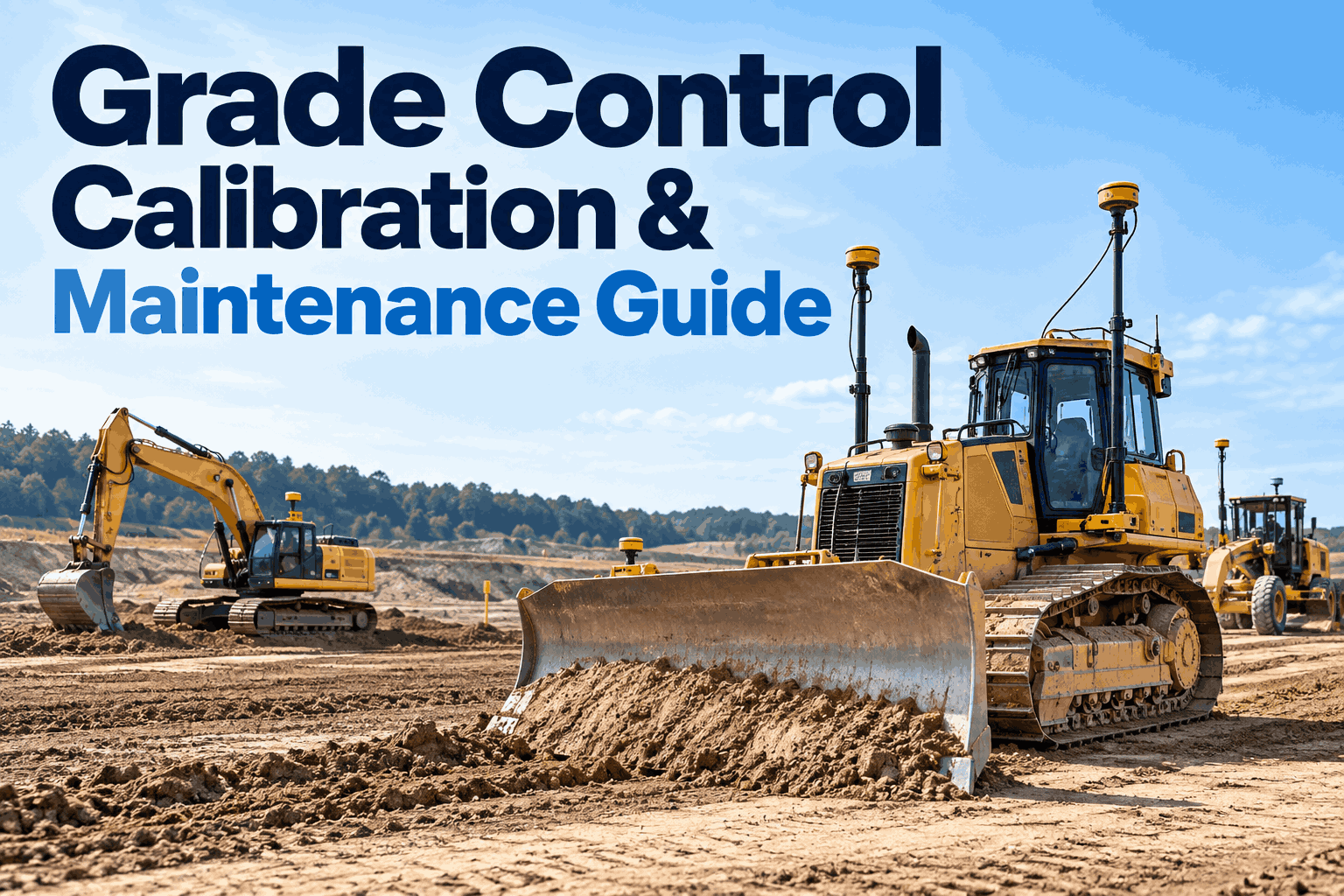
A dozer holding a perfect grade on Monday can be off by two inches on Thursday with nobody touching a setting — and the operator usually blames the software first. Machine control maintenance rarely fails at the system level; it fails at the physical layer underneath it: a worn cutting edge, a reseated antenna, a cable nobody checked. Here's what actually drives grade errors, the daily check that catches most of them early, and when a full recalibration is genuinely required.
What's Causing This Grade Error?
Pick a symptom. See the most likely cause before calling the dealer or re-flashing anything.
As the blade or bucket edge wears down, the physical distance from the GNSS antenna to the cutting edge shortens — the system is still reading correctly, the geometry it's measuring from has changed.
A one-directional error that reverses or disappears when grading the opposite way usually points to a slope or cross-slope sensor needing recalibration, not a GNSS problem.
Intermittent signal loss is a classic symptom of a damaged antenna cable or a loose connector — check voltage at the antenna end before assuming it's a satellite visibility issue.
The system is still configured for the old bucket or blade dimensions. This isn't a fault at all — it's a required recalibration that was skipped after the attachment change.
Machine Control Maintenance Starts With Four Components
GNSS Receiver & Mast Antenna
Mounted on a mast above the cab or blade, this is the machine's position sensor — and the component most exposed to impacts, vibration and weather.
Base Station
A fixed GNSS antenna, receiver and radio set up on or near the site, broadcasting the correction signal every machine on that job depends on simultaneously.
Sensors & IMU
Slope, tilt and inertial sensors track blade or bucket orientation in real time, filling in the geometry GNSS alone can't capture fast enough.
In-Cab Controller & Display
Holds the digital design model, combines every sensor input, and drives the hydraulic valves — the one component an operator interacts with directly, and the one most often blamed first.
Grade accuracy depends on all four agreeing with each other, which is exactly why a single worn part or loose cable downstream of the controller can produce an error that looks, to the operator, like a software problem.
The One Cause Behind Most "Mystery" Machine Control Maintenance Calls
Cutting edge and bucket tooth wear is, by a wide margin, the most common source of a grade error that looks like a system fault but isn't one. As the edge wears down, the physical distance between the GNSS antenna and the actual cutting point shrinks — a change the system has no way to know about unless someone tells it. The result is a consistent elevation error that gets gradually worse as wear progresses, often misread as drift or a failing receiver when the hardware is working exactly as designed around geometry that's quietly changed underneath it.
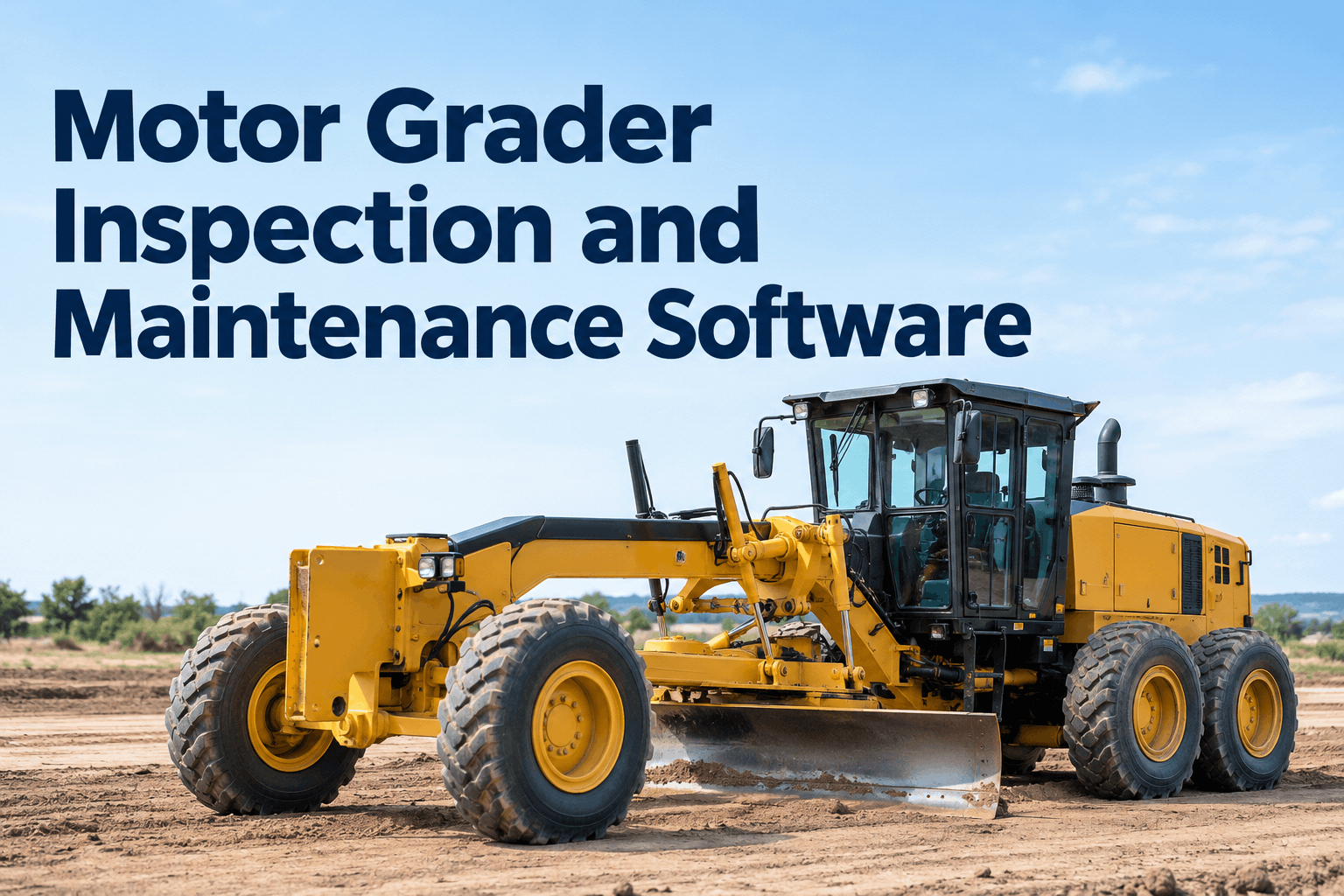
Motor grader antennas compound this risk further: they're commonly removed for transport, and without locking collars ensuring identical reinstallation, a reseated antenna can introduce a consistent offset that mimics a hardware fault. Book a demo to see cutting edge wear and antenna reinstalls logged against each machine control system, so a recalibration gets scheduled instead of a service call for a problem that isn't a system failure at all.
Daily Bench-In: The Five-Minute Check That Catches Problems Early
Experienced machine control technicians recommend a simple daily habit over almost any other maintenance step: before work starts, check the system's accuracy against a known point on the site — a practice commonly called "benching in." It takes a few minutes and catches a shifted antenna, a corrupted calibration, or a base station problem before an entire shift of grading is cut to the wrong elevation. Pairing that morning check with an independent spot-check behind the machine using a separate rover, rather than trusting the in-cab display alone, catches the rare case where the machine's own system is confidently wrong.
When a Full Recalibration Is Required
New geometry means the system's stored dimensions no longer match reality — grading on the old profile introduces an immediate, consistent error.
Especially on graders where the mast is routinely removed for transport — verify position against locking marks, don't assume it went back the same way.
Any strike to the mast, blade or implement warrants a recheck, even if nothing looks visibly bent — sensor mounts can shift without external damage being obvious.
Work on lift, tilt or angle hydraulics can change response characteristics enough to need a fine-tuning pass, even when the original calibration was correct.
Sign up free to trigger a recalibration reminder automatically whenever a logged work order matches one of these events, instead of relying on whoever's in the cab to remember.
Site Calibration: The Numbers That Decide Pass or Fail
Known Control Points
A proper site calibration (localization) needs at minimum three, preferably four or more, surveyor-provided control points with published coordinates to transform GNSS positioning into the project's local coordinate system accurately.
Acceptable Calibration Residual
The leftover error after the transformation is calculated — a good calibration should land under roughly 0.02 feet. A higher residual means the calibration itself is unreliable, regardless of how clean the GNSS signal looks.
A machine can show a strong satellite fix and full signal bars while still grading to the wrong elevation, because none of that reflects whether the underlying site calibration was done correctly. The residual number is the one that actually confirms it.
What an Equipment Manager Actually Watches For
We used to treat every grade complaint as a dealer call, and half the time it turned out to be a worn cutting edge nobody had logged as replaced. Now wear, antenna reinstalls and calibration events are tracked against each machine, so before anyone picks up the phone we can check whether the history actually points to a hardware problem or just a recalibration that's overdue. Service calls on machine control dropped noticeably once we stopped guessing.
The Takeaway
Machine control maintenance comes down to one recurring pattern: most "system" errors are actually physical-layer problems — worn cutting edges, reseated antennas, damaged cables, and skipped recalibrations after a bucket change or an impact. A five-minute daily bench-in check, a clear list of events that require recalibration, and service records tied to each machine catch nearly all of it before it costs a shift of rework. Sign up free and start tracking machine control service history alongside the rest of your fleet maintenance.
Frequently Asked Questions
What's the most common cause of 3D machine control grade errors?
Cutting edge and bucket tooth wear is the most common source of errors that look like a system malfunction but aren't. As the edge wears, the physical distance from the GNSS antenna to the actual cutting point shortens, producing a consistent elevation error that the system has no way to detect on its own unless the wear is accounted for through recalibration.
What is "benching in" and why does it matter for machine control maintenance?
Benching in is a daily practice of checking a machine control system's accuracy against a known point on the jobsite before grading work begins. It takes only a few minutes and catches issues like a shifted antenna, a corrupted calibration, or a base station problem before an entire shift's worth of grading is cut to the wrong elevation.
When does a machine control system need full recalibration?
Recalibration is typically required after a bucket or blade change (which alters the system's stored geometry), antenna removal and reinstallation (especially common on motor graders during transport), any impact or collision to the mast or implement even without visible damage, and after hydraulic service on lift, tilt or angle systems that can change response characteristics.
What does a site calibration (localization) actually require?
A proper site calibration transforms GNSS-derived coordinates into the project's local coordinate system using known control points provided by a surveyor — typically a minimum of three, with four or more preferred for reliability. The resulting calibration residual, the leftover positioning error after the transformation, should generally land under roughly 0.02 feet; a higher residual indicates the calibration itself is unreliable regardless of GNSS signal quality.
Why would a machine control system show a strong signal but still grade incorrectly?
Signal strength and satellite fix only confirm that the GNSS receiver is communicating correctly — they say nothing about whether the underlying site calibration, cutting edge geometry, or sensor calibration is accurate. A machine can show full signal bars and a solid position fix while still grading to the wrong elevation if the physical reference points behind that position have changed or were never calibrated correctly.
Track Machine Control Maintenance Alongside the Rest of Your Fleet
HVI logs cutting edge wear, antenna reinstalls, calibration events and service history per machine, with preventive maintenance reminders tied to real events — bucket changes, impacts, hydraulic service — not a fixed calendar.
No credit card · No hardware required · Live before your next grading job