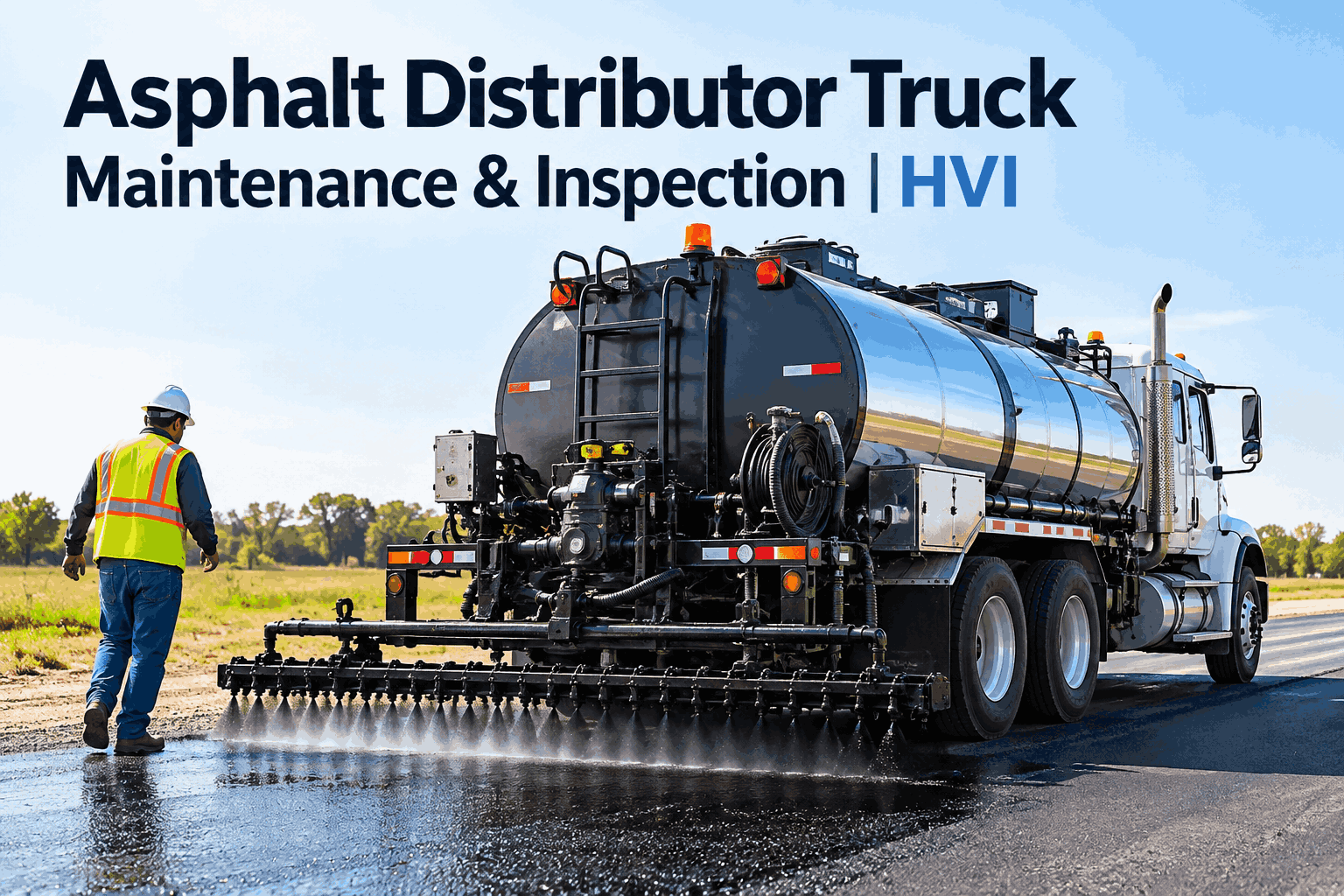
Asphalt distributor maintenance comes down to one unforgiving rule: the binder has to stay hot and moving, or it destroys the machine. Let it cool in the spray bar and it hardens solid in the nozzles; let it sit stagnant on hot flues and it burns. Every daily check exists to hold that line, and a skipped one is expensive to undo. Book a demo to see it enforced daily.
Keep It Hot and Moving — or Lose the Machine
Asphalt binder only cooperates in a narrow window. Too cold and it clogs the nozzles; stagnant on the flues and it burns. The whole distributor exists to hold that window — and the daily inspection is what keeps it there.
Binder thickens and hardens in the bar — nozzles clog, spray streaks or stops.
Binder flows evenly at spec temperature — clean, uniform spray, every pass.
Binder sits against hot flues and burns — degraded material, coked tank.
Below is the distributor walk built around that window — the spray bar that has to spray to spec, the heat and circulation that keep binder alive, the end-of-day flush that saves the machine, and the inspection discipline HVI puts behind all of it.
Streaking is a maintenance failurethe spray bar has measurable standards, not opinions
When a seal coat comes out streaked, it's tempting to blame the operator — but streaking almost always traces to a spray bar that's out of spec. The good news is the spray bar is one of the few things on the machine you can check against hard numbers, so "is it right?" has a real answer.
Nozzle angle
Every nozzle set to the same maker-specified angle for a clean triple-lap fan. One nozzle off-angle distorts the pattern and streaks.
Bucket-test variance
Output across nozzles should vary less than about 10% on a bucket test. More than that and some strips get more binder than others.
Bar height
A constant height above the surface keeps the fans overlapping correctly. Let it drift as the tank empties and coverage changes mid-shot.
Worn or gouged brass nozzles, a sagging bar as the load lightens, or a single blocked tip — each shows up as a stripe on the road. Book a demo to see the bar checks recorded with a photo before each shot It goes deeper than a basic bitumen sprayer inspection checklist by tying each spec to a defect.
Why the heat and pump never restthe circulation loop that keeps binder alive
The heating and circulation systems aren't background utilities — they're the two things standing between usable binder and a coked tank. Understanding the loop is what makes the daily checks feel non-negotiable instead of optional. It also explains why so many distributor problems cluster at start-up and shut-down: those are the moments the binder is most likely to be sitting still or off-temperature, and the moments the checks below matter most.
Stop the heat or the flow for long and the binder decides the outcome for you. Start free and put the heat and circulation checks on the daily inspection
The end-of-day flush that saves the machinethe one step nobody can afford to skip
If there's a single habit that separates a distributor that lasts from one that's always in the shop, it's the end-of-day flush. Binder left in the bar and lines overnight cools, hardens and cements the nozzles shut, and clearing a solid spray bar is a slow, ugly job that takes the truck off the next morning's schedule.
Worse, some nozzles never fully recover from a hard set, so a single skipped flush can turn into a parts order and an uneven bar for weeks. That's a lot of downside riding on a five-minute step at the end of a shift.
Binder cools and hardens in the bar and lines
Nozzles cement shut, some beyond cleaning
Morning starts with a torch and a scraper, not a job
Solvent or approved flush clears the bar and lines
Nozzles stay open and spraying to spec
Truck rolls on time, ready for the next shot
The flush only works if it actually happens every shift — which is exactly what a signed-off inspection guarantees. Book a demo to see the end-of-day flush confirmed before the truck is parked
Paper DVIR vs a system that enforces itwhy the checks that matter most are the ones that get skipped
Every crew knows the flush and the heat checks matter. The problem is a paper DVIR can't tell whether they happened — it's a box someone ticks, or doesn't, and nobody finds out until a tank is coked or a bar is solid. On a machine this unforgiving, that blind spot is the whole risk.
- Flush and heat checks ticked, not proven
- No photo of the spray bar or temperature reading
- A skipped step surfaces as damage, days later
- Forms pile up, impossible to audit or trend
- Each critical check completed before the truck moves
- Photo at the bar and a logged temperature every shift
- A failed check becomes a defect and can hold the truck
- Every inspection stored and searchable for any audit
The DVIR stops being a formality and starts being the thing that protects the machine. Book a demo to see the distributor DVIR that proves the work was done
From a sealcoat contractor's maintenance manager
We lost a whole spray bar to a skipped flush on a Friday — came in Monday to a solid bar and half a day of heat and scraping to save it. The paper sheet said it was flushed; it wasn't. Once the flush and the morning temperature check had to be logged with a photo before the truck could move, that stopped dead. The machine didn't get more reliable — the discipline did.
How HVI runs the distributor inspectiondigital DVIR, photo proof, defects that hold the truck
The whole point of asphalt distributor maintenance is that the heat, spray-bar and flush checks happen every shift with proof behind them. That's exactly what HVI's fleet inspection and DVIR are built to enforce.
Digital DVIR, built for the machine
A distributor-specific inspection — spray bar, nozzles, heat, circulation, flush — the crew runs before and after every shift.
Photo & temperature proof
A photo at the spray bar and a logged temperature turn each check into proof the work was actually done, not just ticked.
Defects that hold the truck
A failed flush or heat check becomes a defect and can keep the truck out of service until it's cleared and signed off.
See how the distributor DVIR, photo evidence and defect workflow live on one screen inside HVI's fleet inspection platform. Line it up in a quick demo
Asphalt distributor maintenance: quick answers
What does asphalt distributor maintenance cover?
It centres on the systems that keep binder usable and spraying evenly: the spray bar and nozzles, the heating and burner system, the pump and circulation, the thermometer and controls, and the end-of-day flush. The recurring theme is keeping binder hot and moving so it never cools and clogs or burns against the flues.
Why does asphalt binder have to stay hot and circulating?
Because it fails two ways if it doesn't. Left to cool in the spray bar it hardens and blocks the nozzles; left stagnant against hot flues it burns and degrades. Continuous heat plus pump circulation keeps binder at spray temperature and moving, which is why those checks are daily, not occasional.
What causes streaking on a seal coat?
Almost always a spray bar out of spec: nozzles set to inconsistent angles, uneven nozzle output (more than about 10% variance on a bucket test), a blocked or gouged tip, or a bar height that drifts as the tank empties. Each distorts the overlapping fan pattern and leaves stripes, so it's a maintenance issue more than an operator one.
Why is the end-of-day flush so important?
Binder left in the bar and lines overnight cools and hardens, cementing the nozzles shut — and clearing a solid bar is a slow job that can take the truck out of the next day's schedule. Flushing with solvent or an approved flush each shift keeps the bar and lines clear so the machine is ready to spray.
How does HVI help with distributor inspection?
HVI turns the daily checks into a digital DVIR the crew completes each shift, with a photo at the spray bar and a logged temperature. A failed flush or heat check becomes a defect that can hold the truck, and every inspection is stored and searchable — so the checks that protect the machine actually get done and proven.
Make the checks that save the distributor impossible to skip
HVI turns the spray bar, heat, circulation and end-of-day flush into a digital DVIR with a photo and temperature behind every check, and turns a missed step into a defect that holds the truck. The skipped flush that coks a tank or solidifies a bar stops being a Monday-morning surprise. Live in under two weeks.
No credit card · Distributor DVIR ready on day one · Photo & temp proof built in