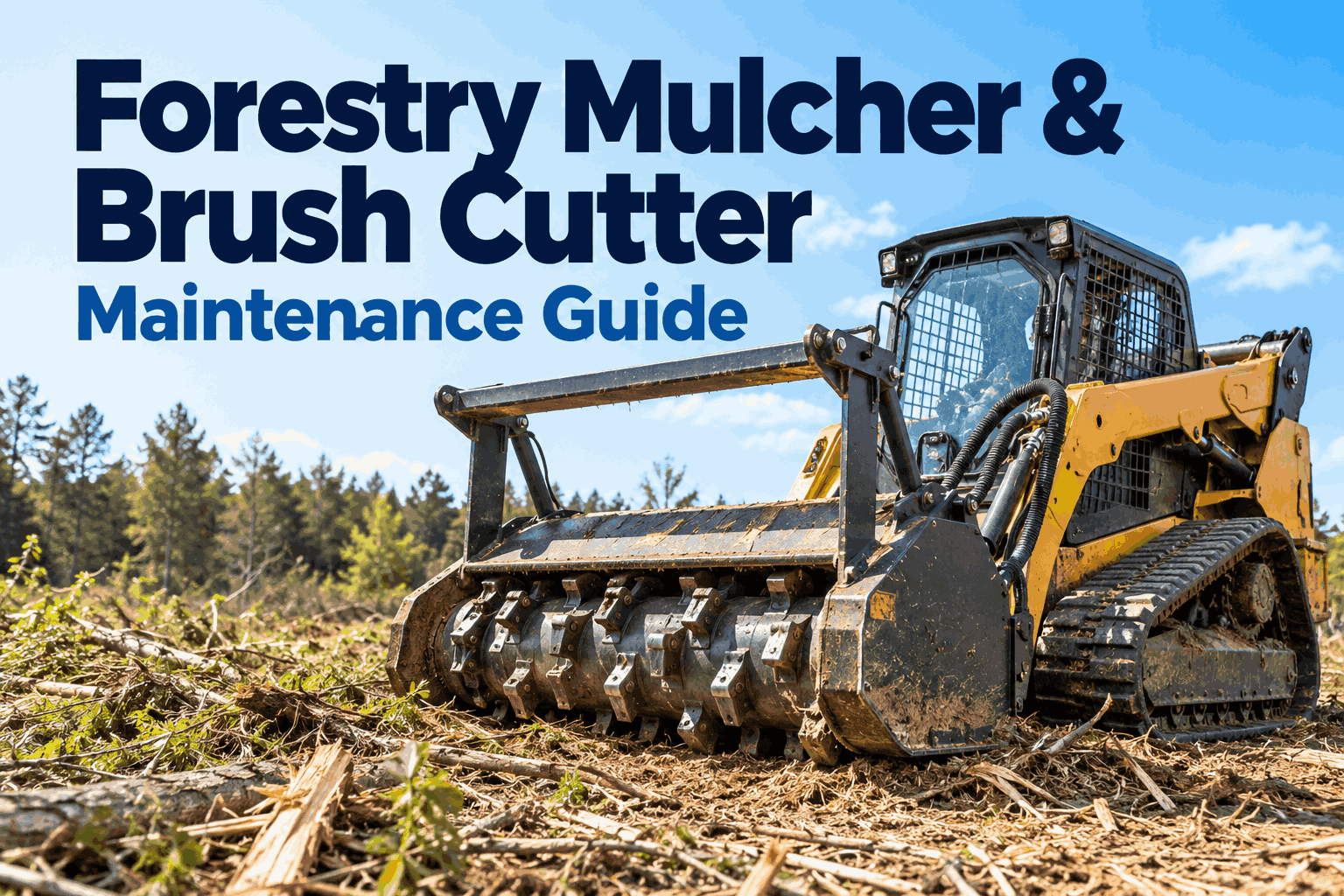
A tooth snaps off mid-job, the operator swaps in a replacement, and the machine goes right back to work — except now there's a brand-new tooth sitting directly opposite one that's half worn away, and the rotor is spinning out of balance from the very next cycle. Mulcher maintenance lives or dies on details like this one, which never show up on a spec sheet and rarely get explained until a rotor or a bearing fails for a reason nobody connects back to a single tooth swap. Book a Demo
Replacing one tooth without its opposite pair is how rotors go out of balance
A rotor spinning off-balance doesn't fail quietly — it accelerates bearing wear starting from the very first cycle after the mismatch.
New tooth on one side, old worn tooth still opposite it — different length, different mass, same rotor.
Matching lengths on both sides of the rotor — the mass stays even, and the rotor spins true.
Most manufacturer guidance is explicit on this: replace a damaged or worn tooth together with the tooth directly opposite it on the rotor, not just the one that broke. Book a Demo
Forestry mulchers and brush cutters live in the hardest operating environment most equipment fleets manage — constant impact, abrasive debris, and hydraulic systems running near their limits for hours at a stretch. Real mulcher maintenance isn't a long checklist so much as a short list of habits, done consistently, that keep the rotor, the bearings, and the hydraulics from quietly working against each other.
Why a Worn Mulcher Tooth Should Never Be Replaced Alonea balance problem that starts at the tooth ends up at the bearing
Mulching teeth are the hardest-working, fastest-wearing component on the machine, and they need daily inspection for wear, cracks, missing carbide, and loose hardware. But the replacement habit matters as much as the inspection itself: pairing a new tooth with its opposite number on the rotor, rather than swapping only the one that failed, is what keeps the rotor spinning true.
Left unmatched, the imbalance doesn't stay contained to the tooth. As teeth wear down unevenly, the material being shredded comes into contact with the rotor body itself more often, which accelerates rotor wear directly — and an out-of-balance rotor puts continuous, uneven load on the bearings supporting it, shortening bearing life well before any single component looked like it was failing. Sign Up Free
Matching Hydraulic Flow to the Attachment Is Maintenance, Not Just a Spec Sheetthe carrier and the head can damage each other if they're mismatched
A mulching head has a specific hydraulic flow and pressure requirement — a heavy-duty head might call for something in the range of 40 gallons per minute at 3,500 psi, as one commonly cited example — and running it on a carrier that can't supply that isn't just a performance problem. A low-flow, low-pressure carrier paired with a heavy-duty head underperforms and strains the carrier; a high-flow, high-pressure carrier paired with a lighter-built head can cause structural issues on the attachment side instead.
This mismatch risk is exactly why hydraulic monitoring belongs in routine maintenance, not just at purchase time: a hydraulic temperature gauge trending high, a high-temperature shutdown triggering, or a low-fluid warning are all early signals worth investigating before a hose or fitting actually fails. Book a Demo
Bearings, Belts and the Rest of the Rotor Systemdifferent components, genuinely different service intervals
Rotor bearings
Often greased roughly every 8 hours of operation, ideally at the end of the day while still warm — and generally hard to over-grease compared to under-greasing.
Belt tensioner
A noticeably longer interval than the rotor bearings — roughly every 50 hours on many units — which is exactly the kind of detail that gets missed when one blanket schedule is applied to every grease point.
Rotor rotation direction
If the rotor starts spinning backward, hydraulic couplers were likely swapped during a hose repair — a quick check, but one that directly costs rpm and cutting power if missed.
Over-greasing a bearing can shorten its life just as surely as under-greasing it — "more" isn't automatically safer, which is why following the manufacturer's specific interval matters more than a generic daily habit. Sign Up Free
Brush Cutters: A Related Machine With Its Own Checkpointsblades and gearboxes, not a rotor full of teeth
Brush cutters share plenty with forestry mulchers — high-impact cutting, demanding hydraulics, debris-heavy operating conditions — but their wear points center on blades or cutting discs, blade carriers, and, on many models, a gearbox that a drum mulcher doesn't have. Routine inspection should cover blade condition and sharpness, carrier hardware tightness, gearbox oil level and condition where applicable, guards, and attachment mounting hardware, following the same principle as the mulcher: catch wear before the machine starts compensating for it.
Tracking Wear by Attachment and Hour, Not by Calendarthis is where mulcher maintenance stops being reactive
Scheduling maintenance off operating hours, manufacturer recommendations, and application severity — rather than a calendar date alone — reflects how unevenly these machines actually get used. A head running in dense, rocky brush all week accumulates wear nothing like a head doing light clearing on the same calendar schedule.
Recording every tooth, blade, belt, and bearing replacement against the specific attachment and its operating hours is what lets a maintenance team compare component life across similar units and catch a recurring problem — a head eating teeth twice as fast as its sister unit, a bearing failing early on the same machine for the third time — while it's still a pattern worth investigating, not just an expensive coincidence.
From a vegetation management contractor who stopped guessing at rotor wear
We lost a bearing on a mulching head that, on paper, had been getting regular maintenance. When we actually dug into the tooth replacement history, half the swaps over the past year had been single-tooth fixes, never paired with the opposite side. The rotor had probably been running slightly out of balance for months.
Now every tooth replacement gets logged by position, and the system flags it if we're about to leave an opposite pair mismatched. Small thing, but it's exactly the kind of detail that used to get lost between jobs when everyone was just trying to keep the crew moving.
Sam's crew didn't need a better rotor — they needed the replacement habit to show up in a record instead of relying on whoever was swapping the tooth that day. Book a Demo
Frequently asked questions
Why should mulcher teeth be replaced in pairs?
Replacing only the worn or damaged tooth, while leaving a mismatched tooth of a different length directly opposite it on the rotor, creates a rotor imbalance from the moment the machine starts up again. Over time, that imbalance accelerates wear on the rotor body itself and puts uneven, continuous stress on the bearings supporting it, which can shorten bearing life considerably compared to a rotor kept in balance through paired replacement.
What should be included in a forestry mulcher maintenance checklist?
A thorough checklist covers cutting teeth for wear, cracks, and loose hardware; the rotor and tooth holders for damage or buildup; bearings for play, noise, or heat; drive belts for wear and correct tension; hydraulic hoses, fittings, and motors for leaks or abrasion; guards and debris-control components; and attachment mounting points. Cleaning accumulated vegetation and debris before inspecting is important, since buildup can hide developing defects.
Why does hydraulic flow matching matter for mulcher maintenance?
A mulching attachment is engineered for a specific hydraulic flow and pressure range. Running it on a carrier that supplies too little flow or pressure causes underperformance and added strain on the carrier, while pairing a lighter-duty attachment with a carrier that supplies too much flow or pressure can cause structural damage to the attachment itself. Monitoring hydraulic temperature and watching for shutdown warnings during operation helps catch a mismatch or developing issue before a hose or fitting actually fails.
How often should mulcher rotor bearings be greased?
Intervals vary by manufacturer, but rotor bearings are commonly greased roughly every 8 hours of operation, often recommended at the end of the day while the bearings are still warm. This is a notably shorter interval than other grease points on the same machine, such as a belt tensioner, which may only need service roughly every 50 hours — applying one blanket interval to every grease point is a common and avoidable maintenance gap.
How is brush cutter maintenance different from forestry mulcher maintenance?
Forestry mulchers center on a rotor fitted with numerous cutting teeth, where tooth balance and rotor condition are the primary concern. Brush cutters typically use blades or cutting discs mounted on a carrier, often paired with a gearbox that a drum mulcher doesn't have. Both require similar diligence around hydraulics, guards, and mounting hardware, but the specific wear components and inspection points differ based on the cutting mechanism.
Keep Every Rotor, Blade and Bearing on Its Own Correct Schedule
HVI builds hour-based preventive maintenance and configurable inspections for teeth, rotors, bearings, belts and hydraulics, turns flagged defects into work orders, and keeps photo-documented, per-attachment service history — so mulcher maintenance runs on data, not memory. Live in under two weeks.
No credit card · Hour-based scheduling included · Per-attachment history ready on day one