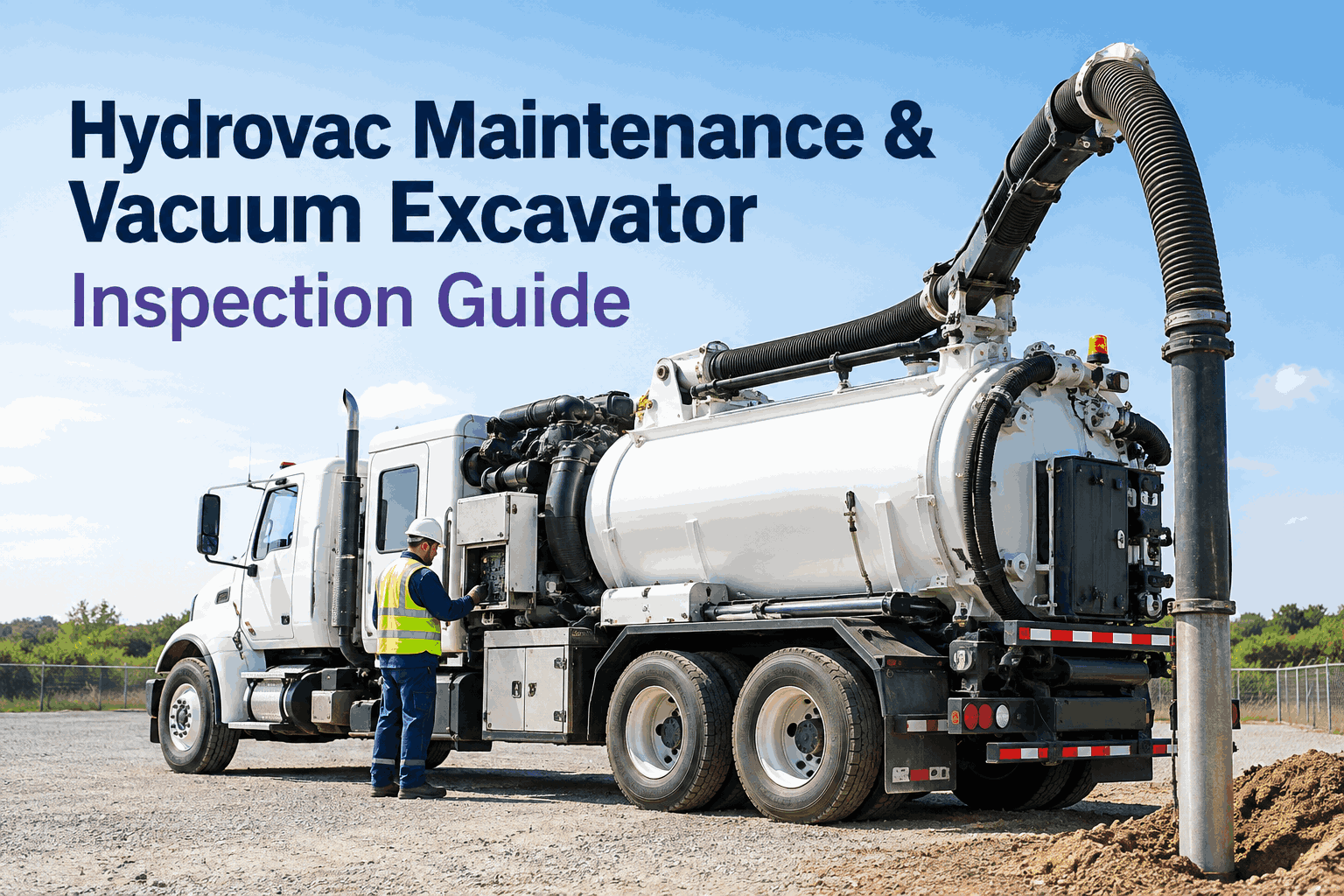
Almost every catastrophic hydrovac failure traces back to one thing: debris that got past its guards and into the blower. Good hydrovac maintenance isn't about babysitting every part — it's about protecting the one five-figure component that a two-minute filter check defends. This page follows that carryover chain, shows the three ways crews wreck it, and gives you the daily routine that stops it. Book a demo to see the blower checks on your trucks.
The $30 Filter That Protects a $8,000 Blower
A hydrovac blower doesn't fail on its own. It fails because slurry carried over past the guards that were supposed to stop it — and every one of those guards is a quick daily check. Here's the chain that either protects the blower or lets it die.
A hydrovac stacks four demanding machines on one chassis, and any one can deadline the truck. But they are not equal in what they cost you when neglected — and the blower almost never fails from wear. It fails from carryover.
That single fact should shape how you run the daily check. For the full side-by-side of all four systems and their service intervals, see our four-system hydrovac maintenance schedule; this page zooms in on the failure that hurts most.
The Blower Carryover Chain, Guard By Guard
Between the wet slurry in the tank and the blower that generates your vacuum sit a series of guards. Each one is a daily-check item. When they all hold, the blower breathes clean air for years. When one fails quietly, the next overfill sends abrasive material straight through. Follow the chain.
Debris tank & float balls
As the tank fills, float balls rise and shut off the vacuum before slurry reaches the outlet. Seized in their cages, they stop protecting silently.
Daily: verify balls move freely, level indicator sweepsCyclone / separator
The cyclone spins out fine material and moisture the tank missed. Caked up or bypassed, it hands that load straight to the filters.
Daily: check cyclone is clear, separator drainingBlower filters
The last barrier. Cleaned daily and replaced on hours, they catch what's left. Clogged or torn, anything past them scores the blower.
Daily: clean filters; replace per manufacturer hoursThe blower
3,000–6,000 CFM of vacuum. When all three guards hold, it runs clean for years. When one fails, the rebuild bill lands.
Outcome: clean air in, no scoring, full suctionNotice the order: the cheapest, fastest checks sit furthest from the blower, and each one is a chance to stop carryover before it reaches the part you can't afford to replace. Miss any single guard and the chain is only as strong as the one you skipped. That is the entire logic of hydrovac preventive maintenance — cheap guards defending an expensive core. Book a demo to see each guard as a required check.
Three Ways Crews Actually Wreck a Hydrovac Blower
Blowers rarely die from a single dramatic event. They die from one of three habits that let carryover through — each preventable, each invisible until the performance drops or the rebuild quote arrives.
Skipped filter cleaning
The most common one. On a hot day with jobs stacked, the daily filter clean gets waved past. Material builds, a filter tears, and carryover starts before anyone notices suction fading.
Guard failed: filtersSeized float balls
A float ball caked with buildup or stuck in its cage can't rise to cut the vacuum. The tank overfills, slurry carries over the top, and the blower takes the hit on the very next full load.
Guard failed: float ballsNeglected blower oil
The positive-displacement blower runs on its own oil schedule. Let it run low or long past interval and the internals wear from the inside — a slower death than carryover, but the same five-figure ending.
Guard failed: lubricationAll three share a root cause: a check that a busy crew skipped and no system caught. Paper walk-arounds make it easy — a signature at the bottom doesn't prove the float balls were touched. Try HVI free and make every blower-guard check a required, photo-backed step.
The Blower-First Daily Hydrovac Inspection Checklist
This is the pre-shift routine that keeps the carryover chain intact. It's ordered the way the blower needs it — the guards first, then the systems that keep the truck safe and digging. Minutes a morning, and it's the highest-return habit on a vacuum excavator.
Blower guards — the carryover chain
- Clean the blower filters; look for tears, gaps, or heavy caking
- Check the cyclone and separator are clear and draining
- Verify float balls move freely in their cages, no buildup
- Confirm the tank level indicator sweeps through its range
Water pump & jetting
- Confirm the water pump primes and holds pressure
- Inspect the lance nozzle for wear, clogging, or damage
- Check high-pressure hoses for cuts, cracks, or bulges
- Verify the lance trigger lock and whip checks on couplings
Boom, hoses & hydraulics
- Inspect the suction hose for thinning, cracks, or bulges
- Grease boom pivot points; check for drift or play
- Scan hydraulic lines and fittings for leaks and chafing
- Test the pendant / boom controls through full motion
Fluids, chassis & safety
- Check engine oil, coolant, hydraulic and water levels
- Confirm outrigger pads deploy and the ground supports the load
- Test E-stop, interlocks, relief valves, and gauges
- Log every item — a photo-backed record beats an unread signature
On paper, item 1 is the first casualty of a rushed morning — and item 1 is the one protecting your most expensive component. On HVI, each line is a required step with a photo, so a caked filter or a seized float ball can't be signed past on a busy day. Book a demo to see the hydrovac pre-shift template.
Cold-Weather Hydrovac Maintenance Is a Different Job
Frozen ground is where hydrovacs earn their premium — and where a maintenance program that ignored winter falls apart. The water side of the machine turns from a cutting tool into a freeze hazard, and a new set of components comes into play.
Boiler / burner service
The heat system that thaws frozen ground has its own burner, filters, and circulation pump. Neglected, you lose cutting power in exactly the conditions you bought it for.
Freeze protection
Water left in the pump, lines, or tank overnight can freeze and crack a manifold. Draining and heated storage move from optional to mandatory in the cold months.
Cold-start discipline
Hydraulic fluid thickens and seals stiffen in the cold. A proper warm-up and a check for cold-weather leaks protect the boom and pump before the first dig.
These winter items don't replace the daily blower checks — they stack on top of them, which is exactly why a seasonal PM schedule beats a fixed one. Track it by the calendar and the hours together, and the truck that struggles for everyone else keeps digging for you. See how HVI schedules seasonal and hour-based PM on one record.
How Tracked Hydrovac Maintenance Pays Back
The payback math is simple because the thing you're protecting is so expensive. A tracked program doesn't just save a filter — it saves the blower rebuild, the towed truck, and the billable days behind them. Three moves do it.
Inspect daily, by phone
Crews run the guided check — blower guards first — with a photo on any defect, so the carryover chain gets eyes on it every single morning.
Schedule by hours
Blower oil, filters, and pump service track against engine hours, not the calendar, so a hard-run truck gets serviced when it's earned it. The work order fires before it's due.
Fix early, document it
A flagged defect becomes a routed work order; every check and service logs to the truck's record — audit-ready proof, and the history that shows the program is working.
Across fleet-heavy operations, unplanned downtime is consistently one of the largest recurring costs on the books, and HVI users report meaningfully lower annual maintenance spend once inspections move off paper. On a hydrovac, where one carryover event can cost a blower and a week of billing, the case writes itself. See it on the daily operator reporting feature, or book a demo to run the numbers on your trucks.
From a fleet lead who's paid for a blower the hard way
We lost a blower to a float ball nobody checked. It stuck in the cage, the tank overfilled on a big job, and the carryover cooked the internals. Eight grand and two weeks down — over a part that costs nothing and takes ten seconds to look at.
Now the daily check is on a phone and it will not close until the filters, the cyclone, and the float balls are signed off with a photo. I stopped chasing paper and I can pull any truck's full service history in about thirty seconds. We haven't carried over into a blower since.
Frequently asked questions
What is the most important hydrovac maintenance task?
Cleaning the blower filters daily. Any slurry that carries over past the filtration guards scores the blower internals permanently, turning a cheap filter into a five-figure rebuild. The cyclone and the debris-tank float balls are the guards ahead of the filters — check all three every shift, because together they protect the machine's most expensive component.
Why do hydrovac debris-tank float balls matter so much?
They're the blower's first line of defense. As the tank fills, the float balls rise and shut off the vacuum before slurry reaches the outlet. If one seizes in its cage from buildup, that protection fails silently and the next overfill carries debris straight into the blower. That's why verifying they move freely is a daily check, not an occasional one.
How often should hydrovac blower filters be replaced?
Clean them daily and replace them every 1,000–3,000 operating hours, or per your manufacturer's schedule. Filters run on their own clock, separate from other services. Follow the interval for your specific unit — Vactor, Vac-Con, TRUVAC, and Vacall each publish their own — and track it by hours so a hard-run truck gets fresh filters when it's earned them.
What extra maintenance does a hydrovac need in winter?
Cold-weather work adds the boiler or burner service that thaws frozen ground, plus freeze protection — draining water from the pump, lines, and tank so nothing cracks overnight. Hydraulic fluid also thickens, so cold-start warm-ups matter. These items stack on top of the daily blower checks, which is why a seasonal PM schedule beats a fixed one.
Can inspection software actually prevent a blower failure?
It can't guarantee it, but it removes the most common cause: a guard check skipped on a busy morning. HVI makes each blower-protecting item a required, photo-backed step and schedules oil and filter service by engine hours, so a caked filter or seized float ball gets caught before carryover reaches the blower. It's a documentation and compliance layer, not a replacement for operator judgment.
Stop Carryover Before It Reaches the Blower
Guided daily inspections that put the blower guards first, hour-based PM scheduling for oil and filters, seasonal winterization tracking, and defect-to-work-order routing with photos — on one timestamped record per truck. Live in under two weeks, trusted by 25,000+ users worldwide.
No credit card · No hardware · Hydrovac inspection templates ready on day one