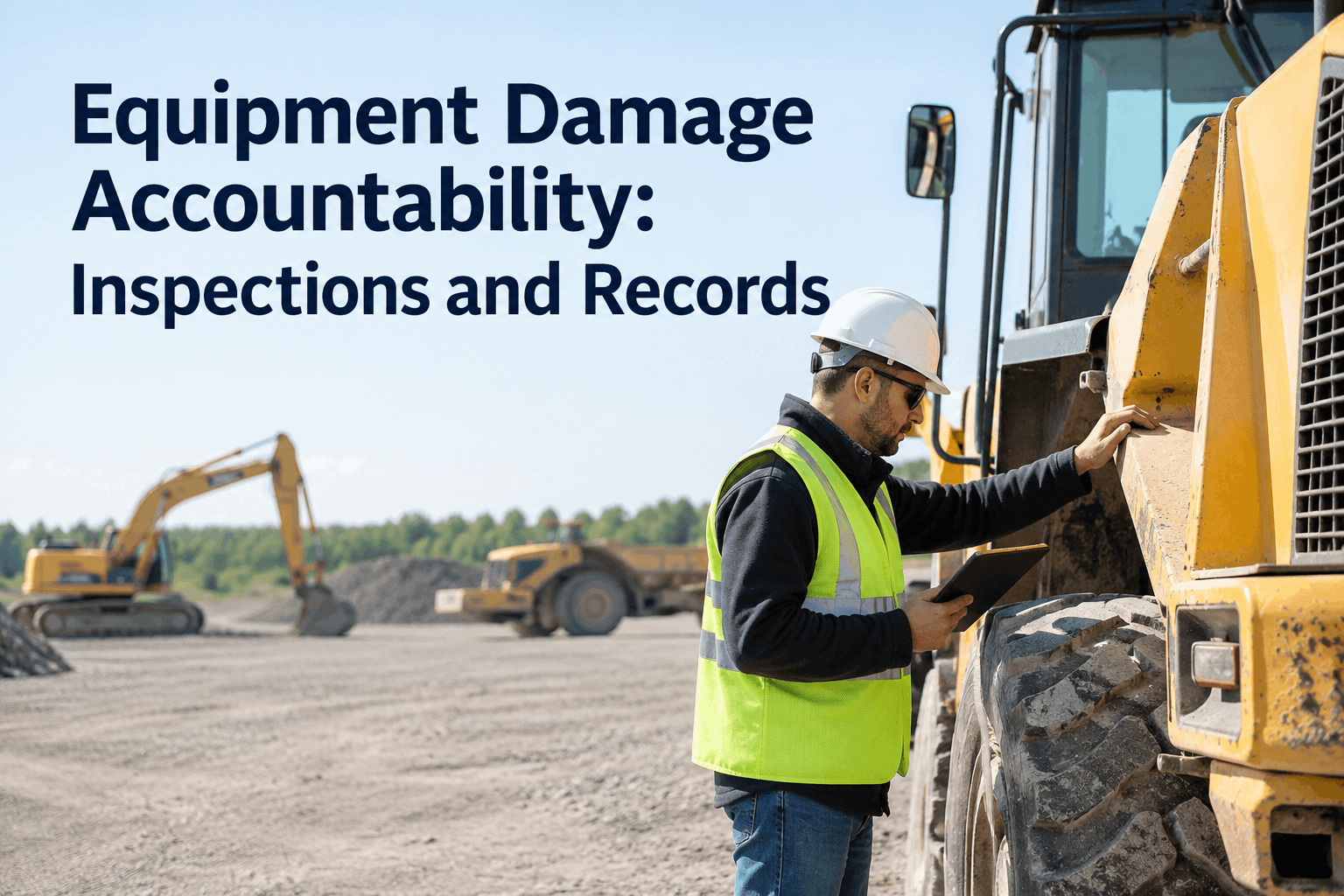
Every fleet manager knows the sentence: "It was already like that." A loader comes back with a cracked windshield, a bent step, a gouged bucket — and nobody saw it happen, nobody logged it, and now it's your repair bill and your mystery. Equipment damage accountability isn't about blaming operators; it's about having a record so clear that the question answers itself. When did this happen, who had the machine, was it flagged? This page shows how to build that trail. Book a demo of the damage-record timeline.
"It was already like that" stops being true the day you have a record
Equipment damage accountability isn't a blame game — it's a chain of custody. Condition logged at every handover, damage flagged with a photo and a timestamp, so the machine's history answers the question for you.
Damage that can't be pinned to a time and a person isn't anyone's fault — which means it's always your cost. The fix isn't stricter operators; it's better records. Equipment damage accountability is really three documents working together, and most fleets are missing all three.
Why equipment damage goes unaccounted forthe gaps that let "already like that" win every time
Nobody's hiding the damage on purpose. It slips through because the paper trail has holes an operator can drive a dozer through.
No baseline condition
If you never logged what the machine looked like before the shift, you can't prove the dent is new. Every argument starts from zero.
Verbal reports only
"I think I mentioned it to the foreman" isn't a record. Spoken damage reports evaporate by the next shift and can't be traced.
Photos lost in chats
A photo texted to a group chat isn't tied to the unit, the time, or the operator. Six weeks later nobody can find it or prove when it was taken.
Shared machines, no handover
When three operators share a unit across shifts and nobody logs the handoff, damage can't be pinned to a window. Everyone points sideways.
Notice the pattern: every gap is a missing record, not a bad operator. Close the records and the accountability appears on its own — no interrogation required. Explore HVI's digital equipment inspections to see where the baseline comes from, or Book a demo to close every one of these gaps.
The 3 records that establish equipment damage accountabilitythe evidence file that answers "when did this happen?"
Baseline condition record
A timestamped, photo-backed snapshot of the machine's condition at the start of a shift or handover. This is the "before" that every later claim gets measured against — without it, you have no reference point.
Captured at: handover / pre-shiftDamage report with proof
When damage appears, it's logged against the unit with a forced photo, the operator's name, and the exact time — turning a vague "something's wrong with the loader" into a traceable event tied to one shift.
Captured at: the moment it's foundCondition timeline
Every record for that machine, in order — so you can see the exact window the damage appeared in and who had the unit then. This is what turns scattered logs into an actual chain of custody.
Built from: every inspection over timeThree records, and together they answer the only question that matters: was it already like that, or did it happen on this shift? That's the whole of equipment damage accountability. Book a demo to see a machine's full condition timeline.
Equipment handover & damage checklistwhat to capture at every transfer to keep the trail clean
Accountability is built at the handover, not the argument. This is the short condition sweep to run whenever a machine changes hands, grouped by what actually gets disputed later.
Run this at every handover and damage has nowhere to hide — it either existed at transfer (on record) or appeared on the shift (also on record). Build it from HVI's ready See HVI's construction equipment checklist templates, or Sign up free and log your first handover.
"He said" vs "the record says"how a documented trail settles the dispute
- "It was already like that when I got it" — and no one can say otherwise
- Three operators shared the unit; the damage belongs to no shift
- The repair quietly becomes general fleet cost, cause unknown
- Coaching the wrong operator — or no one — because you're guessing
- The same careless pattern repeats because nothing's traceable
- The baseline photo shows the machine was clean at 06:10
- The damage was logged on Tuesday's return — one shift, one operator
- The repair is costed to a cause you can actually address
- Coaching goes to the right person, backed by proof not hunch
- Operators know it's tracked, so handling improves across the board
The record doesn't just win the argument — it ends the argument before it starts, because everyone knows the trail exists. That's also the operator's protection: a clean handover record proves the damage wasn't theirs. Pair this with how crews run the daily check — Read our operator inspection training guide.
Why equipment damage accountability pays for itselfwhat untracked damage actually costs a fleet
Accountability isn't about recovering repair costs from operators — it rarely works that way. The real return is catching damage early, coaching the actual cause, and killing the "mystery repair" line that quietly inflates every maintenance budget. Book a demo to put a record behind every machine.
From a fleet manager who closed the accountability gap
We weren't trying to catch anyone — we just wanted to stop paying for damage nobody could explain. The first month we had photo handover records, a returned excavator showed a bent cylinder that wasn't there at the morning check. It wasn't about punishing the operator; it was that we finally knew it happened on that job, retrained the crew on clearance, and it stopped. Our "cause unknown" repair line basically disappeared. Turns out people handle the machine differently when they know there's a before-photo.
Turn equipment damage accountability into a clean paper trail
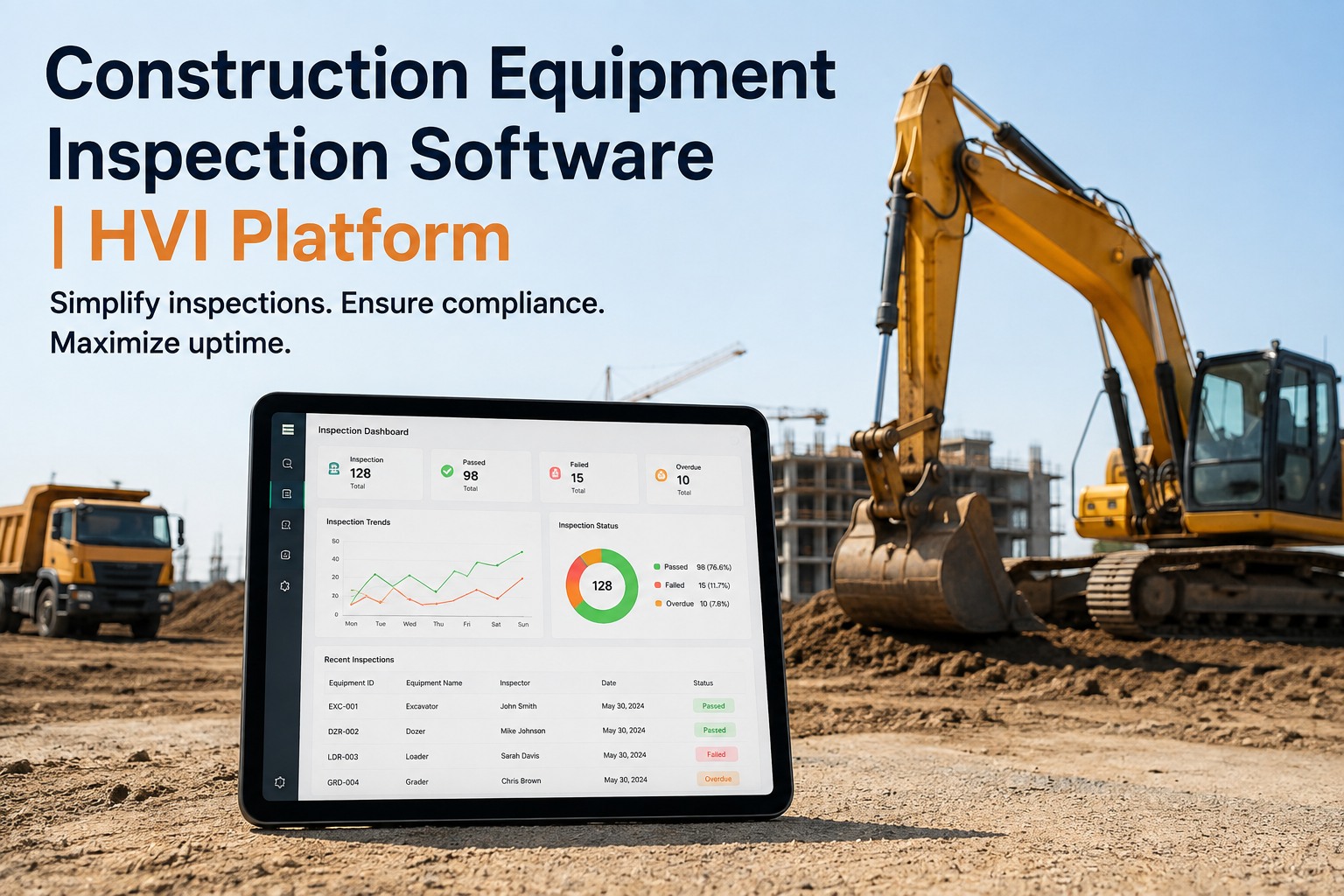
Stop paying for damage nobody can explain. HVI logs every inspection as a timestamped, photo-backed condition record tied to the unit and operator — so damage pins to a shift, disputes end before they start, and the "cause unknown" line disappears from your repair budget.
No credit card · No hardware · Photo condition records from day one
Equipment damage accountability — FAQs
What is equipment damage accountability?
It's the practice of documenting a machine's condition over time so that when damage appears, you can see when it happened and who had the unit. It rests on three records: a baseline condition, a damage report with proof, and a condition timeline.
How do you prove who damaged a piece of equipment?
You don't prove it by argument — you prove it with records. A timestamped baseline photo shows the machine was clean, and the damage report pins the finding to a specific shift and operator. The window between the two is where accountability lives.
Should operators be charged for equipment damage?
Rarely, and it's usually not the goal. Accountability is about catching damage early and coaching the real cause, not recovering repair costs. A clean record also protects operators by proving damage wasn't theirs when it genuinely wasn't.
What should an equipment handover record include?
Unit ID, operator name, timestamp and meter reading, plus a condition check of glass, body, wear points and tires — with photos of any new damage. Both the outgoing and incoming operator should confirm the condition so the transfer is on record.
How does software improve equipment damage accountability?
It ties every inspection to the unit, operator and time, forces photos on damage, and keeps the full condition timeline in one place. That replaces lost texts and verbal reports with a traceable chain of custody you can pull up in seconds.