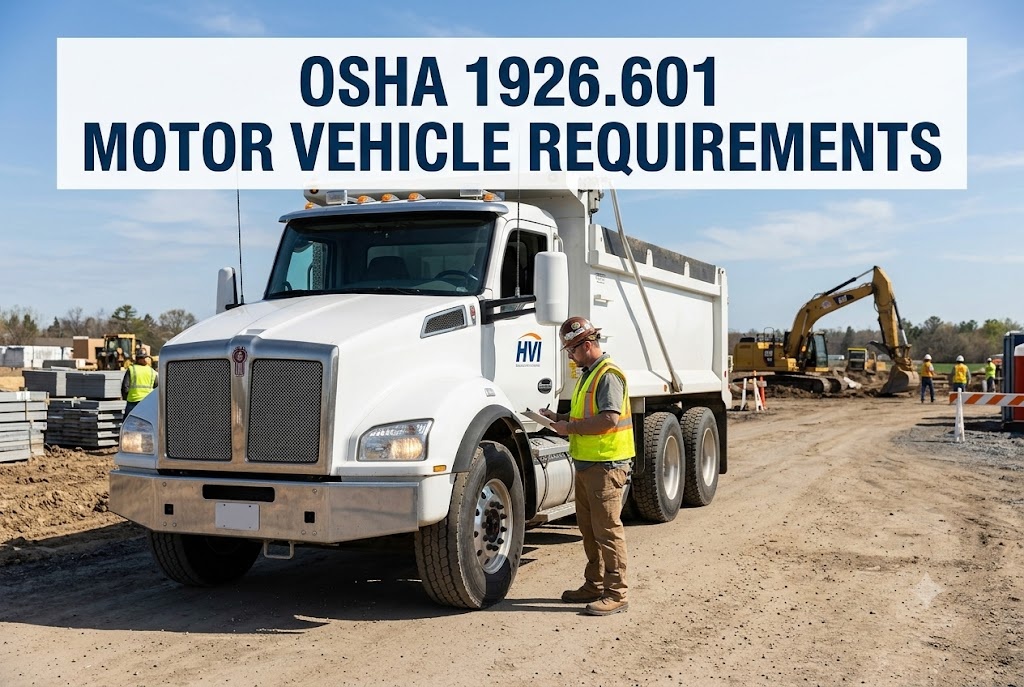
Every dump truck, water truck, and service vehicle moving around a construction site falls under OSHA 1926.601 — the motor vehicle standard for jobsites not open to public traffic. Its most important requirement isn't a piece of hardware; it's a habit: every vehicle gets checked at the beginning of each shift, and any defect gets fixed before the vehicle is put to work. Get that routine right, with the equipment requirements behind it, and you have met the heart of the standard. See the beginning-of-shift inspection built into a daily DVIR
The Standard Comes Down to One Question Every Morning: Is This Vehicle Safe to Run?
1926.601 requires a beginning-of-shift inspection of every jobsite vehicle. Tap an item to see what "safe operating condition" means for it.
Every vehicle needs a service brake, an emergency brake, and a parking brake system, all maintained operable — and the beginning-of-shift check confirms them, including trailer brake connections. Brakes are the first line on the list for a reason.
The steering mechanism and tires are checked for safe condition and any apparent damage that could cause a failure while the vehicle is in use — a blowout or steering fault on a loaded haul truck is exactly what the pre-shift check is meant to catch.
Seat belts — required in all motor vehicles — and the operating controls and coupling devices are verified working. A belt that won't latch or a control that sticks is a defect to correct before the vehicle runs, not something to work around.
The horn and safety devices — including the reverse signal alarm and, where fitted, ROPS — are confirmed working. Plus lights, reflectors, wipers, and fire extinguishers where they're needed. The warning gear only protects anyone if it functions.
1926.601 is the sibling to the earthmoving standard 1926.602 — where 602 governs machines like loaders and dozers, 601 governs the trucks and vehicles moving around the site. Below is what it covers, the equipment it requires, and why the beginning-of-shift inspection is the single most important thing to get right.
What 1926.601 covers — and how it differs from 602
The scope of 1926.601 is defined by two things: where the vehicle operates and what it isn't. It applies to motor vehicles working within an off-highway jobsite closed to public traffic — and specifically not to the earthmoving equipment that 1926.602 handles. Knowing that line tells you which standard a given machine falls under.
Jobsite motor vehicles
Dump trucks, water trucks, service and pickup trucks, haulage vehicles — the on-highway-style vehicles operating within the site, not open to public traffic.
Earthmoving equipment
Loaders, dozers, scrapers, graders, off-highway trucks — the machines that shape the site, covered separately. See our guide to OSHA 1926.602.
The two standards are siblings under Subpart O, and they share the same spirit — equipment that's maintained, equipped with working safety features, and inspected before use. But the specific requirements differ, so it's worth knowing which one applies to which asset in your fleet. Book a demo to sort your fleet by the standard that applies.
The equipment requirements
Behind the inspection sit the equipment requirements — what a jobsite motor vehicle must actually have. These are the things the pre-shift check verifies, and each exists to prevent a specific, common way a vehicle hurts someone.
Three brake systems
A service brake, an emergency brake, and a parking brake, all kept operable — so a vehicle can stop, hold, and fail safely.
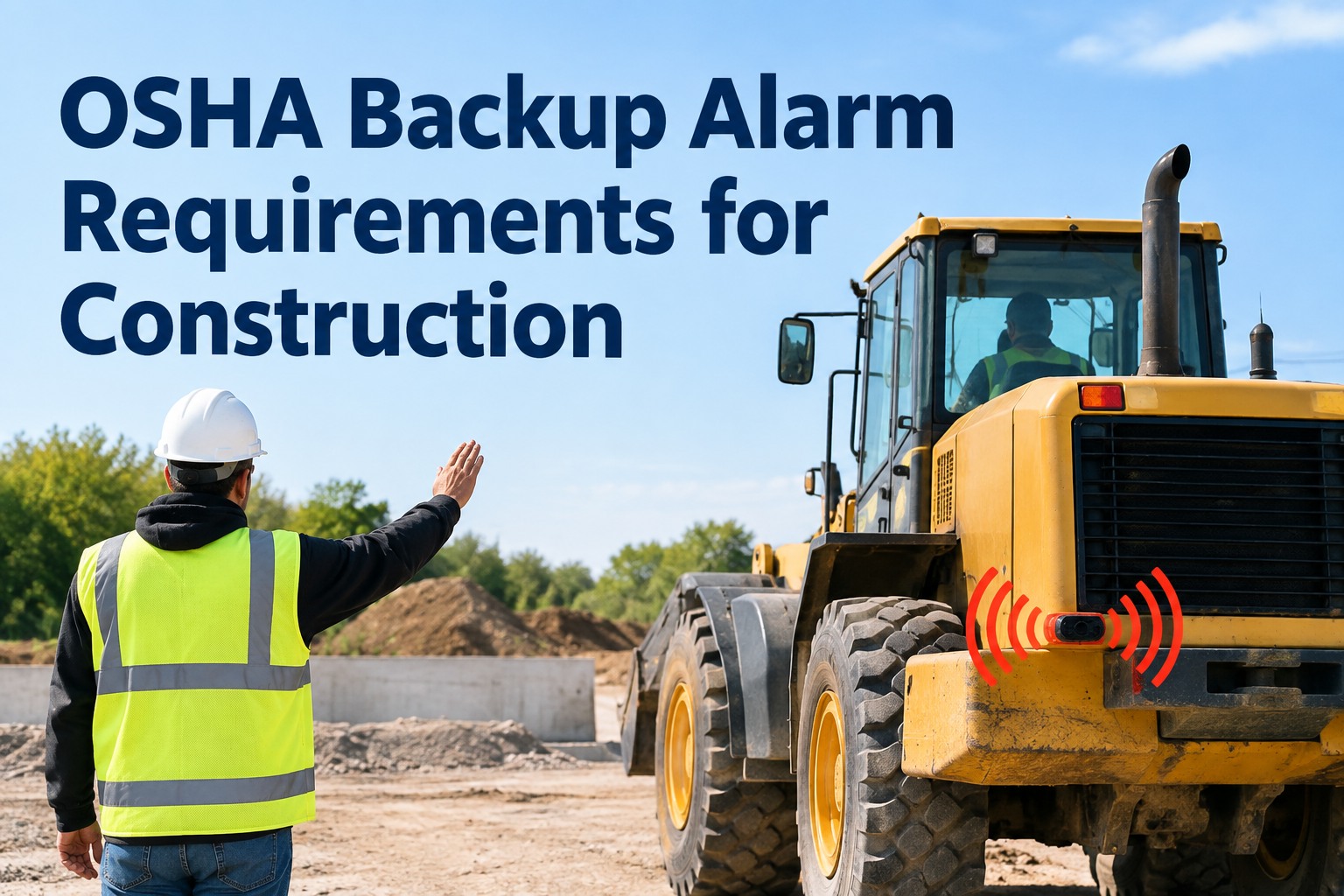
Reverse alarm for blind backing
A reverse alarm audible above noise, or a spotter, for vehicles with an obstructed rear view. See our guide to backup alarm requirements.
Seat belts in all motor vehicles
Seat belts and anchorages meeting DOT standards installed in all motor vehicles. See our guide to seat belt requirements.
Cab shields & dump-body support
A cab shield or canopy on crane-loaded haulage vehicles, and a locking positive support to stop a dump body lowering during maintenance.
Two of these have their own detailed rules worth reading in full — reverse alarms and seat belts — but the cab-shield and dump-body-support requirements are the kind of item that's easy to overlook until an inspector or an incident finds it. A crane-loaded truck without a cab shield, or a raised dump body with no positive support during maintenance, are both specific, citable hazards. Start free and put the 1926.601 equipment items on every check.
The beginning-of-shift inspection: the standard's spine
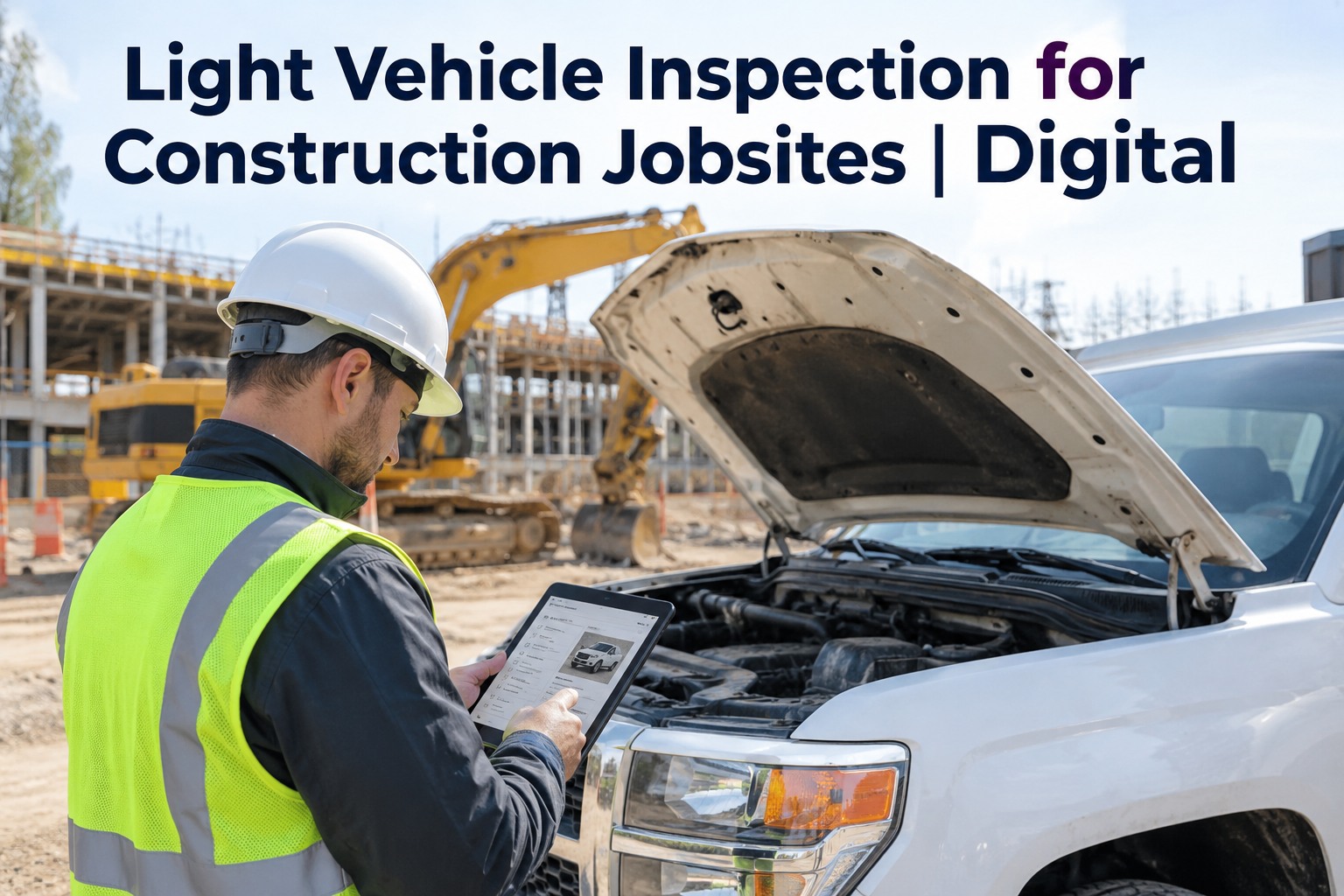
If you do only one thing to comply with 1926.601, it's this. Subsection (b)(14) requires that every vehicle in use be checked at the beginning of each shift, and it names exactly what to look at. This single list pulls nearly all of the standard's equipment requirements into one routine.
Each item has to be in safe operating condition and free of apparent damage that could cause a failure while in use. Where relevant, the check extends to lights, reflectors, windshield wipers, defrosters, and fire extinguishers too. It's a comprehensive snapshot of whether a vehicle is fit to work — taken fresh every shift, because a vehicle that was sound yesterday may not be today. Book a demo to run the full (b)(14) list as a daily check.
The rule that gives the inspection teeth
An inspection that finds a defect but lets the vehicle run anyway isn't compliance — it's a paperwork exercise. What makes 1926.601's pre-shift check meaningful is the clause that follows the list: all defects must be corrected before the vehicle is placed in service.
All defects shall be corrected before the vehicle is placed in service. A failed brake, a dead reverse alarm, a torn seat belt — each takes the vehicle out of service until it's fixed. "We'll get to it after this load" is exactly the gap the standard closes.
This is where the documentation matters most. A recorded inspection that shows a defect was found and corrected before the vehicle worked is proof of a functioning program; an undocumented one is a claim an inspector can't verify. After an incident, the beginning-of-shift record is one of the first things reviewed — and a complete one showing the vehicle was checked and sound is a strong position to be in. Start free and record defects found and fixed before service.
The OSHA 1926.601 compliance checklist
Use this to confirm your jobsite motor vehicles meet the standard and pass the pre-shift check. Use this 1926.601 checklist online free, with each beginning-of-shift item recorded per vehicle.
Three working brake systems
Service, emergency, and parking brakes all operable and checked each shift, including trailer connections.Reverse alarm or spotter for blind backing
An audible reverse alarm or a spotter on any vehicle with an obstructed rear view.Seat belts in every motor vehicle
Belts and anchorages installed and in good condition, verified on the pre-shift check.Cab shields and dump-body supports
A cab shield on crane-loaded haulage, and a locking support to prevent a dump body lowering in maintenance.Run the full (b)(14) check each shift
Brakes, tires, horn, steering, coupling, seat belts, controls, and safety devices — every vehicle, every shift.Correct defects before service & record it
No vehicle goes to work with an uncorrected defect, and every check and fix is documented.
From a superintendent who runs the yard by the check
The beginning-of-shift inspection used to be a clipboard nobody looked at — drivers would tick the boxes in the cab without really looking, and honestly I couldn't have told you if a single defect had ever been caught and fixed before a truck rolled. It was compliance theater, and I knew it.
We made it a real digital check, and the first week caught a dump truck with a reverse alarm that hadn't worked in who knows how long and a service truck with a bald tire. Both would have run all day. Now no vehicle leaves the yard with an open defect, the record's there for every truck every morning, and when OSHA came through, 1926.601 was the easiest part of the visit. The rule was always the same — we just started actually doing it.
Frequently asked questions
What is OSHA 1926.601?
29 CFR 1926.601 is OSHA's construction standard for motor vehicles operating within an off-highway jobsite not open to public traffic — dump trucks, water trucks, service vehicles, and similar. It's part of Subpart O and the sibling to 1926.602, which covers earthmoving equipment; 601 explicitly doesn't apply to equipment covered by 602. It requires vehicles to have working brake systems, seat belts, reverse alarms for obstructed rear views, cab shields on crane-loaded haulage, and dump-body supports, plus a beginning-of-shift inspection of every vehicle with all defects corrected before the vehicle is placed in service.
What is the 1926.601 beginning-of-shift inspection?
Under §1926.601(b)(14), every vehicle in use must be checked at the beginning of each shift to confirm it's in safe operating condition and free of apparent damage that could cause failure. The named items are service brakes and trailer connections, parking and emergency brakes, tires, horn, steering, coupling devices, seat belts, operating controls, and safety devices — plus lights, wipers, and fire extinguishers where needed. All defects must be corrected before the vehicle is placed in service. This pre-shift check is essentially a driver vehicle inspection report, and the core of the standard.
What's the difference between 1926.601 and 1926.602?
Both are in Subpart O and both govern jobsite equipment, but cover different assets. 1926.601 applies to motor vehicles — dump trucks, water trucks, service and pickup trucks, and haulage vehicles on an off-highway jobsite. 1926.602 applies to material handling and earthmoving equipment — loaders, dozers, scrapers, graders, and off-highway trucks. The standards even reference each other: 1926.601 states its requirements don't apply to equipment covered by 1926.602. They share the same philosophy, including a beginning-of-shift inspection, but the specific requirements differ.
Do jobsite vehicles need seat belts and reverse alarms under 1926.601?
Yes to both. Section 1926.601(b)(9) requires seat belts and anchorages meeting DOT Federal Motor Vehicle Safety Standards in all motor vehicles. And 1926.601(b)(4) requires that a vehicle with an obstructed view to the rear not be used in reverse unless it has a reverse signal alarm audible above the surrounding noise, or is backed only when a spotter signals it's safe. Both items are also on the beginning-of-shift inspection under the seat belts and safety devices entries, so they're verified working at the start of each shift rather than just assumed to be present.
What must happen when a pre-shift inspection finds a defect?
The defect must be corrected before the vehicle is placed in service — that's stated directly in 1926.601 after the inspection list. So a truck with a failed brake, a dead reverse alarm, a bald tire, or a torn seat belt comes out of service until it's fixed; it can't run the shift and get repaired later. This "correct before service" rule is what turns the beginning-of-shift inspection from a checkbox into a real safeguard, and recording the defect and its correction is what proves the rule was followed.
Run the 1926.601 beginning-of-shift check as a daily habit you can prove
HVI turns the 1926.601(b)(14) inspection into a digital DVIR for every jobsite vehicle — brakes, tires, steering, horn, seat belts, safety devices — flags each defect, holds the vehicle out of service until it's corrected, and keeps the record. So the standard's core requirement runs every morning, and the proof is a search away when OSHA asks.
No credit card · Beginning-of-shift DVIR per vehicle · Audit-ready inspection & defect records