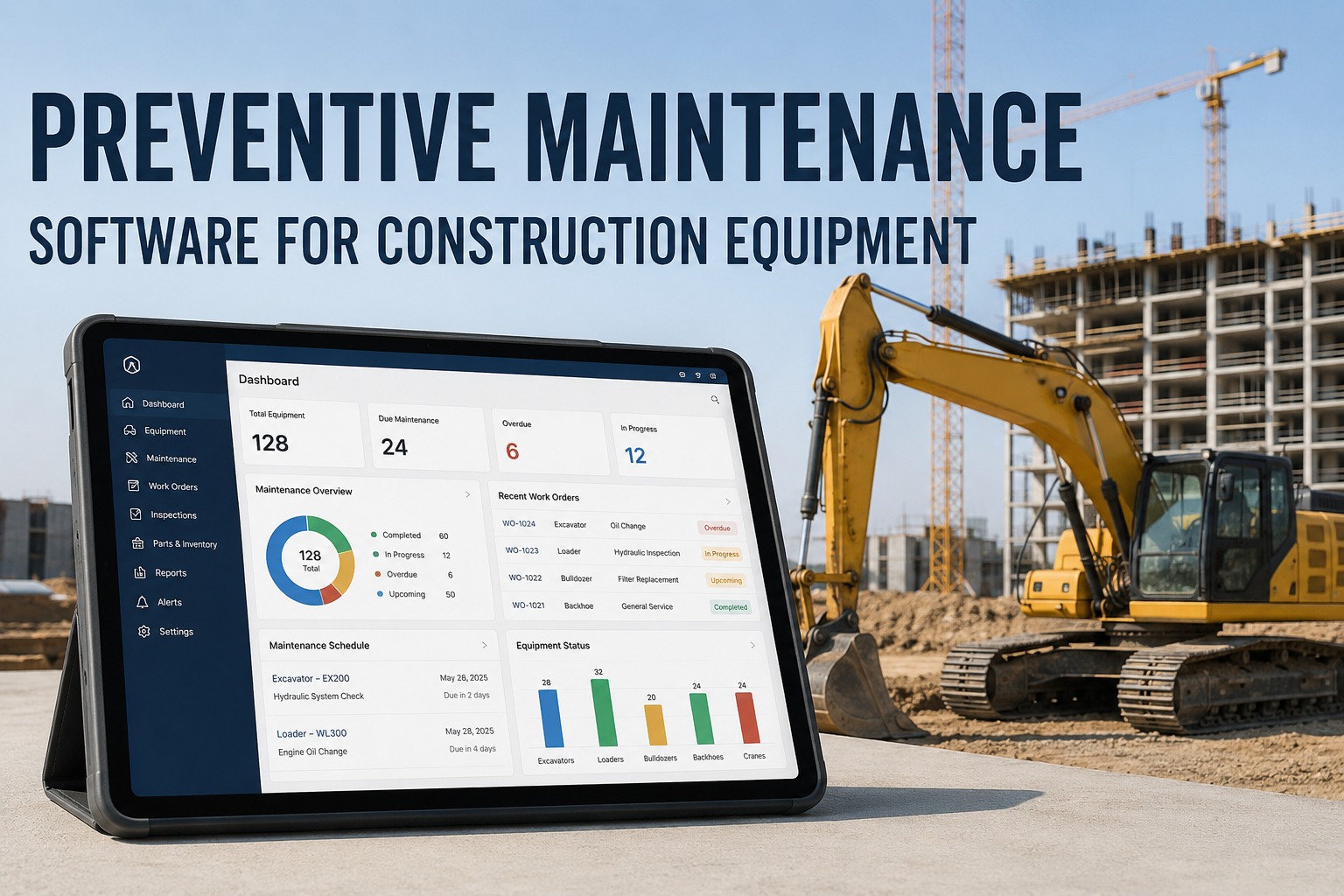
Power trowel maintenance runs on a clock the rest of your fleet doesn't answer to: the concrete. When a slab reaches its finishing window, the trowel has to work right then — there's no rescheduling a pour and no time to fix a machine that won't start. Book a demo to keep every trowel and screed ready when the concrete is.
The Concrete Won't Wait for a Repair
Power trowel and screed maintenance is timing-critical: the finishing window opens once and closes fast. A machine that fails at that moment doesn't just cost a repair — it can cost the whole slab.
Here's a power trowel and concrete screed maintenance program built around that reality — why finishing equipment fails at the worst moment, the five systems that need checking, why the concrete environment wears them fast, the schedule that keeps them ready, and how to track it so no machine is a surprise on pour day.
Timing is the whole problemwhy finishing equipment can't afford a breakdown
Most equipment can wait an hour for a fix. A power trowel can't. Concrete cures on its own schedule, and the finishing window — when the slab is firm enough to walk a machine on but still workable — is measured in a short span you don't control. Miss it because the trowel wouldn't start and you're left with a slab you can't properly finish.
A trowel that fails on pour day is a slab problem, not just a repair. Unlike most equipment, you can't push the job to tomorrow — the concrete is already down. That's why power trowel maintenance is really about reliability at one precise moment, which means catching problems well before the machine is needed, not when it's sitting on wet concrete.
The five systems to keep checkedwhat fails on a trowel or screed
Power trowel and screed maintenance comes down to five systems. Each one has a failure mode that shows up at the worst time, and each belongs on a check done before the machine is loaded for a pour — not discovered on the slab.
Engine
Oil, air filter, fuel and easy starting. A small engine caked in concrete dust that won't fire is the classic pour-day failure.
Gearbox
Oil level and condition, seals and play. A dry or contaminated gearbox is the most expensive trowel failure and often preventable.
Blades & rotor
Wear, pitch adjustment and secure fasteners. Worn or uneven blades leave a poor finish and load the gearbox unevenly.
Belts & drive
Belt tension, glazing and clutch action. A slipping or snapped belt stops the trowel dead in the middle of the finishing window.
Lubrication
Grease points, spider arms and pivots. Skipped greasing in an abrasive environment is what wears trowels out before their time.
The rule
Check all five before the pour, not on the slab. Gearbox and lubrication are the ones crews skip — and the costliest to skip.
The gearbox and the grease points are the two that quietly decide a trowel's life. Both are easy to skip because the machine still runs without them being right — until the gearbox seizes or the blades chew out early. Building these into a pre-pour check is exactly what a digital inspection and DVIR is for. Book a demo to build a trowel check
The concrete environment wears them fastwhy finishing gear needs a tighter program
Concrete finishing equipment works in about the most hostile environment a small machine can face: fine abrasive dust, wet cement, and constant vibration, all at once. That combination attacks the exact systems that keep a trowel running, which is why finishing gear needs more frequent attention than its size suggests.
The single highest-value habit is cleaning the machine down after every pour — before the cement hardens on it — because everything else, from greasing to blade wear, gets worse when a trowel is put away dirty. A short, tracked routine tied to each pour is what keeps the abrasive environment from quietly destroying the machine. Start free and put a clean-and-check routine on every trowel.
The maintenance schedulewhat to do, and when
A power trowel maintenance schedule is anchored to pours and hours rather than the calendar, because a trowel used every day needs far more attention than one that runs a few pours a month. The rhythm layers a clean-and-check after every pour up to a full seasonal service.
The after-every-pour clean-and-check is the layer that pays for itself, because it stops cement damage at the source and catches a loosening blade bolt before it becomes a finish defect. Hours-based scheduling keeps the deeper gearbox and belt services from slipping as usage swings — the discipline behind any solid preventive maintenance scheduling. Book a demo to schedule trowel service by hours
Where finishing gear gets neglectedthe four gaps that cost a slab
Power trowels and screeds are small, so they're easy to treat as disposable — until one fails on a pour and ruins a finish. These four gaps are where finishing equipment slips, and each is avoidable with a tracked program.
The pattern is treating finishing equipment as too small to bother with a program, when a single failure on a slab costs more than a year of upkeep. Closing the gaps means a clean-down after every pour, a real pre-pour check, and tracked gearbox and blade service — the difference between a trowel that's ready and one that gambles the finish. Book a demo to close the finishing-gear gaps
Track it so no trowel is a surprisewhere the program meets the software
A finishing-equipment program only works if it's tracked — the clean-down logged, the gearbox service triggered, the worn blade flagged before pour day. When the check, the hours and the history live in one place, no trowel is a question mark when the concrete is on the ground.
Pre-pour DVIR
A guided check of engine, gearbox, blades, belts and grease, with photos of a worn blade or leaking seal.
Service by hours
Gearbox, belt and engine services triggered on the machine's hours, with alerts before they're due.
History per machine
Every check, service and blade change tied to the unit, so its readiness is a lookup, not a guess.
That's the difference between a finishing crew that shows up confident and one that hopes the trowel starts: a tracked program where every machine's readiness is known before the truck leaves the yard. It runs on the same concrete finisher startup checklist approach, made digital and tracked. Start free and track every trowel and screed in one place.
From a concrete foreman
People think of a power trowel as throwaway gear, and then one lets you down on a big pour and you understand real fast that it isn't. We had a riding trowel drop a belt halfway across a warehouse slab — by the time we got a backup running, we'd lost the window on a whole section and it showed in the finish. The fix was embarrassingly simple: clean the machines down after every pour so the cement never hardens on them, check the gearbox oil and belts before we load out, and service on hours instead of "when it acts up." We haven't lost a finish since, and the trowels themselves last noticeably longer. For gear everybody underrates, keeping it on a real program has paid off more than almost anything else we track.
How HVI keeps finishing gear pour-readycheck before the pour, service by hours, track it all
Power trowel and screed maintenance works when every machine is checked before the pour, serviced on hours, and tracked in one place. HVI's preventive maintenance and fleet inspection / DVIR do exactly that for a concrete-finishing fleet.
Check before the pour
A pre-pour DVIR covering engine, gearbox, blades, belts and grease.
Service by hours
Gearbox and drive PM triggered on the machine's hours, with alerts.
Track it all
Checks, hours and repairs tied to each trowel and screed.
See how a finishing-equipment program runs alongside your other jobsite gear, on the same concrete screed safety checklist foundation, made digital. Walk through your own trowels and screeds in a quick demo
Power trowel maintenance: quick answers
What does power trowel maintenance involve?
Power trowel maintenance covers five systems: the engine (oil, air filter, fuel, starting), the gearbox (oil level and condition, seals), the blades and rotor (wear, pitch, fasteners), the belts and drive (tension, wear, clutch), and lubrication (grease points, spider arms, pivots). Because trowels work in an abrasive concrete environment, a good program also includes cleaning the machine down after every pour before cement hardens on it. The gearbox and lubrication are the systems most often skipped and the most costly to neglect.
How often should a power trowel or screed be serviced?
On a rhythm anchored to pours and engine hours, not the calendar. After every pour, clean off the cement and do a quick check of blades, fasteners and grease points. Before each use, run a full pre-use inspection of engine, gearbox oil, belts and blades. Weekly or on an hours-based interval, service the engine, check gearbox oil, adjust belts and clutch, and complete full lubrication. Seasonally, do a deep service including a gearbox oil change, blade replacement and belt renewal. A trowel used daily reaches these intervals far faster than one used occasionally, so hours-based scheduling matters.
Why is the gearbox the most important part to maintain?
Because a gearbox failure is the most expensive and most disruptive power trowel repair, and it's usually preventable. The gearbox takes the full load of spinning the blades against the concrete, and it runs in a dusty, high-vibration environment. If the oil runs low or gets contaminated, the gearbox wears and eventually seizes — often mid-pour, when it costs a slab as well as a repair. Checking gearbox oil level and condition as part of the routine, and changing it on schedule, is the single highest-return habit in trowel maintenance.
Why does cleaning a power trowel after every pour matter so much?
Because wet cement is corrosive and abrasive, and once it hardens on blades, arms, fasteners and around seals, it's far harder to remove and it accelerates wear on every contact surface. A machine put away caked in concrete degrades noticeably faster than one washed down promptly after each pour. Cleaning down before the cement sets is the cheapest maintenance a trowel ever gets, and it also gives the operator a natural moment to spot a loosening blade bolt or a leaking seal before the next job.
How does HVI help with power trowel and screed maintenance?
HVI gives each power trowel and screed a guided pre-pour inspection and DVIR covering engine, gearbox, blades, belts and lubrication — with photos of a worn blade or leaking seal — and a preventive-maintenance schedule driven by the machine's hours, with alerts before a gearbox or belt service is due. Every check, hour reading and repair is tied to the unit, so its readiness is a lookup rather than a guess. That turns finishing-equipment maintenance from an afterthought into a tracked program, so no trowel is a surprise when the concrete is already down.
Never lose a finish to a trowel that won't run
HVI turns power trowel and screed maintenance into a program that runs itself — a pre-pour DVIR, gearbox and drive PM triggered by hours, and a service history per machine — so the trowel is ready the moment the slab is, and the finish is never at the mercy of a breakdown.
No credit card · Built for concrete & flatwork crews
- Every pour: clean down before cement sets
- Pre-pour: engine, gearbox oil, belts, blades
- Grease all points, check fasteners
- Service gearbox & drive by hours
- Track checks & history per machine