You're not doing the walk-around or turning the wrenches — but when a loader stalls a pour, an auditor wants inspection records, or the owner asks why the fleet's over budget, it lands on your desk. That's the quiet truth of a superintendent's equipment duties: you own the outcome without doing the task. This page lays out what you answer for, what you delegate, and how to keep sight of both. Book a demo of the site equipment view.
The superintendent owns the outcome, not the walk-around
Equipment sits in the middle of your job — delegated down to crews, coordinated up to the shop and the owner. You answer for all of it. The trick isn't doing more; it's seeing all of it without chasing paper.
Most guides on superintendent equipment duties either drown you in a 40-line job description or pretend you personally inspect every machine. Neither is real. The honest version is two lists: what you own outright, and what you delegate but still answer for. Get that line clear and the rest of the job gets quieter.
Own vs delegate: the superintendent equipment linewhere your personal accountability starts and stops
- Site-wide equipment readiness. Is every machine the schedule needs actually fit and available this morning?
- The coordination. Making sure defects move from the crew to the shop and come back fixed — not stall in between.
- Audit-readiness. When a client or OSHA auditor asks, the records exist and are current across the whole site.
- Production vs safety calls. The final word when a needed machine is flagged and the schedule is screaming.
- The daily walk-around. Operators run it; foremen verify it. You don't do it — you confirm it happened.
- Defect judgment at the unit. The foreman decides park-or-run on each machine, within the policy you set.
- The physical repair. The shop or a tech does the work; you track that it closes.
- PM scheduling detail. The equipment manager owns the calendar; you make sure it's not slipping on your site.
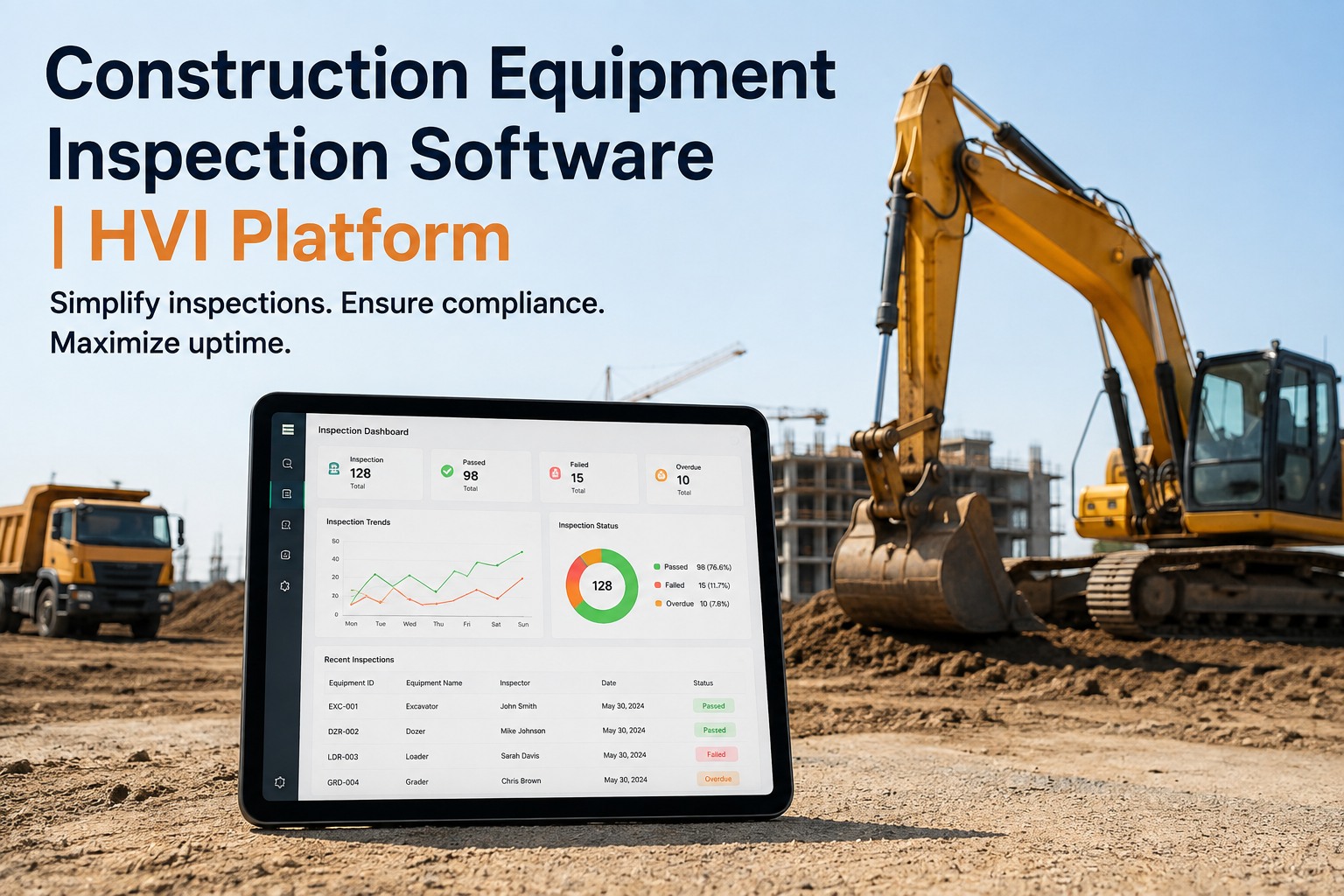
Everything in the right column you delegate — but a line in the left column still breaks if the right column fails silently. That's the whole problem: you're accountable for work you can't see happening. Explore HVI's digital equipment inspections to turn the delegated work into something you can actually watch.
5 equipment oversight duties of a site superintendentthe coordination layer only you can run
Confirm the site is inspected — all of it
Not one crew, not the machines you walked past. Every unit the day's work needs has a completed, current check. One un-inspected machine on a multi-crew site is your blind spot, and it's always the one that fails.
Keep defects moving, not parked
A foreman flags it, a shop fixes it — your job is the handoff between them. Defects die in the gap between "reported" and "repaired," and that gap is exactly where a superintendent either adds value or loses a week of uptime.
Make the production-vs-safety call
The needed machine is flagged and the pour is waiting. That decision — park it or run it limited — is yours, and it's the one that shows up in an incident review. Logged, it's a managed risk; unlogged, it's exposure.
Hold the line on PM compliance
You don't build the PM schedule, but a service slipping on your site becomes your downtime. Watching overdue PMs is a two-minute daily habit that prevents the breakdown that costs a shift.
Keep the records audit-ready
When the client's safety rep or an OSHA inspector shows up, "the crews check the machines" is not an answer — the signed, dated records are. Across a whole site, that paper trail is either one search away or a frantic reconstruction.
Notice none of these is "inspect the machine." Every one is oversight — confirming, coordinating, deciding, holding the line. That's the superintendent's equipment job, and it's exactly the part a clipboard can't help with. Book a demo to see all five on one site view.
Blind spots vs full site viewthe same oversight duty, with and without visibility
- You find out a machine is down when a foreman radios you mid-morning
- A flagged defect sat three days before anyone raised a work order
- Inspection records live in cab binders across the whole site
- "Is everything inspected?" means three phone calls and a guess
- The owner asks for status and you promise a number by end of day
- Down units and their reason are on your screen before the standup
- Every defect becomes a tracked work order the moment it's flagged
- Records are one search away, current across every crew and unit
- "Is everything inspected?" is a green count, not a phone tree
- Status for the owner is live — you answer in the moment, not by five
The duties are identical in both columns — what changes is whether you can see the site or you're reconstructing it. This is the superintendent's version of the same loop the crew runs; for the foreman's hands-on side, Read our guide on foreman daily equipment duties. Sign up free and pull your whole site into one view.
Superintendent equipment oversight checklistthe morning scan before the site goes hot
You don't inspect machines — you confirm the system worked. This is the short scan a superintendent runs at standup to know the site is covered, grouped by what you're actually checking across every crew.
Run this as a two-minute screen scan instead of a radio relay and your standup starts with facts, not guesses. Book a demo to put this site scan on a live dashboard, or build it from HVI's ready See HVI's construction equipment checklist templates.
Why equipment oversight lands on the superintendentthe cost of the blind spot, in real numbers
OSHA requires pre-shift equipment inspection by a "competent person" under 29 CFR 1926 — but it doesn't check whether your whole site did it. That's the superintendent's gap to close, and the numbers above are why it's worth two minutes every morning. Book a demo to close the site-wide blind spot.
From a superintendent who stopped radioing for status
I used to start every day not actually knowing if the site was covered — I'd radio three foremen, get "yeah we're good," and find out at 10 a.m. that a grader never got checked and was already down. Now I open one screen at standup and I can see every crew's inspections, what's flagged, what's parked. When a client's safety guy showed up unannounced, I pulled the records in front of him instead of sweating. I'm not doing anyone's job for them — I can finally just see that it got done.
Own the outcome without chasing the paper
A superintendent's equipment duties were never about doing the inspection — they're about knowing, across the whole site, that it got done, the defects moved, and the records hold up. HVI puts every crew's inspections, defects, work orders and records on one site view, so you confirm in seconds what used to take a phone tree. Live across your crews in weeks.
No credit card · No hardware · Your site view live in weeks
Superintendent equipment duties — FAQs
What are a site superintendent's equipment duties?
The superintendent oversees equipment rather than inspecting it: confirming the whole site is checked, keeping defects moving to repair, making the production-vs-safety call, holding PM compliance, and keeping records audit-ready. You own the outcome across every crew, even for work you delegate.
Does a superintendent inspect equipment personally?
No — operators run the daily walk-around and foremen verify and judge defects. The superintendent's job is confirming that happened across the whole site and coordinating the follow-up. The task is delegated; the accountability for the result stays with you.
How is a superintendent's role different from a foreman's on equipment?
A foreman owns the unit-level loop — inspection, defect judgment, release — for their crew. The superintendent sits above that, overseeing every crew at once, coordinating repairs across the site, and answering to the owner. One is depth on a crew; the other is breadth across the site.
What should a superintendent check each morning on equipment?
A quick site-wide scan: every needed machine is inspected, new safety-critical defects are handled, parked units are known, open work orders are moving, overdue PMs are chased, and records are stored. It's a confirmation sweep, not a hands-on inspection.
How does software help a superintendent oversee equipment?
It rolls every crew's inspections, defects and work orders into one live site view, so readiness, stalled repairs and records are visible without radioing foremen. That replaces the phone-tree-and-guess approach with a two-minute screen scan and instant audit-ready records.