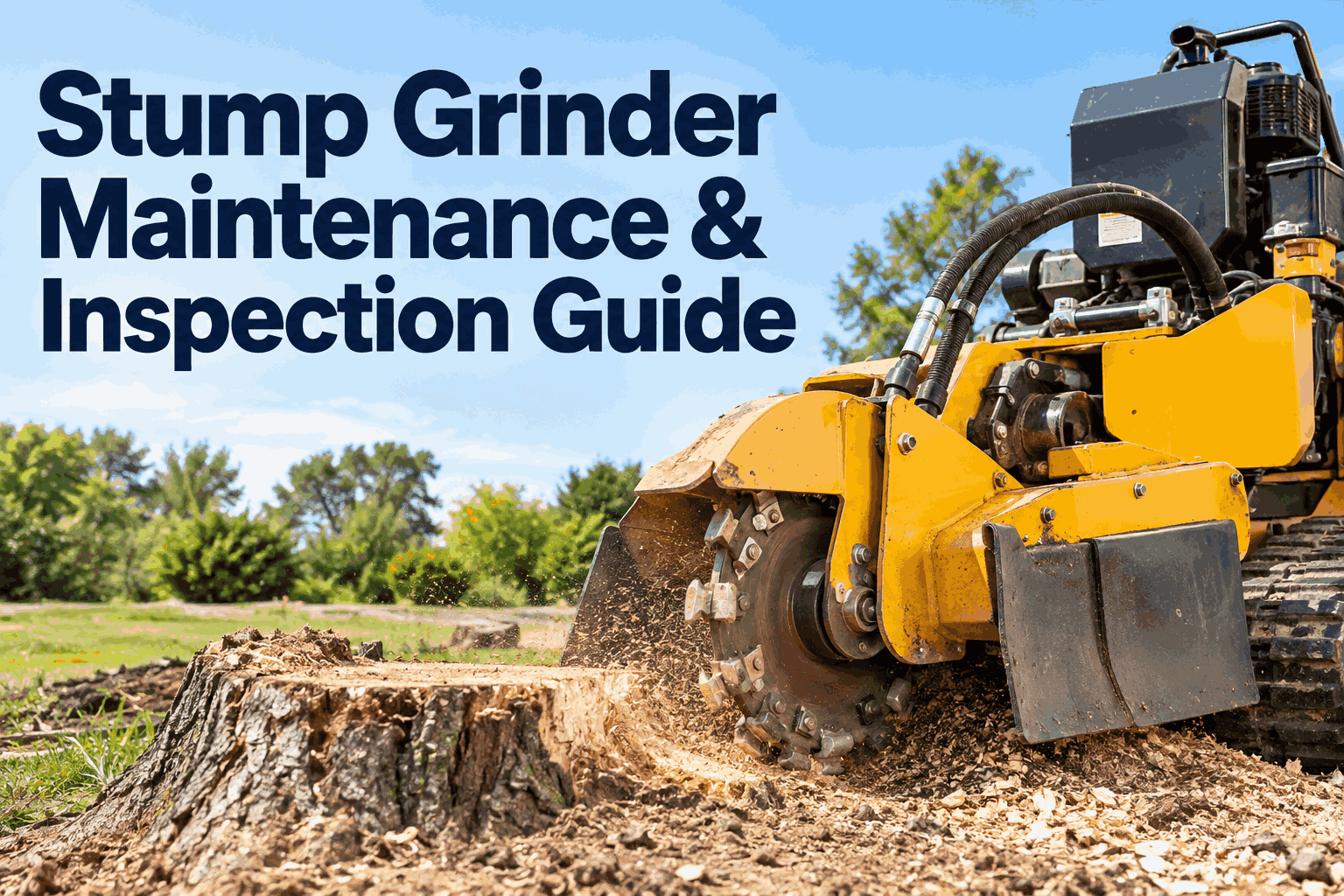
The grinder starts throwing stringy debris instead of clean chips, the operator leans on it harder to get through the same stump that took half the time last week, and nobody connects that to three worn teeth that should have been rotated two jobs ago. Stump grinder maintenance mostly comes down to one component category — the teeth and the wheel they're mounted on — getting checked before the machine starts compensating for them. Book a Demo
Not every tooth on the wheel wears at the same rate
Outer positions take more abuse than inner ones on most cutter wheels — rotating teeth into position, not just replacing them at random, is what actually extends wheel life.
Rotating outer teeth inward as they wear — instead of replacing only what's visibly broken — is what most OEM manuals actually specify, and it's the single habit most responsible for wheel longevity. Book a Demo
A stump grinder is a mechanically simple machine built around one violent job: spinning a wheel full of carbide teeth into wood, roots, and whatever soil or rock happens to be mixed in. Real stump grinder maintenance isn't a long list — it's a short list of high-wear components checked consistently enough that nobody's compensating for a defect without realizing it.
Cutter Teeth, Pockets and Mounting Hardware: The Component That Fails Firstthis is the number-one wear item on every stump grinder, by a wide margin
Teeth take the most abuse on a stump grinder, and they need to be checked after every use — not because the schedule says so, but because a loose tooth isn't just a performance problem. A tooth that works loose can separate from the wheel entirely, which is both a safety hazard at operating speed and a real risk of damaging the cutter wheel itself.
A real inspection covers three things together: the physical condition of the carbide tip for chips or wear, whether the tooth and its holder are still tight against the pocket, and the mounting hardware torque — manufacturer specs commonly fall in the 44 to 56 ft-lb range for the retaining nuts, and that number matters more than "snug." Outer teeth on most wheel designs wear faster than inner ones, which is exactly why rotation — not just replacement — is part of a real maintenance routine, not an optional extra step. Sign Up Free
Cutter Wheel, Guards and Debris Controlthe structure underneath the teeth deserves its own look, separate from the teeth themselves
The wheel itself can take damage independent of its teeth — cracked tooth holders, bent pockets, or a wheel that's no longer tracking true all show up as vibration or uneven cutting long before a tooth failure would. A quick way to catch this is rotating the wheel by hand after shutdown and watching for anything that doesn't look symmetrical.
Guards and debris-control components matter just as much as the cutting components they protect — a guard that's missing, loose, or incorrectly reinstalled after a repair defeats the entire reason it was specified by the manufacturer in the first place.
Belts, Bearings and the Hydraulic Systemquieter components, but they stop the machine just as fast when they fail
Drive belts
Condition and tension checked against the manufacturer's specification, not eyeballed — a belt that's too loose slips and glazes, too tight accelerates bearing wear.
Bearings
Listen for abnormal noise, feel for play or excess heat after a run — all three are early warning signs well before a bearing actually seizes.
Hydraulic system
Hoses, fittings and cylinders checked for leaks and abrasion, with fluid and filters serviced on the equipment manufacturer's own schedule — not a generic interval.
Hydraulics drive the cutting performance directly, so a wheel that slows noticeably more than usual under the same load is often a hydraulic symptom before it's a tooth symptom. Book a Demo
Cleaning Between Jobs Is Part of the Inspection, Not Separate From Ita defect you can't see is a defect that doesn't get fixed
Wood chips, soil, and packed debris don't just make a stump grinder harder to inspect — they actively hide the exact things an inspection is supposed to catch. Material packed around the cutter wheel, housings, and moving components conceals cracks, loosening hardware, and leaks until the machine is already running the next job. A grinder that comes back from a rental or a job site caked in debris should get cleaned before it gets inspected, not after — otherwise the inspection is really just a guess.
Tracking Teeth, Belts and Hours by Machine, Not by Memorythis is where stump grinder maintenance stops being reactive
Recording tooth changes, belt service, defects, and repairs against a specific machine and its operating hours is what turns individual maintenance events into a pattern worth noticing — a grinder that's eating belts every few hundred hours, or chewing through teeth faster than its sister machine on the same crew, is a signal worth investigating, but only if someone's actually tracking it that way.
Paired with engine, cooling system, battery, and lubrication items on a scheduled preventive maintenance routine, this per-machine history is what separates a fleet that's managing stump grinders from one that's just reacting to whichever one breaks down first this week.
From an equipment manager who stopped guessing at tooth wear
We had two stump grinders on the same crew, same application, and one was going through teeth almost twice as fast as the other. For a while we just assumed it was bad luck or a harder route, because nobody was actually tracking tooth changes by machine.
Once we started logging every rotation and replacement against the specific unit, the pattern jumped out immediately — a wheel alignment issue on the faster-wearing machine that a quick inspection had missed twice. Fixed in an afternoon, once we could actually see it.
Brian's crew didn't need a different grinder — they needed the wear data from the one they already had. Book a Demo
Frequently asked questions
What should a daily stump grinder maintenance check cover?
A daily check should cover cutter teeth for wear, damage, or looseness; tooth mounting hardware torque; guards and safety devices for correct installation; belt condition; and a general visual check for leaks around hydraulic hoses and fittings. Cleaning accumulated debris before inspecting is important, since packed material can hide developing defects that would otherwise be visible.
How often should stump grinder teeth be replaced or rotated?
There's no single universal interval, since wear rate depends heavily on the wood and soil conditions being cut, but teeth should be checked after every use and rotated or replaced as soon as wear or damage is visible, following the specific machine and cutting-system manufacturer's procedures. Outer positions on most cutter wheels wear faster than inner ones, which is why rotating teeth into less-worn positions, rather than only replacing visibly broken ones, is part of most OEM maintenance recommendations.
Why is a loose stump grinder tooth dangerous, not just a performance issue?
A tooth that isn't properly tightened against its pocket can separate from the cutter wheel during operation, which is a safety hazard given the wheel's rotational speed and can also cause damage to the wheel itself or nearby components. This is why tooth mounting hardware should be checked to the manufacturer's specified torque value rather than simply tightened by feel.
What are common signs that a stump grinder needs maintenance attention?
Material coming off the stump turning finer or stringy instead of producing solid chips, the grinder cutting unevenly or requiring repeated passes over the same area, the cutting wheel slowing more than expected under normal load, and unusual noise, heat, or vibration from bearings are all common early indicators. Most of these show up gradually rather than as a sudden failure, which is exactly why consistent inspection catches them earlier than waiting for a breakdown.
Why does tracking maintenance by machine and operating hours matter?
Recording tooth changes, belt service, and repairs against a specific machine and its accumulated operating hours makes it possible to spot patterns, such as one unit consistently wearing through teeth or belts faster than comparable machines doing similar work. Without that per-machine history, a developing mechanical issue like a wheel alignment problem can go unnoticed for a long time, since each individual maintenance event looks unremarkable in isolation.
Stop Reconstructing Tooth and Belt History From Memory
HVI builds configurable inspections for teeth, pockets, cutter wheel, belts, bearings and hydraulics, schedules preventive maintenance per machine, turns flagged defects into work orders automatically, and keeps photo-documented service history tied to each unit. Live in under two weeks.
No credit card · Photo documentation included · Per-machine history ready on day one