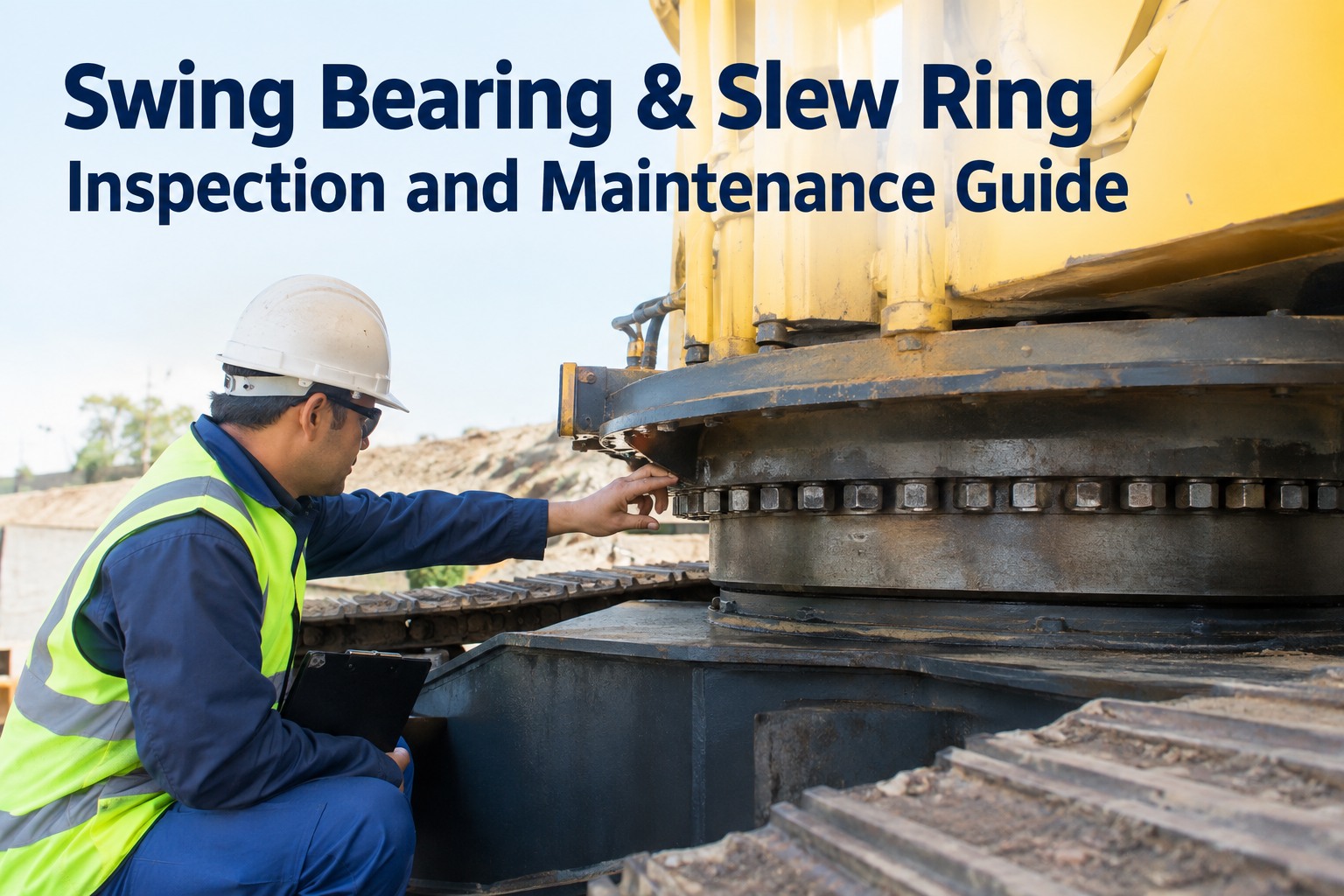
The swing bearing is the most expensive surprise on an excavator. It's the ring that joins the whole upper structure to the undercarriage, it carries every dig and every swing, and when it finally lets go it can take the swing pinion, the mounting bolts, and a week of production with it. The catch: it almost never fails suddenly. It wears on a slow curve you can measure — a few tenths of a millimetre of extra play per check. Swing bearing inspection isn't about spotting the failure; it's about tracking that number so the replacement lands in a planned window instead of on a random Tuesday. This guide shows how. Book a demo to see the wear trend tracked per machine.
Planned replacement vs. a random-Tuesday failure
Same bearing, same wear. Switch between measuring it and not — and see when you find out it's finished.
Each tilt-test reading joins the trend. As the line climbs toward the OEM wear limit, you book the crane, the ring, and the bolts into a planned shutdown — on your schedule, around production.
No readings, no trend. The first real signal is the popping and grinding on a live dig — and by then it may already be taking the swing pinion and mounting bolts with it. Emergency crane, emergency parts, unplanned days down.
The wear is identical either way. The only difference is whether you measured it — and measuring is what turns a catastrophic surprise into a line item in the next shutdown. Book a demo to see clearance readings trended to the limit
A slew ring replacement is one of the biggest single repairs on an excavator — crane time, days of downtime, and a five-figure component. The good news is that it's also one of the most predictable, because the failure mode is gradual raceway wear you can put a number on. The whole game is measuring that number, writing it down, and watching the trend. Everything below is how to do that, and what happens when you don't.
The tilt test: putting a number on swing bearing wear
Operator feel and noise will eventually tell you a bearing is worn — but "eventually" is usually too late to plan around. The measurement that lets you plan is the tilt test (also called the wobble or rock test), and it's the single most important swing bearing inspection you can standardize across a fleet. Done the same way every time, it produces a clearance number you can trend.
The wear allowance is machine-specific — it scales with bearing diameter and tonnage — so always work to the figure in your OEM manual rather than a rule of thumb, and confirm the exact tilt-test procedure for your model. The value isn't any single reading; it's the sequence. One number tells you today's play. Five numbers over a year tell you when you'll hit the limit. Start a free trial and every tilt-test reading lands on the machine's record with a photo, ready to trend.
Beyond the tilt test: bolts, lubrication, and the swing gear
Clearance is the headline number, but a swing bearing inspection isn't complete without the things that either cause wear or warn of it. These are the checks that turn a single measurement into a real condition assessment.
Mounting bolts
Look for loose, missing, or sheared bolts and elongated bolt holes — an oval hole means the bearing has already shifted under load. Retorque to the OEM spec in the star pattern on schedule, and never reuse old bolts on a replacement.
Lubrication & grease condition
Grease on schedule — but also read the old grease. Milky or watery means a failed seal letting water in; silver metal flakes mean raceway wear; brass or bronze particles point to cage wear; actual chips mean stop now.
Swing gear & pinion
Check ring-gear and pinion tooth wear and backlash against the OEM range. Excessive backlash and worn teeth both accelerate once tilt clearance opens up — the pinion is often the first casualty of a neglected bearing.
Gear case oil & seals
Where fitted, check swing-drive gear oil for water or metal — either signals a seal failure or internal wear. Inspect bearing seals for damage; a compromised seal lets in dirt and water that destroys a bearing from the inside.
Listen and feel, too: grinding, popping, or clicking through the swing cycle, tight spots or uneven resistance, or the upper structure over-swinging past its stop are all symptoms worth logging alongside the measured play — they add context to the trend. A bolt finding or a milky-grease note recorded this month is exactly the kind of early signal that should trigger a closer look before the next scheduled check. Book a demo to see bolt and lubrication findings logged against the asset
What deferred swing bearing maintenance actually costs
The reason measurement matters is that a worn swing bearing doesn't fail politely in isolation. Once tilt clearance opens up, the damage cascades — each failed component loading the next — and the repair bill and downtime climb at every stage. Here's the chain a deferred bearing sets off.
Every stage you catch earlier is dramatically cheaper than the one after it. A tilt-test trend that flags the bearing at Stage 1 buys a planned ring replacement; discovering it at Stage 2 or 3 means the bearing plus the gear plus the pinion plus emergency crane and days of unplanned downtime. The measurement isn't paperwork — it's the difference between one line item and a cascade. Book a demo to see how condition data triggers a planned repair
From a reliability engineer who trends the play
We used to check swing bearings by feel — someone would say "that one's getting sloppy" and we'd argue about whether it could wait. No numbers, just opinions. Then we lost a slew ring on a big digger mid-campaign, it took the pinion with it, and the emergency crane alone was more than the ring.
Now every 500-hour service includes a four-point tilt test, logged with a photo. I've got a clearance trend on every excavator in the fleet. When a line starts steepening toward the limit, that machine goes on the shutdown list months out — ring, bolts, and gear ordered while it's still digging. We haven't been surprised by a swing bearing since. The measurement paid for itself the first time it saved us one emergency crane.
Swing bearing & slew ring inspection FAQs
How do you measure excavator swing bearing wear?
Swing bearing wear is measured with a tilt test (also called a wobble or rock test) using a magnetic dial indicator. Park the machine on level ground, engage the swing lock, and mount the dial indicator so it spans the joint between the undercarriage and the upper structure near the bearing, then zero it under static load. Extend the boom and stick and gently press the bucket into the ground to lift the front of the machine slightly—this applies a reverse-moment load that tilts the bearing and opens the clearance the indicator reads. Record the deflection, then rotate the upper structure 90 degrees and repeat so you have readings at four points (0, 90, 180, and 270 degrees), because raceway wear is usually uneven and concentrated in the machine's habitual work zone. Compare the measured clearance to the manufacturer's wear allowance for that specific machine—the limit scales with bearing diameter and tonnage, so always use the OEM figure rather than a generic rule. Log every reading, including healthy ones, so successive measurements build a wear trend you can plan against.
What are the signs of a failing slew ring?
A failing slew ring usually gives warning before it fails outright, if you know what to look for. Audible signs include grinding, popping, or clicking sounds during the swing cycle, which typically mean the balls or rollers are passing over damage on the raceway or that gear teeth are worn. Feel-based signs include tight spots or increased resistance while swinging (pointing to uneven raceway wear), and the upper structure over-swinging past its intended stop, which indicates loss of precise control. Visually, you may see noticeable wobble or rocking of the upper structure during digging. On inspection, watch for loose, sheared, or missing mounting bolts and elongated bolt holes, and check the old grease: milky or watery grease means a failed seal admitting water, silver metal flakes indicate raceway wear, brass or bronze particles suggest cage wear, and actual metal chips mean an imminent failure—stop the machine. The most reliable early warning, though, is a rising tilt-clearance measurement caught on a trend before any of these symptoms become obvious.
How often should swing bearing mounting bolts be checked and retorqued?
Mounting bolt maintenance follows a specific pattern, and the exact figures should come from your OEM manual, but the general practice is well established. On a newly installed swing bearing, the mounting bolts should be inspected and retorqued after roughly the first 100 operating hours, because bolts settle and lose preload during initial service. After that, bolts are typically checked and retorqued on a periodic schedule—commonly in the range of every 500 to 1,000 operating hours or at least annually, depending on the manufacturer. Bolts must be tightened to the exact OEM torque specification, usually in a crisscross or star pattern and often in staged steps rather than all at once, using a calibrated torque wrench. Two important cautions: never reuse old mounting bolts when replacing a bearing, as they undergo thread deformation and fatigue during initial torquing and are a safety hazard reused; and treat elongated or oval bolt holes as a serious finding, since they indicate the bearing has already shifted under load. Always confirm torque values, patterns, and intervals against the manufacturer's specification for your machine.
What happens if you keep running a worn swing bearing?
Running a worn swing bearing sets off a cascade of secondary damage that gets more expensive at every stage. First, excess tilt clearance lets the upper structure wobble during digging and slewing, which loads the bearing balls and races unevenly and accelerates their wear. That wobble then transfers into the drivetrain: it accelerates gear backlash wear and hammers the swing motor pinion, so a job that could have been a bearing replacement becomes a bearing plus pinion plus possibly swing-drive repair. If it continues, the concentrated and shifting loads work on the mounting bolts and the flange surfaces, and in the extreme case the upper house can structurally separate from the undercarriage—a catastrophic safety event rather than a breakdown. Each stage caught earlier is dramatically cheaper than the next, which is the entire argument for measuring and trending tilt clearance: catching the bearing at the excess-play stage buys a planned ring replacement, while discovering it after the damage has spread means a far larger repair plus emergency crane time and unplanned downtime.
How does measurement tracking help plan a slew ring replacement?
A single tilt-clearance reading only tells you the bearing's condition today. Repeated readings taken the same way over the machine's life build a wear trend, and that trend is what makes a slew ring replacement plannable rather than reactive. When you can see the measured clearance climbing toward the OEM wear limit over successive inspections, you can estimate roughly when it will reach the limit and schedule the replacement into a planned shutdown—ordering the ring, mounting bolts, and any gear or pinion parts in advance, booking crane time, and timing the work around production instead of against it. This is a major cost difference on a component this expensive: a planned replacement is a scheduled line item, while a failure discovered in service typically means an emergency crane, expedited parts, secondary damage to the pinion and mounting components, and days of unplanned downtime. Historical measurement records also support capital planning, giving maintenance managers evidence-based timing for major component spend across the fleet rather than reacting to failures one at a time.
Turn swing bearing wear into a planned repair, not a surprise
HVI captures tilt-test clearance, bolt checks, and grease findings with photo evidence on configurable templates, fires the inspection on hour- or calendar-based PM, and trends every reading toward the OEM limit in analytics — so the slew ring gets replaced in a planned shutdown with parts and crane booked ahead, and the asset logbook backs your capital planning. See it on your own excavator fleet.
No credit card · Measurement tracking from day one · Wear trends built in