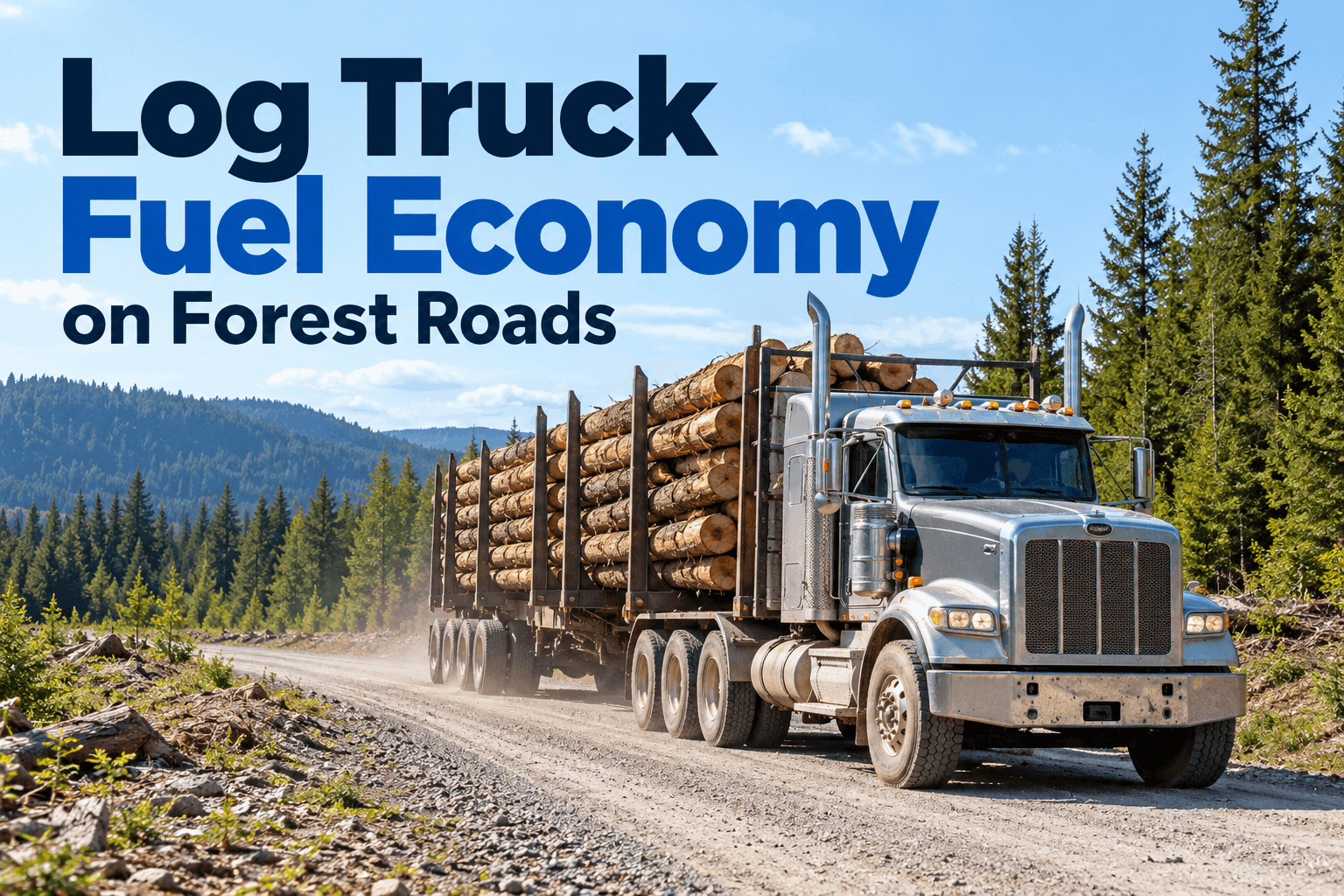
Log truck fuel economy changes with every loaded climb, gravel-road grade, queue and empty return. For forestry fleet managers, the useful question is not simply “What MPG did this truck achieve?” but “What did it cost to move this load over this route—and what can we improve without compromising safety?” This guide explains how to measure fuel performance, investigate waste and use maintenance records to make better hauling decisions.
Log Truck Fuel Economy on Forest Roads
Turn fuel receipts, haul cycles and service history into a practical plan for reducing avoidable fuel cost.
Why forest-road MPG needs context
Highway MPG alone hides the operating conditions that determine fuel consumption on timber routes. Compare trucks only after accounting for load, terrain and duty cycle.
Payload and gross weight
Loaded climbs demand more energy than empty returns. Track payload or load class when available.
Grades and road surface
Steep slopes, soft gravel, mud and snow change rolling resistance and traction.
Idle and queue time
Loading, unloading, warming and site delays consume fuel without adding distance.
Vehicle condition
Tire pressure, alignment, filters and mechanical faults can increase fuel use.
Build a fuel baseline for each haul cycle
Record fuel used and distance travelled over a consistent period. Separate loaded and empty legs where reliable trip data is available, and group comparisons by route, truck class and season.
For high-idle operations, add engine hours and idle hours. Where reliable payload data exists, consider fuel per ton hauled or per ton-mile as an additional operational metric.
Book a Demo to explore HVI fuel records and fleet cost tracking →Example figures only; not a typical logging-truck MPG or diesel price.
Find the reason behind rising fuel consumption
Investigate changes against comparable routes before assuming driver behavior or mechanical condition is the cause.
Six levers to improve log truck fuel efficiency
Prioritize controllable actions and document whether changes improve performance under similar conditions.
Maintain tires and inflation
Check pressure to manufacturer and load requirements, tread condition and damage before dispatch.
Reduce avoidable idling
Review queue patterns and warm-up practices while respecting operational and weather requirements.
Keep preventive maintenance current
Follow OEM service schedules for filters, lubrication, engine and drivetrain systems.
Plan haul-road upkeep
Coordinate grading, drainage and surface maintenance with the road team; never sacrifice traction for efficiency.
Review routes and loading cycles
Identify unnecessary empty miles, bottlenecks and avoidable rehandling without exceeding safe loads.
Investigate outliers early
Compare repeat high-consumption trucks with similar equipment and route conditions before acting.
See how HVI connects fuel records with fleet upkeep
Review fuel entries, asset histories, preventive maintenance and repair records in a single fleet management workflow.
Use fuel trends to trigger a structured maintenance review
A fuel spike is a signal to investigate—not proof of a mechanical fault. Pair the trend with inspection findings, recent repairs and service intervals.
Fuel record
Flag an unusual consumption trend.
Context check
Review loads, road and idle conditions.
Inspection
Check tires, leaks and visible defects.
Work order
Document repairs when justified.
Recheck
Compare subsequent fuel results.
HVI can support fuel and maintenance recordkeeping; automated fuel-anomaly detection, live route optimization or telematics integrations should not be assumed without product verification.
A weekly logging-fleet fuel scorecard
Keep the report short enough for supervisors to act on. Compare similar vehicles and route types, document exceptions and assign follow-up owners.
- Gallons purchased and fuel spend by truck
- Miles and MPG by comparable haul cycle
- Idle hours, where measured reliably
- Open maintenance issues related to fuel efficiency
- Fuel cost per mile and change from baseline
For budgeting, connect fuel expense with other vehicle costs. See HVI's approach in a Book a Demo walkthrough of fleet cost reporting.
Different grades and loads can make raw MPG rankings misleading.
Start improving fuel visibility in 30 days
Clean the records
Match fuel purchases to truck IDs, odometer readings and dates.
Group comparable trips
Separate routes, load classes and duty cycles where data permits.
Inspect exceptions
Review maintenance and road conditions behind unusual trends.
Act and measure
Assign improvements and monitor the next comparable operating period.
Log truck fuel economy FAQs
What is a good MPG for a logging truck?
There is no universal MPG target for forest-road logging. Payload, steep grades, road surface, weather and idle time create major differences. Establish a baseline from comparable trucks and routes rather than applying a single highway-truck figure.
How do you calculate log truck fuel economy?
Divide distance travelled by gallons consumed over the same period. For example, 240 miles divided by 60 gallons equals 4 MPG. Verify fuel entries and odometer readings before comparing periods.
Why does fuel consumption increase on gravel forest roads?
Rough or soft surfaces, grades, low speeds, repeated stops and heavy loads can raise energy demand. Weather and road conditions also affect traction and travel time.
Can preventive maintenance improve logging truck fuel efficiency?
Correct tire condition and inflation, timely engine servicing and prompt repair of mechanical problems can help prevent avoidable fuel waste. Follow vehicle manufacturer recommendations and evaluate results under comparable conditions.
How can HVI help track logging fleet fuel costs?
HVI supports fuel record management alongside fleet assets, inspections and maintenance histories. Ask for a product demonstration to confirm the reporting fields and workflows available for your operation.
Bring fuel and maintenance records into one fleet workflow
Explore how HVI can help your forestry team organize fuel entries, maintenance schedules and vehicle histories.