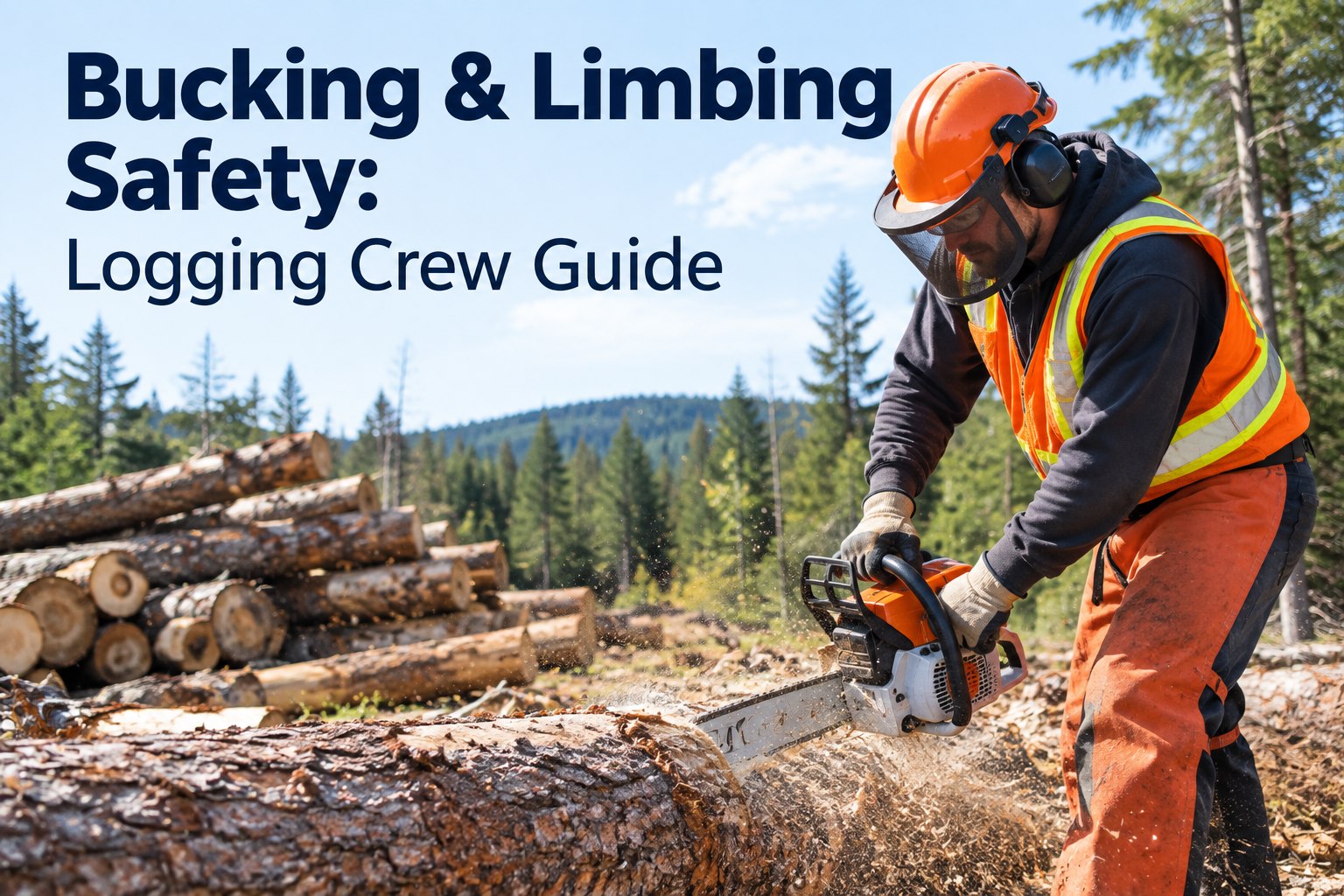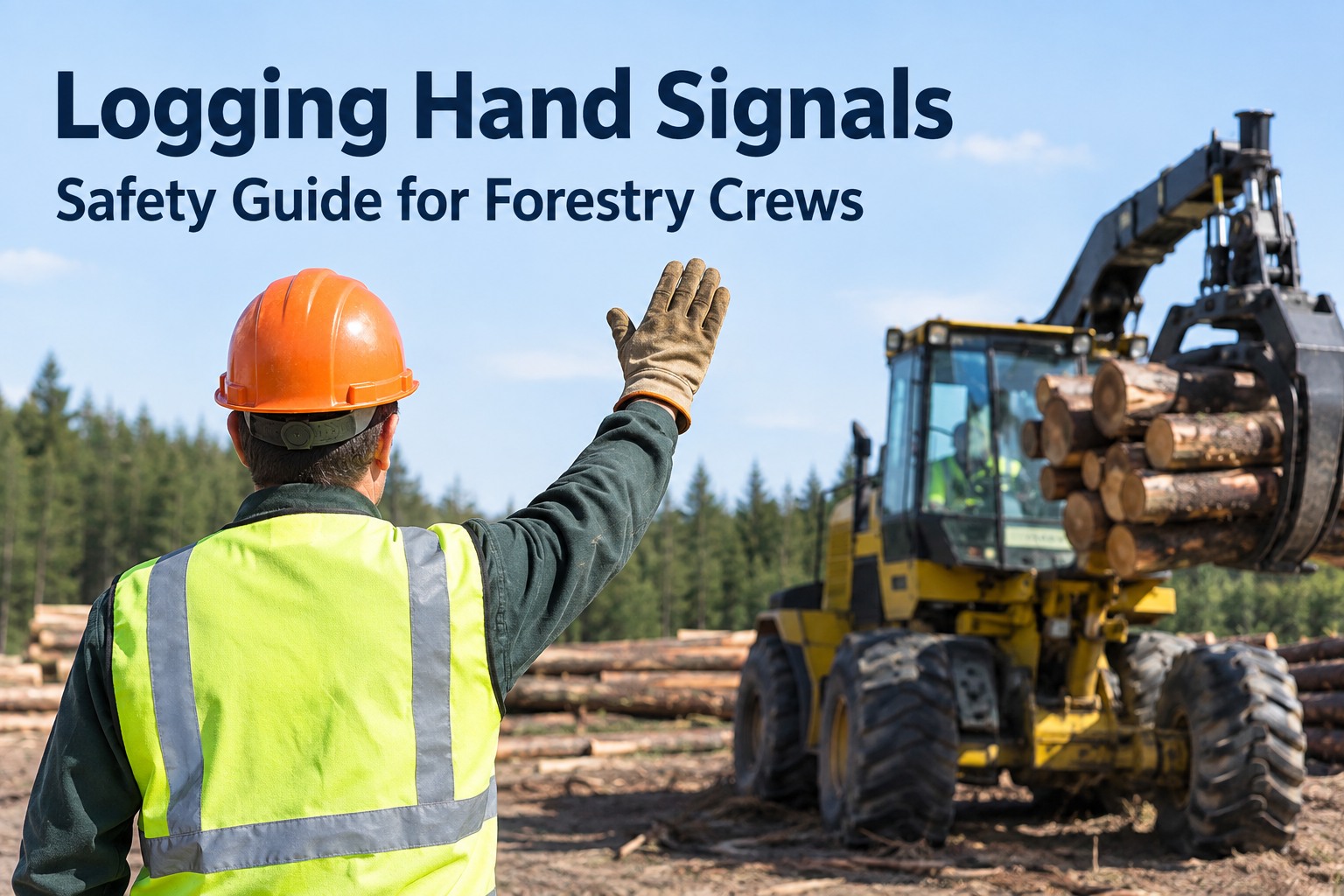
A knuckleboom loader swings a 40-foot Douglas fir log across a crowded landing, blinding the operator's view just as a ground hand steps toward the chaser deck. In the roar of diesel engines, running lines, and processors, a misread gesture or an unstandardized hand flick can result in a fatal crush injury in less than two seconds. Mastering universal logging hand signals is an indispensable life-safety requirement that protects ground workers and equipment operators across every timber tract. Book a demo to see how HVI standardizes logging safety protocols and digital crew briefings
Logging Hand Signals & Yarder Whistle Codes: Field Visualizer
OSHA and state forestry codes require standardized signaling between ground crews and machinery. Switch below to see how standardized visual signals prevent fatal blind-spot accidents on active timber landings.
Ground workers use casual head nods and erratic arm waving that operators mistake for 'all clear' swings. A loader turns into a blind quadrant while a rigging slinger is still releasing chokers, causing catastrophic struck-by collisions.
Every movement adheres to explicit ASME and OSHA logging arm motions. Operators execute zero machine slewing or log drops until the dedicated spotter gives clear, visible cues. Any worker on site can flash an immediate emergency stop that halts all hydraulic action instantly.
Timber landings are among the most congested, decibel-heavy industrial environments in the world. Between 110-decibel feller bunchers, roaring delimbers, twin-engine log loaders, and howling yarder winches, verbal communication is virtually impossible beyond five feet. When heavy iron handles multi-ton stems across muddy drop zones, standardized signaling provides the sole life-safety bridge between the operator cab and the ground crew.
Universal Logging Hand Signals Every Crew Member Must Knowstandardized visual commands for knuckleboom loaders, yarders, log stackers, and skidders
OSHA standard 29 CFR 1910.266(f)(2) dictates that clear signaling systems must be maintained between operators and ground personnel. The following manual commands represent the operational standard across North American forestry tracts.
Emergency Stop
Execution: Extend both arms horizontally at shoulder level, palms down, and swing them rapidly back and forth horizontally across the chest.
Rule: Must be obeyed instantly by any equipment operator, regardless of who gives the signal on the logging tract.
Hoist Log / Raise Boom
Execution: Forearm vertical with index finger pointing upward; rotate the hand in a small horizontal circle at eye level.
Application: Directs knuckleboom loaders, shovels, or yarder carriage mainlines to elevate logs clear of landing chasers.
Lower Log / Drop Tongs
Execution: Arm extended downward toward the hip, forefinger pointing to the ground; rotate hand in small horizontal circles.
Application: Tells the operator to feather hydraulic levers to place logs onto bunk trailers or processor feed chutes gently.
Swing Boom (Left or Right)
Execution: Arm extended horizontally out from the shoulder, pointing with index finger distinctly in the intended swing direction.
Application: Directs the house rotation of log loaders and excavators away from high-hazard sorting alleys and crew zones.
Never let a new rigger or equipment operator guess signals on an active landing. Schedule an operational demo to see how HVI structures digital safety orientations and equipment check-ins
Cable Yarding Audible Signals: Whistle & Horn Codesstandardized whistle punk and talkie-tooter patterns that govern tower line operations
When rigging slinging occurs hundreds of yards down steep, brush-choked canyons, direct hand signals are impossible. Cable yarding setups rely on electronic radio horns (talkie-tooters) governed by strict statutory whistle patterns.
Audible signaling devices must be tested at the start of every shift. Sign up for HVI to digitize pre-shift yarder talkie-tooter and winch brake inspections
Unwritten Yard Norms vs. Digital Safety Verificationhow structured daily communication safeguards timber contracts and eliminates OSHA citations
Relying on assumptions and informal hand gestures between seasoned operators and new contract riggers creates massive liability. Standardizing signaling routines through digital verification bridges experience gaps across logging crews.
Unregulated Verbal / Informal Gestures
- Crews invent localized arm gestures that differ between independent contractors.
- Ground personnel walk into machinery blind spots assuming the operator sees them.
- Spotter responsibilities shift informally without clear morning designation.
- No written record of signaling competency or pre-shift radio equipment checks.
HVI Digital Safety System
- Mobile tailboard checklists log daily designated spotters across loaders and towers.
- Equipment pre-trips mandate functional testing of cab backup alarms, lights, and horns[cite: 1, 2].
- Digital safety training logs verify employee understanding of ASME/OSHA hand signals.
- Instant work order creation when horn relays, radios, or cab mirrors show defects.
Implementing standardized digital inspection and safety workflows cuts equipment maintenance costs by up to 25% while building audit-ready records. Book a demo to see how HVI modernizes jobsite communication
The 5 Cardinal Rules of Ground Crew Landing Safetyoperational best practices to guarantee zero struck-by incidents around heavy iron
Even with standardized logging hand signals, visual communication is only effective when paired with defensive ground habits. Every logger entering the active landing deck must adhere to these five operational mandates.
Establish Eye Contact Before Approaching
Never enter a machine's swing radius or blind zone until you have established direct eye contact with the operator and received the standardized 'thumbs up' or idle acknowledgment.
Ground the Boom and Grapple When Approached
Operators must rest grapples, shovels, or delimbing heads completely on the ground before allowing chasers or mechanics to approach within striking distance.
Wear High-Visibility PPE at All Times
Fluorescent orange or lime-green high-visibility vests and hard hats are mandatory under OSHA 1910.266 to contrast against deep forest brush, bark, and shadows.
Maintain a Clear Line of Sight
If you cannot see the operator's mirrors or direct face in the cab window, the operator cannot see you. Position yourself outside the machine's counterweight swing radius.
Stay Clear of Unsecured Stems and Piles
Never stand on the downhill side of log decks or behind log trucks during loading. A shifted stem or failed binder can roll without warning.
From a logging hooktender who rebuilt landing safety
We were loading out eight highway trucks a day on a narrow mountain ridge landing. New chasers were waving their arms like flight marshals, and our loader operator was second-guessing every swing. We had a near-miss where a 36-inch hemlock butt grazed a chaser's hard hat because of a misunderstood boom signal.
That evening, we standardized our hand signals using HVI's digital safety checklist platform[cite: 1, 2]. Now, during our morning tailgate talks on our rugged tablets, we designate one spotter per shift and review the standard hand movements. The loader doesn't budge until the spotter signals. It eliminated landing confusion completely.
Frequently asked questions
What is the most critical hand signal on a logging landing?
The Emergency Stop signal is universally the most critical. Executed by extending both arms horizontally with palms down and swinging them rapidly back and forth across the chest, it overrides all previous commands and must be obeyed instantly by any machine operator, regardless of who gives it.
What does OSHA 1910.266 require for logging signaling systems?
OSHA 29 CFR 1910.266 requires that only standardized, understood signals be used to direct equipment operators. It mandates that machine operators accept signals from only one designated signaller at a time, cease motion immediately if line-of-sight is lost, and maintain reliable radio or whistle communications during cable yarding operations.
Why are whistle signals used in cable yarding instead of hand signals?
In cable yarding, the rigging crew is often hundreds of yards down a steep hillside, concealed by thick brush, fog, or topography. Hand signals are completely invisible at these distances. Electronic whistle systems (talkie-tooters) provide instant, audible blast codes directly to the yarder cab to control winch drums safely.
Who is allowed to give hand signals to a log loader operator?
Only the designated signal person assigned during the pre-shift safety meeting is authorized to direct machine movements. However, in an emergency or sudden hazard situation, any worker on the site is permitted and expected to give the Emergency Stop signal.
How does HVI software help logging outfits manage ground safety?
HVI provides mobile-first inspection and safety software that allows forestry supervisors to conduct paperless tailboard safety briefings, record daily spotter designations, and log equipment pre-trips offline in remote mountain tracts[cite: 1, 2]. It ensures complete compliance tracking, records safety acknowledgments, and automatically routes equipment defects into work orders.
Conclusion: Clear Signals Save Lives in the Woodsbuilding defensible, disciplined communication across logging crews
Mastering universal logging hand signals and cable whistle codes is not an optional preference; it is a vital life-safety discipline. When dealing with multi-ton logs, blinding terrain dust, and roaring diesel horsepower, clear and standardized gestures eliminate ambiguity and protect ground workers from fatal pinch-point and struck-by hazards.
By integrating HVI's digital safety checklists and equipment inspection workflows, logging contractors replace unverified verbal assumptions with documented, audit-ready compliance[cite: 1, 2]. Keep your ground crews visible, your operators in sync, and your landing deck accident-free. Schedule an operational safety consultation today
Standardize Landing Safety & Equipment Compliance with HVI
Ensure every operator walkaround, spotter briefing, and pre-shift hazard check is fully documented[cite: 1, 2]. Deploy mobile checklists, eliminate paperwork delays, and maintain audit-ready safety logs across all harvest tracts.
No credit card required · Offline mobile capabilities · Comprehensive audit compliance