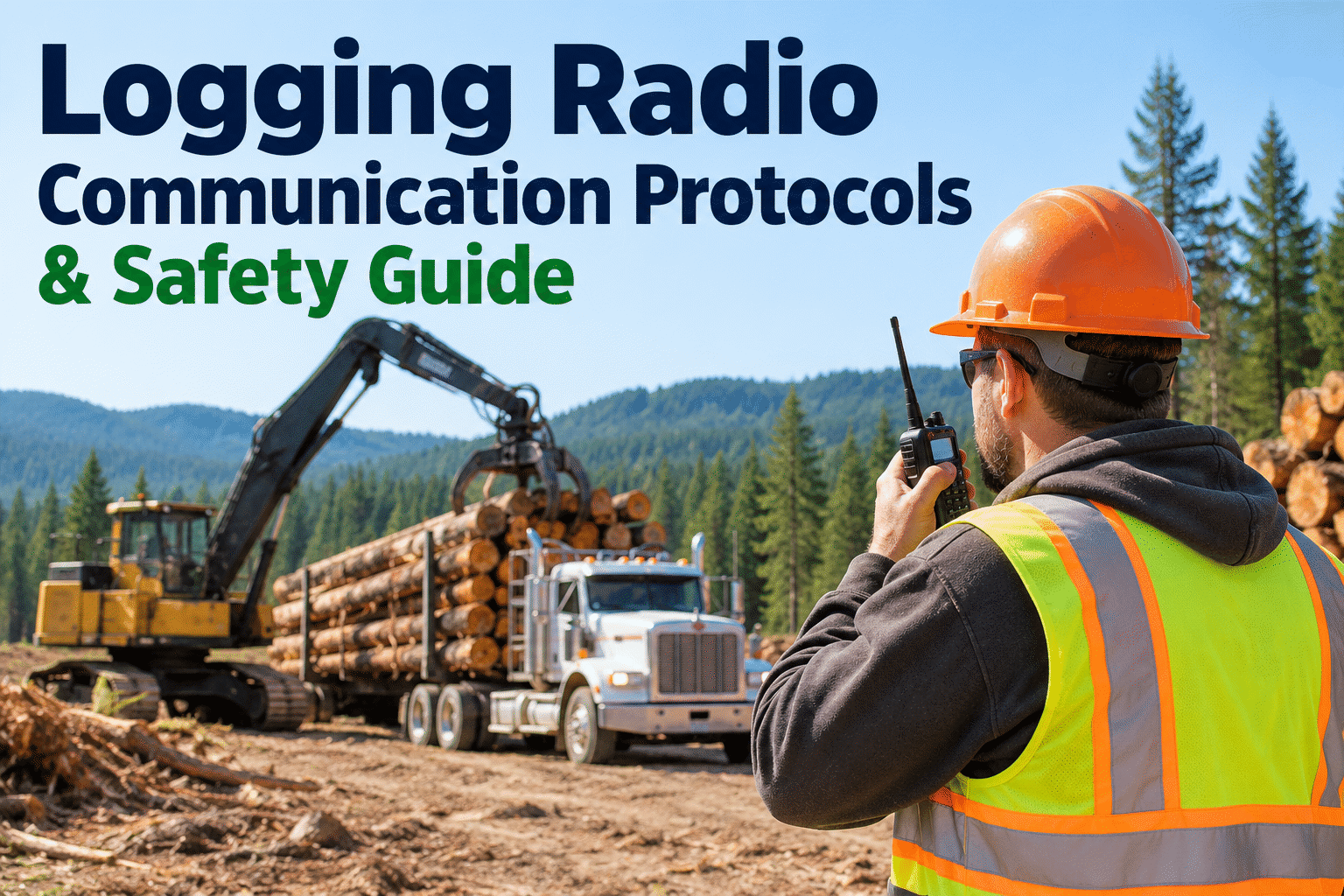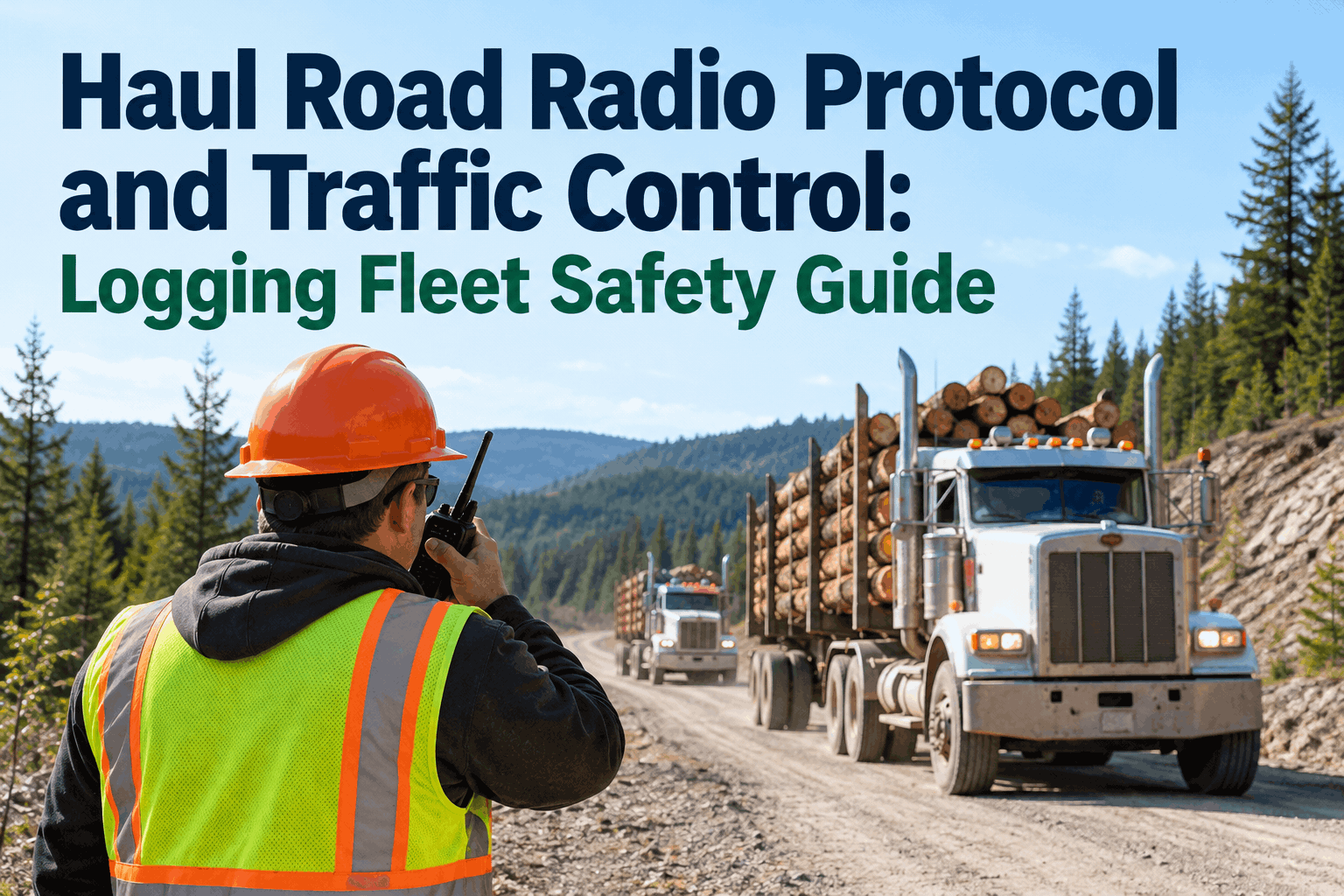
A loaded log truck reaches a blind bend while another vehicle approaches uphill. Neither driver should have to guess who is on the road. A practical haul road radio protocol combines agreed call points, clear position reports, right-of-way rules and a stop-and-confirm response when communication fails. The goal is predictable vehicle movements backed by consistent pre-trip checks and recorded hazards.
The bend is blind. Is the radio call clear?
One missed call point can turn a routine loaded descent into an uncertain meeting on a narrow forest road. Build a protocol drivers can repeat—and a fleet inspection process supervisors can verify.
Make every call easy to understand
A useful radio call identifies where the vehicle is, which way it is moving and whether it is loaded. Site-specific instructions determine the exact wording.
“Loaded truck, Call Point Four, downhill toward the creek crossing.”
“Empty truck at Call Point Five, holding at the designated turnout.”
“Copy. Proceeding to the crossing; will call clear.”
Four elements of a clear call
Check the radio before entering the haul road; avoid unnecessary traffic on the channel.
Use posted or mapped point names—not informal descriptions that visiting drivers may not know.
“Loaded downhill” and “empty uphill” help others understand vehicle movement.
Repeat back holds or passing instructions before acting.
A radio call is not permission to enter an occupied single-lane segment. Drivers must follow the road operator’s approved traffic plan, signs and controller instructions. Sign Up Free to Create Forestry Vehicle Inspection Checklists.
Define the meeting point before the meeting happens
Passing rules must be established for the specific haul road. Grade, visibility, vehicle dimensions, available turnouts and road conditions can change what is safe.
Before entering a controlled section
- Identify your vehicle and call point.
- Confirm the segment is clear under the site procedure.
- Know the next safe turnout or hold area.
- Keep speed appropriate for grade, load and visibility.
When conditions change
- Report washouts, fallen trees and poor visibility.
- Follow site-specific procedures for radio failure.
- Do not improvise a passing maneuver.
- Escalate hazards to the road supervisor.
The radio is only one part of a safe departure
Before a loaded trip, the driver should check both communications equipment and the truck’s operating condition. Use your approved inspection criteria and applicable requirements.
Communication readiness
- Assigned channel selected and functional
- Transmit/receive test completed
- Call-point map and instructions available
- Backup/failure procedure understood
Truck & load readiness
- Brakes, tires, steering and lights inspected
- Mirrors, glass and visibility checked
- Load restraint checked as required
- Previous safety defects resolved
Road & shift readiness
- Known closures and hazards reviewed
- Passing and right-of-way rules understood
- Weather, surface and grade risks considered
- Reporting contact and escalation path known
Use qualified personnel and the applicable rules to decide whether the vehicle can return to service. HVI records support that process; they do not replace the decision.
Digital inspection forms make recurring checks easier to document across shifts. Book a Demo to See Configurable Forestry Pre-Trip Checklists.
Turn a reported road hazard into an accountable action
Drivers may report a damaged turnout, poor radio coverage or a vehicle fault. These need different owners: the road supervisor manages traffic hazards; the maintenance team manages equipment defects.
Driver calls in the issue and records the relevant details.
Separate road-control hazards from vehicle defects.
Supervisor controls the road; maintenance addresses the vehicle.
Confirm corrective action before the restriction is lifted.
Radio mount broken during the morning check
Driver records the equipment issue, notifies the supervisor and follows the site's communication-failure procedure. The repair is assigned, documented and verified before the truck is cleared for its intended haul-road duty.
Sign Up Free to Track Inspection Defects and RepairsKeep the protocol consistent across every shift
A written procedure only works when new drivers, contractors and regular operators use the same call points and reporting rules.
Brief the route
Confirm channel, call points, closures, traffic priorities and known hazards.
Watch exceptions
Review missed calls, unsafe meetings, reported hazards and vehicle defects.
Close the loop
Update the traffic plan when needed; review inspection and repair records for open items.
For vehicle-side documentation, HVI can help supervisors review inspection history and maintenance follow-up. Book a Demo to Review Forestry Fleet Inspection Records.
Haul road radio protocol FAQs
Practical answers for forestry safety and logging fleet teams.
What should a haul road radio call include?
At minimum, use the site-approved call point, direction of travel and vehicle/load status. Include other information required by the road operator, and confirm any instruction affecting right-of-way or entry into a controlled section.
Who has right-of-way on a single-lane logging road?
There is no safe universal rule for every haul road. The road operator should establish right-of-way based on grade, vehicle types, turnouts and local conditions. Drivers must follow the posted and communicated site procedure.
What should drivers do if their radio stops working?
Follow the site's radio-failure procedure, which may require stopping at a safe location and contacting the supervisor through an approved alternative. Do not continue into a controlled or blind section without the required communication or authorization.
How can a fleet record haul road safety checks?
Use configurable pre-trip checklists to document communication equipment, vehicle condition and known defects. HVI supports digital inspections, DVIR records and maintenance follow-up; road traffic control remains a site-management responsibility.
Does HVI control haul road traffic or monitor live radio calls?
No. HVI should be used for vehicle inspections, defect documentation and maintenance records—not as a radio dispatch, right-of-way control or real-time vehicle-separation system.