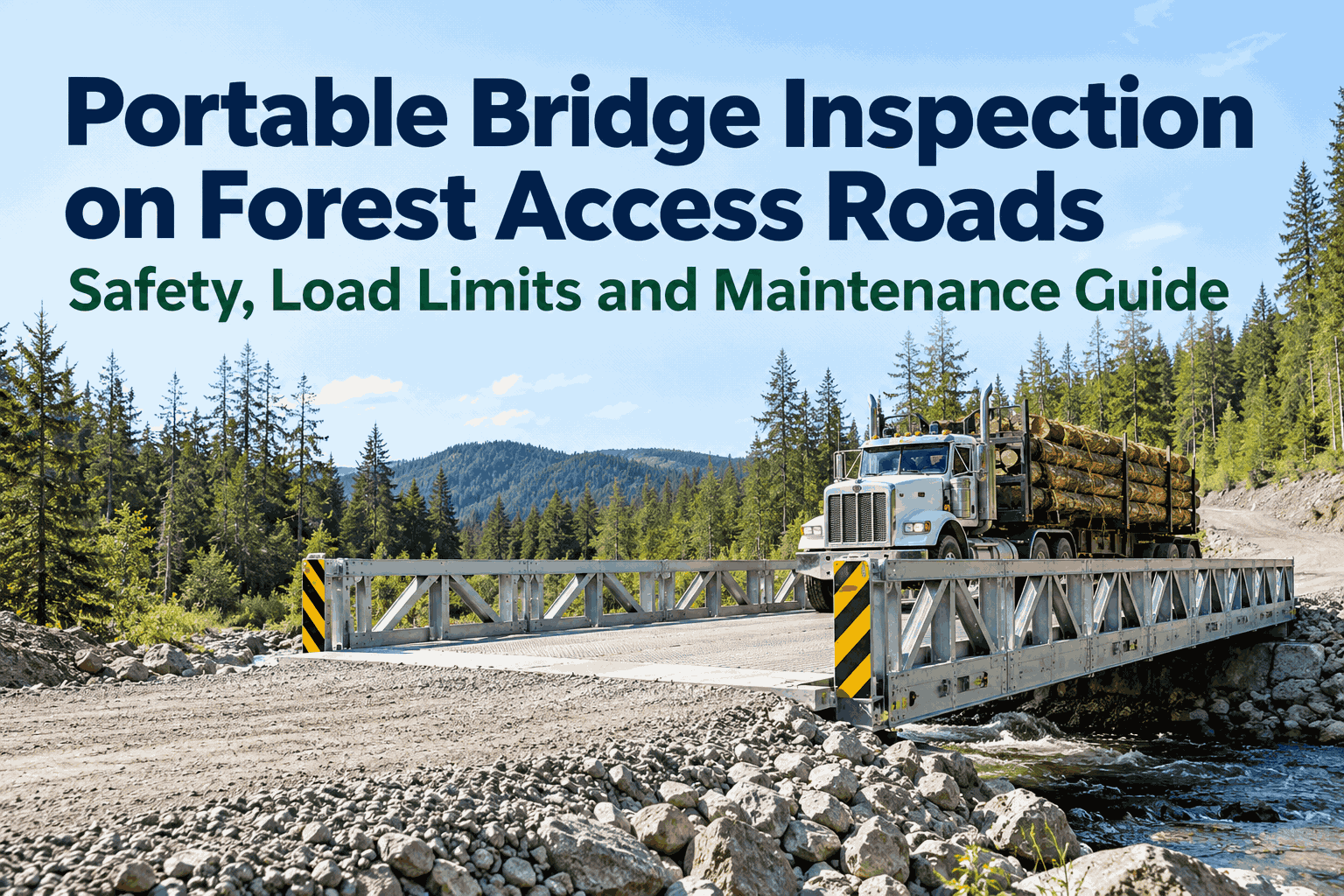
Portable bridge inspection on forest access roads is a critical check before logging trucks, loaders and support vehicles cross a temporary span. A bridge can look serviceable from the cab while its approaches, bearing points or deck connections have changed after heavy rain or repeated loading. This guide explains what crews should inspect, when to restrict a crossing and how to keep equipment and follow-up maintenance records organized. Book an HVI Demo to See Equipment Inspection Records.
The truck is loaded. Is the crossing still fit for use?
A portable bridge needs more than a posted capacity. Inspect the deck, supports, approaches and changes since the last crossing—then make restrictions and follow-up work visible to the crew.
Four points can change a crossing decision
The safe-use question is not just whether a bridge was originally rated for the load. Conditions at the site can change between inspections.
Deck and connections
Look for damaged decking, movement, missing fasteners, displaced panels and changes at joints.
Bearing and foundations
Check seating, settlement, erosion, scour and any movement at abutments or supports.
Approach alignment
Inspect ruts, soft shoulders, approach settlement and vehicle entry angle.
Load and access controls
Verify posted restrictions, approved vehicle configuration and site-specific crossing instructions.
Field decision: If structural condition, capacity or support integrity is uncertain, restrict access and seek assessment by a qualified bridge professional before reopening. Book an HVI Demo to Organize Equipment Inspection Follow-Ups.
Portable bridge inspection: what to record
Use a consistent inspection record before first use, after relocation, following significant events and at intervals determined by the owner or responsible engineer.
Identity and approval — bridge ID, location, approved design documents, load limits and configuration.
Deck and edge — wear, deformation, loose panels, connections, debris and edge protection where specified.
Supports and waterway — bearing contact, settlement, erosion, scour and blocked flow.
Approaches and signage — rutting, alignment, signs, visibility and traffic restrictions.
Action and sign-off — photographs, defect severity, access status, responsible person and verification record.
Confirm the load limit—not just the sign
A portable bridge's capacity depends on its engineered design, installation, condition and the actual vehicle configuration. A generic weight number is not enough.
Check gross vehicle weight, axle loads, spacing and vehicle combination against the approved bridge restrictions.
Verify support conditions, assembly and configuration against the bridge owner's or engineer's instructions.
Set crossing direction, spacing, speed and any single-vehicle restriction based on the approved site plan.
Important: HVI does not calculate bridge load capacity, certify structural integrity or authorize a crossing. Its relevant role is documenting the inspection and maintenance of the vehicles and equipment used in forestry operations.
A defect is not closed when the note is filed
Road crews need a visible chain from the first observation through assessment, corrective action and documented release.
Observe
Record location, date, photographs and the condition seen.
Restrict
Apply the site's hold or closure process when safety is uncertain.
Correct
Assign qualified assessment and approved repair work.
Verify
Document inspection and authorized return to use.
For support equipment such as excavators, service vehicles and loaders, HVI can help teams document equipment defects and follow repair work orders. Bridge-specific structural decisions must follow the owner's engineering process. Book an HVI Demo to See Defect and Work Order Tracking.
Keep the inspection and repair crew ready
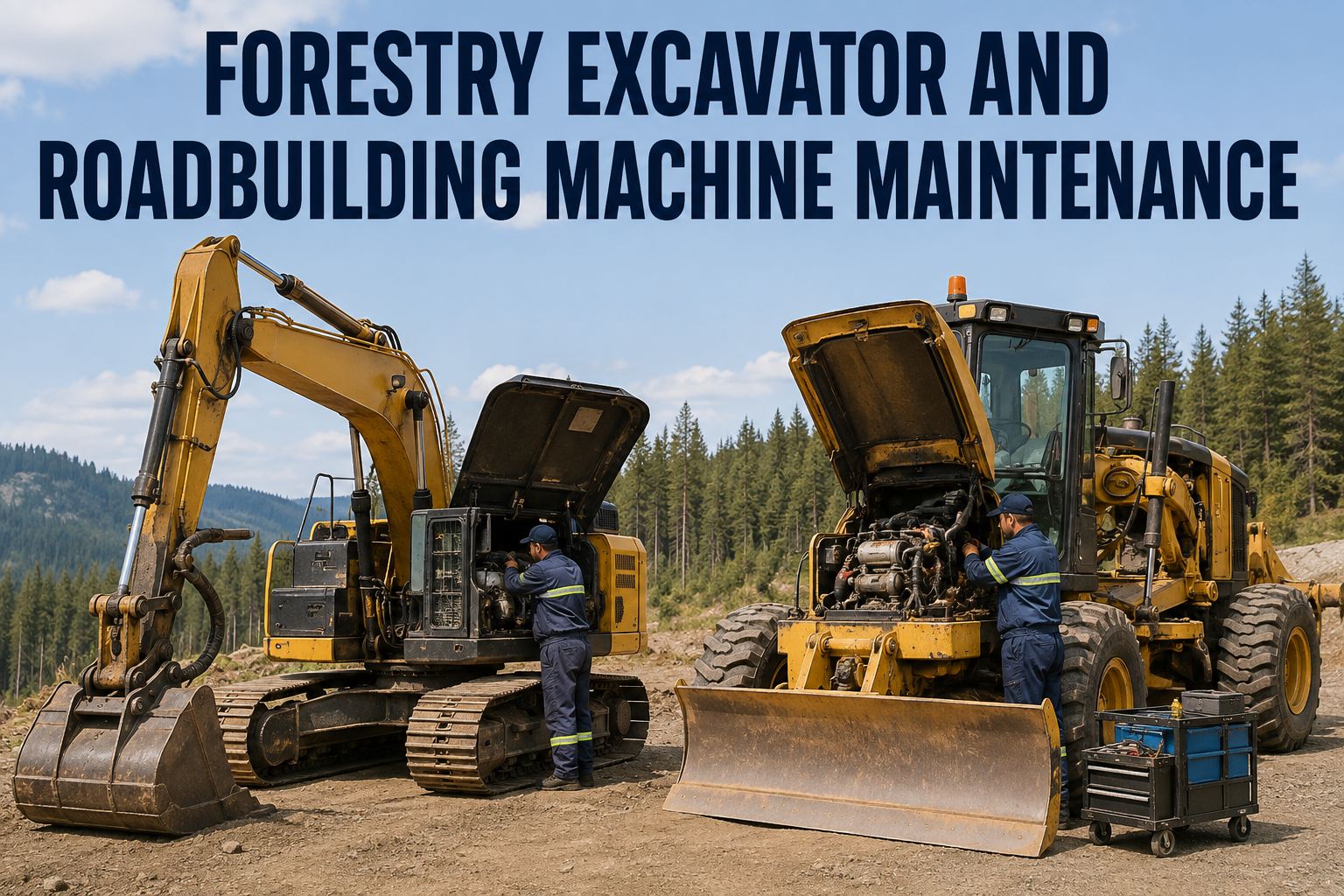
Even a well-planned bridge inspection can stall if the excavator, service truck or lifting equipment needed for access and repairs is unavailable.
Hydraulic lines, attachments, undercarriage and open defects.
Pre-trip checks, access equipment, tires and overdue maintenance.
Inspection status, servicing, approved lifting accessories and repair history.
Inspect after change—not only by calendar
Build a portable bridge inspection plan around the events that can alter condition, then keep maintenance equipment on its own preventive maintenance schedule.
Confirm documentation, assembly, supports and site-specific acceptance before opening.
Use an owner- or engineer-defined frequency reflecting traffic and exposure.
Restrict access as appropriate and obtain qualified reassessment.
Record corrective work and required professional authorization.
Set separate PM schedules for the road-maintenance equipment that supports these inspections. Book an HVI Demo for Equipment Preventive Maintenance Scheduling.
Portable bridge inspection FAQs
Practical answers for forestry road supervisors and equipment managers.
What should a portable bridge inspection checklist include?
Document bridge identity and approved restrictions, deck and connections, supports and bearings, scour and erosion, approaches, signage, visible defects, photographs, corrective actions and sign-off. Use the bridge owner's and qualified engineer's requirements for acceptance criteria.
How often should temporary logging bridges be inspected?
There is no single interval appropriate for every portable bridge. Frequency should follow applicable requirements, the bridge design, owner instructions, site exposure and competent engineering advice. Include event-triggered inspections after flooding, impact, relocation or suspected movement.
How do you determine a portable bridge's load capacity?
Use the engineered rating and approved installation documentation, including restrictions for vehicle axle loads, spacing and configuration. Do not infer capacity from appearance, bridge dimensions or a generic posted weight alone. Seek a qualified bridge engineer where information is missing or conditions have changed.
What should crews do when they find bridge damage?
Follow the site restriction or closure procedure, prevent unsafe crossing, document the observation and refer the condition to qualified personnel. Reopen only after required assessment, corrective action and authorization.
How does HVI support forestry bridge maintenance operations?
HVI supports digital inspections, asset records, preventive maintenance, defects and work orders for vehicles and maintenance equipment used by forestry road crews. It does not replace structural bridge inspection, engineering load rating or crossing authorization.