Harvest season maintenance keeps logging equipment productive when every operating hour matters. During peak cutting and hauling, a missed service interval can turn a planned 45-minute inspection into an extended field repair. Forestry maintenance managers need a schedule that respects machine hours, crew shifts, transport constraints, and the realities of remote work sites.
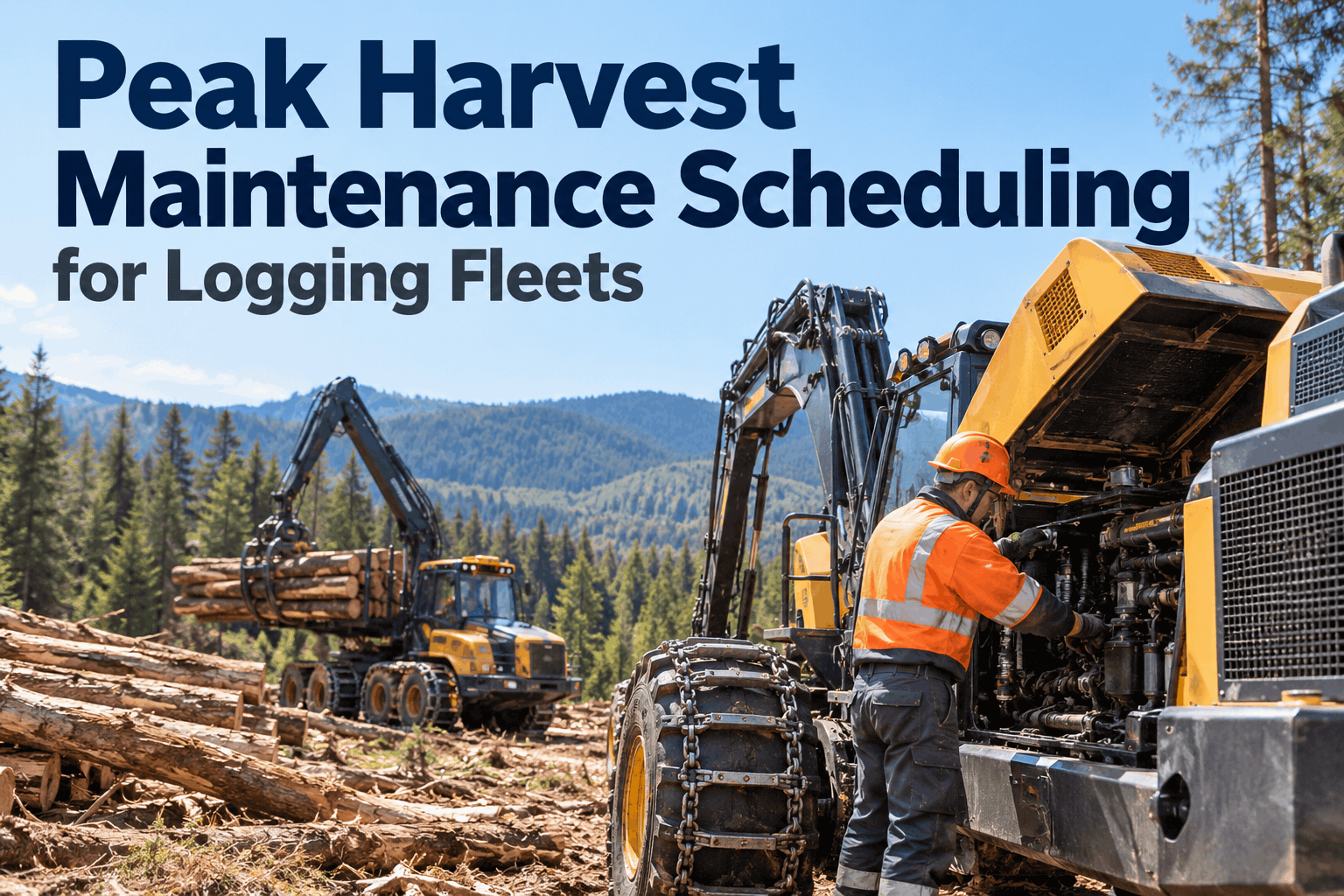
Peak Harvest Maintenance Scheduling for Logging Fleets
Protect the harvest window with short service blocks, clear equipment priorities, and inspections that identify problems before machines are dispatched.
Why peak harvest changes the maintenance schedule
During harvest, equipment is spread across cutting blocks, landings, and haul routes. Service technicians may spend as much effort coordinating access as turning wrenches. The objective is not to defer all maintenance until the season ends; it is to perform the right work in a window that minimizes production disruption.
Hours accumulate unevenly
Harvesters and forwarders may run different shifts. Trigger service using actual engine hours rather than calendar dates alone.
Travel time matters
Remote jobsites make unscheduled parts runs expensive. Confirm access, tools, and materials before dispatching a mechanic.
Small defects escalate
Hose abrasion, loose guards, track damage, and cooling problems need prompt triage before they become stop-work failures.
Use HVI's maintenance scheduling demo to explore how inspection findings and service records can support a more coordinated harvest plan.
A seven-day maintenance schedule that fits production
This illustrative schedule shows how short checks, rotating service slots, and a weekly planning review can coexist with active logging. Adapt it to OEM requirements, shift arrangements, site hazards, and labor availability.
Schedule preventive maintenance before the service window closes
A reliable harvest season maintenance plan starts with each machine's last completed service, current hour meter, and manufacturer-recommended interval. Forecast the next due point using actual daily utilization, then reserve labor and parts in advance.
- Record: Capture the latest verified hour-meter reading and service history.
- Forecast: Estimate the due date from recent hours per shift, allowing for variable workload.
- Reserve: Assign a technician, service location, and required parts.
- Complete: Record work performed and revise the next interval.
HVI can help teams organize preventive maintenance and equipment records. Book a demo to review forestry preventive maintenance scheduling with your fleet's service workflow.
Keep harvest maintenance visible across the fleet
See how HVI can help organize inspections, preventive maintenance tasks, and equipment service records while crews are working across multiple sites.
Prioritize repairs without sacrificing safe operation
When a machine reports a defect, classify the risk before negotiating production time. A simple priority model gives operators, maintenance staff, and supervisors a common decision language.
Critical safety or functional defect
Examples: compromised braking, uncontrolled hydraulic leak near ignition sources, structural damage affecting safe operation. Remove equipment from service and follow site procedures.
Defect likely to worsen
Examples: developing hose abrasion or persistent abnormal vibration. Assess the machine and schedule repair promptly within approved limits.
Noncritical condition with a defined plan
Document the finding, assign an owner, and set a review date. Reassess if symptoms change or operating conditions become more demanding.
An inspection is useful only when the finding has an owner. Sign up to start documenting logging equipment inspections and link findings to your maintenance process.
Connect field inspections to maintenance action
A forestry inspection should capture enough information for a technician to prepare before traveling to the machine. Record the asset ID, location, operating hours, defect description, and photos when safe and practical.
Maintenance coordinators can then determine whether the machine must stop, what parts are needed, and which planned service window can accommodate the repair. Track the result in the asset's history so the next shift does not rediscover the same issue.
See how HVI equipment inspections and maintenance records can support that handoff. Site-specific communications and return-to-service approval remain the responsibility of the operating team.
12-point peak harvest equipment maintenance checklist
Use this as a planning aid alongside OEM inspection instructions and your site's safety procedures. Tasks vary by harvester, forwarder, skidder, log loader, and support vehicle.
Measure maintenance performance without chasing the wrong numbers
Peak-season reporting should help crews act quickly. Review a small set of measures weekly and investigate changes by equipment type, location, and shift.
Completed preventive services ÷ services due in the period
Unresolved stop-work findings, with age and owner
Time from reported defect to authorized return to service
Recurring issues on the same component or machine
Review these measures with the weekly equipment plan. A low count of reported defects is not necessarily good news if crews are underreporting problems. Book an HVI demo to explore maintenance visibility for your logging fleet.
Build a harvest schedule your maintenance crew can execute
Bring equipment checks, service planning, and maintenance history into one coordinated workflow so the next repair does not begin with missing information.
Peak harvest maintenance scheduling FAQs
How should logging fleets schedule maintenance during peak harvest?
Use manufacturer service intervals and current engine-hour readings to forecast due work. Reserve short, predictable maintenance windows around production shifts, while immediately addressing any safety-critical defect.
Is engine-hour scheduling better than calendar scheduling?
For many forestry machines, operating hours are an essential maintenance trigger, but time-based and condition-based tasks may also apply. Follow the OEM schedule and use actual utilization to forecast service dates.
What should happen when a machine fails a pre-shift inspection?
Document the finding, assess severity, and remove the machine from service if safe operation is compromised. Assign corrective work and require appropriate verification before returning it to production.
How can remote logging sites reduce repair delays?
Capture clear defect information, verify machine location, identify required parts, and coordinate mechanic access before dispatch. Maintain an equipment history to identify recurring problems and reduce repeated diagnosis.
How does HVI support harvest season maintenance?
HVI supports equipment inspections, preventive maintenance planning, maintenance records, and repair tracking. It can help maintenance managers coordinate the supporting information; actual service intervals, safety decisions, and work authorization remain site responsibilities.
Keep harvest season maintenance planned, visible and actionable
The strongest harvest season maintenance program does not wait for a breakdown or rely on memory. It combines hour-based service forecasts, daily equipment inspections, risk-based defect decisions, and coordinated field repairs. For logging fleets, that means more predictable maintenance work and clearer equipment readiness decisions during the busiest weeks of the season.
To see how digital inspections and preventive maintenance records can support this approach, book a demo of HVI for logging equipment maintenance.