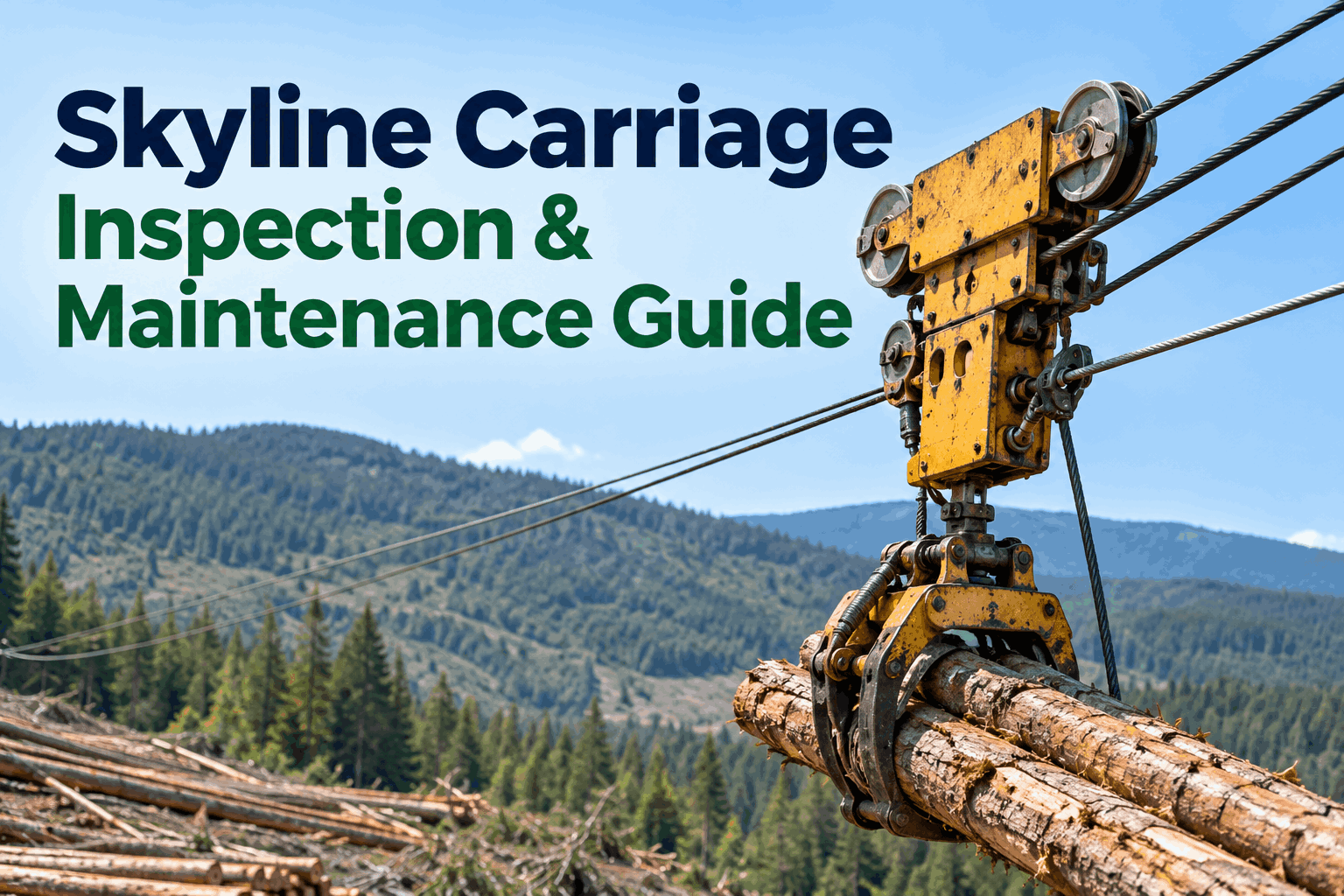
A skyline carriage can travel hundreds of turns before a small defect becomes obvious. A rough sheave, unreliable clamp or damaged connection may first appear as a minor change in movement. A practical skyline carriage inspection helps crews spot those warning signs, decide when equipment needs attention and keep the findings on record. Here is a field-focused guide to inspecting carriage components, planning maintenance and documenting the work with HVI.
Don't let a worn carriage stop the next turn.
Check the parts that carry, grip and control the load. Give every finding a clear next action and a record your crew can retrieve.
The carriage is not a single component. Its sheaves, frame, load connections and—on applicable models—clamps or controls work together under demanding conditions. HVI does not certify a carriage or decide whether it is safe to operate; qualified personnel make those decisions. HVI helps teams complete consistent digital equipment inspections, capture defects and keep the documentation together. See the inspection workflow in a demo.
Five checks that matter on a skyline carriagewhat to look at before the carriage goes back into the cycle
Instead of a generic “carriage OK” checkbox, separate the inspection into the parts that can fail differently. Use the manufacturer's limits to determine acceptance or removal from service.
Sheaves and grooves
Check groove wear, cracks, alignment and rope tracking. Look for rubbing or damage where the skyline contacts the carriage.
Bearings and rotation
Look for rough movement, unusual play, noise, heat or lubrication problems. Follow approved procedures for functional checks.
Frame, pins and retainers
Inspect for cracks, distortion, loose fasteners, corrosion and missing retaining devices at load-bearing connections.
Clamp and actuation system
On clamping models, verify gripping and release functions. Check hydraulic, mechanical or electrical components as fitted.
Suspension and load attachment
Inspect hooks, connectors, attachment points and pins for damage or conditions outside approved limits.
Know the difference between wear and a stop-use defectmake the inspection result lead to a clear decision
Not every mark means the carriage has failed, but not every defect can wait until the next planned service. Use the manufacturer's rejection criteria and your site procedure—not a guessed threshold.
Condition within approved limits
Record measurable wear, note trends and plan service where permitted by the manufacturer and qualified inspector.
Unacceptable or uncertain condition
Secure and isolate the carriage using approved procedures. Refer it for qualified assessment before further use.
The important part is closing the loop. A written finding that never reaches maintenance is still an unresolved problem. HVI maintenance management can help organize equipment work and related records.
When to inspect and maintain the carriagea practical rhythm based on use, condition and manufacturer guidance
A fixed calendar date cannot capture every risk in cable logging. Match inspection and service tasks to operating conditions, unusual events and the requirements for the specific carriage model.
Check operating condition
Complete required pre-use checks and review unresolved findings before authorizing operation.
Reassess abnormal loading
Inspect after suspected overload, impact, rope hang-up or unexpected carriage behavior.
Maintain critical parts
Service bearings, lubrication points, mechanisms and wear items at approved intervals.
For recurring work, use HVI preventive maintenance to keep planned tasks and service documentation organized. Start free and explore equipment records.
From a defect on the carriage to a record the shop can usewhat a connected inspection process looks like
Picture a technician finding resistance in a sheave during a pre-use check. The useful record is not simply “failed.” It identifies the carriage, the affected component and the action required.
Inspect at the equipment
Follow a repeatable checklist suited to the carriage model and the site's procedure.
Describe the finding
Record the component, observed problem and supporting information such as a photo.
Coordinate maintenance
Keep the inspection finding connected to the required service or replacement decision.
Review the outcome
Retain the maintenance record and confirm the required approval before returning to work.
HVI helps teams keep digital inspections and maintenance records organized. The inspector still makes the technical judgment. Book a walkthrough of the inspection process.
What better carriage records change for the crewless uncertainty between the landing, supervisor and maintenance shop
Consistent checks
Crews follow the same component-based inspection questions.
Clearer history
Previous findings and service actions are easier to review.
Better handovers
The next shift can see what was found and what remains open.
Accountable follow-up
Maintenance decisions stay associated with the affected carriage.
You can manage carriage checks alongside the rest of your forestry equipment inspection program. See HVI's inspection and maintenance tools.
Skyline carriage inspection — FAQs
What does a skyline carriage inspection include?
It includes the components relevant to the carriage model: sheaves and bearings, frame and connections, load attachments, rope-contact points and any clamp or control system. The manufacturer's inspection procedure determines the exact checks and acceptance criteria.
How often should a skyline carriage be inspected?
Follow the applicable forestry rules, manufacturer instructions and site procedures. Pre-use checks, scheduled detailed inspections and additional checks after abnormal loading or suspected damage may all be required. Do not assume one frequency applies to every carriage.
What defects mean a carriage should stop operating?
Examples include cracked or distorted load-bearing parts, missing retaining devices, unacceptable sheave wear, unreliable clamp function and unexpected control behavior. Isolate equipment when required and let qualified personnel determine its condition and authorized return to service.
Can HVI determine whether a carriage is safe?
No. HVI is not a rigging engineering or equipment certification tool. Qualified inspectors and technicians make the safety decisions against applicable requirements. HVI supports the checklist, equipment history, inspection documentation and maintenance process.
How can HVI help with skyline carriage maintenance?
HVI provides digital inspections, equipment records and maintenance management tools. Teams can use these capabilities to organize recurring checks, document defects and retain service history. Discuss model-specific workflows during an HVI demo.
Put every skyline carriage inspection on record.
Keep technical decisions with your qualified crew—and give the inspection a consistent checklist, a clear defect record and a maintenance history everyone responsible can find.
Inspect the carriage · Record the finding · Follow up on repairs