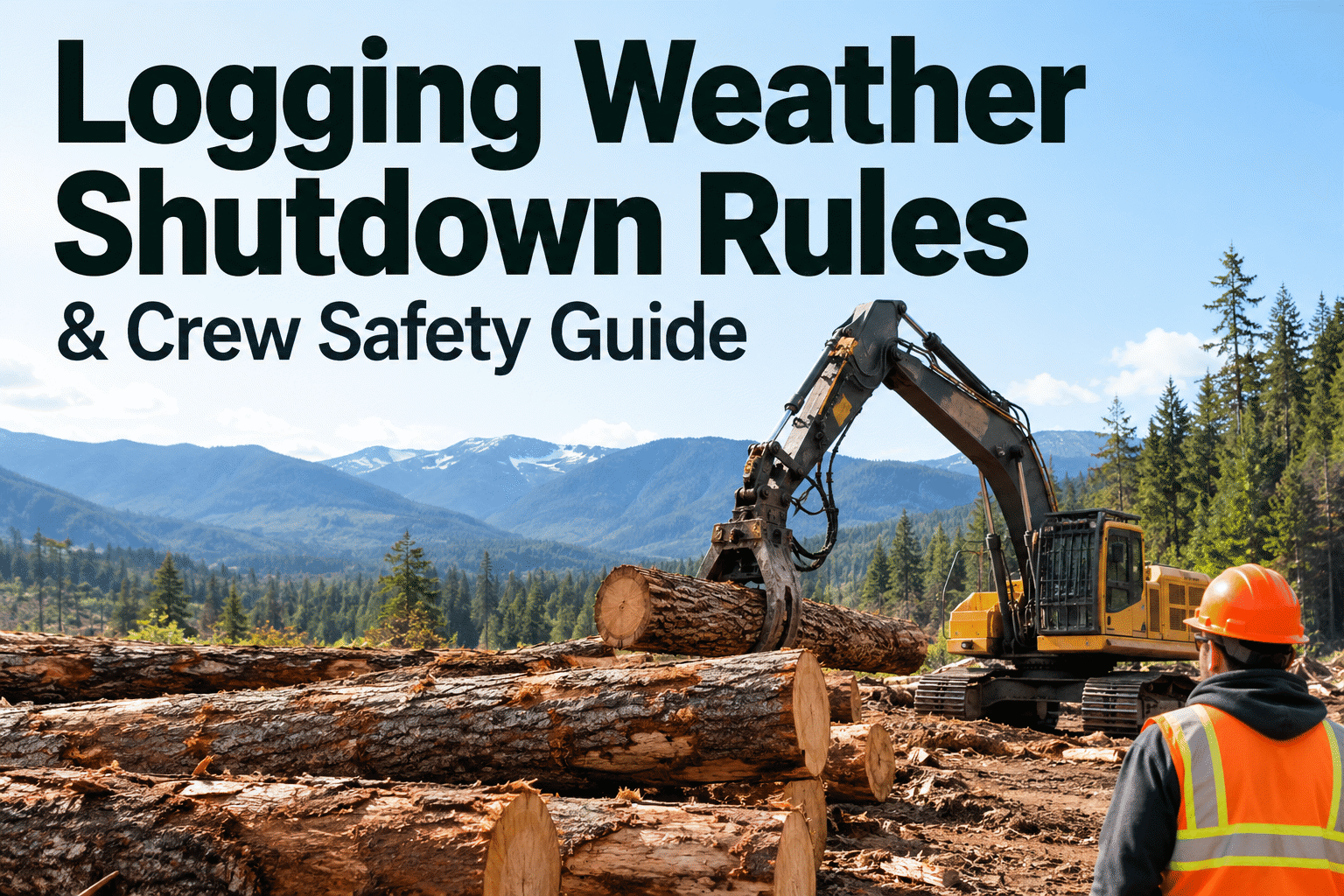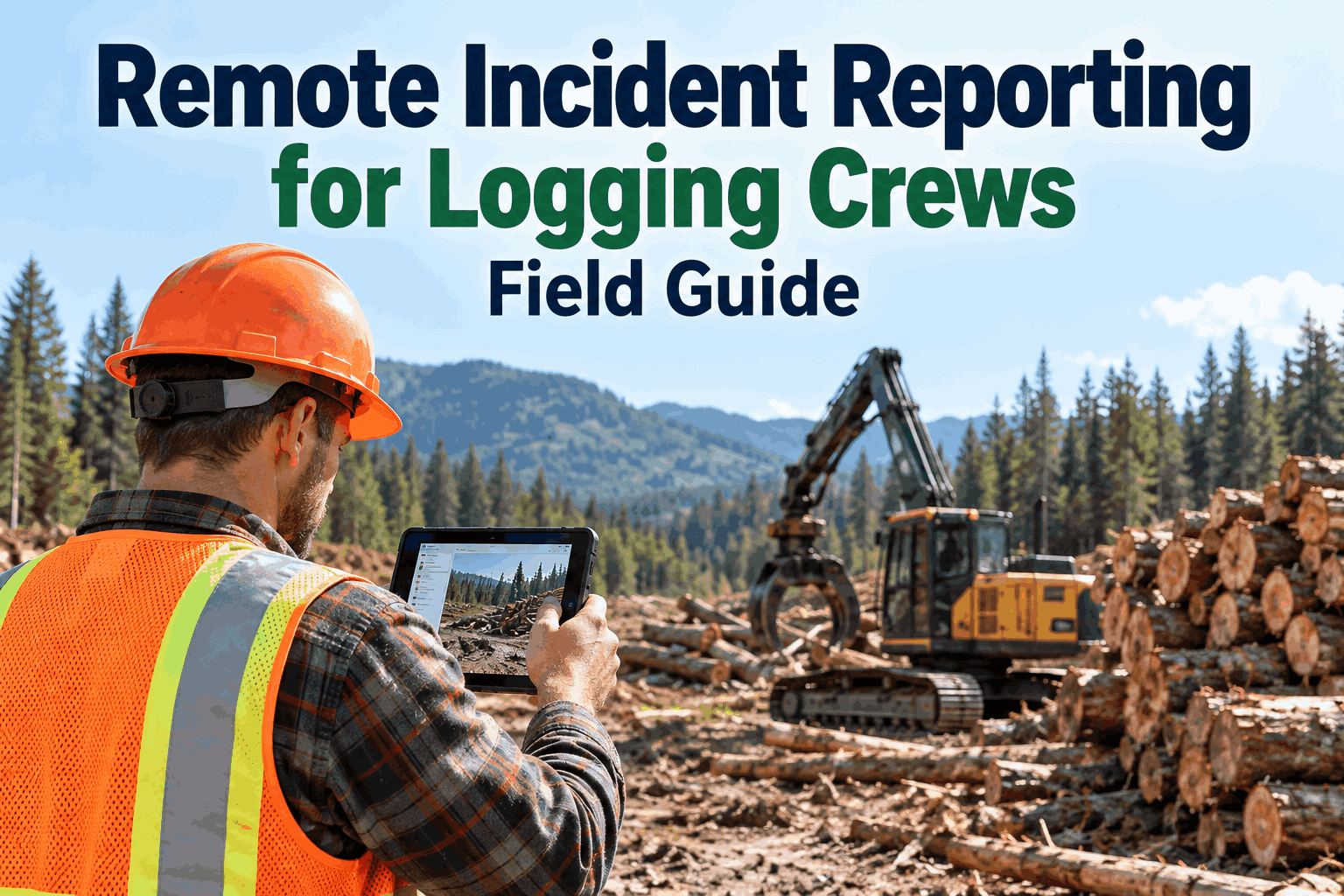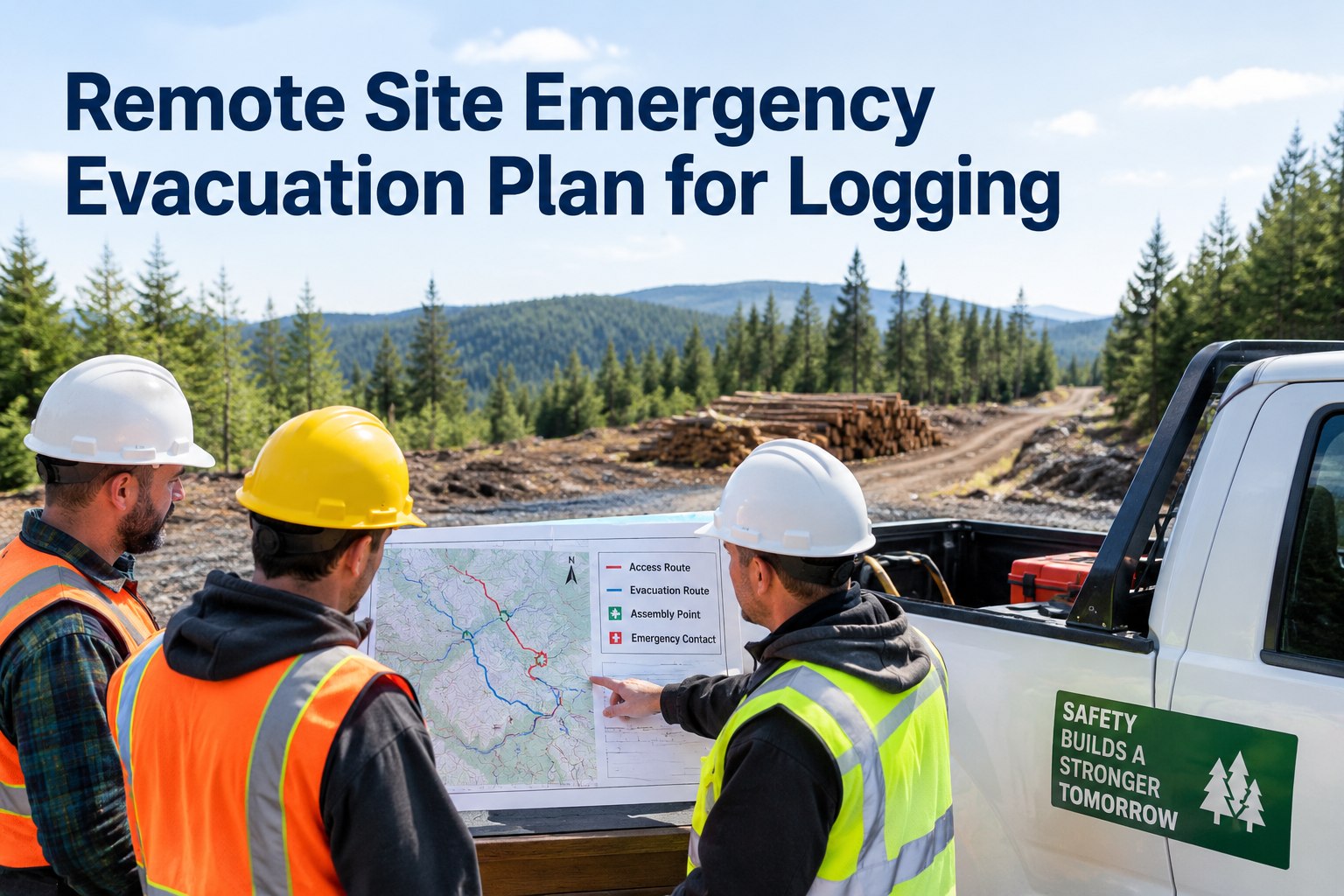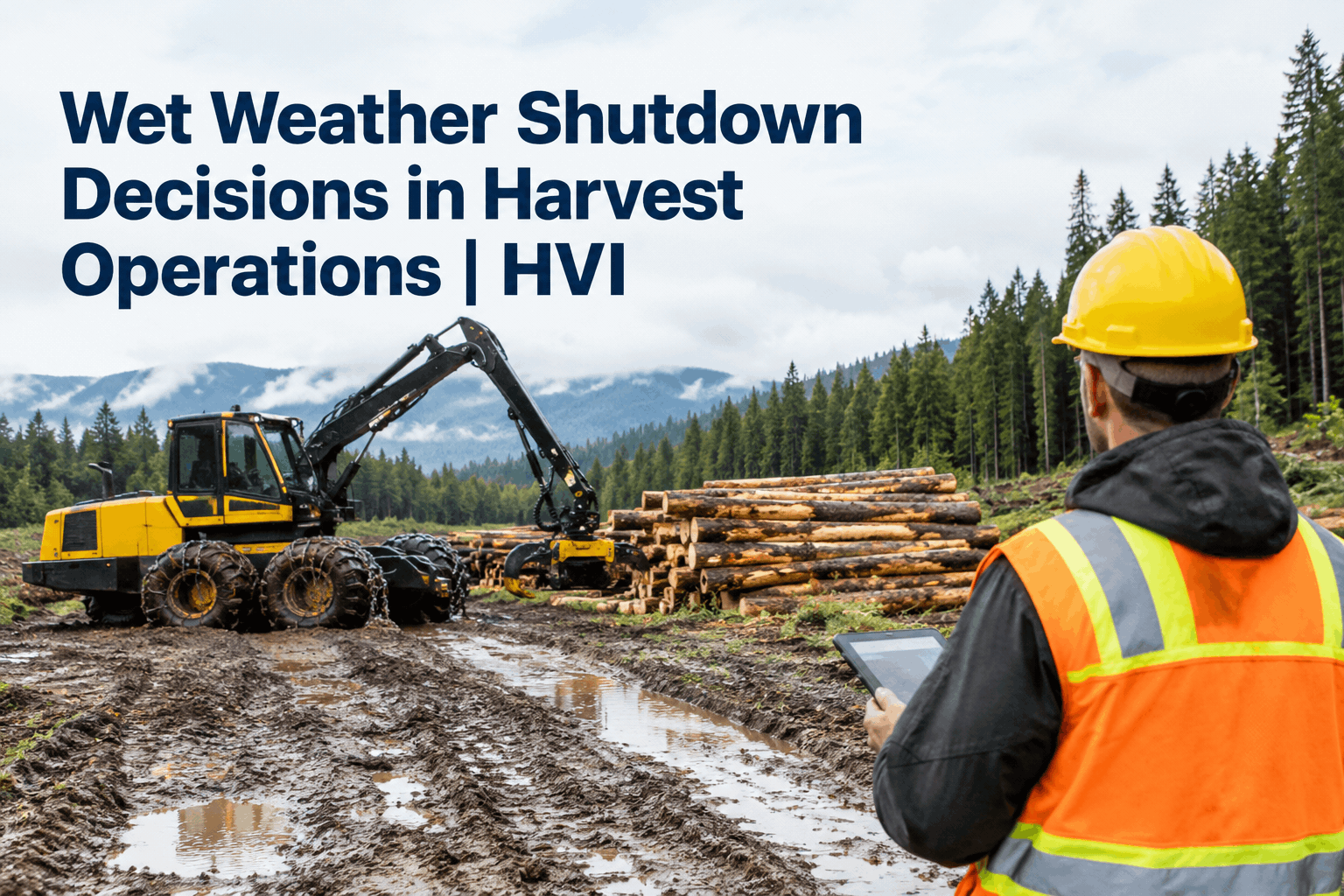
Two days of rain, water pooling in the skidder ruts, and the same hard math: push through and risk bogging a machine and churning the block into a mess that fails inspection, or call it and lose a day the schedule can't spare. The wet weather shutdown is one of the toughest calls in logging — and the crews who get it right have turned a gut feeling into a decision they can defend. Start free and document your shutdown calls.
Wet Weather Shutdown: Turning a Gut Call Into a Decision You Can Stand Behind
When the ground's too soft to log, the right call protects the site, the machines, and your standing with the landowner. Make it on criteria, record it, and keep every crew consistent.
A wet weather shutdown isn't about being cautious for its own sake. It's a calculated trade: the cost of a lost day against the much larger cost of a bogged machine, a rutted block that fails its environmental inspection, and a landowner who stops trusting your crews on their ground. Get the trade right, consistently, and weather stops being a crisis and becomes a managed risk.
The real cost of the wrong callwhy a wet weather shutdown is a trade, not a loss
The reason this call is hard is that the cost of shutting down is visible and immediate — a day's production gone — while the cost of pushing through is hidden until it lands all at once. A manager who only sees the lost day will run too long. A manager who sees both sides shuts down before the damage, not after.
- A day (or part of one) of lost production
- A gap in the delivery schedule to make up
- Crews and machines idle but undamaged
- A bogged machine and a recovery that eats days
- Deep ruts that fail an environmental inspection
- Site rehabilitation and a damaged client relationship
Seen side by side, the math usually favours the shutdown long before most crews actually stop. The job of a good wet-weather policy is to move that decision earlier and make it the same for everyone — not left to whoever's on the block and how far behind they feel. Capturing each call as a recorded assessment is where the HVI inspection and checklist tools come in. Start free and standardize the call.
What the ground is telling youthe criteria behind a wet weather shutdown call
Good shutdown decisions don't rely on a single thing. They read several signals together, the same way a site plan or a wet-weather shutdown guideline lays them out. No one of these is the whole answer, but together they turn "it feels too wet" into a call anyone on the crew would make the same way.
How deep the tracks are cutting in. Past the site's limit, every pass does damage that has to be repaired.
Standing water in tracks or saturated ground means the soil can't carry the load. Water running off-site carries sediment with it.
What's already fallen and what's coming. A dry window changes the call; more rain on saturated ground makes it easy.
Clay and steep ground give up far sooner than free-draining flats. The same rain is a different call on a different block.
Many blocks come with wet-weather limits written into the plan. The threshold isn't always yours to set — but following it is.
Thresholds for these come from your site plan, the soil, and the landowner or regulator — not from a weather app and not from HVI. What a digital checklist does is make sure every one of them actually gets checked and recorded before a machine rolls, so the decision rests on the ground, not the schedule pressure. Sign up free and build a ground-assessment checklist.
The shutdown checklista go / no-go assessment to run before the shift
Here's a working wet weather shutdown assessment — the questions to answer on the block before a machine starts, and the actions that follow once the call is made. Run it the same way every morning conditions are in doubt, and the decision becomes routine instead of a debate.
- Walk the working area and check rutting depth against the site limit
- Look for standing water in tracks and water running off the block
- Check the forecast and the rain already on the ground
- Note soil type and slope for the area being worked today
- Compare conditions against the site plan's wet-weather limits
- Decide: go, work restricted areas only, or shut down
- Record the decision with the time, who made it, and why
- Photograph the ground conditions that backed the call
- Park machines on firm ground, not in low or soft spots
- Inspect machines for mud-packed tracks and undercarriage after wet work
- Re-assess before resuming — don't restart on yesterday's call
Why the record mattersa wet weather shutdown you can't prove is a risk
The decision is only half the job. If an environmental officer or the landowner later asks why the block was worked on a wet day — or why it wasn't — a documented assessment is the difference between a short conversation and a long one. A call made and recorded protects you; the same call made and forgotten leaves you defending a memory.
This is the quiet value of treating the shutdown as a documented assessment rather than a judgment call that evaporates by lunchtime. It builds the same evidence trail as your forestry safety compliance records, and the post-wet machine checks feed straight into HVI maintenance management. Book a demo to see a decision log built.
What a forestry operations manager says about shutdown calls
For years the wet-weather call was whatever the most senior guy on the block felt that morning, and it swung all over the place depending on how behind we were. We bogged a forwarder badly one spring and nearly lost a contract over the ruts. Now every crew runs the same ground check and logs the decision with photos. When the licensee came asking about a wet stretch last fall, I pulled up the records in a minute — and that was the end of it.
Wet weather shutdown — FAQs
What is a wet weather shutdown in forestry?
It's the decision to stop or restrict logging when the ground is too wet to work without rutting the site, bogging machines, or breaching the block's soil-disturbance limits. Many sites have formal wet-weather shutdown criteria in the plan. Start free and document yours.
What criteria decide a wet weather shutdown?
Read several signals together: rutting depth, standing water and soil moisture, recent and forecast rain, soil type and slope, and any limits in the site plan. No single one decides it — the combination does. Book a demo of a ground-assessment checklist.
Does HVI tell me when to shut down?
No — HVI doesn't forecast weather or set thresholds; those come from your site plan, soil, and landowner. HVI is where the ground assessment gets checked and the decision recorded, so the call is consistent and documented. Book a demo to see how.
Why document the shutdown decision at all?
Because if a regulator, landowner, or insurer later asks about a wet day, a timestamped assessment with photos proves what the ground looked like and why you decided as you did. An undocumented call leaves you defending a memory. See forestry compliance records.
What should happen to equipment after wet work?
Park on firm ground, then inspect for mud-packed tracks and undercarriage wear before the next shift — wet, abrasive conditions accelerate wear. Logging those checks keeps the machine's record complete. Explore HVI maintenance management, or book a demo.
Make every wet-weather call on criteria, and keep the proof
Give every crew one ground-condition assessment, record each go, caution, or shut-down decision with photos and a reason, and turn weather from a daily argument into a consistent, defensible routine.
- One ground-check for every crew
- Go / caution / shut-down recorded
- Photos and reason on every call
- Post-wet machine checks logged