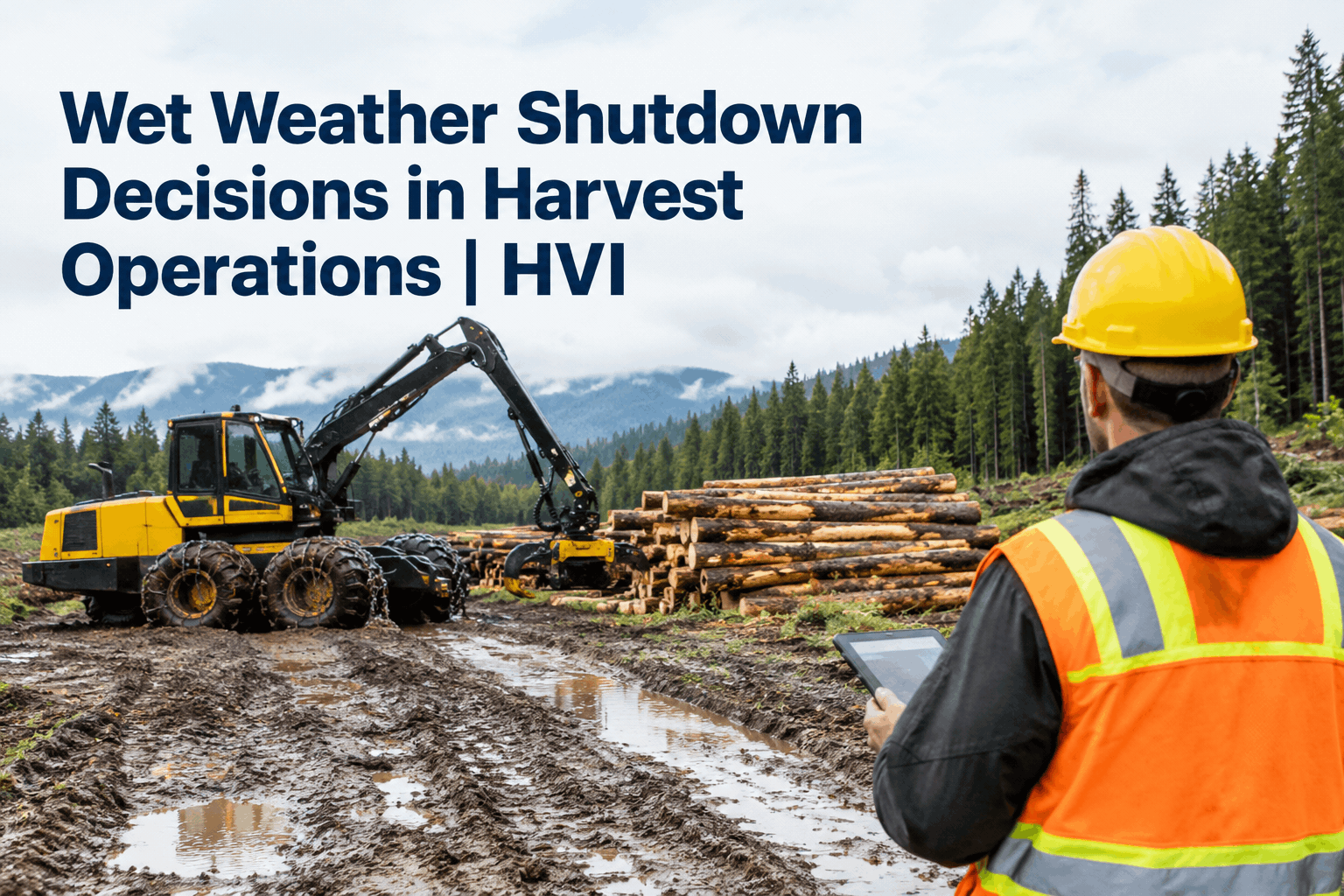
Logging weather shutdown decisions protect crews when wind, lightning, heavy rain, snow or poor visibility make harvesting unsafe. A clear stop-work process tells supervisors when to pause, how to secure equipment and what must be checked before restarting. This guide covers practical weather risk assessments, crew communication and post-storm inspections. Start free with HVI to organize equipment checks and repair records.
When the weather turns, the safest move may be to stop.
Wind in the canopy. Lightning on the ridge. Mud under a loaded machine. Build a shutdown decision that crews understand—and a restart process backed by equipment inspections.
What should trigger a logging weather shutdown?Assess actual site exposure—not a single universal weather number
The same forecast can create very different risks on a sheltered landing, a steep skid trail and a ridge-top felling block. Supervisors should evaluate changing conditions, the task underway, escape routes and the condition of trees and ground. Stop or suspend exposed work when hazards cannot be controlled.
High wind & unstable trees
Watch for crown movement, falling limbs, hung-up trees and reduced directional-felling control. Wind gusts can change faster than ground-level readings suggest.
Decision: pause exposed felling and reassess tree hazards.Lightning & thunderstorms
Lightning threatens crews in open landings, near tall trees and on exposed terrain. Thunder is a warning to follow the site lightning response plan and reach appropriate shelter.
Decision: suspend exposed tasks and move crews to shelter.Rain, snow & unstable ground
Saturated soil, ice and runoff can reduce traction, undermine road edges and increase machine rollover or slide risks—particularly on grades.
Decision: restrict travel and inspect routes before use.Fog, smoke & poor visibility
Operators need enough visibility to recognize people, equipment, signals and travel routes. Smoke can also introduce air-quality and evacuation concerns.
Decision: stop movements when safe separation is uncertain.Use a written site-specific plan with responsible decision-makers, communication methods and restart conditions. Book an HVI demo to see how equipment inspection records support post-weather checks.
A practical stop-work decision pathFour decisions every crew supervisor should be able to explain
Spot the change
Review forecasts and on-site signs: gusts, thunder, loss of visibility or road deterioration.
Assess the task
Identify exposed crews, suspended loads, felling zones, travel routes and available shelter.
Stop & communicate
Pause unsafe operations, alert all teams, account for people and secure equipment where safe.
Authorize restart
Reassess the site, inspect affected machines and confirm that controls are restored.
Logging weather shutdown checklistUse before and during a severe-weather pause
01 Crew & communication
- Warn all affected crews and contractors
- Confirm headcount and safe shelter or evacuation route
- Stop felling, yarding and loading in affected areas
- Record who ordered the shutdown and when
02 Machines & worksite
- Lower attachments and secure loads when safe
- Park away from unstable trees and exposed edges
- Restrict unsafe forest-road and slope access
- Record visible defects and storm-related damage
03 Restart conditions
- Confirm hazards have reduced to acceptable levels
- Inspect trees, roads, landings and drainage
- Complete machine condition and safety checks
- Close critical defects before equipment returns to service
An inspection checklist is a record of what was checked; it does not replace the supervisor's hazard assessment. Start free to organize forestry equipment inspections.
After the storm: inspect before restartingWeather may pass while equipment and site hazards remain
A restart is not simply the end of a weather alert. Fallen limbs, washouts, loosened debris and damaged machine components can create hazards after the sky clears. Assign competent personnel to check the affected work area and equipment before releasing operations.
Recheck the site
Assess overhead hazards, unstable timber, haul roads, slopes, landings and access routes.
Inspect the equipment
Check guards, glazing, lights, brakes, tires or tracks, hydraulic lines and any visible storm damage.
Record & correct defects
Document affected assets, assign repairs and keep unsafe machines out of service until corrected.
Brief crews & release work
Explain remaining controls, route changes and restart authorization to operators.
HVI can help organize digital inspections, maintenance work orders and equipment history. Book a demo of the post-storm equipment workflow.
How to set weather shutdown rules that crews actually followWrite the policy around tasks, hazards and responsibility
Define site-specific triggers
Describe observable conditions that require stopping or reassessing work. Use applicable rules, equipment manuals and site risk assessments rather than a universal wind or rainfall number.
Assign clear authority
Identify who monitors conditions, who orders a shutdown, how operators report hazards and who authorizes restart.
Plan the communication
Specify radio channels, backup contacts, shelter locations, headcount procedures and instructions for isolated crews.
Practice & document
Review the plan with crews, rehearse stop-work calls and retain incident, inspection and corrective-action records.
For U.S. logging operations, review applicable provisions of OSHA's logging standard, 29 CFR 1910.266, along with relevant state requirements, employer procedures and manufacturer instructions. The regulation does not establish one universal shutdown threshold for every weather hazard and logging task.
Where HVI fits in forestry weather readinessEquipment records that support decisions made by your safety team
Digital inspections
Keep pre-use and post-storm machine condition checks in organized equipment records.
Defect documentation
Capture observed damage and maintenance issues before equipment returns to service.
Maintenance work orders
Turn repair needs into trackable tasks for the service team.
Equipment service history
Review past repairs and inspection information by machine.
HVI does not monitor live weather, calculate safe wind limits or automatically approve shutdowns and restarts. Your designated supervisors make those decisions. Sign up to organize the inspection and maintenance side of your forestry operations.
Logging weather shutdown FAQs
When should logging operations shut down because of weather?
Stop or suspend affected work when wind, lightning, visibility, precipitation or ground conditions create hazards that cannot be adequately controlled. Decisions should reflect the task, terrain, equipment, crew exposure and applicable safety requirements—not one universal weather number.
Is there a universal wind-speed limit for logging shutdowns?
No single wind-speed threshold safely covers every logging operation. Tree condition, gusts, slope, felling method, equipment limitations and site exposure all matter. Establish task-specific limits using the applicable requirements, risk assessment and manufacturer guidance.
What should crews do when lightning approaches a logging site?
Follow the site's lightning response plan, suspend exposed activities and move to an appropriate shelter. Supervisors should account for workers and only authorize a return when the plan's restart conditions are met.
What should be checked before restarting after a storm?
Inspect access roads, overhead tree hazards, slopes, landings and affected equipment. Record damage, address critical defects and brief crews on any changed operating conditions before work resumes.
Can HVI automatically decide when to stop logging work?
No. HVI supports equipment inspections, maintenance records, defect documentation and work orders. Weather monitoring, stop-work thresholds, site risk assessments and restart authorization remain the responsibility of the contractor and designated supervisors.
Keep equipment checks organized—before and after severe weather.
Give your crews a consistent way to record machine condition, identify defects and follow repairs. Pair those records with your site-specific weather shutdown procedures.