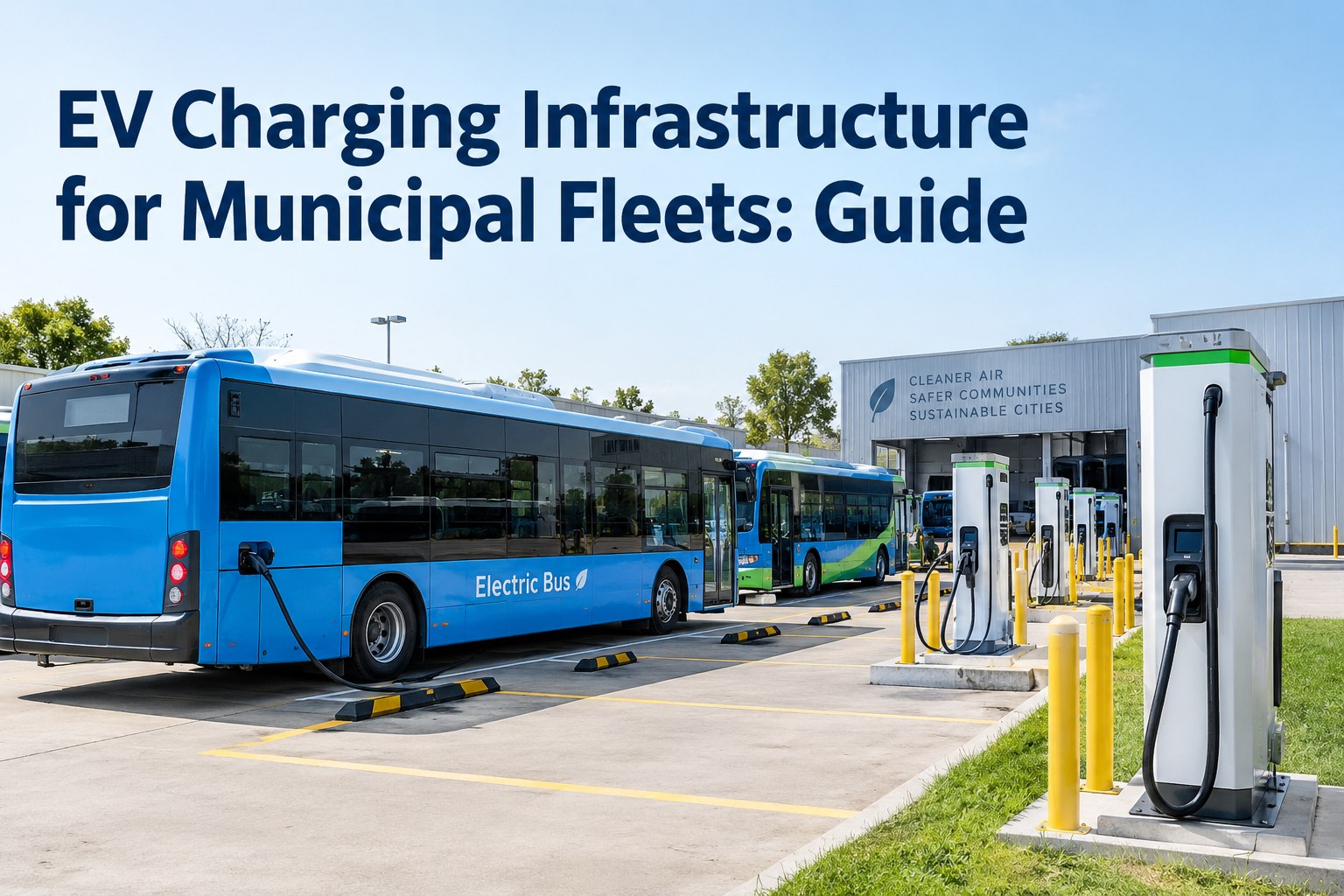
Here's the trap most municipal electrification plans fall into: they order the electric trucks first. But the trucks arrive in months and the power to charge them takes far longer — utility service upgrades routinely run 12 to 18 months. Plan EV charging infrastructure for a municipal fleet the way it actually sequences: power first, working backwards to the vehicles. Get that order wrong and you've parked electric trucks at a depot that can't charge them — on the public's budget. See diesel and EV maintained in one system through the transition
The Vehicles Arrive in Months. The Power Takes Over a Year.
Charging infrastructure has longer lead times than the vehicles it serves — so it has to be planned first. Here's the real sequence, and the gap that catches cities out.
Why this is on your desk now, not later
Municipal fleets aren't electrifying because someone in the yard wants to — they're doing it because the mandates arrived. That's what makes this a planning problem with a deadline, not a someday project. Three pressures put it on the fleet director's desk today.
The mandate sets the destination; the infrastructure timeline sets when you have to start. And because it's public money and public service, the margin for a stalled rollout is thin. Book a demo to see the whole mixed fleet tracked on one platform.
Plan it in this order — power to pavement
Because the electrical work is the long pole, the plan runs from the grid inward, not from the vehicles outward. Each step below feeds the next, and the early ones are the ones with the timelines you can't compress.
The first two steps carry the timelines that sink projects; the last one keeps it fundable. HVI doesn't size your electrical service — but once the chargers are in, it runs them and the fleet as one operation. Book a demo to track chargers and vehicles together.
The part nobody plans for: maintaining a mixed fleet
Electrification is drawn as a switch — diesel out, electric in. It's actually a long overlap. For years your depot runs both at once, and that mixed-propulsion period is the real operational problem almost nobody writes about honestly. One system now has to maintain two completely different kinds of machine, plus the chargers.
- PM by hours or miles
- Engine oil, DPF, DEF, fuel system
- Familiar intervals & parts
- Different PM intervals — no oil or DPF
- Battery health, HV system, thermal, charging
- Techs qualified for high-voltage work
- Inspected & maintained for uptime
- Cables, connectors, output checked
- Downtime = a stall out of service
Run that on a diesel-only maintenance system and the EV side gets forced into the wrong checklist — or ignored until something fails. This is exactly where HVI fits: any-trigger PM, inspection templates per propulsion type, and qualification tracking so only certified techs are assigned to high-voltage work — diesel, electric, and chargers on one platform. Book a demo to see per-propulsion templates and qualification tracking.
Funding and procurement: use somebody else's money
Municipal budgets don't absorb an electrification build in one line, and they don't have to. The infrastructure has a funding stack built for exactly this — and public-sector procurement rewards the plan that documents it. Sequence the money the way you sequence the build.
Programs and credits shift year to year, so contact your utility and state energy office first — the make-ready program is often the single largest piece. And whatever you deploy, the documentation trail that satisfies procurement is the same record that proves the fleet is maintained. Start free and keep the maintenance record your procurement needs.
The municipal charging readiness checklist
Before the first electric truck is ordered, this is what should already be in motion — the long-lead items that decide whether the vehicles have power waiting for them. Use this readiness checklist online free, and track chargers and both fleets in one place from day one.
From a city fleet director mid-transition
The mandate came down and everyone's first instinct was "order the trucks." I had to stand in a budget meeting and explain that the power upgrade was an eighteen-month job and the trucks were a six-month job — so if we bought vehicles first, we'd be storing them, not running them. That reframed the whole plan around the utility timeline.
The part I didn't see coming was the maintenance. For the next several years we're running diesel and electric side by side, and the chargers are their own thing to keep alive. Putting all three — diesel, EV, chargers — on one system with the right checklist for each is what kept the transition from turning into three separate messes.
Frequently asked questions
Why should charging infrastructure be planned before buying EVs?
Because it takes far longer to deliver. Electric vehicles arrive within months of ordering, but the electrical work behind the chargers — utility service upgrades and interconnection — routinely runs 12 to 18 months. Buy the vehicles first and you risk parking them at a depot that can't charge them, on public money. Planning power first and working backwards to the vehicles is the only sequence that lands trucks and charging capacity at roughly the same time.
What are the main steps in planning municipal EV charging?
In order: size electrical capacity and start the utility service upgrade (the long-lead item); choose a charging strategy (overnight Level 2 backbone plus DC fast where needed); lay out charger placement around depot circulation; add demand management to control peak charges; plan uptime and outage resilience for essential services; and deploy in phases matched to budget and grant cycles. The electrical and utility steps carry the timelines you can't compress, so they come first.
How does electrification change fleet maintenance?
It adds to diesel maintenance rather than replacing it. For years the depot runs a mixed fleet: diesel units on hour or mile PM with engine, DPF, and fuel systems, alongside electric units with different intervals, no oil or DPF, and battery, high-voltage, thermal, and charging systems needing their own templates and HV-qualified techs. Plus the chargers, which are maintainable assets with uptime. Running all three on one system with the right checklist for each is the real transition challenge.
Should chargers be maintained like fleet assets?
Yes. A charging stall that's down takes a truck out of service just like a dead fuel pump — and in a municipal fleet running essential services, that's a public-service problem, not an inconvenience. Chargers have cables, connectors, and output that wear and fail, so they need inspection, uptime tracking, and defects routed to work orders. Managing chargers as assets alongside the vehicles they serve keeps the depot's power and its fleet in one operational view.
What funding is available for municipal charging infrastructure?
Several stacked sources: utility make-ready programs (often the largest single piece), state fleet-electrification grants, the federal 30C infrastructure credit, NEVI and corridor funding, and EV-specific utility rate structures — deployed in phases across budget cycles. Programs and credits change year to year, so contact your utility and state energy office first to confirm what's currently active for your jurisdiction. Public-sector procurement also rewards a well-documented plan, which is the same record that later proves the fleet is maintained.
Plan the power first — then run the mixed fleet as one
HVI won't size your electrical service, but it runs everything after: chargers tracked as assets with uptime, any-trigger PM and inspection templates per propulsion type, and qualification tracking so the right tech works the high-voltage jobs — diesel, EV, and chargers on one platform. So the years-long mixed-fleet transition stays one clean operation, not three separate messes.
No credit card · Per-propulsion templates · Chargers & vehicles in one system